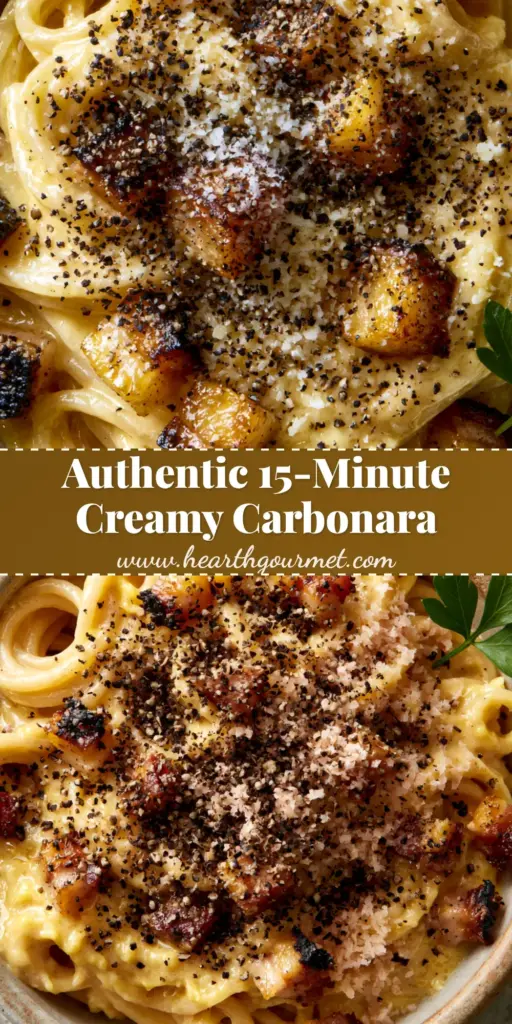
Experience the soul of Rome in a single bowl with this masterclass in Pasta Carbonara. Forget the heavy creams and artificial thickeners; true Carbonara relies on the culinary alchemy of tempering eggs and sharp Pecorino Romano to create a pale-gold, glossy emulsion that clings to every strand of al dente spaghetti.
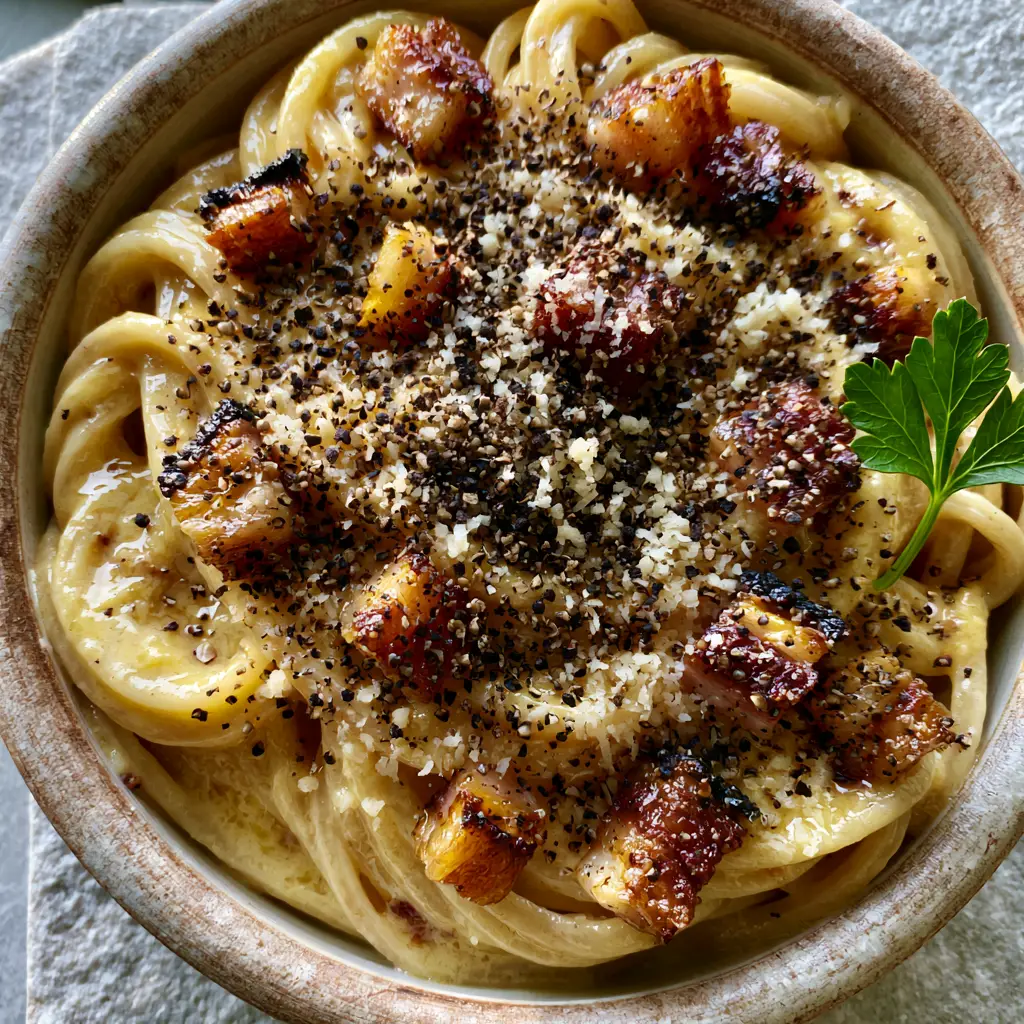
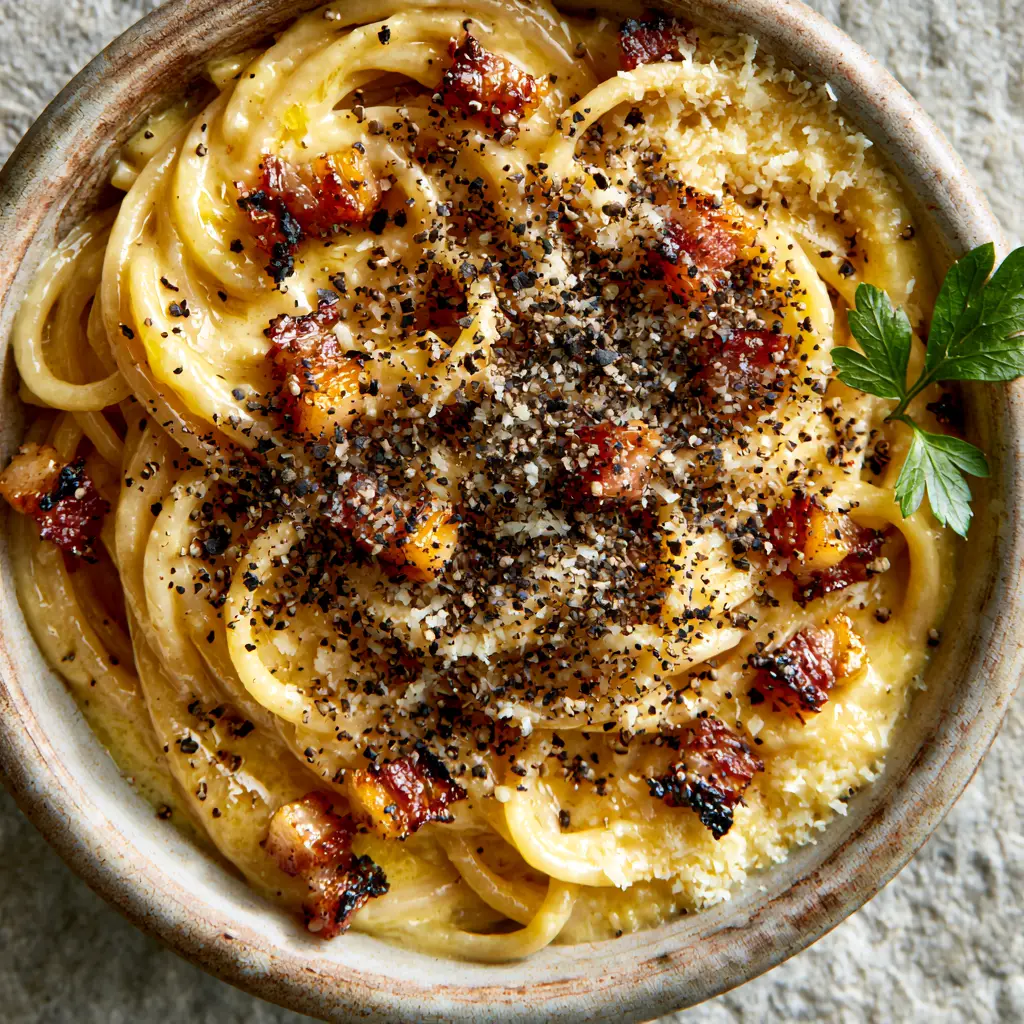
This recipe is designed to replicate the rustic elegance of a high-end trattoria, featuring twirled pasta nests, deeply rendered guanciale, and a dense scattering of coarsely cracked black pepper. The visual contrast between the charred edges of the pork and the snowfall of finely grated cheese makes this dish as stunning to look at as it is to eat.
Whether you are a seasoned chef or a home cook looking to elevate your weeknight rotation, mastering this technique will transform your kitchen. We are focusing on the precise science of heat management to ensure your sauce remains a silky sheen without a single hint of liquid separation or scrambled eggs.
The Irresistible Allure of Real Roman Carbonara
- Unmatched Texture: A thick, pale-gold emulsion that delivers a luxurious mouthfeel without the use of heavy cream.
- Crispy Contrast: Small cubes of guanciale rendered until golden-brown and translucent with perfectly charred edges.
- Sharp Umami: A heavy hand of aged Pecorino Romano provides a salty, tangy depth that balances the richness of the egg yolks.
- Bold Aromatics: Coarsely cracked black pepper flakes provide a spicy bite that cuts through the fats for a balanced palate.
Essential Elements for the Perfect Roman Emulsion
To achieve the specific visual blueprint of this Pasta Carbonara, each ingredient must be selected for its structural and flavor contribution. We avoid substitutions where possible to maintain the authenticity of the dish.
Dried Spaghetti: 1 lb (454g) of high-quality bronze-die pasta is essential. The rough surface of bronze-cut noodles creates more starch, which is the “glue” that allows your egg emulsion to bond perfectly to the pasta.
Guanciale: 5 oz (142g) of cured pork jowl, sliced into small, uniform cubes. Guanciale has a higher fat-to-meat ratio than pancetta, providing the necessary rendered liquid gold required to flavor the entire dish.
Egg Yolks: 4 large egg yolks plus 1 whole egg. The high concentration of yolks is what creates that signature pale-gold, glossy finish described in our visual guide, providing richness and stability to the sauce.
Pecorino Romano: 1.5 cups (150g) of finely grated cheese, plus extra for the “snowfall” garnish. This sheep’s milk cheese is sharper and saltier than Parmesan, which is vital for the authentic Roman flavor profile.
Coarse Black Pepper: 2 tsp (10g) of whole peppercorns, crushed manually. You want large, visible flakes rather than fine powder to achieve the rustic, textured look and the specific spicy punch of a true authentic Italian pasta dish.
Fresh Flat-Leaf Parsley: A single small sprig for garnish. While traditionalists might argue, a pop of green against the neutral stone background provides the visual contrast needed for a professional presentation.
Sea Salt: 2 tbsp (30g) for the pasta water. Remember, the water should be “salty like the sea” to season the spaghetti from the inside out, though we use slightly less than usual because the cheese and pork are already quite salty.
Professional Tools for a Flawless Finish
Achieving a restaurant-quality result requires a few specific tools to manage heat and emulsion. Unlike a creamy garlic pasta where the sauce is simmered, Carbonara requires off-heat mixing.
Heavy-Bottomed Skillet: A large stainless steel or cast-iron skillet is needed to render the guanciale. The heat retention helps keep the pasta warm during the final mixing phase without needing the stove.
Stainless Steel Mixing Bowl: You will mix the eggs and cheese in this bowl. Setting this bowl over the steaming pasta water (a makeshift bain-marie) is a pro tip for thickening the sauce safely.
Whisk and Tongs: A whisk ensures the egg and cheese mixture is lump-free, while tongs are necessary to twirl the spaghetti into the signature rustic mounds seen in our reference photo.
Mortar and Pestle: To get those specific “coarsely cracked” pepper flakes, crushing whole peppercorns manually is far superior to using a standard grinder.
Mastering the Art of the Carbonara Swirl
Step 1: Rendering the Guanciale to Perfection
Place your cubed guanciale into a cold skillet and turn the heat to medium-low. This slow start allows the fat to render out completely, ensuring the cubes become crispy and translucent with charred edges rather than just burnt.
Once the pork is golden-brown and the fat has coated the bottom of the pan, remove the skillet from the heat. Set aside a small amount of the rendered fat to whisk into your egg mixture for extra sheen.
Step 2: Preparing the Egg and Pecorino Base
In your stainless steel bowl, whisk together the 4 yolks, 1 whole egg, and the finely grated Pecorino Romano. The mixture should form a thick, pale paste.
Add your coarsely cracked black pepper directly into this mixture. Adding the pepper to the fats early allows the piperine to bloom, enhancing the aroma of the Pasta Carbonara.
Step 3: Achieving the Al Dente Snap
Boil your spaghetti in salted water, but pull it out roughly 2 minutes before the package instructions suggest. The pasta will finish cooking in the residual heat of the skillet, absorbing the flavors of the pork fat.
Critical Step: Reserve 1 cup (240ml) of the starchy pasta water before draining. This “liquid gold” is the secret to a smooth, non-clumping sauce.
Step 4: The Mantecatura (The Final Emulsion)
Toss the hot spaghetti into the skillet with the crispy guanciale, coating every strand in the rendered fat. Add a splash of pasta water to lower the temperature of the pan slightly so you don’t scramble the eggs.
Pour the egg and cheese mixture over the pasta. Using your tongs, toss vigorously and constantly. The heat from the pasta will cook the eggs just enough to create that thick, glossy sheen without any liquid separation.
Pro-Level Secrets for a Glossy Sauce
- Temperature Control: If the skillet is too hot, the eggs will scramble. If it is too cool, the sauce will remain watery. Look for the sauce to thicken until it coats the back of a spoon.
- Starch Power: Use less water than usual to boil your pasta. This increases the starch concentration, which is essential for a stable emulsion similar to what you’d find in a well-emulsified orzo dish.
- The Resting Period: Let the dish sit for 30 seconds after mixing. This allows the proteins in the cheese to fully integrate with the egg yolks, creating that signature pale-gold color.
- Pepper Freshness: Always toast your peppercorns briefly in a dry pan before cracking them to release the essential oils.
Maintaining that Silky Texture
Pasta Carbonara is best enjoyed immediately while the emulsion is at its peak silkiness. As it cools, the cheese will begin to solidify and the eggs will lose their gloss.
If you must store leftovers, keep them in an airtight container for up to 2 days. To reheat, avoid the microwave, which will scramble the eggs. Instead, place the pasta in a skillet over very low heat with a tablespoon of water or cream to loosen the sauce back to a glossy state.
We do not recommend freezing this dish, as the delicate egg emulsion will break upon thawing, leading to a grainy texture that lacks the visual appeal of the original recipe.
Perfect Pairings for an Italian Feast
To balance the intense richness of the guanciale and egg yolks, serve this dish with a crisp, acidic side. A simple arugula salad with lemon vinaigrette works beautifully.
For a multi-course Italian dinner, you might start with a refreshing caprese or a bowl of Greek egg-lemon soup to contrast the heavy flavors of the Roman pasta. If you are feeding a crowd and need more variety, a side of Cajun chicken pasta can provide a spicy alternative for different palates.
Finally, end the meal with something decadent like a chocolate dessert lasagna to round out the rich theme of the evening.
Your Burning Carbonara Questions
While guanciale is traditional for its high fat content and unique cure, you can use thick-cut pancetta or unsmoked bacon as a substitute. The flavor profile will change slightly, becoming less funky and more smoky.
Using a high ratio of yolks to whole eggs (4:1) is what creates the deep pale-gold color and the thick, glossy texture. Whole eggs contain more water, which can lead to a thinner, less luxurious sauce.
Avoid using a standard pepper mill on the fine setting. Instead, use a mortar and pestle or crush whole peppercorns under the flat side of a heavy chef’s knife to get large, visible flakes.
Parmigiano-Reggiano is the closest substitute, but it is milder and less salty. For the most authentic result, use Pecorino or a 50/50 blend of both cheeses.
This usually happens if the heat is too high when adding the eggs. Always remove the skillet from the burner and add a splash of pasta water to slightly cool the surface before tossing in the egg and cheese mixture.
Authentic Pasta Carbonara Recipe
Pasta Carbonara: The Ultimate Guide to Authentic Roman Silky Perfection
Ingredients
Equipment
Method
- Add cubed guanciale to a cold skillet. Heat over medium-low until the fat renders and the meat becomes crispy with charred edges.
- In a bowl, whisk egg yolks, the whole egg, grated Pecorino, and cracked pepper until a thick pale-gold paste forms.
- Cook spaghetti in salted water until 2 minutes before al dente. Reserve 1 cup of starchy water.
- Toss hot pasta into the skillet with guanciale and fat. Remove from heat and vigorously stir in the egg mixture and a splash of pasta water until glossy.
- Twirl into bowls, top with extra cheese snowfall, more pepper, and a parsley sprig.
Notes
Always remove the pan from the heat before adding eggs to avoid scrambling.
Closing & Call to Action
Mastering Pasta Carbonara is a rite of passage for any home cook. By focusing on the visual cues of charred guanciale and the glossy, pale-gold sauce, you can recreate this iconic Roman staple with professional precision. The key is confidence and quick movement during the final toss.
Did your sauce achieve that perfect silkiness? We want to see your results! Leave a comment below with your experience or any questions you have about the tempering process.
Don’t forget to share your culinary masterpiece and follow us on Pinterest for more authentic Italian inspirations. Pin this recipe to your “Italian Dinners” board by clicking the image below!