There is a specific kind of magic that happens when humble pantry staples transform into a dish that looks like liquid gold. Avgolemono soup is not just a meal; it is a masterclass in culinary emulsion and texture. This iconic Greek comfort food captures the essence of Mediterranean cooking—bright, nourishing, and deceptively simple.
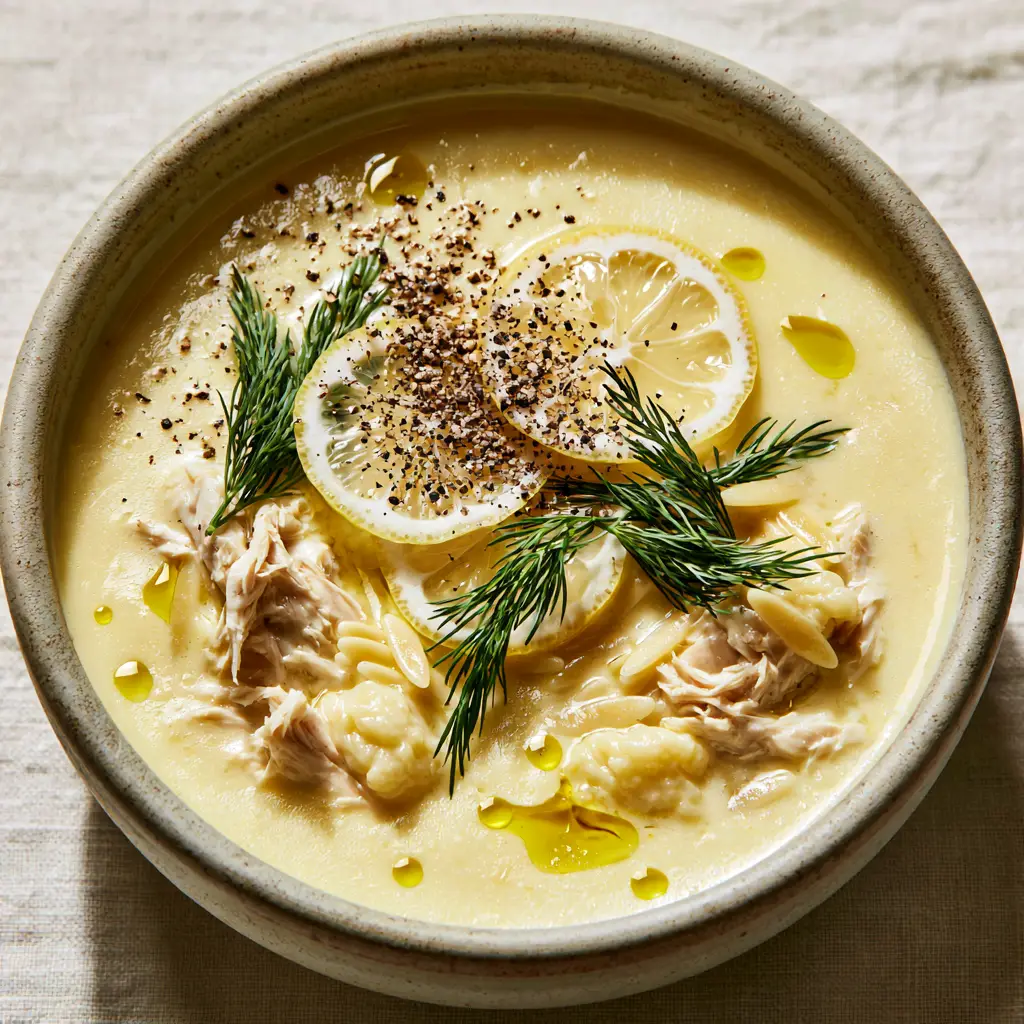
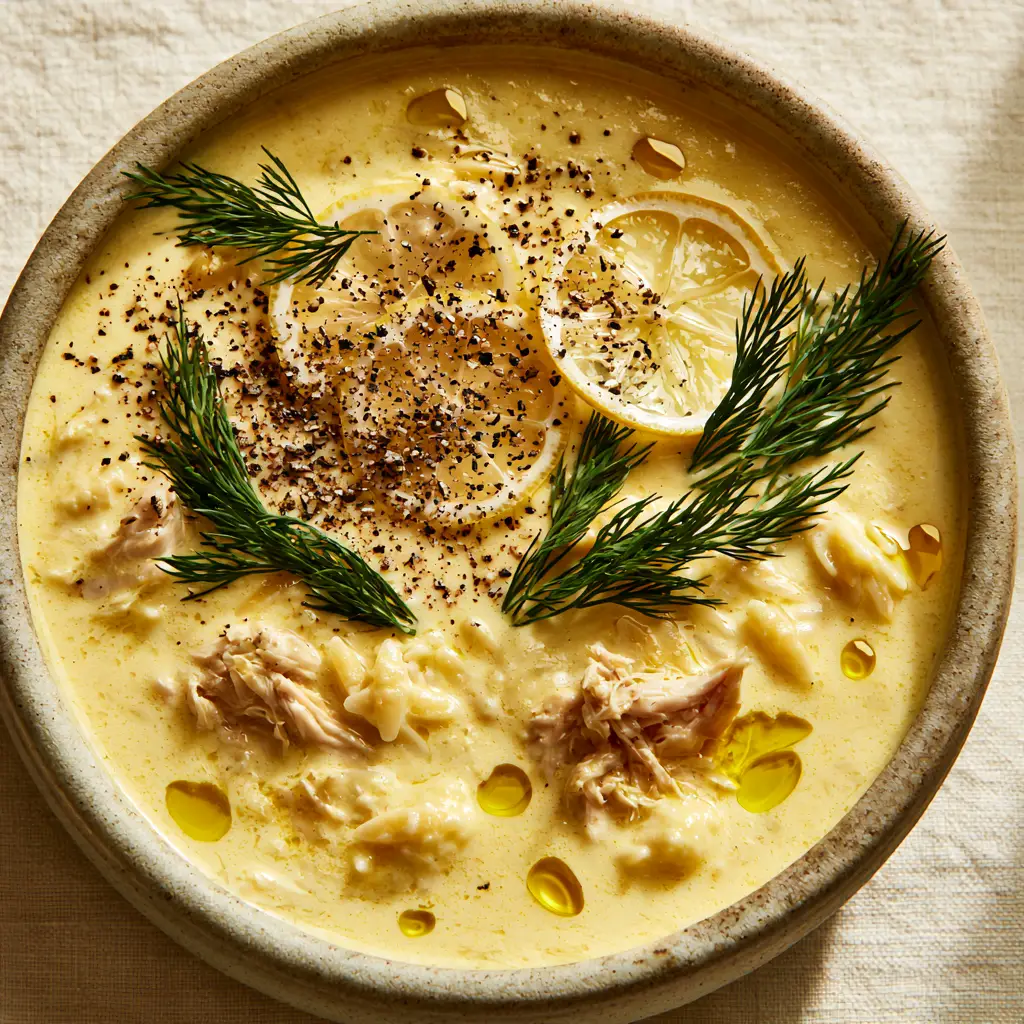
When you look at a bowl of authentic Avgolemono, you should see a pale golden-yellow landscape that is thick and velvety, yet contains no heavy cream. The richness comes entirely from the interaction between fresh lemon juice and tempered eggs. It is a visual and sensory experience that warms you from the inside out.
In this guide, we are going to recreate the exact visual profile of a high-end food blog aesthetic: a rustic ceramic bowl filled with opaque, creamy broth, tender shredded chicken, and soft orzo. We will garnish it with translucent lemon wheels and feathery dill to ensure every spoonful is as beautiful as it is delicious.
Why This Velvety Greek Lemon Soup Is a Culinary Masterpiece
- The Emulsion Perfection: Achieve a thick, custard-like consistency using the traditional egg-lemon technique without the risk of curdling.
- Textural Contrast: A harmonious blend of “soft and swollen” orzo pasta paired with tender, hand-shredded poached chicken breast.
- Vibrant Visual Appeal: A stunning pale-yellow palette accented by shimmering droplets of extra virgin olive oil and cracked black pepper.
- Symphonic Flavors: The sharp, clean acidity of citrus perfectly balances the savory, deep notes of a rich chicken base.
Essentials for the Silkies Greek Lemon Soup
To achieve the specific visual blueprint of this dish, each ingredient must be selected for both its flavor profile and its structural contribution to the soup’s famous opacity.
Boneless, Skinless Chicken Breasts: We use 1 lb (450g) of chicken breast, poached gently to ensure the meat remains tender and easy to shred into long, rustic clusters. This provides the protein heart of the dish without adding excess fat that might break the emulsion.
Dried Orzo Pasta: You will need 3/4 cup (150g) of orzo. These rice-shaped grains absorb the broth, becoming soft and “swollen,” which helps naturally thicken the liquid through starch release.
Low-Sodium Chicken Stock: 6 cups (1.4L) of high-quality stock serves as the canvas. Using a clear, savory stock ensures the final color remains a vibrant pale yellow rather than a muddy brown.
Fresh Large Eggs: 3 large eggs are the structural foundation. They must be at room temperature to ensure they incorporate smoothly into the hot broth without scrambling.
Freshly Squeezed Lemon Juice: 1/2 cup (120ml) of juice provides the signature tang. Do not use bottled juice; the fresh enzymes in real lemons are necessary for the chemical reaction that thickens the soup.
Extra Virgin Olive Oil: 2 tbsp (30ml) of high-quality oil is essential for the finish. These “golden droplets” add a luxurious mouthfeel and catch the light for that macro-shot glow.
Fresh Dill: 1/4 cup (10g) of feathery fronds adds a pop of vibrant green. Dill provides a grassy, anise-like aroma that cuts through the richness of the egg yolks.
Foundational Seasonings: You will need 1 tsp (6g) of kosher salt and 1/2 tsp (3g) of coarsely cracked black pepper. The pepper is crucial for the visual “dusting” described in the blueprint.
Tools Required for Professional Results
Achieving a professional creamy soup recipe aesthetic requires a few specific tools to manage the delicate egg-tempering process. You will need a heavy-bottomed Dutch oven or stockpot for even heat distribution, ensuring the orzo doesn’t stick to the bottom.
A high-quality balloon whisk is non-negotiable for aerating the eggs into a pale froth. You will also need a fine-mesh strainer if you want to ensure the lemon juice is completely free of pulp, maintaining that perfectly smooth, opaque broth texture seen in the Midjourney prompt.
Architecting the Perfect Avgolemono: Step-by-Step
Poaching the Chicken and Preparing the Base
Place your 6 cups (1.4L) of chicken stock in a large pot over medium-high heat. Add the chicken breasts and bring to a gentle simmer. Do not boil aggressively, as this toughens the protein. Poach for 12-15 minutes until the internal temperature reaches 165°F (74°C).
Remove the chicken and set it aside on a cutting board. Once cool enough to handle, use two forks to shred the meat into tender, irregular clusters. Keep the stock simmering, as this is where we will cook the orzo.
Cooking the Orzo to Soft Perfection
Add the 3/4 cup (150g) of orzo to the simmering stock. Cook for about 8-10 minutes, or until the pasta is “soft and swollen.” It should be slightly past al dente to achieve the comforting, velvety texture typical of authentic Greek recipes like spinach and tomato orzo.
Once the orzo is cooked, reduce the heat to the lowest setting. It is vital that the liquid is not boiling when you add the egg mixture, or you will end up with something closer to an egg drop soup than a silky Avgolemono.
The Tempering Ritual: Creating the Emulsion
In a medium bowl, whisk the 3 large eggs until they are extremely frothy and have turned a lighter shade of yellow. Gradually whisk in the 1/2 cup (120ml) of fresh lemon juice. This creates the “Avgolemono” base.
Now, perform the “tempering” bridge. Slowly ladle about 2 cups (480ml) of the hot (but not boiling) chicken stock into the egg-lemon mixture while whisking constantly. This gradually raises the temperature of the eggs so they don’t scramble when introduced to the main pot.
Final Assembly and Visual Styling
Slowly pour the tempered egg mixture back into the large pot, stirring continuously with a wooden spoon. You will see the broth transform instantly into a thick, velvety, pale golden-yellow liquid. Stir in the shredded chicken.
Continue to cook over very low heat for 2-3 minutes. You are looking for the “visual cue” of the broth coating the back of a spoon. Do not let it boil! If it boils now, the emulsion will break, and you will lose that opaque, smooth finish.
Expert Tips for a Flawless Finish
- Room Temp is Key: Never use cold eggs straight from the fridge. Let them sit out for 30 minutes to ensure a stable emulsion.
- The Lemon Slice Secret: For the “translucent lemon wheels” seen in the prompt, use a mandoline to slice the lemon paper-thin. Remove any seeds before placing them on the hot soup surface.
- Controlled Heat: If you are worried about curdling, turn the heat off entirely before adding the tempered eggs. The residual heat is often enough to thicken the soup.
- Freshness Matters: Only chop the dill immediately before serving to maintain that “vibrant, feathery” appearance.
Maximizing Your Leftovers: Storage and Reheating
Avgolemono is best served immediately, as the orzo will continue to absorb liquid over time. However, you can store leftovers in an airtight container in the refrigerator for up to 3 days. The soup will thicken significantly as it cools, resembling a soft porridge.
To reheat, place the soup in a saucepan over low heat. Add a splash of water or additional chicken stock to loosen the consistency. Stir constantly and remove from heat the moment it is warm. Avoid the microwave, as uneven hotspots can cause the egg base to grain or curdle.
What to Serve with Authentic Greek Chicken Soup
This soup is a complete meal on its own, but it pairs beautifully with rustic, crusty bread to soak up every drop of the velvety broth. If you are looking for a larger spread, consider serving this alongside a hearty pasta salad for a fusion lunch.
For those who enjoy a variety of textures, this soup acts as a fantastic starter for heavier dishes like Tuscan chicken soup or even a decadent buffalo chicken lasagna during a multi-course dinner party.
Frequently Asked Questions
Yes! Simply swap the orzo pasta for white rice or a gluten-free orzo alternative. The egg-lemon emulsion technique remains the same.
Absolutely. Just shred the pre-cooked chicken and add it at the very end to warm through, ensuring you still use high-quality stock for the base.
The secret is tempering. Slowly add hot broth to your whisked egg and lemon mixture before adding it back to the main pot. Ensure the soup never reaches a boil after the eggs are added.
The thickness comes from both the egg yolks and the starch in the orzo. Ensure you whisk the eggs until very frothy and use the full amount of lemon juice, as the acidity helps the proteins thicken the liquid.
The Ultimate Avgolemono Soup Recipe
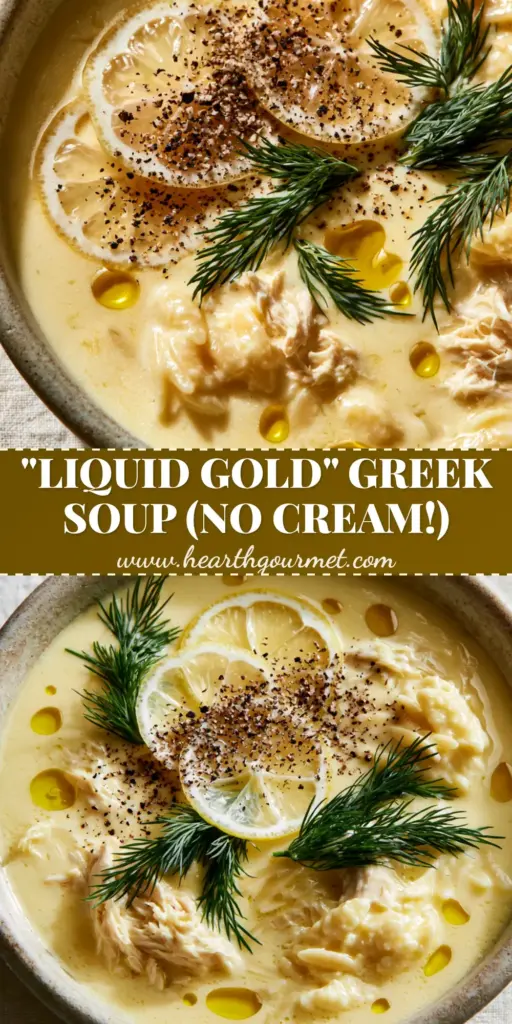
Avgolemono Soup: The Ultimate Guide to Silky Greek Egg-Lemon Chicken Soup
Ingredients
Equipment
Method
- In a large pot, bring chicken stock to a simmer. Add chicken breasts and cook for 12-15 minutes until internal temp reaches 165°F (74°C). Remove and shred into rustic clusters.
- Add orzo to the simmering stock and cook for 8-10 minutes until soft and swollen. Reduce heat to low.
- In a separate bowl, whisk room temperature eggs until frothy and pale. Whisk in lemon juice.
- Slowly ladle 2 cups of hot stock into the egg mixture while whisking constantly to prevent curdling.
- Pour the tempered mixture back into the pot, stirring constantly until the broth turns opaque and velvety. Add chicken back in.
- Ladle into bowls. Top with three translucent lemon wheels, a dusting of cracked black pepper, fresh dill sprigs, and droplets of olive oil.
Notes
Do not let the soup boil after adding the egg-lemon mixture, or it will curdle.
Conclusion: A Taste of the Aegean at Home
Mastering the Avgolemono soup is a rite of passage for any home cook who loves Mediterranean flavors. By focusing on the delicate balance of heat and acid, you create a dish that is the epitome of comfort. The sight of that pale golden broth, topped with shimmering oil and fresh dill, is enough to brighten even the gloomiest day.
We would love to see your culinary creations! If you made this recipe, please leave a comment below and tell us how your emulsion turned out. Don’t forget to share your photos and follow us on Pinterest for more visually stunning recipe inspiration.