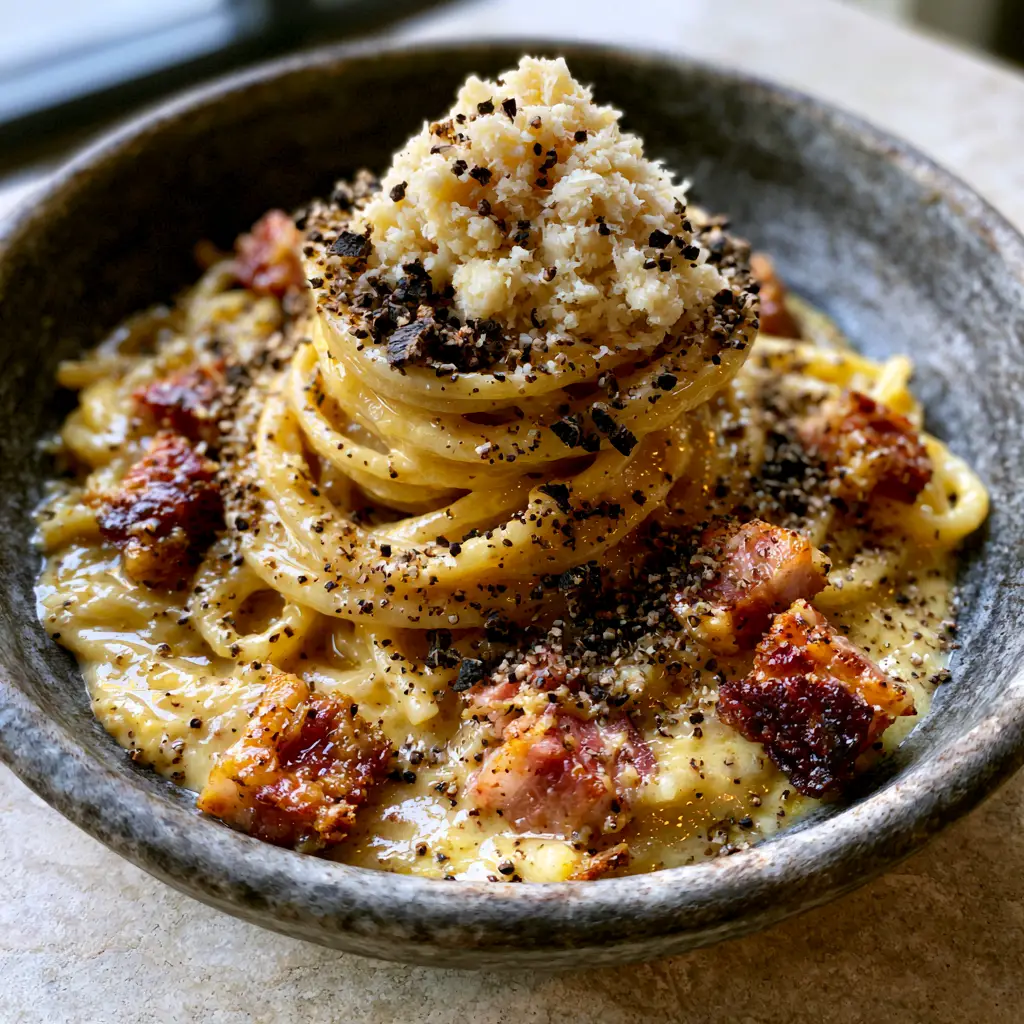
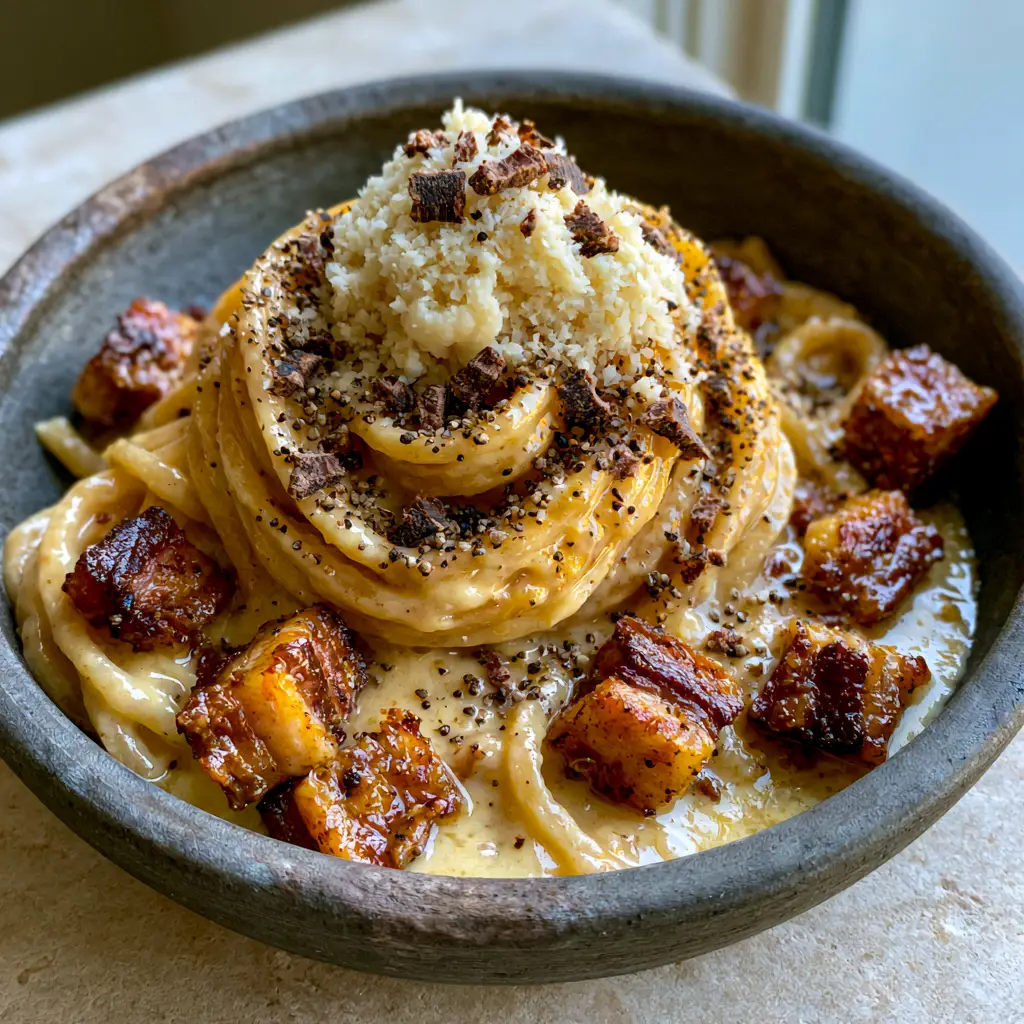
There is a specific kind of magic that happens when high-quality fat, sharp sheep’s milk cheese, and farm-fresh eggs collide with the starch of perfectly boiled pasta. This Carbonara recipe isn’t just a meal; it is a masterclass in emulsification, designed to replicate the rustic, high-end experience of a Roman trattoria right in your own kitchen. Imagine a handheld smartphone photo of authentic Italian spaghetti carbonara served in a rustic dark grey ceramic pasta bowl—the spaghetti swirled high, catching the natural side-lighting from a window.
The visual appeal of this dish lies in its textures: the thick, ultra-glossy, pale gold egg and cheese emulsion that clings to every strand of al dente spaghetti. It is punctuated by thick-cut cubes of guanciale, seared until they offer a crispy, golden-brown exterior and a melt-in-your-mouth center. Topped with a mountain of cloud-like, finely grated Pecorino Romano and a heavy dusting of coarse-cracked black pepper, this is the ultimate comfort food for the discerning palate.
The Four Pillars of an Authentic Roman Emulsion
- Visual Texture: A successful Carbonara recipe results in a pale gold sauce that is glossy, not scrambled, mimicking a professional silk-finish glaze.
- Aromatic Depth: The smell of rendered guanciale fat combined with toasted black pepper should fill your kitchen before the first bite.
- Structural Integrity: The pasta must be strictly al dente to provide a resistant “bite” against the creamy, velvety sauce.
- Sensory Contrast: The “mountain” of cloud-like cheese provides a salty, sharp contrast to the rich, fatty pork and the heat of the pepper.
The Essential Components for Carbonara Mastery
Spaghetti (Dried, Bronze-Die Extruded): Use 14 oz (400g) of high-quality spaghetti. The rougher surface of bronze-die pasta is essential for the glossy sauce to grip the noodles rather than sliding off.
Guanciale: You will need 7 oz (200g) of guanciale, sliced into 1/2-inch (1.25cm) cubes. This cured pork jowl provides the foundational fat that flavors the entire dish, creating those crispy, golden-brown nuggets seen in the visual blueprint.
Pecorino Romano: Use 1.5 cups (120g) of finely grated Pecorino Romano. This sheep’s milk cheese provides the necessary salinity and “cloud-like” volume that makes the dish visually stunning and flavor-dense.
Large Egg Yolks: Use 5 large egg yolks plus 1 whole egg. The high yolk-to-white ratio is the secret to achieving that specific pale gold, ultra-glossy emulsion described in our visual guide.
Whole Black Peppercorns: You need 2 tsp (10g) of whole peppercorns, coarsely cracked. Freshly cracking them ensures a heavy dusting of large grains that provide a sharp, floral heat to cut through the richness.
Pasta Water (The Invisible Ingredient): You will reserve at least 1 cup (240ml) of starchy cooking water. This is the scientific bridge that turns egg and cheese into a cohesive, flowing sauce.
Tools Required for Professional Results
Heavy-Bottomed Skillet: Essential for rendering the guanciale fat evenly without burning the delicate pork cubes. A stainless steel or cast iron pan works best for achieving that golden-brown sear.
Large Stainless Steel Mixing Bowl: This is used for the “bain-marie” style mixing off-heat. It prevents the eggs from scrambling by providing a controlled environment for the emulsion.
Microplane Grater: To achieve the “mountain of cloud-like” cheese, you must use a fine grater. Coarsely shredded cheese will not melt properly into the sauce and will ruin the glossy finish.
Mortar and Pestle: For the coarse-cracked black pepper. You want large, irregular pieces that catch the light, not a fine grey powder.
Executing the Perfect Roman Technique
Step 1: The Guanciale Foundation
Place your 1/2-inch (1.25cm) guanciale cubes into a cold skillet. Turn the heat to medium-low, allowing the fat to render slowly. This ensures the pork becomes crispy and golden-brown on the outside while remaining tender inside.
Once the guanciale is seared to perfection, remove the pan from the heat. Set the crispy cubes aside on a paper towel, but keep that liquid gold—the rendered fat—in the skillet. This fat is a core flavor component of the Carbonara recipe.
Step 2: The Egg and Cheese Pre-Mix
In your large stainless steel bowl, whisk together the 5 yolks and 1 whole egg until smooth. Slowly whisk in the 1.5 cups (120g) of finely grated Pecorino Romano until a thick, pale yellow paste forms.
Add half of your coarse-cracked black pepper to this mixture. This allows the oils in the pepper to begin blooming within the egg fats, deepening the flavor profile before the pasta even enters the bowl.
Step 3: Boiling to Al Dente
Bring a large pot of water to a boil, salted less than usual, as the cheese and pork are already high in sodium. Drop your spaghetti and cook for 1-2 minutes less than the package instructions indicate.
Before draining, use a measuring cup to reserve 1 cup (240ml) of the cloudy, starchy pasta water. This water is the secret to the glossy, pale gold emulsion that catches the light in our visual blueprint.
Step 4: The Art of the Emulsion
Add the hot spaghetti directly into the skillet with the rendered guanciale fat, tossing to coat. Then, transfer the fat-coated spaghetti into the egg and cheese bowl. Speed is essential here to utilize the residual heat without cooking the eggs.
Vigorously whisk in small amounts of the reserved pasta water while tossing the pasta. Watch for the sensory cue: the sauce will transform from a paste into a thick, ultra-glossy, pale gold liquid that coats each strand perfectly.
Expert Tips for a Flawless Glossy Sauce
- The Temperature Sweet Spot: If the bowl feels too cool and the cheese isn’t melting, place the bowl over the pot of boiling pasta water for 30 seconds. This gentle steam heat will finish the emulsion without scrambling the eggs.
- Pepper Toasting: For extra depth, toast your coarse-cracked pepper in a dry pan for 60 seconds until fragrant before adding it to the dish.
- Fat Management: If your guanciale produced an excessive amount of fat, remove all but 2 tbsp (30ml). Too much fat can cause the sauce to break and appear greasy rather than glossy.
- Cheese Quality: Always grate your Pecorino Romano fresh. Pre-grated cheeses contain anti-caking agents that prevent the smooth, cloud-like texture required for this authentic pasta experience.
Maximizing Your Roman Feast
Carbonara is a rich, decadent dish that benefits from a bright, acidic side. Consider serving it alongside a crisp arugula salad or even as part of a larger spread featuring a crowd-pleasing party favorite.
If you are planning a themed Italian night, this dish pairs beautifully with a starter of vibrant vegetable pasta or a slow-cooked traditional meat sauce for those who prefer a variety of textures. For those looking for a different kind of comfort, our silky vegetable soup makes for a wonderful preceding course.
Common Questions About Carbonara
While guanciale (cured pork jowl) is traditional for its high fat content and funky flavor, thick-cut unsmoked bacon or pancetta can be used as a substitute, though the flavor will be less authentic.
No, authentic Carbonara never uses cream. The glossiness comes entirely from the emulsification of egg yolks, cheese, and starchy pasta water.
The key is to create the emulsion off the heat. Use the residual heat of the pasta and a small amount of starchy pasta water to cook the eggs gently into a sauce rather than an omelet.
A dry sauce usually means not enough pasta water was added. Starchy pasta water is essential to loosen the egg and cheese paste into a glossy, flowing emulsion.
The Ultimate Carbonara Recipe
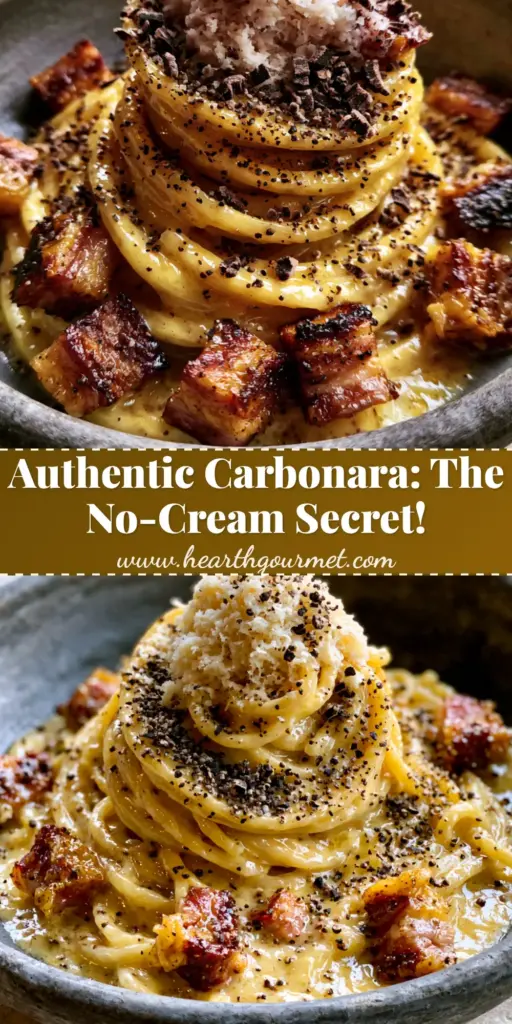
Carbonara Recipe: The Authentic Guide to a Glossy, Creamy Roman Classic
Ingredients
Equipment
Method
- Place guanciale in a cold skillet over medium-low heat. Sear until crispy and golden-brown. Set meat aside, keeping the fat in the pan.
- Whisk egg yolks, the whole egg, grated Pecorino, and half the black pepper in a large bowl until a thick paste forms.
- Boil spaghetti in salted water until just before al dente. Reserve 1 cup (240ml) of starchy water before draining.
- Toss hot pasta in the skillet with guanciale fat, then move to the egg bowl. Vigorously whisk in pasta water until a glossy, pale gold sauce forms. Top with guanciale, remaining cheese, and pepper.
Notes
Ensure the pasta is steaming hot when added to the egg mixture to create the emulsion off-heat.
Closing & Call to Action
Achieving the perfect Carbonara recipe is a rite of passage for every home cook. The combination of crispy guanciale, pungent Pecorino, and that signature glossy egg sauce creates a sensory experience that is unmatched in Italian cuisine. We would love to see your results! Leave a comment below with your success stories or questions. Don’t forget to save this recipe to your boards on Pinterest so you can recreate this Roman masterpiece anytime the craving hits!