There is nothing more comforting than a bowl of authentic ragù alla bolognese. This isn’t just a meat sauce; it is a slow-cooked masterpiece characterized by its deep mahogany hue and incredibly tender texture. When you toss it with silky ribbons of tagliatelle, you create a dish that defines the heart of Italian cuisine.
The secret to a world-class ragù alla bolognese lies in the patience of the simmer. By allowing the ground beef and pork to meld with a concentrated tomato and red wine base, you achieve a richness that shimmering droplets of rendered fat can only signal. Every bite offers a complex profile of savory meat and softened aromatics.
Whether you are looking for a show-stopping perfect party dish recipe or a weekend project to fill your home with incredible scents, this recipe is the gold standard. We are moving beyond the basic “spaghetti sauce” into a realm of culinary precision that honors the traditions of Bologna.
The Culinary Blueprint of a Perfect Bolognese
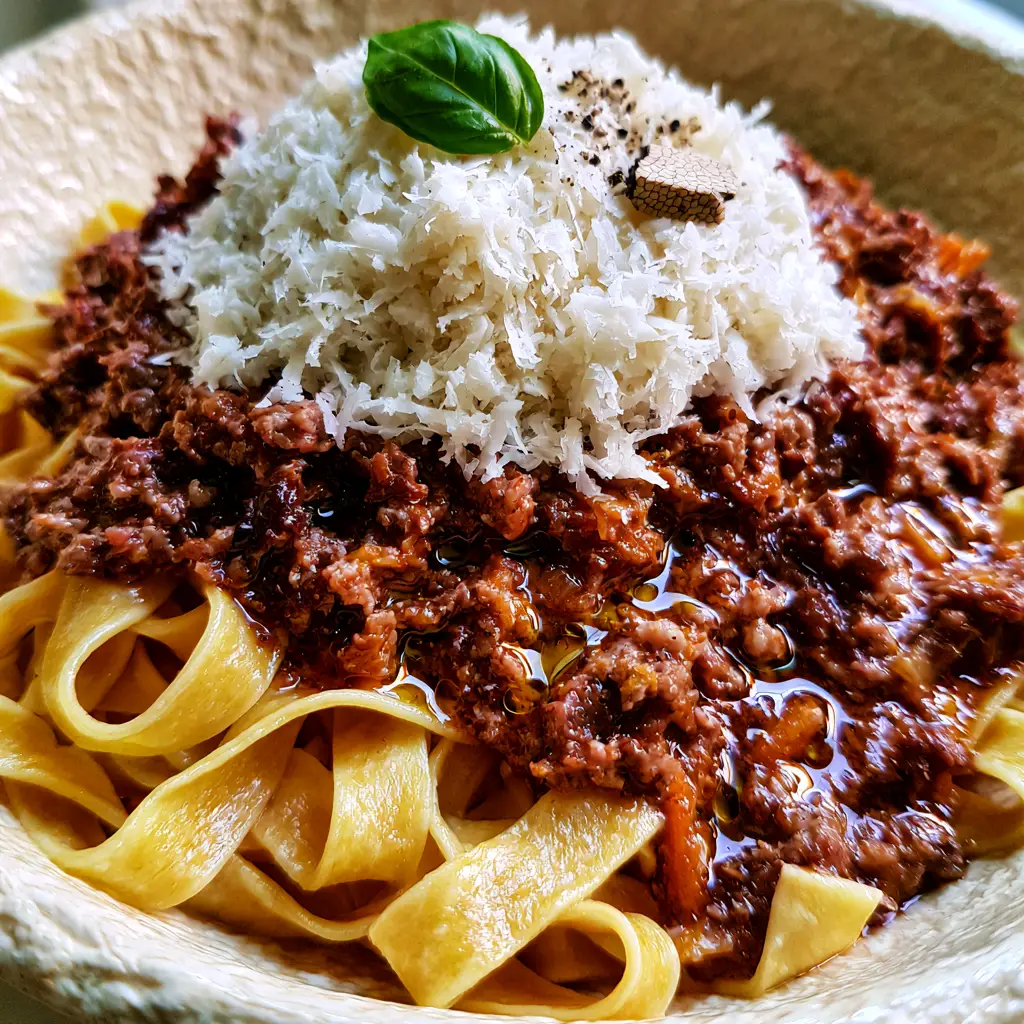
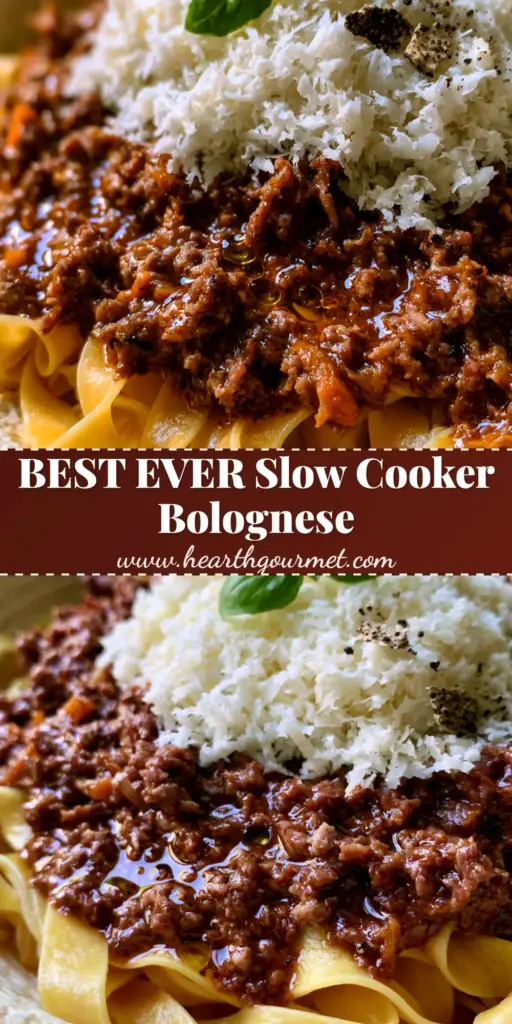
- Visual Mahogany Depth: A long, slow cook transforms bright tomatoes into a dark, concentrated, and rich sauce.
- Al Dente Silkiness: Wide tagliatelle ribbons provide the perfect surface area for the meat to cling to, unlike thinner pasta shapes.
- Texture Density: The sauce should be thick and meat-heavy, punctuated by finely minced carrot and onion flecks that have almost melted away.
- Fat Emulsification: You should see a beautiful shimmer of olive oil and rendered animal fats that carry the flavor across your palate.
- The Finishing Touches: A fluffy mound of finely grated Parmigiano-Reggiano and a single vibrant basil leaf provide the essential visual and flavor contrast.
The Secret Architecture of Ingredients
To achieve the visual and textural results seen in professional kitchens, every ingredient must serve a structural purpose. We aren’t just throwing things in a pot; we are building layers of flavor through specific chemical reactions like the Maillard effect.
Ground Beef and Pork: Use 1 lb (450g) of 80/20 ground beef and 0.5 lb (225g) of ground pork. The beef provides the structure and deep savory notes, while the pork adds essential fats and a softer texture to the crumb.
Pancetta or Guanciale: 4 oz (115g) of finely diced cured pork fat is the “invisible” hero. This renders down to provide that shimmering fat mentioned in our visual blueprint, adding a salty, funky depth that salt alone cannot achieve.
The Soffritto (Onions, Carrots, Celery): 1 cup (150g) each of finely minced onion and carrot, and 0.5 cup (75g) of celery. These must be minced so finely they integrate into the meat, providing sweetness and aromatic body without large, chunky distractions.
Tomato Paste and Red Wine: 3 tbsp (45g) of double-concentrated tomato paste and 1 cup (240ml) of dry red wine like Sangiovese. These are responsible for the mahogany color, providing acidity to cut through the richness and a dark pigment during the reduction phase.
Whole Milk: 1 cup (240ml) of whole milk is a traditional Bolognese secret. The lactic acid tenderizes the meat fibers over the long cook, ensuring the beef is “slow-cooked” and soft rather than rubbery or tough.
Beef Stock: 2 cups (480ml) of high-quality beef stock. This acts as the braising liquid, slowly evaporating to leave behind a concentrated essence of umami that coats every strand of pasta.
Essential Equipment for a Mahogany Simmer
To reach the desired density and color for your ragù alla bolognese, you need a heavy-bottomed vessel. A Dutch oven or a heavy cast-iron pot is non-negotiable for even heat distribution over several hours. This prevents the bottom from scorching while the liquid reduces.
You will also need a microplane or a very fine grater. This tool is necessary to achieve that “heavy, fluffy mound” of Parmigiano-Reggiano that sits atop the dish like a cloud. A standard box grater produces shreds that are too heavy and will sink into the sauce rather than resting delicately on top.
Finally, ensure you have a large pasta pot. Tagliatelle ribbons need plenty of salted water to move around in so they don’t stick together. This ensures each ribbon is perfectly al dente and ready to be glazed in the rich meat sauce.
Step-by-Step: Crafting the Perfect Ragù
Developing the Fat and Aromatics
Begin by heating 2 tbsp (30ml) of extra virgin olive oil in your Dutch oven over medium heat. Add the diced pancetta and cook until the fat has rendered and the bits are golden brown. This creates the flavorful fat base required for the shimmering finish.
Add the finely minced onion, carrot, and celery to the pot. Sauté these aromatics for at least 10 minutes until they are soft and translucent. You want them to “melt” so that only small flecks of carrot and onion are visible in the final mahogany sauce.
The Maillard Reaction and Deglazing
Increase the heat to medium-high and add the ground beef and pork. Use a wooden spoon to break the meat into very fine crumbles; large chunks are the enemy of an authentic ragù alla bolognese. Cook until the meat is no longer pink and has developed a deep, browned crust.
Stir in the tomato paste and cook for 3 minutes. You are looking for the paste to darken from bright red to a rusty brick color, which is the first step toward that mahogany visual. Pour in the red wine, scraping the bottom of the pot to release all the browned bits (the fond).
The Long, Slow Braise
Once the wine has reduced by half, add the milk and a pinch of nutmeg. Let the milk simmer away until it has mostly evaporated. This step protects the meat from the acidity of the tomatoes and ensures a silky mouthfeel.
Add the beef stock and reduce the heat to the lowest possible setting. Cover the pot partially and let it simmer for 3 to 4 hours. If the sauce looks too dry, add a splash of water, but the goal is a thick, concentrated sauce shimmering with rendered fat.
Expert Tips for a Professional Finish
- The Emulsification Trick: Before serving, add a splash of starchy pasta water to the sauce. This helps the fat and liquids bind, creating a glossy sheen that clings to the tagliatelle.
- Don’t Rush the Meat: If you don’t brown the meat deeply enough, your sauce will be orange instead of mahogany. Look for that dark brown sear for maximum flavor.
- Seasoning in Layers: Add small pinches of salt throughout the process rather than all at once. This builds a more complex savory profile that isn’t just “salty.”
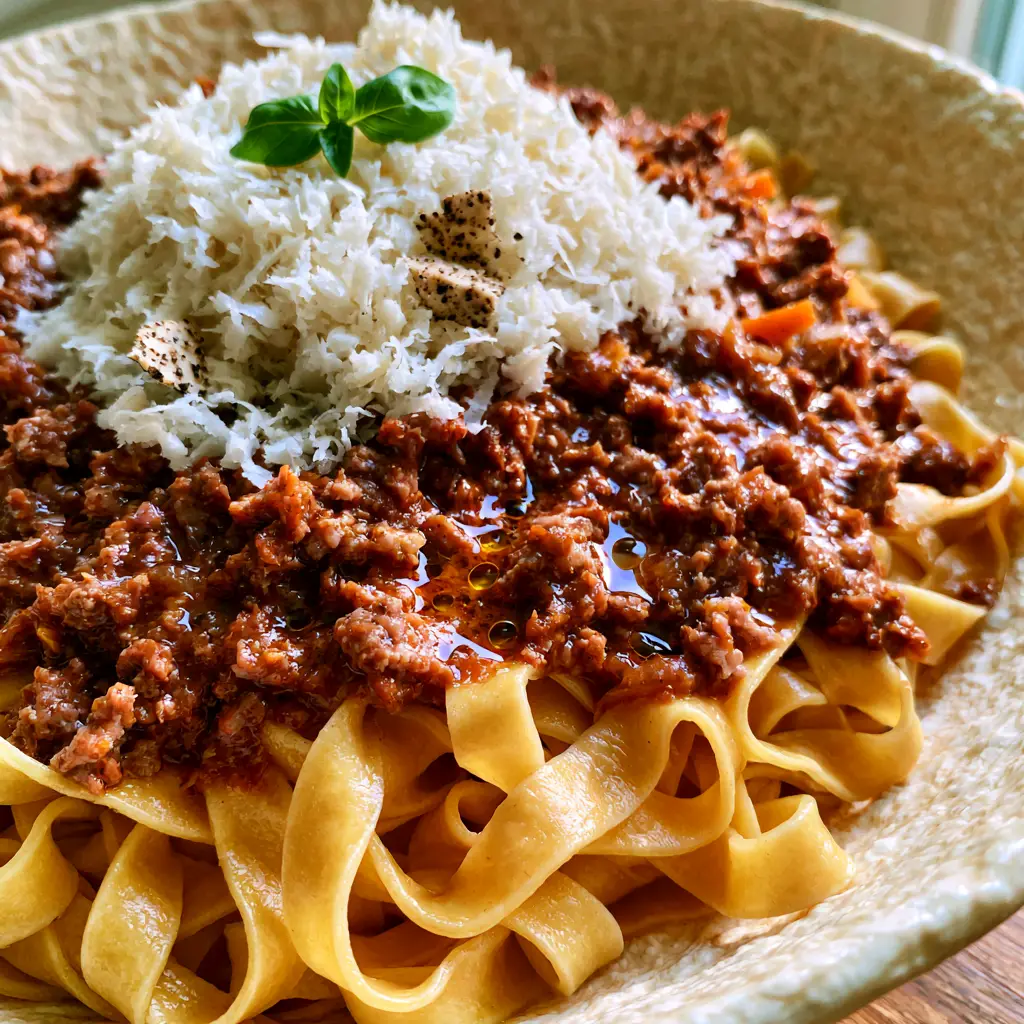
- The Pepper Finish: Use a pepper mill set to a coarse grind. The large-grain black pepper visible on top of the cheese provides a sharp, floral heat that cuts through the rich pork and beef.
Serving and Pairing Suggestions
While this dish is a meal in itself, it pairs beautifully with other Italian-inspired sides. If you are hosting a larger gathering, you might consider serving this alongside a buffalo chicken lasagna for a modern twist on pasta night or a traditional pastitsio for a Mediterranean theme.
For those who prefer a lighter side, a simple arugula salad with lemon vinaigrette provides a crisp contrast to the heavy meat sauce. If you have leftover sauce, it works remarkably well as a base for a creamy Cajun chicken pasta fusion dish the next day.
Frequently Asked Questions
Yes! This sauce freezes exceptionally well. Store it in an airtight container for up to 3 months. Thaw in the fridge overnight before reheating slowly on the stovetop.
In Bologna, ragù is traditionally served with tagliatelle. The wide, flat ribbons provide a better surface for the thick, heavy meat sauce to cling to compared to thin spaghetti.
This comes from using a combination of beef and pork (especially pancetta) and ensuring the sauce is properly emulsified with a little bit of starchy pasta water before serving.
The deep mahogany color comes from three things: properly browning the meat (Maillard reaction), caramelizing the tomato paste, and a long, slow reduction of red wine and stock.
Traditional bolognese uses milk to tenderize the meat fibers. The lactic acid breaks down the proteins over the long simmer, resulting in a silkier texture and protecting the meat from the acidity of the tomatoes.
Authentic Slow-Cooked Ragù alla Bolognese
Ragù alla Bolognese: The Ultimate Guide to Authentic Mahogany Meat Sauce
Ingredients
Equipment
Method
- Sauté pancetta in olive oil until golden and fat is rendered.
- Add onion, carrot, and celery. Cook until softened and translucent, roughly 10 minutes.
- Add beef and pork. Brown thoroughly until a deep crust forms and meat is in fine crumbles.
- Stir in tomato paste and red wine. Reduce wine by half, then add milk and stock.
- Simmer on low for 3-4 hours until the sauce is mahogany-colored and thick.
Notes
Don't skip the milk; it's vital for tender meat texture.
Closing Thoughts on Italian Comfort
Mastering the ragù alla bolognese is a rite of passage for any home cook. It requires time, but the reward is a sauce of unparalleled depth, shimmering with flavor and rich with history. The combination of mahogany-colored beef and golden tagliatelle ribbons is a visual and culinary triumph.
If you enjoyed this deep dive into Italian comfort food, please leave a comment below and share your results! Don’t forget to follow us on Pinterest for more kitchen inspiration and visual recipe guides.