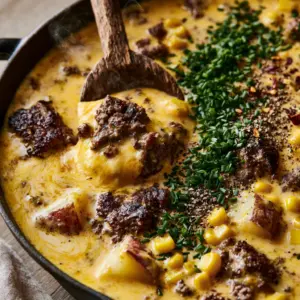
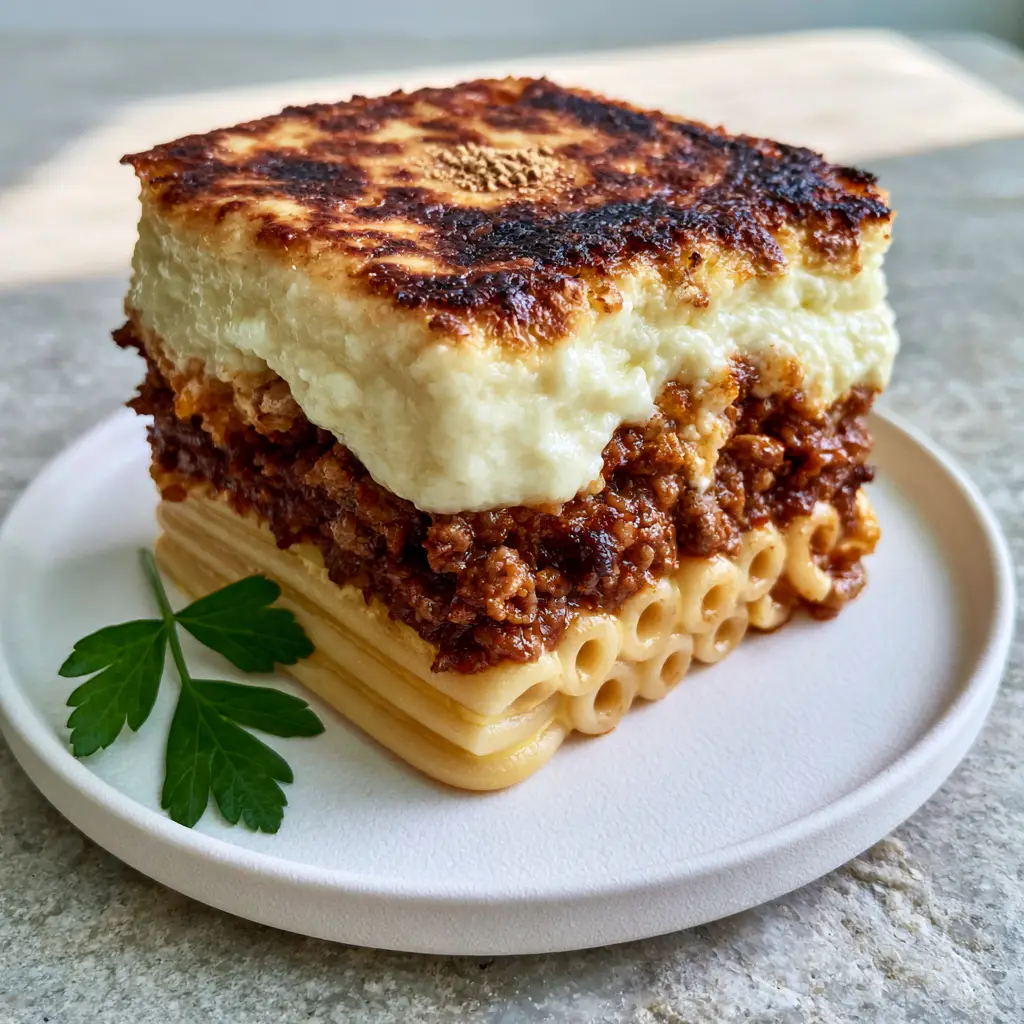
There is perhaps no dish in the Hellenic repertoire that commands as much respect and anticipation as a perfectly executed Pastitsio. Often described as Greek lasagna, this architectural marvel is so much more than just a pasta bake. It is a symphony of textures: the structural integrity of tubular bucatini, the aromatic warmth of a cinnamon-spiced beef ragu, and the crowning glory of a two-inch thick, velvety bechamel sauce. When you pull this from the oven, the kitchen fills with the scent of toasted nutmeg and scorched kefalotyri cheese, signaling that a true feast is about to begin.
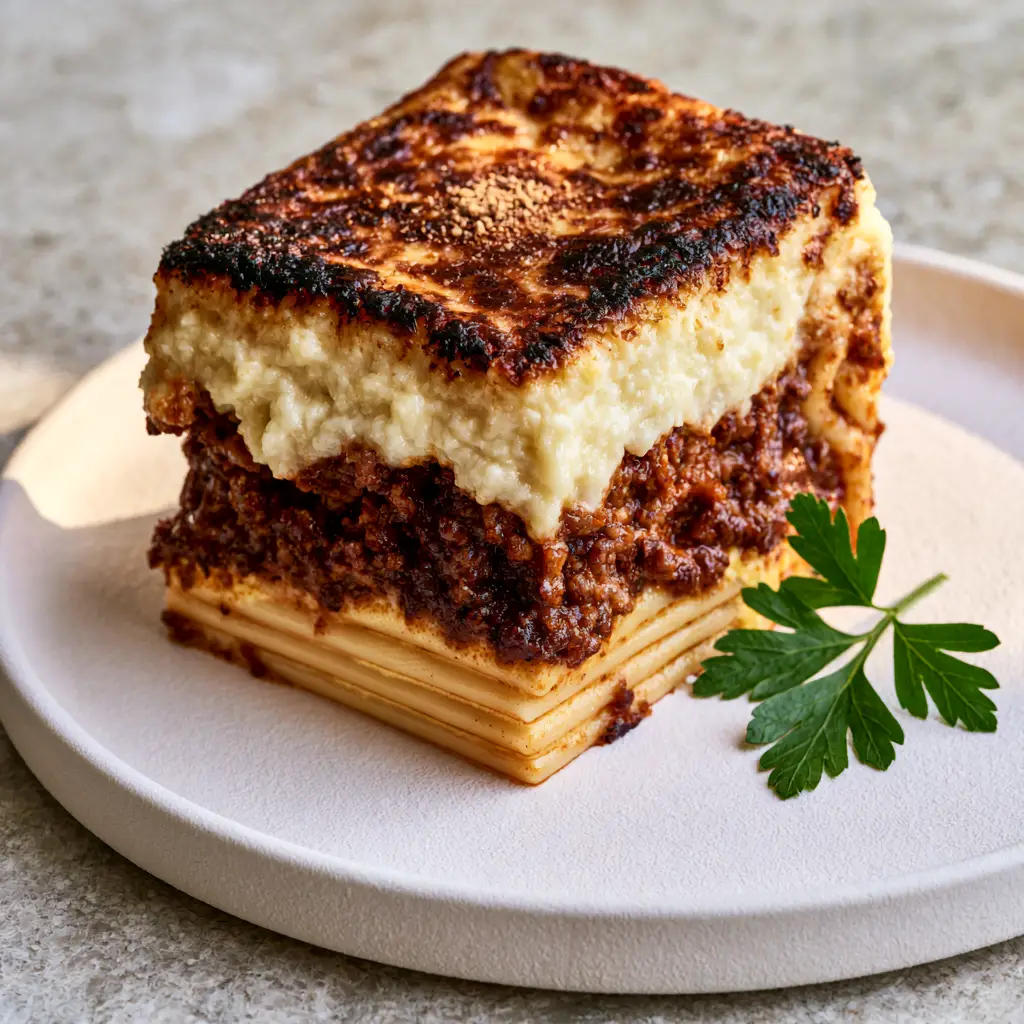
Our version of Pastitsio stays strictly true to the visual and culinary standards of a professional Greek kitchen. We aren’t just making a casserole; we are building layers. From the neat, horizontal alignment of the pasta base to the deep reddish-brown hue of the meat sauce, every element is designed for visual impact and flavor depth. Whether you are hosting a festive Sunday dinner or looking for a centerpiece for a special occasion, this recipe delivers a restaurant-quality result that stands upright and proud on the plate.
What Makes This the Definitive Greek Pastitsio?
- Structural Integrity: By using a light egg wash in the pasta layer, we ensure each square slice stands upright with perfectly aligned horizontal bucatini tubes.
- Aromatic Ragu: The ground beef is slow-simmered with cinnamon and cloves, creating a dense, rich flavor profile that distinguishes it from Italian-style sauces.
- The Two-Inch Bechamel: This recipe prioritizes a thick, stable, and incredibly creamy white sauce that doesn’t collapse when sliced.
- The Golden Char: We use authentic Kefalotyri cheese to achieve that iconic, deeply golden-brown scorched crust visible in high-end Mediterranean photography.
- Fragrant Finishing: A precise dusting of freshly ground nutmeg adds the final sensory layer to the scorched surface.
The Anatomy of Architectural Pasta Layers
Building a Pastitsio that looks as good as it tastes requires high-quality ingredients with specific functional properties. You cannot simply swap components and expect the same structural results. Here is what you need to gather for this culinary project.
Bucatini No. 2: 1 lb (450g) of these thick, hollow pasta tubes is traditional. Their shape allows the egg wash to bind them together, creating the “honeycomb” effect when sliced.
Lean Ground Beef: 1.5 lbs (680g) of beef with a 90/10 lean-to-fat ratio. This ensures the ragu is rich and dense without being greasy, which would compromise the layers.
Kefalotyri Cheese: 1.5 cups (150g) of this hard, salty goat/sheep milk cheese. It provides the sharp flavor and the high-heat char required for the crust; Pecorino Romano is a suitable alternative.
Whole Milk: 4 cups (960ml) of full-fat milk for the bechamel. The fat content is non-negotiable for achieving that velvety, 2-inch thick white layer.
Warm Spices: 1 tsp (2g) ground cinnamon and 1/4 tsp (0.5g) ground cloves. These are the signature “DNA” of a Greek meat sauce, providing an earthy, sweet aroma.
Large Eggs: 4 eggs in total. Two will bind the pasta layer, and two yolks will stabilize the bechamel, ensuring it sets firmly for clean slicing.
Tomato Paste: 2 tbsp (32g) of concentrated paste. This provides the deep reddish-brown color and the thick consistency needed for the ragu layer.
Fresh Flat-Leaf Parsley: One bunch for garnishing. A single sprig on the plate provides a vibrant green contrast to the rich, warm tones of the dish.
Unsalted Butter and Flour: 1/2 cup (115g) of each. This creates the heavy roux necessary to support the weight of the thick bechamel layer.
Essential Gear for a Perfect Casserole
To achieve the “perfectly square slice” described in our visual blueprint, you need the right tools. A standard 9×13 inch (23×33 cm) deep-dish ceramic or glass baking pan is essential. The depth is critical to accommodate the pasta, the meat, and that massive 2-inch bechamel layer without overflowing.
You will also need a heavy-bottomed Dutch oven for the ragu, which allows for even heat distribution and moisture evaporation. A whisk and a medium saucepan are required for the bechamel to ensure a lump-free, velvety texture. Finally, a sharp offset spatula or a sturdy cake server is the best tool for lifting the square slices out of the pan cleanly.
Mastering the Dense Cinnamon Meat Ragu
The middle layer of our Pastitsio must be a dense, rich, dark reddish-brown ground beef ragu. We begin by searing the beef in a hot pan with a tablespoon of olive oil. Do not crowd the pan; we want a hard sear to develop deep flavor through the Maillard reaction. Once browned, add finely diced onions and garlic, cooking until translucent and fragrant.
The “secret” to the authentic flavor lies in the spices. Stir in the cinnamon, cloves, and tomato paste, letting them toast for 2 minutes. Deglaze the pan with a splash of red wine or beef stock, then simmer on low for at least 45 minutes. The goal is for the liquid to evaporate entirely, leaving behind a thick, concentrated sauce that won’t run into the pasta layer below. This ragu should be much thicker than a classic Italian Ragù alla Bolognese.
The Secret to a Non-Slip Pasta Base
One of the most common failures in home-cooked Pastitsio is a bottom layer that falls apart. To achieve the neatly aligned, horizontal tubular bucatini look, we must treat the pasta with care. Boil the bucatini in salted water until just under al dente—they will finish cooking in the oven. Drain them and let them cool slightly.
While the pasta is warm, toss it with 2 lightly beaten egg whites and a handful of grated kefalotyri cheese. The proteins in the egg whites act as a “culinary glue.” When you transfer the pasta to the baking dish, take a moment to align the tubes horizontally. This extra effort ensures that when you cut into the dish, the cross-section reveals those beautiful, orderly hollow circles. This makes it a perfect crowd-pleasing party dish that looks professionally catered.
Crafting a Velvet Bechamel That Stands Tall
The crowning achievement of this recipe is the exceptionally thick, 2-inch velvety white bechamel sauce. Start by melting the butter and whisking in the flour to create a blonde roux. Slowly, in stages, pour in the room-temperature milk, whisking constantly to prevent any lumps. The sauce should be thick enough to coat the back of a spoon heavily.
Once the sauce is thickened, remove it from the heat. Whisk in the egg yolks and a generous portion of the cheese. This adds a rich, golden hue and ensures the sauce “sets” like a savory custard. If you enjoy creamy textures, this layer will remind you of the luxury found in Delmonico style potatoes. The finished sauce should be smooth, glossy, and heavy enough to sit on top of the meat without sinking.
Assembly and Achieving the Golden Char
Assembly is where the architecture comes together. Spread the meat ragu evenly over the pasta base, pressing down slightly to remove air pockets. Pour the bechamel over the meat, smoothing it with a spatula to the edges. Sprinkle the remaining kefalotyri cheese over the top, along with a fine dusting of ground nutmeg.
Bake at 375°F (190°C) for 45-55 minutes. Look for the “Visual & Sensory Cues”: the edges should be bubbling, and the top must have a deeply golden-brown charred crust with small scorched spots from the cheese and nutmeg. The smell will be intoxicating—a mix of savory beef and sweet, toasted spice. If the top isn’t scorched enough, a quick 2-minute broil at the very end will provide that perfect visual finish.
How to Slice Perfectly Square Portions
Patience is the most important “ingredient” for a perfect slice of Pastitsio. You must let the dish rest for at least 30 to 45 minutes after removing it from the oven. This cooling period allows the bechamel to firm up and the pasta binder to set. If you cut it too soon, the layers will slide and the 2-inch bechamel will slump.
Use a sharp knife to cut straight down, creating a 4×4 inch square. Lift the first piece out carefully—the first one is always the hardest! On the plate, the side profile should show the distinct horizontal tubes, the dark meat layer, and the towering white bechamel. Garnish with a single sprig of parsley for that professional, high-resolution aesthetic.
Strategic Pairings for a Greek Feast
Pastitsio is a very rich and dense dish, so it pairs best with bright, acidic, or light side dishes. A classic Greek salad with plenty of lemon and vinegar is the traditional choice. If you are serving this during a colder month, a bowl of Avgolemono soup makes for a wonderful, silky starter that mirrors the egg-and-lemon traditions of Greece.
For those looking for a lighter vegetable accompaniment, a side of spinach and tomato orzo provides a nice textural contrast. If you are hosting a larger gathering with multiple pasta options, this dish stands out next to more casual fares like a taco pasta salad, providing a sophisticated, “old world” anchor to the menu.
Expert Tips for Success
- Room Temp Milk: Always use room temperature milk for your bechamel to prevent the roux from seizing and creating lumps.
- The “Spoon Test”: The meat ragu is ready when you can draw a spoon through it and the “path” stays dry for several seconds.
- Don’t Overcook Pasta: Stop boiling the bucatini 2 minutes before the package directions; the steam inside the casserole will finish the job.
- Fresh Nutmeg: Grate your nutmeg fresh from the nut if possible; the pre-ground version loses its volatile oils and won’t have the same aromatic punch on the charred crust.
Storage, Reheating & Freezing
Pastitsio actually tastes better the next day as the flavors have more time to meld. Store leftovers in an airtight container in the refrigerator for up to 4 days. To reheat, cover a slice with foil and bake at 350°F (175°C) until the center is hot; this preserves the texture of the bechamel better than a microwave.
This dish also freezes beautifully. You can freeze individual square slices wrapped tightly in plastic wrap and foil for up to 3 months. Thaw overnight in the fridge before reheating. It’s a great way to have a “gourmet meal” ready on short notice, much like having a batch of party pies or vegan stew tucked away for busy nights.
Frequently Asked Questions
While you can, bucatini is traditional because its long, hollow shape allows the layers to bind better horizontally, creating the signature look of authentic Pastitsio.
Ensure your meat ragu is simmered until very dense and dry. If the meat sauce is too watery, the heavy bechamel will sink into it rather than sitting on top.
Traditionally, cinnamon and cloves go in the meat ragu, while nutmeg is reserved for the bechamel and the scorched top crust.
Pecorino Romano or a very hard, salty Parmesan are the best substitutes as they mimic the salty profile and high melting point of Kefalotyri.
This usually happens for two reasons: not using an egg-wash binder in the pasta layer, or slicing the dish while it is still too hot. Let it rest for at least 45 minutes.
Authentic Greek Pastitsio: The Master Recipe
Pastitsio: The Ultimate Guide to Authentic Greek Layered Pasta
Ingredients
Equipment
Method
- Heat olive oil in a Dutch oven and brown the ground beef until deep reddish-brown. Add onions and garlic and sauté until soft.
- Stir in tomato paste, cinnamon, and cloves. Deglaze with red wine and simmer until the liquid is fully evaporated and the sauce is thick and dense.
- Boil bucatini in salted water until just before al dente. Drain and cool slightly.
- Toss the pasta with egg whites and 1/2 cup kefalotyri cheese. Lay horizontally in the greased 9x13 baking dish.
- Melt butter, whisk in flour for 2 minutes. Gradually whisk in milk until a thick, velvety sauce forms.
- Remove from heat, whisk in egg yolks and 1 cup of cheese. Season with salt and a pinch of nutmeg.
- Spread meat ragu over pasta. Top with the 2-inch thick bechamel layer. Sprinkle extra cheese and nutmeg over the top.
- Bake at 375°F (190°C) for 45-55 minutes until the top shows a deeply golden-brown charred crust. Garnish with parsley sprig before serving.
Notes
Use bucatini No. 2 for the most authentic internal tubular structure.
Closing & Call to Action
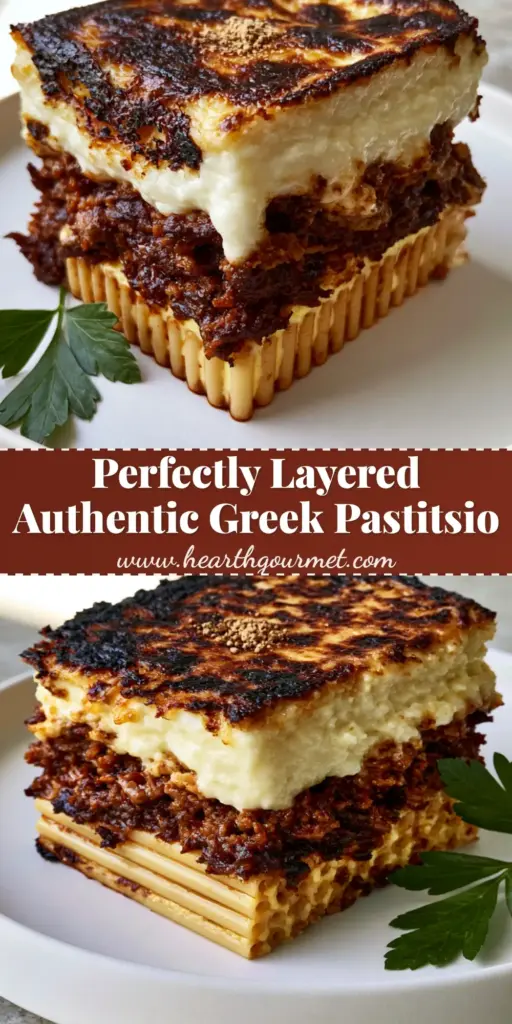
Creating an authentic Pastitsio is a labor of love that rewards you with one of the most comforting and visually stunning meals in the world. From the first bite of that scorched cheese crust to the savory, cinnamon-infused beef, it is a dish that creates lasting memories. If you enjoyed building these layers with us, please leave a comment below and share your results! Don’t forget to follow us on Pinterest for more deep-dives into culinary classics and visual recipe guides.