When you think of the ultimate comfort food, the Classic Italian Lasagna sits undisputed on the throne. There is something deeply evocative about a tall, thick slice of pasta where every layer tells a story of patience and culinary craft. This isn’t just a casserole; it is an architectural feat of wavy al dente noodles, a robust bolognese that has simmered to perfection, and a molten crown of toasted cheeses.
Imagine pulling a heavy ceramic dish from the oven, the edges of the mozzarella sizzling and showing those beautiful golden-brown bubbly toasted spots we all crave. The aroma of dried oregano and fresh basil fills the kitchen, signaling that a masterpiece is ready to be shared. In this guide, we will walk you through the forensic details of creating a stable, non-watery lasagna that looks exactly like a professional macro photograph.
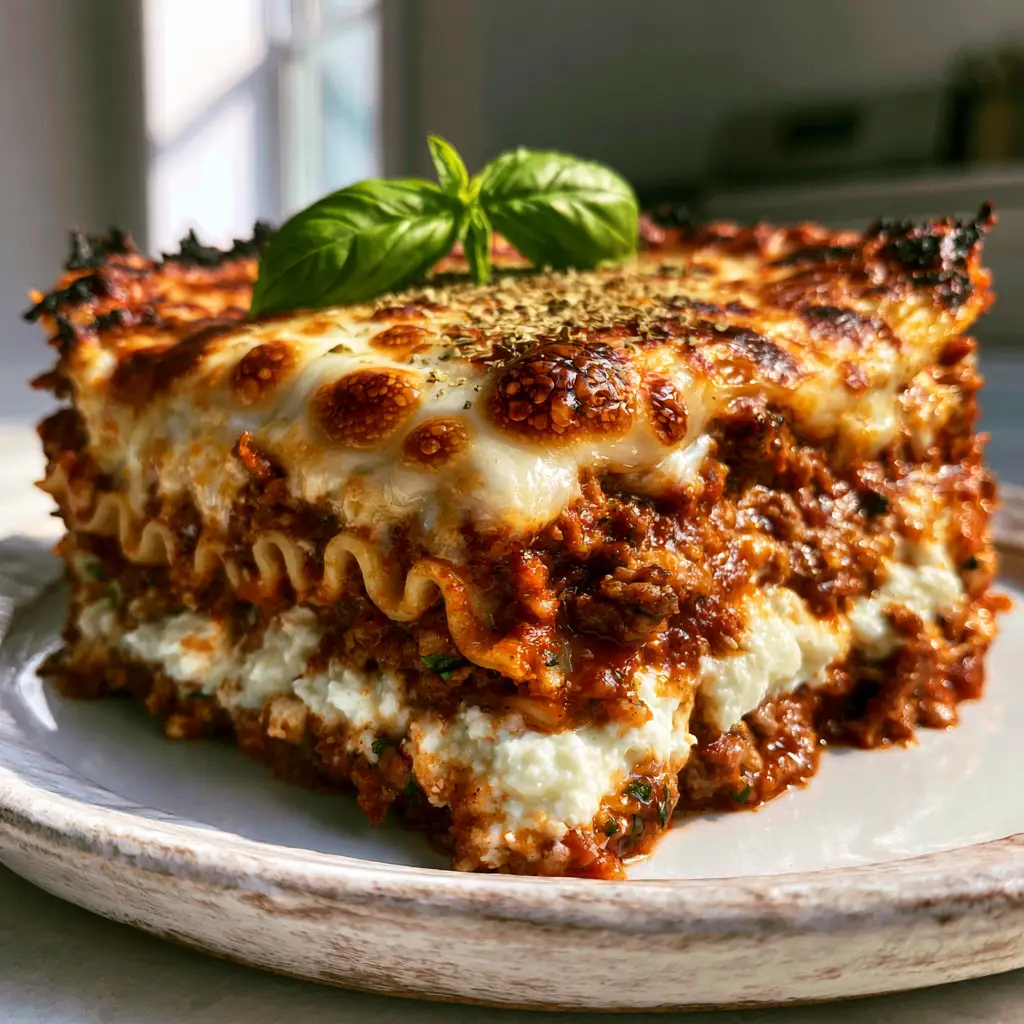
Why This Architectural Lasagna Recipe Works
- Structural Integrity: By using a thick, reduced meat sauce and a stabilized ricotta mixture, we ensure every slice stands tall without leaking liquid onto the plate.
- Textural Contrast: The combination of soft, wavy pasta sheets against the crispy charred edges of the parmesan crust creates a multi-sensory eating experience.
- Visual Precision: From the bright green sprig of fresh basil to the light dusting of oregano, this dish is designed to be as beautiful as it is delicious.
- Scientific Balance: We balance the acidity of the tomatoes with the creamy fat of the ricotta and the salty punch of the toasted parmesan.
The Anatomy of Ingredients for a Rich Meat Sauce and Creamy Layers
Wavy Lasagna Noodles: 1 box (16 oz / 450g). The ridges in these noodles are essential for trapping the thick meat sauce, providing the “wavy” visual characteristic identified in our blueprint.
Lean Ground Beef: 1.5 lbs (680g). We use a 90/10 blend to ensure a rich flavor without excess grease, which can lead to a watery result. This provides the “visible bits of ground beef” seen in the profile view.
Crushed Tomatoes & Tomato Paste: 28 oz (794g) crushed tomatoes and 2 tbsp (30g) paste. The paste is the secret to a deep-red, thick bolognese that clings to the pasta rather than running off.
Whole Milk Ricotta Cheese: 15 oz (425g). Using full-fat ricotta is non-negotiable for that thick, creamy white layer that remains distinct even after baking.
Low-Moisture Mozzarella: 3 cups (340g), shredded. Low-moisture cheese is critical to achieving those toasted golden-brown spots without creating a pool of oil on top.
Parmesan Cheese: 1 cup (90g), finely grated. This provides the saltiness and the “crispy charred edges” that define a high-end Italian bake.
Large Egg: 1 unit. Whisked into the ricotta, the egg acts as a binder, ensuring the white layers stay stable and distinct when sliced.
Fresh Basil & Dried Oregano: A handful of fresh leaves and 1 tsp (2g) of dried flakes. The dried oregano provides the herbaceous base, while the fresh basil offers a bright visual garnish.
Aromatic Base: 1 medium onion (150g) and 3 cloves of garlic. These foundational ingredients provide the invisible depth of flavor required for a professional-grade sauce.
Olive Oil & Seasonings: 2 tbsp (30ml) extra virgin olive oil, 1 tsp (6g) kosher salt, and 1/2 tsp (1g) cracked black pepper. The pepper must be freshly cracked to match the visual blueprint’s textural details.
Precision Tools for the Perfect Italian Bake
To achieve the “tall, thick slice” aesthetic, you need a deep-dish 9×13 inch (23x33cm) ceramic baking pan. A shallow pan will result in spillover and thin layers. You will also need a heavy-bottomed Dutch oven for simmering the sauce, as this ensures even heat distribution and prevents the bottom of the meat sauce from scorching.
Finally, a sharp offset spatula or a sturdy cake server is essential for lifting the slice cleanly from the pan. This allows you to maintain those “perfectly stable, distinct, non-watery layers” during plating.
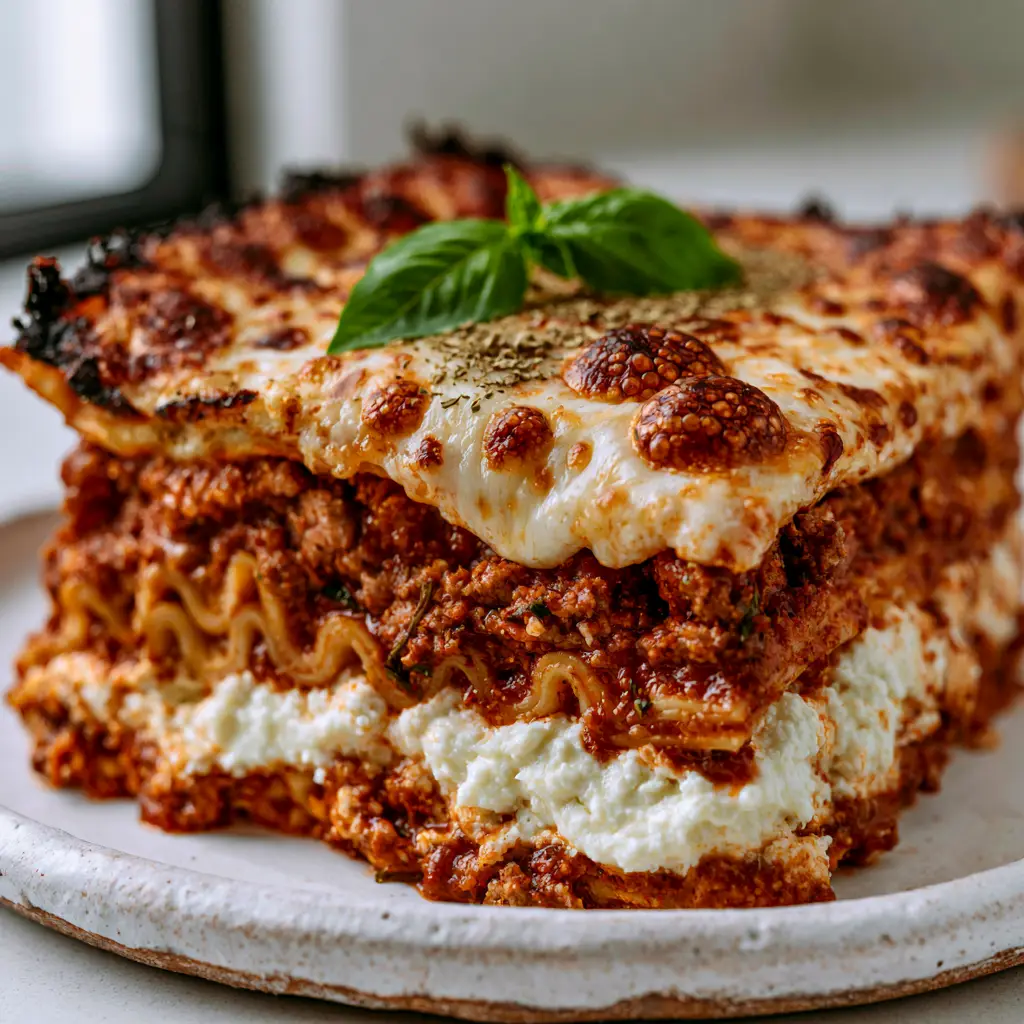
Architectural Layering: The Step-by-Step Construction
1. Crafting the Deep-Red Bolognese Meat Sauce
Heat the olive oil in your Dutch oven over medium-high heat. Add the ground beef and cook until a deep brown crust forms on the meat; this Maillard reaction is vital for the “rich deep-red” appearance of the final sauce. Add finely diced onions and garlic, sautéing until translucent.
Stir in the tomato paste and cook for 2 minutes to caramelize it, then pour in the crushed tomatoes and dried oregano. Reduce heat to low and simmer for at least 30-45 minutes. The goal is a thick, jammy consistency where the liquid has mostly evaporated, leaving a concentrated, savory ragù.
2. Stabilizing the Creamy Ricotta Layer
In a medium mixing bowl, combine the ricotta cheese with the whisked egg, half of the parmesan, and a pinch of cracked black pepper. Use a spatula to fold the ingredients together until smooth. The egg is the scientific key here; it prevents the ricotta from turning grainy or watery under the heat of the oven.
3. Preparing the Wavy Al Dente Pasta
Boil a large pot of salted water and cook the wavy noodles for 2 minutes less than the package directions suggest. They should be flexible but still have a firm bite (al dente). Rinse them briefly in cool water and lay them flat on parchment paper to prevent sticking. This ensures they maintain their “wavy” shape during the layering process.
4. The Masterful Layering Sequence
Spread a thin layer of meat sauce on the bottom of your baking dish to prevent sticking. Lay down the first layer of wavy noodles, slightly overlapping them. Spread 1/3 of the ricotta mixture, followed by 1/3 of the meat sauce, and a handful of mozzarella.
Repeat this process until you reach the top of the dish. For the final crown, cover the top noodles entirely with the remaining mozzarella and a heavy dusting of parmesan cheese. This top layer is what will transform into the toasted golden-brown parmesan crust.
Pro-Tips for Achieving that Golden-Brown Bubbling Crust
- The Broil Finish: If your cheese isn’t showing those “beautiful golden-brown bubbly toasted spots” after 45 minutes of baking, turn the broiler on for the last 2-3 minutes. Watch it like a hawk to ensure you get charred edges without burning the entire surface.
- The Resting Rule: You MUST let the lasagna rest for at least 15-20 minutes before slicing. This allows the proteins to set, ensuring you get that “tall, thick slice” rather than a collapsed pile of pasta.
- Sauce Thickness: If your bolognese looks like soup, keep simmering it. A watery sauce is the #1 reason for unstable lasagna layers.
- Noodle Placement: Alternate the direction of your noodles in each layer (longitudinal then horizontal) to create a cross-hatched internal structure that supports the weight of the cheese.
What to Serve With This Classic Italian Lasagna
To balance the richness of the beef and cheese, serve this dish with a crisp green salad or a light vegetable side. If you are hosting a themed dinner, you might consider starting with a silky lemon soup or pairing it with a side of roasted squash soup during colder months.
For those who love a variety of textures, this lasagna pairs beautifully with creamy potatoes or even a zesty pasta salad if you’re serving a larger crowd at a festive gathering. If you enjoy the process of long-simmered meats, you will likely appreciate our authentic bolognese recipe for future pasta nights.
Frequently Asked Questions
Absolutely. Lasagna freezes exceptionally well. Assemble it fully, wrap it tightly in foil, and freeze for up to 3 months. Bake from frozen, adding an extra 20-30 minutes to the total cooking time.
Use a combination of mozzarella and finely grated parmesan. If the crust isn’t golden-brown after baking, place the dish under the broiler for 2-3 minutes until bubbly and charred at the edges.
To prevent a watery lasagna, ensure your bolognese sauce is simmered until thick and reduced. Additionally, use low-moisture mozzarella and add an egg to your ricotta mixture to act as a binder for stable layers.
Yes, boil them to ‘al dente’ (about 2 minutes less than the package instructions). This ensures they absorb some sauce during baking without becoming mushy, maintaining their wavy structural integrity.
Resting for 15-20 minutes allows the melted cheese and internal layers to firm up. This is the secret to achieving a tall, thick slice that stays together on the plate instead of sliding apart.
The Authentic Classic Italian Lasagna Recipe
Classic Italian Lasagna: The Ultimate Layered Masterpiece with a Crispy Golden Crust
Ingredients
Equipment
Method
- Brown 1.5 lbs (680g) ground beef in a Dutch oven with olive oil until a deep crust forms. Add onions and garlic.
- Add tomato paste, crushed tomatoes, and dried oregano. Simmer for 45 minutes until the sauce is thick and deep-red.
- Combine ricotta, egg, and half the parmesan. Whisk until smooth and stable.
- Layer wavy noodles, ricotta mixture, and meat sauce in a deep dish. Top with mozzarella and remaining parmesan.
- Bake at 375°F (190°C) for 45 minutes. Broil for 2-3 minutes to achieve golden-brown bubbly spots and crispy charred edges.
Notes
Use low-moisture mozzarella to prevent wateriness on the crust.
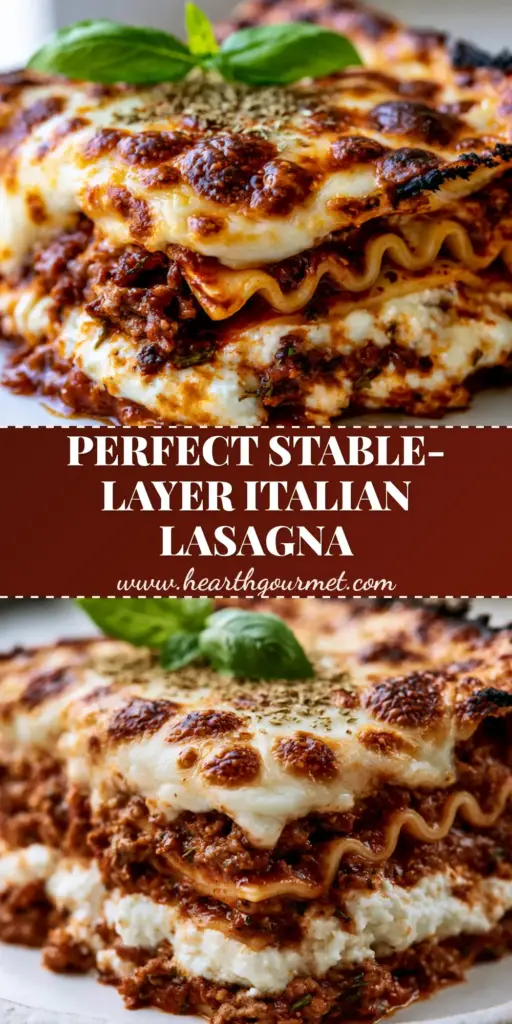
Final Thoughts on the Perfect Italian Slice
Mastering the Classic Italian Lasagna is a rite of passage for every home cook. By focusing on the stability of your layers and the toasted perfection of your cheese crust, you transform a simple dinner into a culinary event. The combination of textures—from the crispy edges to the creamy ricotta—makes every bite worth the effort.
If you enjoyed this recipe, please leave a comment below and let us know how your crust turned out! Don’t forget to share your creations and follow us for more gourmet inspiration on Pinterest.