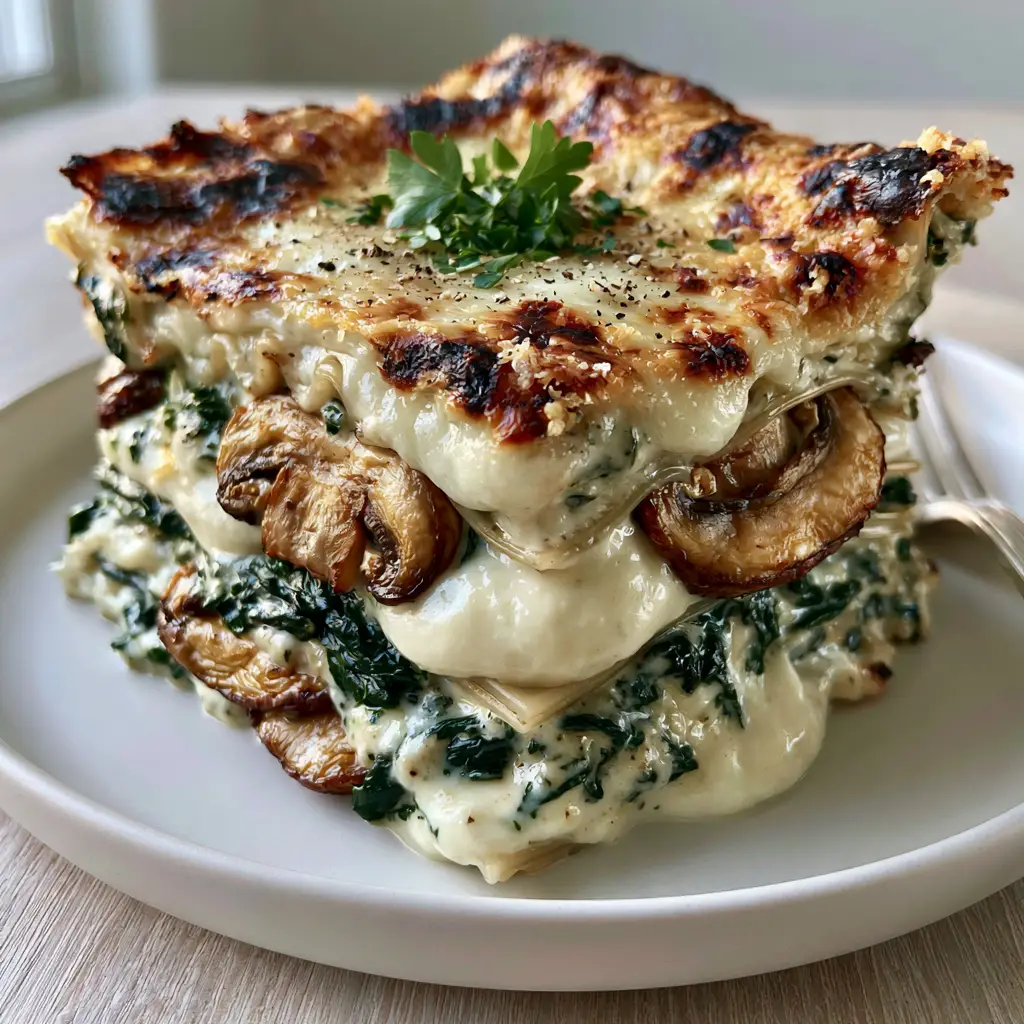
There is nothing quite as satisfying as a Spinach and mushroom lasagna that stands tall on the plate, showcasing clean, architectural layers and a crown of bubbly, golden cheese. If you have ever struggled with a vegetarian lasagna that turns into a watery mess, this recipe is your culinary turning point. We are moving away from watery ricotta and embracing the classic Italian Lasagne Bianca method, utilizing a thick, luxurious bechamel sauce that binds the earthy vegetables together into a masterpiece of flavor and texture.
Imagine sliding your fork through a toasted parmesan crust into a landscape of dark forest green spinach and meaty, seared cremini mushrooms. This is a dish designed for the enthusiast who appreciates the science of a perfect sear and the patience required for a silk-smooth roux. Every bite offers a contrast between the al dente bite of the pasta and the viscous, creamy sauce, punctuated by the sharp heat of cracked black pepper and the freshness of flat-leaf parsley.
Why You Will Crave This Statuesque Spinach and mushroom lasagna
- Structural Integrity: By properly draining the spinach and searing the mushrooms to remove excess moisture, we ensure a slice that stands tall and proud without leaking onto the plate.
- The Bechamel Advantage: Unlike ricotta-based versions, our thick, opaque white sauce provides a consistent, velvety mouthfeel that perfectly complements the earthy mushroom profile.
- Textural Contrast: We achieve a professional finish with a dual-cheese topping of mozzarella for the “pull” and parmesan for a deeply toasted, savory crunch.
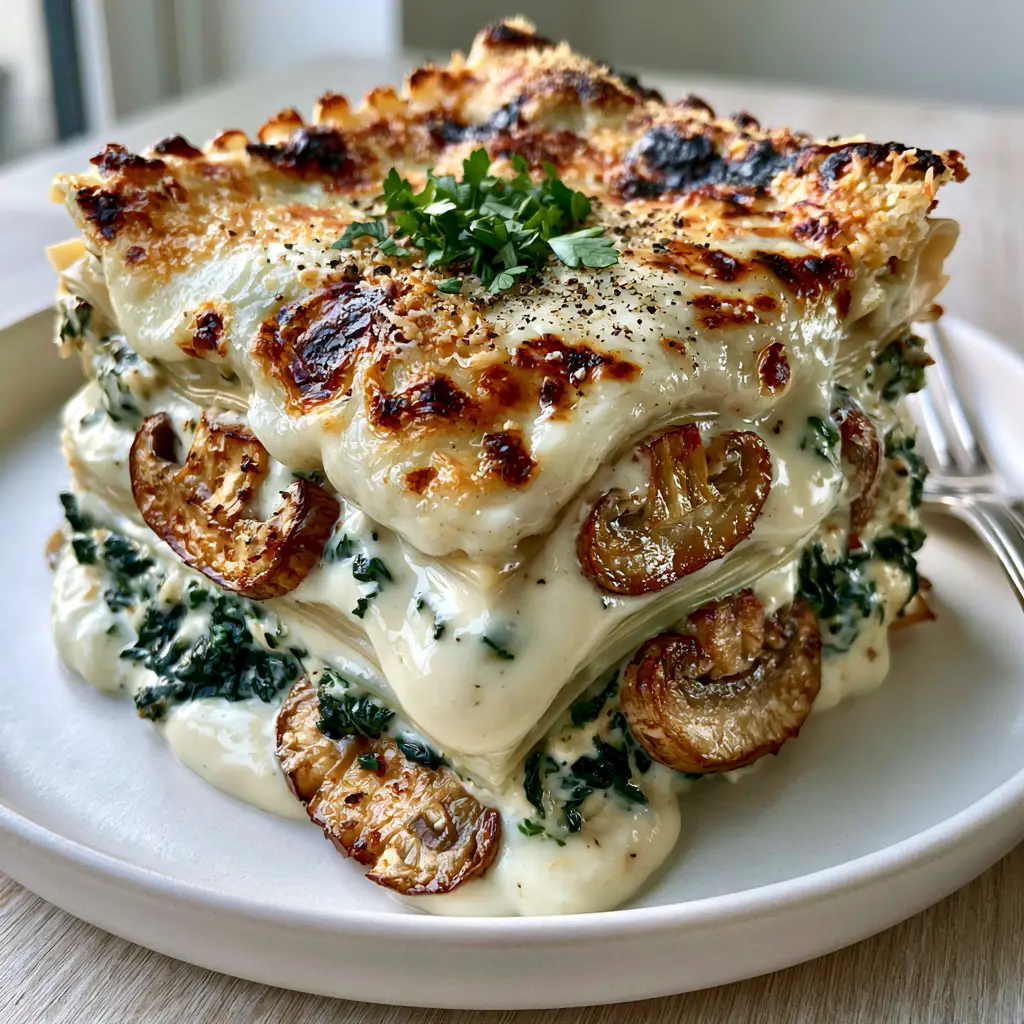
- Visual Precision: This recipe delivers exactly what you see in high-end food photography: clean layers, vibrant greens, and charred golden-brown spots on a bubbling crust.
The Essential Architecture: Ingredients for a Flawless Lasagna
To achieve the result of a professional Spinach and mushroom lasagna, every ingredient must serve a specific structural and flavor purpose. We aren’t just layering food; we are building a culinary foundation.
Lasagna Sheets: Use 1 pound (450g) of high-quality dried lasagna noodles. We will boil these just shy of al dente to ensure they maintain their “bite” after the final bake in the creamy sauce.
Cremini Mushrooms: You will need 1.5 pounds (680g) of meaty cremini (baby bella) mushrooms. These are superior to white buttons because they hold less water and develop a deeper, golden-brown sear when handled correctly.
Fresh Spinach: Start with 20 ounces (560g) of fresh baby spinach. It may look like a mountain, but once sautéed and well-drained, it becomes the concentrated, dark forest green layer essential for our visual blueprint.
Whole Milk: 4 cups (950ml) of full-fat milk are required for the bechamel. The fat content is non-negotiable here; it provides the viscosity needed to keep the layers distinct and opaque.
Unsalted Butter & All-Purpose Flour: 4 tablespoons (56g) of each to create a blonde roux. This is the “glue” that transforms milk into a thick, luxurious sauce that won’t run when sliced.
Mozzarella Cheese: 2 cups (225g) of low-moisture, part-skim mozzarella. Avoid fresh mozzarella packed in water, as it will compromise the “clean, non-watery layers” we are aiming for.
Parmesan Cheese: 1 cup (90g) of freshly grated Parmigiano-Reggiano. This provides the saltiness and the ability to form that iconic toasted parmesan crust.
Foundational Seasonings: Fine sea salt, 1 teaspoon (2g) of freshly ground nutmeg, and plenty of cracked black pepper. Nutmeg is the “invisible” ingredient that makes the bechamel taste authentically Italian.
Fresh Parsley: Half a bunch of flat-leaf parsley, finely chopped. This is our final garnish, adding a pop of color and a clean herbal finish to the rich, earthy flavors.
Professional Equipment for Clean-Cut Slices
While you can make lasagna in almost anything, achieving a “perfectly square slice” requires the right tools. A standard 9×13 inch (23x33cm) ceramic or glass baking dish is the gold standard for heat distribution.
You will also need a large, heavy-bottomed stainless steel skillet. This is vital for the mushrooms; stainless steel allows for the Maillard reaction to occur, giving you those golden-brown seared edges. A colander and a clean kitchen towel (or cheesecloth) are also mandatory for squeezing every last drop of moisture out of the sautéed spinach.
Step-by-Step Architecture: Engineering the Perfect Layers
1. Mastering the Golden-Brown Mushroom Sear
Clean your mushrooms with a damp paper towel rather than washing them, as they act like sponges. Slice them into thick, meaty pieces. Heat 2 tablespoons (30ml) of extra virgin olive oil in your skillet over medium-high heat until it shimmers.
Add the mushrooms in a single layer—do not crowd the pan, or they will steam instead of sear. Leave them undisturbed for 3-4 minutes until you see a deep golden-brown crust form. Flip and repeat. Season with salt and cracked black pepper only after they are browned to prevent premature moisture release.
2. Preparing the Concentrated Spinach Layer
In the same skillet, add a splash of oil and the baby spinach in batches. Sauté just until wilted. This is the critical part: transfer the spinach to a colander and let it cool. Once cool, wrap it in a clean kitchen towel and squeeze with all your might. You want to remove as much liquid as possible until you are left with a dense, dark green mass. Roughly chop it so it’s easy to distribute.
3. Crafting the Thick, Opaque Bechamel Sauce
In a medium saucepan, melt the butter over medium heat. Whisk in the flour and cook for 2 minutes to remove the raw flour taste, but do not let it brown. Slowly stream in the milk while whisking constantly. Continue cooking and whisking until the sauce is thick enough to coat the back of a spoon—it should look like a viscous, creamy white paint. Stir in the salt, nutmeg, and a generous amount of cracked black pepper.
4. Preparing the Al Dente Pasta
Boil your lasagna sheets in salted water for 2 minutes less than the package directions. They should be flexible but still have a firm “bite.” Drain and lay them flat on parchment paper so they don’t stick together. This ensures the noodles don’t turn to mush during the 45-minute bake.
5. The Assembly: Building for Height and Stability
Spread a thin layer of bechamel on the bottom of your baking dish. Lay down your first layer of pasta sheets, overlapping slightly. Add a layer of bechamel, then a generous scatter of the seared mushrooms and the well-drained spinach. Sprinkle with a handful of mozzarella. Repeat these layers until you reach the top. For the final layer, place the last pasta sheets, cover them completely in the remaining bechamel, and top with a thick, even layer of mozzarella and the grated parmesan.
Expert Tips for Success in the Kitchen
- The 15-Minute Rule: Never slice a lasagna immediately out of the oven. Let it rest for at least 15-20 minutes. This allows the bechamel to “set,” ensuring your slices come out square and the layers stay distinct.
- Mushroom Crowd Control: If you have a small skillet, sear the mushrooms in two or three batches. Crowding causes the temperature of the pan to drop, resulting in grey, rubbery mushrooms rather than golden-brown ones.
- Internal Link Inspiration: If you love the combination of greens and creamy textures, you might also enjoy our creamy spinach tomato tortellini or a more traditional spinach and ricotta lasagna.
- Bechamel Consistency: If your sauce feels too thin, keep simmering. It should be noticeably thicker than a standard gravy to support the weight of the pasta and vegetables.
Storage, Reheating, and Freezing Guidelines
This Spinach and mushroom lasagna is a fantastic candidate for meal prep. Leftovers can be stored in an airtight container in the refrigerator for up to 4 days. To reheat, cover a slice with foil and bake at 350°F (175°C) until the center is hot; this preserves the texture of the bechamel better than a microwave.
For freezing, you can freeze the entire lasagna (unbaked) for up to 3 months. Wrap it tightly in plastic wrap and then aluminum foil. Bake directly from frozen, adding about 20-30 minutes to the total cooking time. This makes it an excellent party dish recipe to have on hand for unexpected guests.
What to Serve With Your White Lasagna
Because this dish is rich and creamy, it pairs beautifully with high-acid side dishes. A simple arugula salad with a lemon vinaigrette cuts through the fat of the bechamel perfectly. If you are looking for a more substantial feast, consider serving it alongside a light avgolemono soup or a crisp taco pasta salad for a diverse potluck spread.
If you prefer a red-sauce alternative for a different night, our classic Italian lasagna or a hearty ragù alla bolognese are excellent choices to round out your recipe repertoire.
Frequently Asked Questions Regarding White Lasagna
Yes, but you must ensure your bechamel sauce is slightly thinner or use a bit more of it, as no-boil noodles soak up more moisture during the baking process.
The key is two-fold: First, squeeze the sautéed spinach in a kitchen towel until it’s bone-dry. Second, sear the mushrooms on high heat until golden-brown to cook off their internal moisture before layering.
You should let the lasagna rest for at least 15 to 20 minutes. This allows the sauce to thicken and the layers to bond, ensuring a clean, square slice.
Cremini (baby bella) mushrooms are best because they have a lower water content and a deeper, meatier flavor than white button mushrooms.
Bechamel provides a more stable, creamy structure and an authentic Italian flavor profile. Ricotta contains high moisture which often leads to the layers collapsing or leaking water.
The Ultimate Spinach and mushroom lasagna Recipe
Spinach and mushroom lasagna with Velvety Bechamel and Toasted Parmesan
Ingredients
Equipment
Method
- Wilt spinach in a pan, then squeeze in a kitchen towel until completely dry. Roughly chop.
- In a hot skillet with oil, sear mushrooms in batches until a deep golden-brown crust forms on both sides.
- Melt butter, whisk in flour for 2 minutes over medium heat.
- Slowly whisk in milk until a thick, viscous, opaque sauce forms. Season with salt, nutmeg, and black pepper.
- Layer pasta, bechamel, spinach, mushrooms, and mozzarella. Repeat until dish is full.
- Top with remaining cheese and bake at 375°F (190°C) for 45 minutes until the top is bubbly with charred golden-brown spots.
Notes
Let the lasagna rest for 20 minutes before slicing for clean, square pieces.

Bring This Masterpiece to Your Table
Mastering the Spinach and mushroom lasagna is a badge of honor for any home cook. It requires a balance of technique—from the perfect roux to the patient searing of vegetables—but the result is a sophisticated, restaurant-quality meal that satisfies the soul. We hope you enjoy the process of building these beautiful, creamy layers as much as you enjoy eating them.
If you made this recipe, please leave a comment below and tell us how your layers turned out! Don’t forget to share your photos on social media and tag us. For more culinary inspiration, follow us on Pinterest and join our community of passionate home cooks.