There is nothing quite as satisfying as pulling a bubbling, golden-brown spinach and ricotta lasagna from the oven. If you have ever struggled with a vegetarian lasagna that turns into a watery mess on the plate, this recipe is your definitive solution. We are focusing on structural integrity and deep, toasted flavors to create a dish that looks exactly like a professional food photograph.
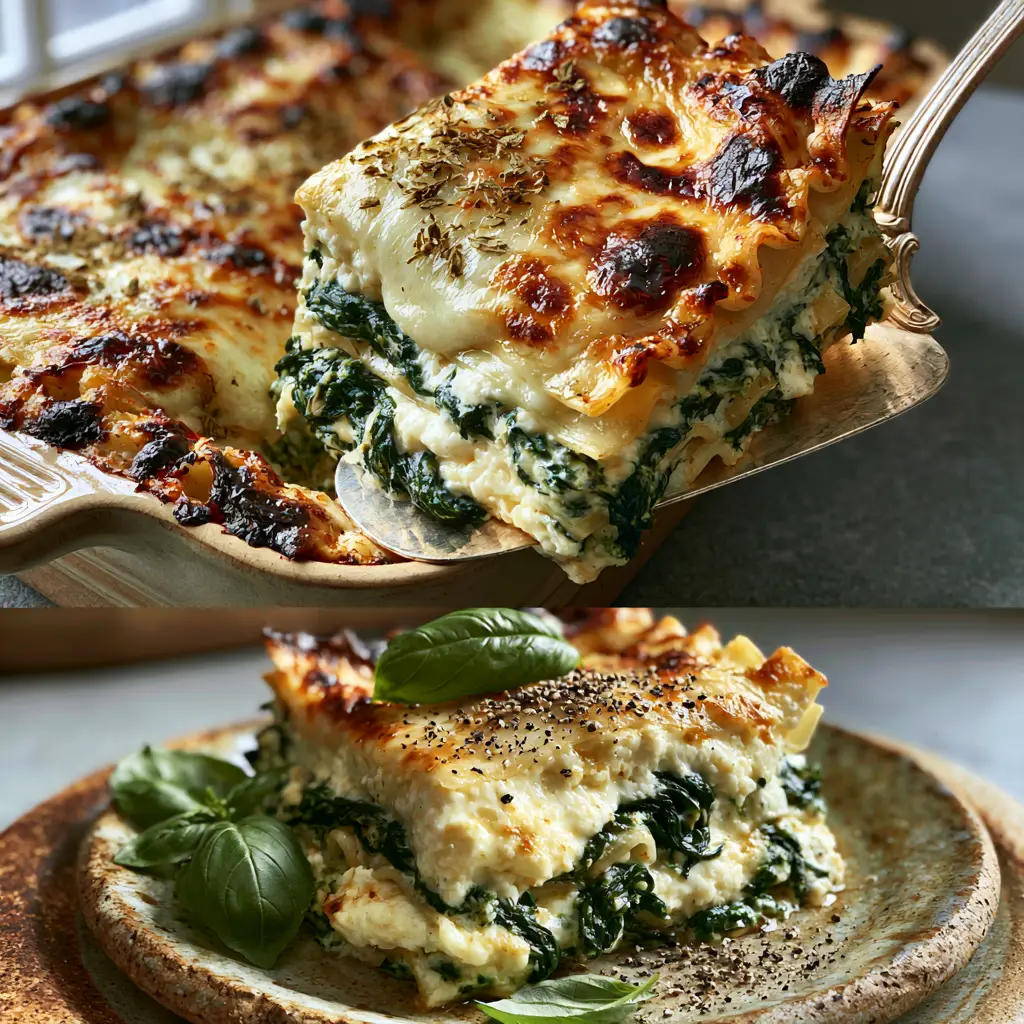
This spinach and ricotta lasagna features thick, distinct layers of creamy whole-milk cheese and vibrant dark green spinach, all held together by a silky white bechamel. You won’t find any liquid pooling at the bottom of this ceramic baking dish. Instead, you get charred cheese edges and a crust that crackles under your fork.
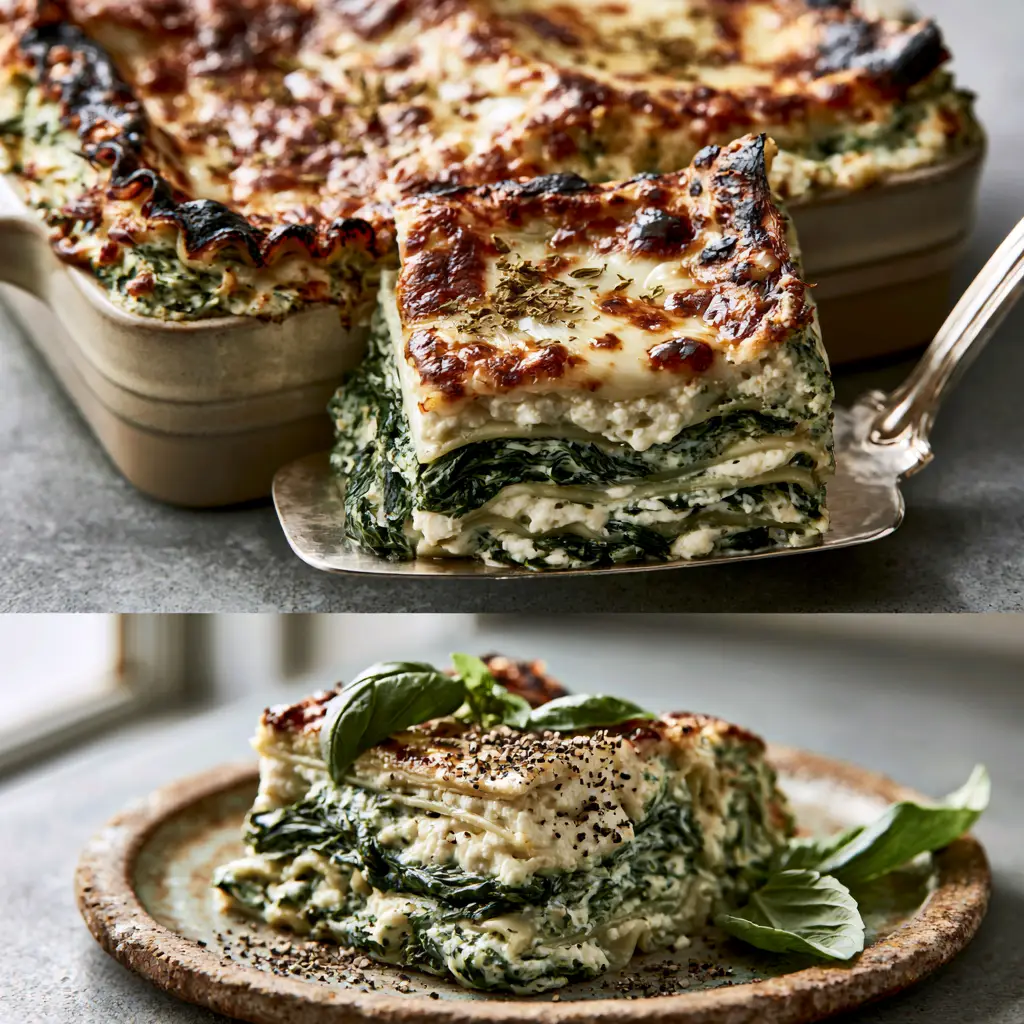
Whether you are preparing a crowd-pleasing party dish or a cozy Sunday dinner, the visual appeal of this meal is unmatched. The contrast between the snowy white ricotta and the forest-green wilted spinach creates a stunning vertical profile in every slice.
Why You Will Love This Ultra-Creamy Vegetarian Lasagna
- Structural Perfection: No more “lasagna soup”—these layers stay perfectly distinct and dry when sliced.
- Golden-Brown Finish: A dual-cheese topping of mozzarella and parmesan creates a shattered-glass texture with beautiful charred edges.
- Velvety Mouthfeel: By using a traditional French bechamel instead of just marinara, the result is exponentially creamier.
- Sensory Contrast: You get the bite of al dente pasta sheets against the cloud-like fluffiness of seasoned ricotta.
- Herb-Forward Aroma: The combination of dried oregano flecks and fresh basil leaves provides a rustic Italian fragrance.
Essential Components for a Non-Watery Lasagna
To achieve the “thick, dry layers” seen in our visual blueprint, every ingredient must serve a specific culinary purpose. Moisture is the enemy of a sturdy spinach and ricotta lasagna, so we select our fats and greens with precision.
Fresh Baby Spinach: 20 oz (565g). We use a massive amount of fresh spinach because it wilts down significantly. Sautéing it first allows us to squeeze out every drop of excess water before it hits the pasta.
Whole Milk Ricotta: 30 oz (850g). Avoid low-fat versions, which contain more stabilizers and water. Whole milk ricotta provides the structural “loft” needed for those thick white layers.
Whole Milk Mozzarella: 3 cups (340g), shredded. Low-moisture mozzarella is vital for that bubbling golden-brown crust without adding grease to the interior.
Parmigiano-Reggiano: 1 cup (90g), finely grated. This adds the salty, toasted crust element that pairs perfectly with the dried oregano flecks.
Lasagna Noodles: 1 box (454g). Use traditional curly-edged noodles for a classic look, or flat sheets for a more modern, clean-cut aesthetic. We boil them just shy of al dente.
Unsalted Butter & All-Purpose Flour: 4 tbsp (55g) each. These form the roux for our bechamel, providing the thickening power that keeps the spinach and ricotta lasagna stable.
Whole Milk: 4 cups (950ml). The base of our white sauce. It should be room temperature to prevent clumping when whisking into the roux.
Large Egg: 1 unit. Whisked into the ricotta, the egg acts as a binder, ensuring the cheese layers set firmly during the baking process.
Seasonings: 1 tsp (2g) dried oregano, 1/2 tsp (1g) ground nutmeg, kosher salt, and plenty of cracked black pepper. The nutmeg is the “secret” ingredient that elevates the bechamel to professional levels.
Professional Tools for the Perfect Bake
To replicate the high-resolution, hyper-realistic textures of our food photography, you need the right vessels. A deep-dish ceramic baking dish is preferred over glass as it retains heat more evenly and encourages those charred cheese edges.
You will also need a large skillet for wilting the spinach and a heavy-bottomed saucepan for the bechamel. A clean kitchen towel or cheesecloth is non-negotiable—you will use this to squeeze the liquid out of the cooked spinach until it is bone-dry.
Finally, a sharp offset spatula or a sturdy silver server is essential for lifting those square slices without disturbing the delicate layers. If you enjoy the layering process of this dish, you might also love the technique required for a classic Italian lasagna or even a decadent chocolate lasagna for dessert.
Step 1: Preparing the Wilted Dark Green Spinach
Heat a drizzle of olive oil in a large skillet over medium heat. Add the spinach in batches, tossing with tongs until it is completely wilted and turns a vibrant, dark green.
Once wilted, transfer the spinach to a colander and let it cool. Once cool enough to handle, wrap the spinach in a clean kitchen towel and squeeze with all your might. You will be surprised at how much green liquid is released.
Roughly chop the squeezed spinach. This ensures that every bite of your spinach and ricotta lasagna has an even distribution of greens without any long, stringy pieces.
Step 2: Crafting the Silky Bechamel Sauce
In your saucepan, melt the butter over medium heat until it foams. Whisk in the flour and cook for 2 minutes—you are looking for a pale gold color and a nutty aroma, but do not let it brown.
Slowly pour in the milk, whisking constantly to eliminate lumps. Continue cooking and whisking until the sauce thickens enough to coat the back of a spoon. It should look like heavy cream.
Remove from heat and stir in the nutmeg, a pinch of salt, and half of the parmesan. This “Mornay-style” sauce will act as the glue between your pasta and the ricotta mixture.
Step 3: The Fluffy Ricotta Layer Foundation
In a medium bowl, combine the whole-milk ricotta, the whisked egg, a handful of mozzarella, and a generous amount of cracked black pepper. Fold in the chopped, dried spinach.
Mixing the spinach directly into the ricotta ensures the “thick, dry layers” described in our visual blueprint. The egg will coagulate during baking, turning the ricotta into a stable, mousse-like consistency.
If you have leftover ricotta after this step, it is the perfect excuse to bake a limoncello ricotta cake for a bright, citrusy finish to your meal.
Step 4: Assembling the Vertical Masterpiece
Spread a thin layer of bechamel at the bottom of your ceramic dish. Lay down your first layer of al dente noodles, slightly overlapping them to prevent the sauce from seeping through.
Spread a thick, even layer of the spinach and ricotta mixture over the noodles. Follow this with a generous drizzle of bechamel. Repeat these layers until you reach the top of the dish.
The final layer should be noodles topped with the remaining bechamel, a heavy blanket of mozzarella, the rest of the parmesan, and a scattering of dried oregano flecks. This combination is what creates that iconic toasted parmesan crust.
Step 5: Achieving the Golden-Brown Bubbly Crust
Preheat your oven to 375°F (190°C). Cover the dish loosely with foil, ensuring the foil doesn’t touch the cheese. Bake for 25 minutes to heat the interior and set the ricotta layers.
Remove the foil and increase the heat to 400°F (205°C) or turn on the broiler for the last 5-10 minutes. Watch closely! You are looking for the mozzarella to develop deep golden-brown bubbles and those specific charred cheese edges.
Once the edges are sizzling and the top is a mosaic of toasted gold and white, remove it from the oven. Crucial Tip: Let the lasagna rest for at least 15-20 minutes. This rest period allows the bechamel and ricotta to “set,” ensuring the slice stays upright on the plate.
Expert Tips for a Professional Finish
- The Spinach Squeeze: If you think you’ve squeezed the spinach enough, squeeze it one more time. Residual moisture is the primary cause of lasagna failure.
- Noodle Texture: Boil your pasta for 2 minutes less than the package directions. They will finish cooking in the oven, absorbing the flavors of the sauce while remaining al dente.
- Cheese Quality: Grate your own mozzarella and parmesan. Pre-shredded cheeses are coated in potato starch to prevent clumping, which interferes with the “bubbly” melting property.
- Vertical Height: For a taller, more impressive slice, use a smaller but deeper baking dish (like an 8×8 inch / 20×20 cm dish) and add more layers.
Make-Ahead, Storage, and Reheating
This spinach and ricotta lasagna is an excellent candidate for meal prep. You can assemble the entire dish, cover it tightly, and refrigerate it for up to 24 hours before baking. This actually helps the flavors meld and the structure to firm up.
Store leftovers in an airtight container for up to 4 days. When reheating, use the oven rather than the microwave to preserve the toasted parmesan crust. Cover with foil and bake at 350°F (175°C) until the center is hot.
For freezing, cut the lasagna into individual portions and wrap them in parchment paper followed by foil. They will stay fresh for up to 3 months. Thaw in the refrigerator overnight before reheating.
What to Serve with Creamy Lasagna
Because this dish is rich and decadent, it pairs best with bright, acidic sides. A crisp arugula salad with a lemon vinaigrette cuts through the weight of the bechamel perfectly.
If you are hosting a larger gathering, consider adding a sheet pan lasagna with meat for variety, or perhaps some savory party pies to snack on while the main course rests. The earthy tones of the spinach also pair beautifully with a side of roasted garlic bread.
Yes, frozen spinach works well. Just ensure it is completely thawed and squeezed bone-dry using a kitchen towel or cheesecloth before mixing it with the ricotta.
If using no-boil noodles, you must ensure your bechamel sauce is slightly thinner, as the pasta will absorb more moisture. For the thick, dry layers shown here, traditional boiled noodles are recommended.
The key is to sauté the spinach first and then squeeze it in a clean kitchen towel until completely dry. Additionally, adding an egg to the ricotta mixture helps the layers set during baking.
Allow the lasagna to rest for at least 15 to 20 minutes. This allows the cheeses and sauce to firm up, ensuring you get a clean, square slice with distinct vertical layers.
Bechamel provides a silky, creamy binder that marinara or ricotta alone cannot achieve. It helps hold the layers together and creates that professional ‘white lasagna’ flavor profile.
The Ultimate Spinach and Ricotta Lasagna Recipe
Spinach and Ricotta Lasagna with a Toasted Parmesan Crust
Ingredients
Equipment
Method
- Sauté the fresh spinach in a large skillet until wilted and dark green.
- Let cool, then wrap in a kitchen towel and squeeze out all excess liquid. Roughly chop.
- Melt butter, whisk in flour for 2 minutes until nutty and pale gold.
- Slowly whisk in milk. Simmer until thick enough to coat a spoon. Stir in nutmeg and half the parmesan.
- Mix ricotta, egg, and spinach. Layer noodles, ricotta mix, and bechamel in the dish.
- Finish with bechamel, mozzarella, remaining parmesan, and dried oregano flecks.
- Bake at 375°F for 25 mins covered, then 400°F uncovered until golden-brown and bubbly with charred edges.
Notes
Let the lasagna rest for 20 minutes before slicing to ensure the layers stay distinct.

Enjoy the Perfect Slice!
Creating a professional-grade spinach and ricotta lasagna is all about mastering moisture and heat. With its thick, distinct layers and toasted parmesan crust, this dish is a testament to the beauty of vegetarian cooking. The vibrant green spinach against the creamy ricotta is not just a meal; it’s a visual experience.
We would love to see your results! If your cheese edges are perfectly charred and your layers are standing tall, leave a comment below or tag us in your photos. Don’t forget to save this recipe to your boards on Pinterest so you can find it for your next dinner party!