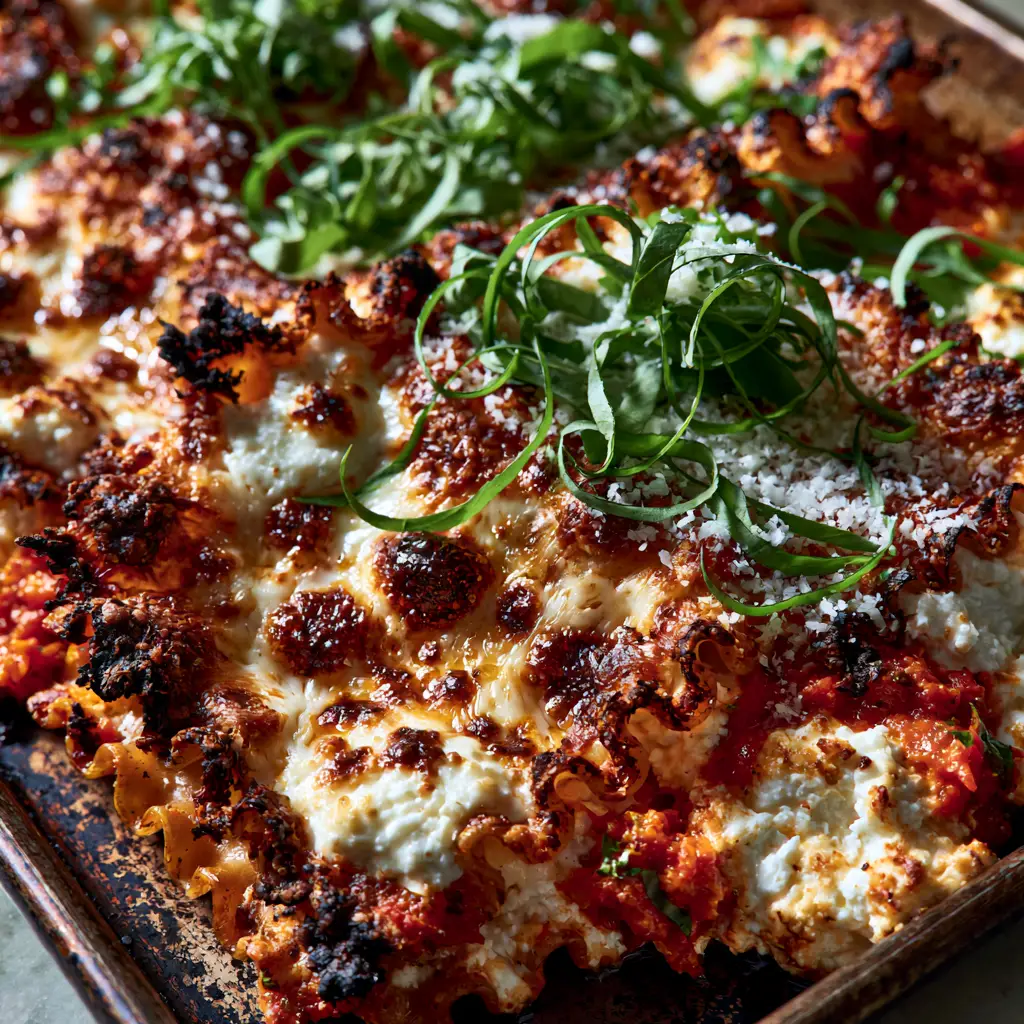
If you live for the crispy, caramelized corners of a traditional pasta bake, this Sheet Pan Lasagna is about to become your new culinary obsession. By swapping a deep dish for a shallow vintage metal sheet pan, we maximize the surface area for the Maillard reaction to work its magic on every single bite.
This isn’t just a shortcut; it’s a texture-focused revolution that transforms wavy, ruffled lasagna noodles into deeply bronzed, crunchy ribbons. The contrast between the snow-white dollops of creamy ricotta and the vibrant red marinara sauce creates a visual masterpiece that tastes even better than it looks.
The secret lies in the rustic dark metal baking sheet, which conducts heat more aggressively than ceramic, ensuring those iconic charred edges we all crave. Prepare to experience a classic Italian profile reimagined for the modern, texture-seeking home cook.
Why This Traybake Lasagna Wins Every Time
- The Crunch Factor: Unlike deep-dish versions, every serving of this Sheet Pan Lasagna features those coveted crispy, charred pasta edges.
- Perfect Proportions: The shallow layers ensure a balanced ratio of melted bubbly mozzarella to vibrant red marinara in every forkful.
- Visual Appeal: The snow-white ricotta dollops against the green basil chiffonade make this a stunning center-piece for any gathering.
- Speedy Cleanup: One single dark metal sheet pan does all the heavy lifting, making this a realistic weeknight luxury.
Essential Ingredients for the Ultimate Crispy Crust
Ruffled Lasagna Noodles (Mafalda): 12 oz (340g) of wavy-edged pasta is required to catch the sauce and create those standing ridges that char beautifully under the broiler. The ridges act like little heat sinks, crisping up while the centers remain tender.
Whole Milk Mozzarella: 3 cups (336g) of low-moisture, freshly shredded mozzarella provides the best “bubbly” texture with toasted brown spots. Avoid pre-shredded bags, as the anti-caking agents prevent the cheese from flowing into the pasta folds correctly.
Creamy Whole Milk Ricotta: 1.5 cups (375g) creates those snowy dollops that provide a cooling contrast to the acidic marinara. We leave this creamy and pure to maintain that vibrant white color against the dark metal pan.
Vibrant Marinara Sauce: 3 cups (720ml) of high-quality, bright red tomato sauce serves as the moisture source to cook the pasta and the visual anchor for the dish. Look for a sauce with visible herbs to enhance the rustic aesthetic.
Freshly Grated Parmesan: 0.5 cup (45g) creates the “toasted crust” effect when dusted over the mozzarella. It adds a salty, nutty depth that balances the creamy ricotta.
Foundational Additions: 2 tbsp (30ml) extra virgin olive oil to coat the rustic metal pan, 1 tsp (6g) kosher salt for the pasta water, and 0.5 tsp (1g) freshly cracked black pepper for the final garnish.
Tools for Achieving Professional Texture
To replicate the visual prompt exactly, you need a 13×18 inch (33x45cm) rustic dark metal baking sheet. Darker pans absorb more heat, which is the mechanical requirement for those deeply caramelized, charred golden-brown edges.
A sharp chef’s knife is also essential for creating the basil chiffonade. By stacking the leaves and rolling them into a cigar shape, you can cut the thin, bright green ribbons that garnish the final dish without bruising the delicate herb.
Step-by-Step Evolution of a Sheet Pan Masterpiece
1. Preparing the Pasta Ruffles
Bring a large pot of salted water to a rolling boil. Submerge the ruffled lasagna noodles and cook for 2 minutes less than the package directions for “al dente.”
The noodles should be flexible but still have a firm bite; they will finish cooking in the oven. Drain them carefully and toss with a drizzle of oil to prevent sticking while you prep the pan.
2. Layering for Maximum Surface Area
Generously coat your dark metal sheet pan with 1 tbsp (15ml) of olive oil. Spread 0.5 cup (120ml) of marinara sauce across the bottom to create a non-stick moisture barrier.
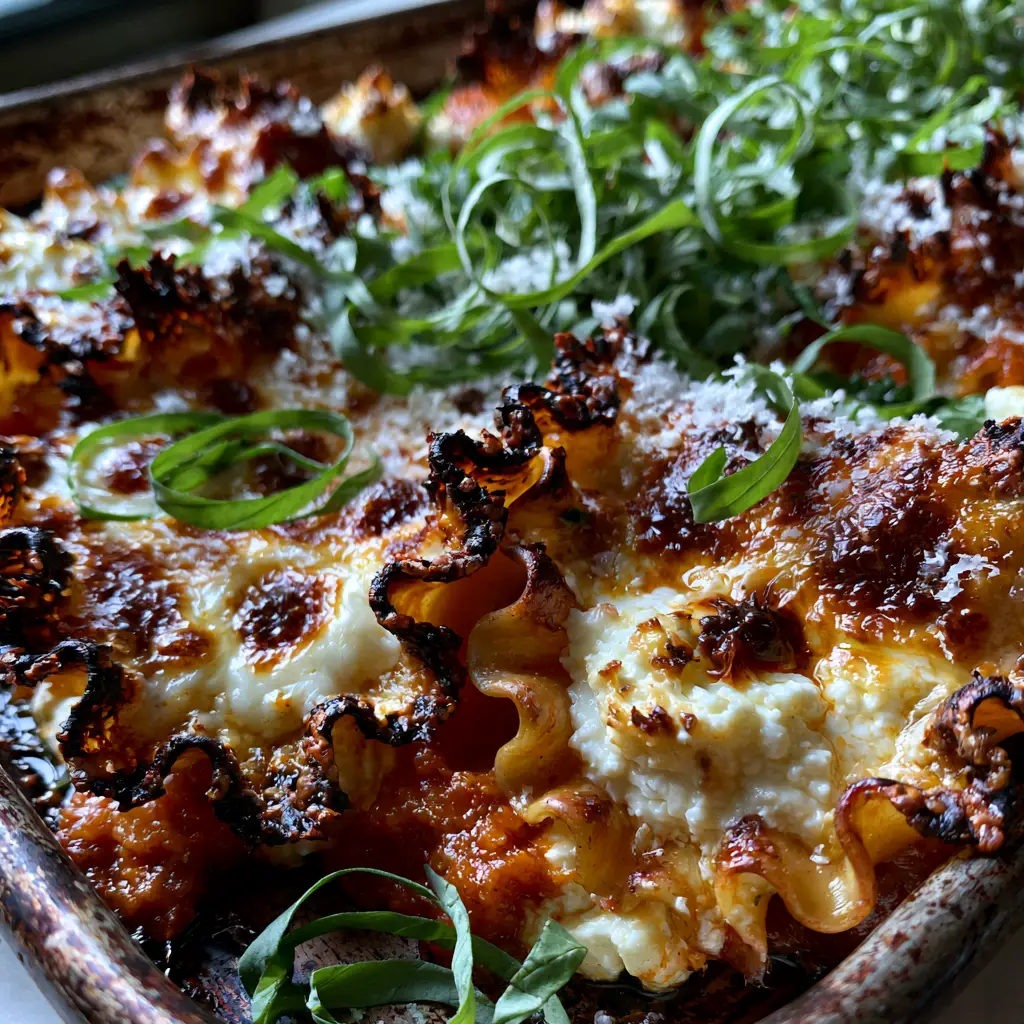
Lay the ruffled noodles in a slightly overlapping, wavy pattern. Don’t press them flat; allow the edges to stand up—these vertical ruffles are what will eventually become the charred, crispy highlights.
3. The Cheese and Sauce Landscape
Spoon the remaining marinara into the crevices of the pasta folds. Distribute the shredded mozzarella evenly, ensuring some areas are more concentrated to create those “toasted brown spots.”
Using a small spoon, tuck dollops of snow-white ricotta into the curves of the noodles. Sprinkle the grated parmesan over the top like a fine dust, focusing on the exposed pasta edges for extra crunch.
4. The High-Heat Transformation
Preheat your oven to 425°F (220°C). Slide the pan onto the center rack and bake for 20-25 minutes. You are looking for the mozzarella to become bubbly and the sauce to thicken.
For the final visual cue, turn the broiler to high for the last 2-3 minutes. Watch closely! You want the ruffled pasta edges to turn a deep, caramelized golden-brown and the cheese to develop dark, toasted spots.
Expert Tips for the Perfect Sheet Pan Lasagna
- The “Wick” Effect: Leave some pasta edges completely dry (no sauce). These will act like wicks, drawing up heat and crisping into “pasta chips” that provide a fantastic texture.
- Ricotta Timing: If you want the ricotta to stay perfectly “snow-white,” add half of the dollops halfway through the baking time.
- Pan Selection: If you only have a light-colored aluminum pan, increase the oven temperature by 15 degrees to encourage browning.
- Resting Period: Allow the lasagna to sit for 5-10 minutes before slicing. This lets the sauce thicken and the crispy edges firm up even further.
What to Serve with Your Traybake Lasagna
This dish is rich and texture-heavy, so it pairs beautifully with a light, acidic side. A simple arugula salad with lemon vinaigrette cuts through the creamy ricotta perfectly.
If you are hosting a larger Italian-inspired feast, consider starting with a bowl of bright citrus soup or serving alongside a vibrant orzo salad for additional color on the table.
Frequently Asked Questions
You can, but you will lose the ‘crispy ruffle’ texture. The wavy edges of Mafalda pasta are essential for catching the heat and creating those charred, crunchy bits.
Yes, but only partially. Par-boiling for about 2 minutes less than al dente ensures the noodles are flexible enough to layer but firm enough not to turn mushy in the oven.
Dollop the ricotta into the ‘nests’ created by the ruffled pasta. This protects the cheese from direct heat, keeping it creamy and snow-white while the pasta crisps around it.
Dark metal conducts heat more efficiently than glass or ceramic, which is necessary to achieve the caramelized, charred edges featured in this recipe.
The Ultimate Sheet Pan Lasagna Recipe
Sheet Pan Lasagna with Crispy Ruffled Edges and Creamy Ricotta
Ingredients
Equipment
Method
- Preheat oven to 425°F (220°C). Boil ruffled noodles in salted water for 2 minutes less than the package instructions. Drain and toss with 1 tbsp oil.
- Coat a dark metal sheet pan with 1 tbsp olive oil and spread 0.5 cup marinara sauce across the bottom.
- Arrange noodles in a wavy, overlapping pattern, ensuring edges stand upward.
- Top with remaining marinara, mozzarella, and dollops of ricotta. Dust with parmesan.
- Bake for 20 minutes until cheese is bubbly. Broil for 2-3 minutes until edges are charred and golden-brown.
- Garnish with fresh basil chiffonade and cracked black pepper before serving.
Notes
Do not overcook the pasta initially as it softens during the bake.
Closing Thoughts on This Crispy Innovation
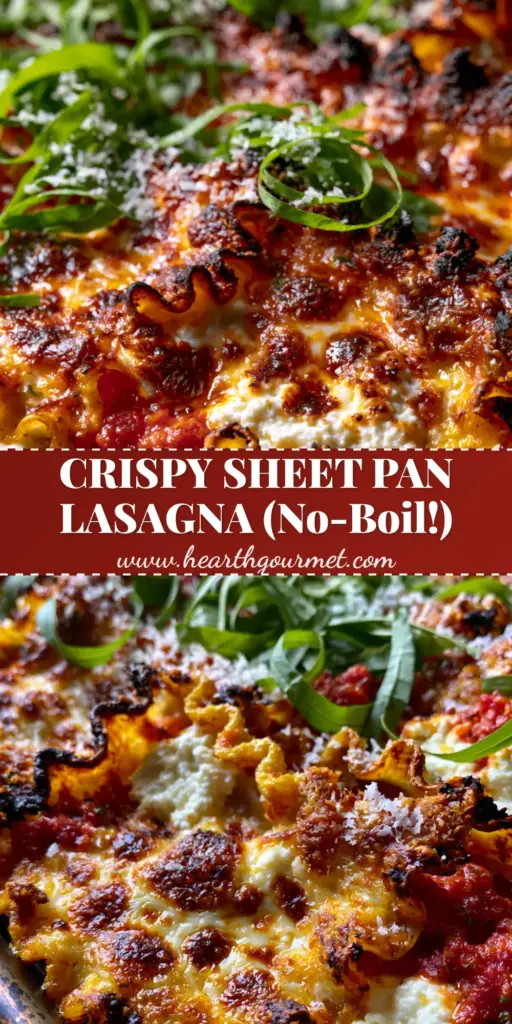
This Sheet Pan Lasagna proves that you don’t need hours of simmering to achieve gourmet results. By focusing on the interplay of high heat and ruffled textures, you create a dish that is as visually stunning as it is delicious.
If you loved those charred edges, please leave a rating and a comment below! Be sure to share your crispy creations on Pinterest and tag us so we can see your beautiful traybakes.