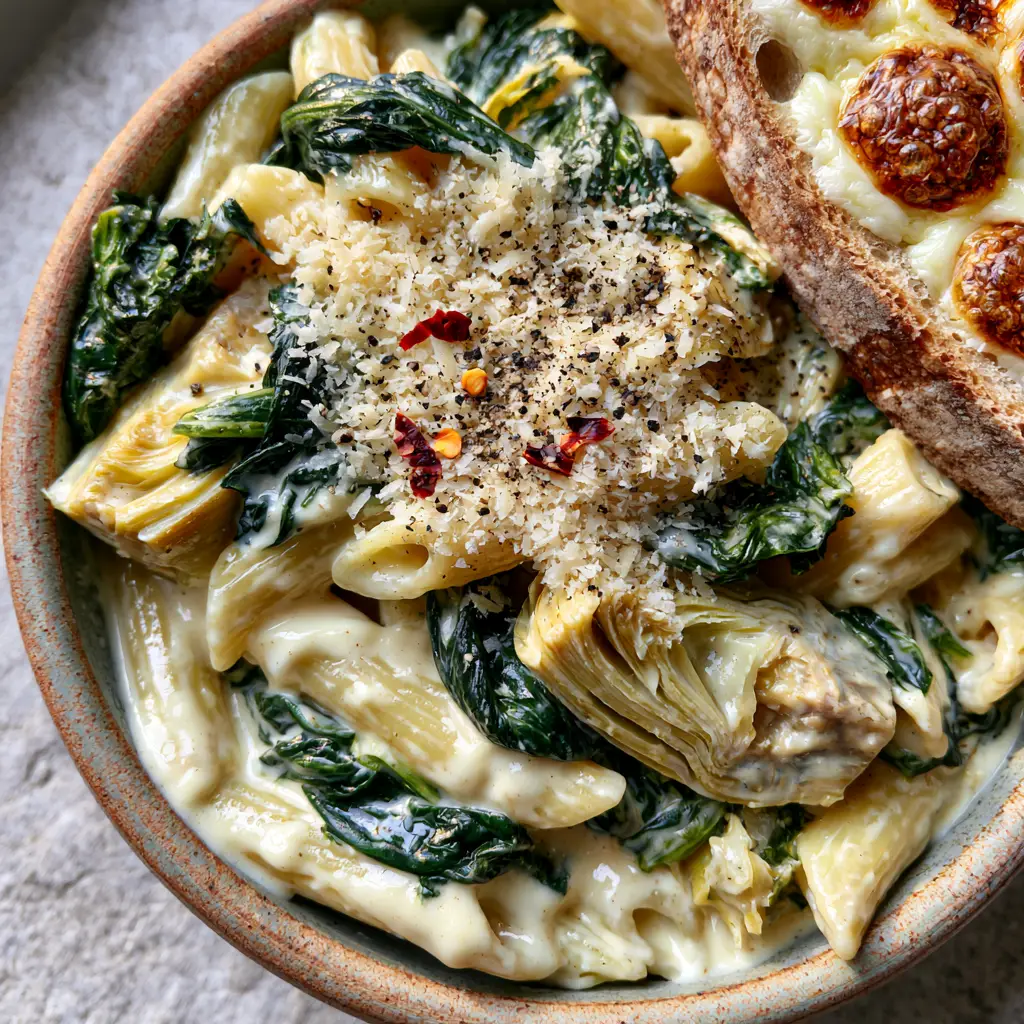
There is a specific kind of magic that happens when the classic flavors of a beloved appetizer are transformed into a soul-warming main course. This spinach artichoke pasta is the ultimate realization of that culinary crossover, featuring a thick, glossy, velvety white cream sauce that clings to every ridge of perfectly al dente penne. It is a dish designed for those who crave the richness of a dip but the satisfaction of a robust, home-cooked meal.
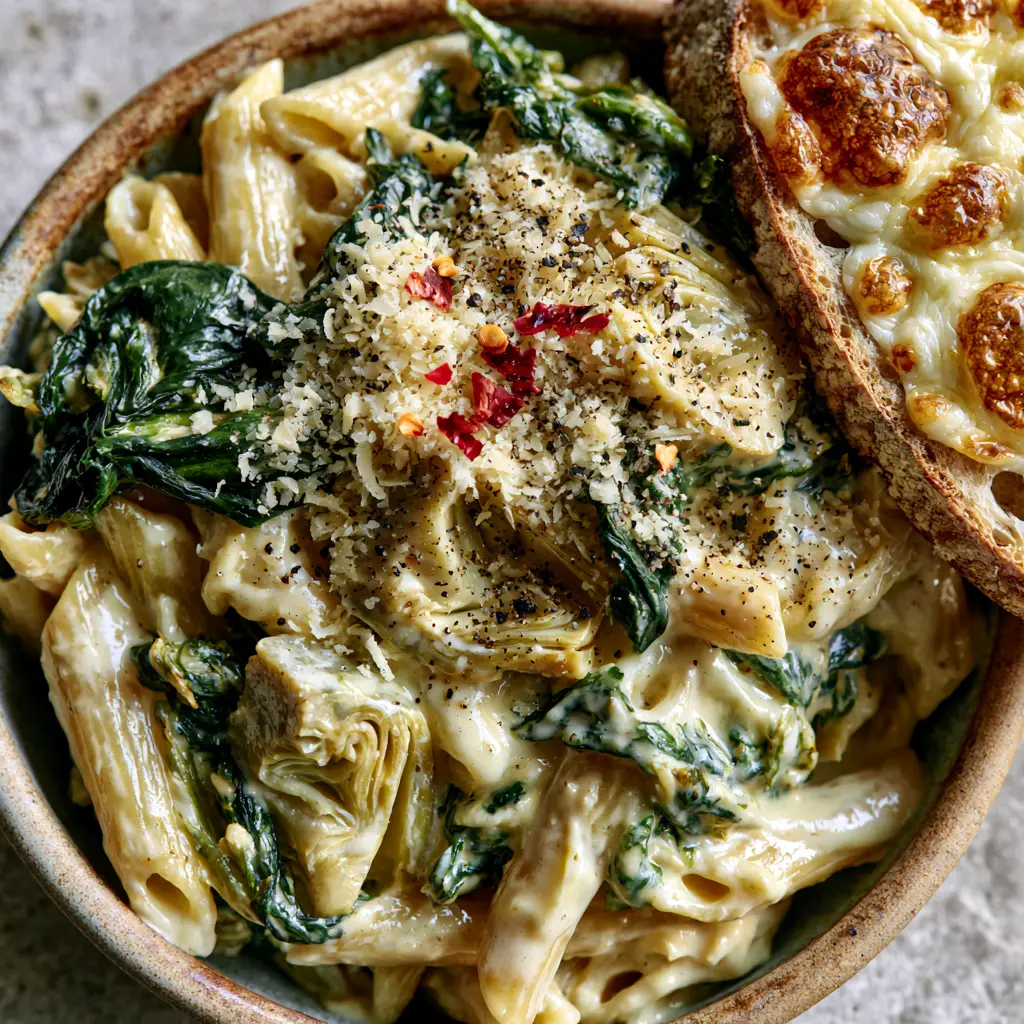
Every bite of this spinach artichoke pasta offers a masterclass in texture. You have the structural bite of the pasta, the chunky, tender quarters of artichoke hearts, and the delicate, wilted ribbons of vibrant dark green spinach. Topped with a heavy dusting of micro-planed parmesan and a kick of coarse cracked black pepper, this isn’t just dinner; it’s a sensory experience captured in a rustic ceramic bowl.
Beyond the pasta itself, we serve this with a side of thick-cut sourdough bread, toasted until the edges are golden-brown and the mozzarella topping is bubbly and molten. The directional natural light hitting the glossy sauce in the bowl reveals the sheer creaminess we’re aiming for—a sauce that is thick enough to coat, but fluid enough to swirl. Let’s dive into how to achieve this professional-grade result in your own kitchen.
The Anatomy of the Perfect Creamy Pasta Texture
- Al Dente Precision: We use ridged penne to ensure the white cream sauce has maximum surface area to cling to, providing a “sauce-to-pasta” ratio that feels indulgent.
- Vibrant Greens: By folding the spinach in at the final moment, we preserve its deep green color and delicate structure against the pale, velvety sauce.
- Chunky Artichoke Hearts: Quartered artichoke hearts provide a meaty, acidic contrast to the rich dairy base, ensuring every forkful has a complex flavor profile.
- The Crunch Factor: The accompanying mozzarella-crusted sourdough provides the essential textural bridge, perfect for mopping up any remaining glossy sauce.
- Finishing Zest: Coarse cracked black pepper and bright red chili flakes offer a visual pop and a heat that cuts through the micro-planed parmesan cheese.
Essential Components for This Spinach Artichoke Pasta
Penne Rigate (454g / 1 lb): The “rigate” or ridges are non-negotiable here. They act as tiny channels for the glossy cream sauce, ensuring you never get a dry bite of pasta.
Heavy Cream (480ml / 2 cups): This is the foundation of our velvety sauce. Unlike milk-based sauces, heavy cream reduces into a thick, stable coating that won’t break when tossed with the artichokes.
Unsalted Butter (60g / 4 tbsp): Used to sauté the garlic and provide a fat base for the sauce. It adds a nutty depth that mimics the richness of lemon whipped ricotta textures.
Fresh Baby Spinach (150g / 5 oz): We use fresh over frozen to maintain that vibrant green visual. It wilts instantly in the residual heat, keeping its integrity and “snap.”
Artichoke Hearts (400g / 14 oz jar): Use hearts packed in water or brine, drained and quartered. These provide the “meaty” chunks that make the dish feel substantial, similar to the heartiness in creamy tuscan mushroom pasta.
Parmesan Cheese (60g / 1/2 cup): Micro-planed for a snow-like texture. It melts instantly into the sauce, acting as both a flavor enhancer and a natural thickening agent.
Sourdough Bread & Mozzarella: Thick slices of rustic sourdough (2cm thick) topped with low-moisture mozzarella (100g). This provides the essential side-dish crunch confirmed in our visual blueprint.
Invisible Essentials: You will also need kosher salt for the pasta water, high-quality olive oil for the bread, and fresh garlic cloves for the aromatic base of the sauce.
Required Tools for Culinary Precision
To achieve the “smartphone-realistic” food photography look, you need the right tools. A micro-plane grater is essential for that heavy dusting of parmesan cheese that looks like fine snow. A large heavy-bottomed skillet or Dutch oven is required to allow the cream to reduce evenly without scorching.
For the sourdough, use a baking sheet lined with parchment paper to ensure the mozzarella bubbles and browns without sticking. A serrated bread knife will give you those thick, clean slices of sourdough that hold up to the weight of the melted cheese.
Step-By-Step: Crafting the Ultimate Spinach Artichoke Pasta
1. Achieving the Perfect Al Dente Penne
Bring a large pot of heavily salted water to a rolling boil. Add 1 lb (454g) of penne and cook for exactly 1 minute less than the package directions. You want the pasta to have a firm “bite” as it will finish cooking in the cream sauce later.
2. Preparing the Glossy Garlic Cream Base
In a large skillet over medium heat, melt 4 tbsp (60g) of butter. Add 3 cloves of minced garlic and sauté until fragrant (about 60 seconds)—do not let it brown. Pour in 2 cups (480ml) of heavy cream and bring to a gentle simmer.
Allow the cream to reduce by about one-third. You are looking for a visual cue: the sauce should be thick enough to coat the back of a spoon and leave a clear trail when you run your finger through it.
3. Integrating the Artichokes and Spinach
Gently fold in the quartered artichoke hearts and the fresh baby spinach. The spinach will wilt within 30-45 seconds. The goal is “vibrant green,” so remove from high heat once the leaves have just collapsed into the sauce.
4. The Emulsion Phase
Add the cooked penne directly into the skillet. Sprinkle in half of the micro-planed parmesan. Toss vigorously over low heat. The cheese will emulsify with the cream, creating that “thick, glossy, velvety” texture that clings to the pasta ridges.
5. Toasting the Cheesy Sourdough
While the pasta rests for a moment, place your sourdough slices under a broiler. Once lightly toasted, top with a generous layer of mozzarella and return to the heat. Watch for “bubbly, golden-brown” spots—this usually takes 2-3 minutes.
6. Final Plating and Visual Flourish
Transfer the pasta to a rustic ceramic bowl. Finish with a heavy dusting of the remaining micro-planed parmesan. Add a generous amount of coarse cracked black pepper and a pinch of red chili flakes for that “pop of color.” Serve the sourdough immediately on the side.
Expert Tips for Success
- Don’t Overcook the Spinach: Add the spinach at the very end. Residual heat is enough to wilt it while keeping it “dark green” rather than slimy and grey.
- Starch Water Secret: Reserve a half-cup of pasta water. If your sauce becomes too thick as it sits, a splash of this liquid gold will loosen it while maintaining the glossy sheen.
- Artichoke Prep: Pat the artichoke hearts dry with a paper towel before adding them. This prevents excess brine from thinning out your velvety sauce.
- Tempering the Cheese: Ensure your parmesan is at room temperature before micro-planing it over the hot pasta to ensure it melts into a seamless lace rather than clumping.
Storage, Reheating, and Freezing
This spinach artichoke pasta is best served fresh to maintain the glossy emulsion. However, leftovers can be stored in an airtight container in the refrigerator for up to 3 days. When reheating, the cream sauce will naturally thicken; add a splash of milk or cream before microwaving or heating on the stovetop to restore the velvety texture.
We do not recommend freezing this dish. The high fat content in the heavy cream and the delicate structure of the spinach do not hold up well to the crystallization of freezing, often resulting in a broken sauce upon thawing. If you love creamy textures, consider making a batch of creamy black bean taquitos for a more freezer-friendly option.
What to Pair with Your Creamy Pasta
This dish is rich and indulgent, so it pairs beautifully with light, acidic sides. A crisp arugula salad with a lemon vinaigrette cuts through the weight of the cream sauce perfectly. If you are looking for a more varied pasta night, this dish sits wonderfully alongside a buffalo chicken alfredo pasta for a spicy contrast.
For those who enjoy a bit of heat, consider serving a side of spicy snacks or even a cup of pasta fagioli to start the meal. The earthy notes of the artichoke also pair exceptionally well with a glass of crisp Sauvignon Blanc or an un-oaked Chardonnay.
Frequently Asked Questions
Absolutely! Grilled chicken breast or sautéed shrimp pair beautifully with the spinach artichoke base. Add them at the very end when tossing the pasta in the sauce.
Yes, but ensure you thaw it and squeeze out every drop of excess moisture. Frozen spinach is much denser and won’t have the same vibrant green ‘snap’ as fresh baby spinach.
Simmer the cream over medium-low heat and avoid boiling it aggressively. Adding the cheese gradually while tossing the pasta also helps create a stable, glossy emulsion.
Reheat on the stovetop over low heat with a splash of cream or milk. This helps loosen the sauce and restores its original velvety texture without it becoming oily.
Penne rigate (with ridges) is superior for this thick sauce as the cream fills the hollow centers and clings to the outer ridges, ensuring a perfect sauce-to-pasta ratio in every bite.
The Ultimate Spinach Artichoke Pasta Recipe Card
Spinach Artichoke Pasta with Creamy Garlic Sauce and Cheesy Mozzarella Sourdough
Ingredients
Equipment
Method
- Bring a large pot of salted water to a boil. Cook penne rigate until 1 minute shy of al dente. Reserve 1/2 cup pasta water before draining.
- Place sourdough slices under a broiler until golden. Top with mozzarella and return to broiler until bubbly and brown.
- Melt butter in a large skillet. Sauté minced garlic for 60 seconds until fragrant.
- Add heavy cream and simmer until it reduces by one-third and coats the back of a spoon with a glossy sheen.
- Stir in quartered artichokes and fresh spinach. Cook until spinach is just wilted and vibrant green.
- Combine pasta with the sauce. Add half the micro-planed parmesan and toss over low heat. Serve in bowls with extra parmesan, black pepper, chili flakes, and the cheesy bread.
Notes
Micro-planing the cheese ensures it melts instantly into the sauce without clumps.
A New Weeknight Favorite
This spinach artichoke pasta proves that you don’t need a professional kitchen to create a restaurant-quality meal. By focusing on the “Visual Recipe Blueprint”—the glossy sauce, the vibrant greens, and the toasted sourdough—you’ve created a dish that is as beautiful as it is delicious. The combination of textures and the punch of the red chili flakes makes every bite an adventure.
If you enjoyed this recipe, please leave a comment below and let us know how your sauce turned out! Don’t forget to sign up for our newsletter for more “Culinary Forensic” deep dives and share this recipe to Pinterest so your friends can enjoy this creamy comfort food too.