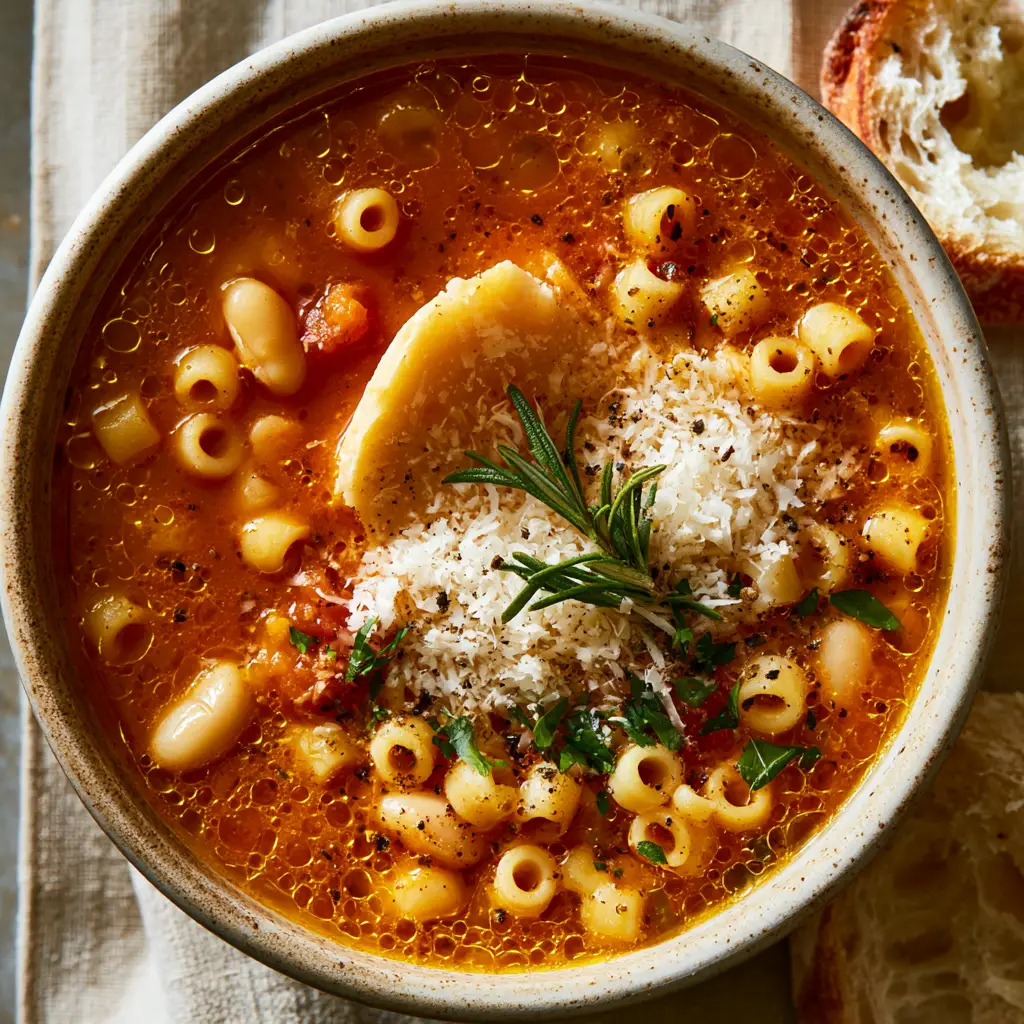
There is nothing quite like a steaming bowl of this authentic Pasta Fagioli recipe to warm your soul on a chilly evening. Imagine a rustic ceramic bowl filled to the brim with a deep, reddish-orange broth that glimmers under the kitchen lights with droplets of liquid gold. This isn’t just a soup; it is a culinary embrace, featuring perfectly al dente pasta and creamy beans that melt in your mouth.
Our version captures the essence of a handheld smartphone photo taken in soft natural daylight: high-resolution textures, realistic colors, and a rustic charm. You can almost smell the aromatic fresh rosemary and the sharp, salty tang of the melting Parmesan rind peeking through the center. Every spoonful is a testament to the beauty of simple, high-quality ingredients treated with respect.
Whether you are looking for a hearty midweek dinner or a centerpiece for a casual gathering, this dish delivers on every sensory promise. From the first crack of black pepper to the final swipe of crusty sourdough bread against the bowl, this recipe is designed to be your new favorite kitchen staple.
Why This Rustic Italian Bean and Pasta Soup Stands Apart
- The Velvety Texture: Unlike thin, watery soups, this broth is thickened naturally by the starches in the beans and pasta, creating a luxurious mouthfeel.
- The Umami Secret: A large, partially melted Parmesan rind simmers in the heart of the pot, infusing the entire dish with a deep, savory complexity.
- Vibrant Visual Contrasts: The bright green of chopped flat-leaf parsley and the sprig of fresh rosemary pop against the rich, tomato-infused orange broth.
- Perfectly Al Dente: By following our specific timing, the ditalini pasta maintains its structure, providing a satisfying bite in every spoonful.
Building the Flavor Foundation: Essential Pantry Items
Extra Virgin Olive Oil (EVOO): Use 3 tbsp (45ml) of high-quality oil to sauté the aromatics and another drizzle for that signature shimmering finish. It provides the essential fat that carries the flavors of the rosemary and garlic throughout the dish.
Ditalini Pasta: You will need 1.5 cups (250g) of these small, tube-shaped noodles. Their size is historically perfect for Pasta Fagioli, as they nestle perfectly into the spoon alongside the cannellini beans.
Cannellini Beans: Use 2 cans (15 oz/425g each) of these creamy white beans. We use a portion of them whole for texture and mash a portion to achieve that specific velvety broth described in our visual blueprint.
Crushed Tomatoes: 1 cup (240ml) of high-quality crushed tomatoes provides the deep reddish-orange hue and a subtle acidity. This balances the richness of the beans and the salty Parmesan cheese.
Parmesan Rind & Freshly Grated Cheese: One 2-inch (5cm) rind is essential for the simmer, while a generous dusting of microplaned Parmesan adds a sharp, salty finish. This dual-use of Parmesan ensures the flavor is layered from the bottom up.
Fresh Rosemary & Flat-Leaf Parsley: A whole sprig of rosemary infuses the broth with piney notes, while 1/4 cup (10g) of chopped parsley adds a fresh, grassy finish. These herbs provide the aromatic “high notes” that cut through the density of the stew.
Vegetable or Chicken Stock: 5 cups (1.2L) of low-sodium stock acts as the liquid canvas for our ingredients. It provides more depth than water alone, ensuring every drop of the tomato-infused broth is flavorful.
Crusty Sourdough Bread: A large, torn piece of sourdough is non-negotiable for serving. Its airy crumb and chewy crust are perfect for soaking up the final shimmering droplets of olive oil at the bottom of the bowl.
The Chef’s Toolkit: Tools for the Perfect Simmer
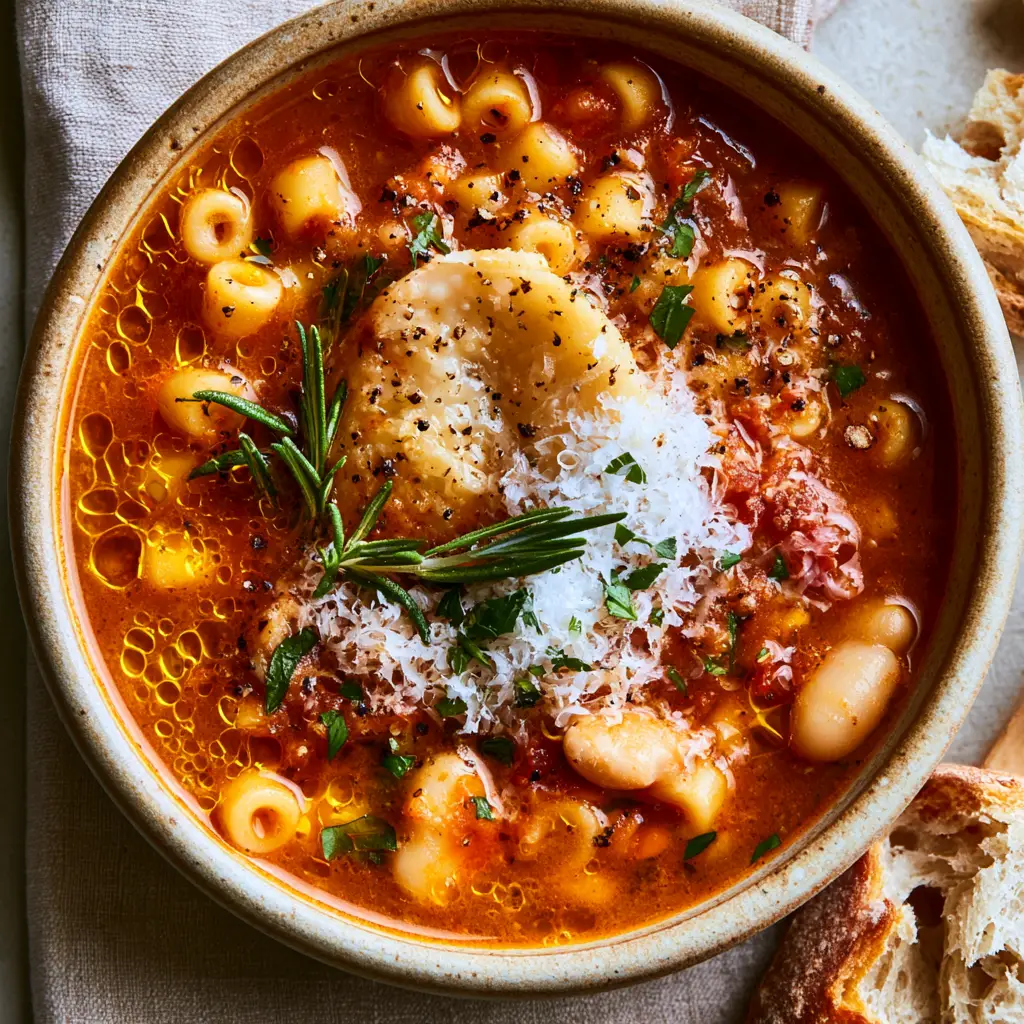
To achieve the results seen in our overhead close-up shot, you will need a heavy-bottomed Dutch oven or a large rustic ceramic pot. These vessels distribute heat evenly, which is crucial for preventing the beans from sticking as the broth thickens. A wooden spoon is the best tool for gently stirring the pasta without breaking the delicate ditalini shapes.
For the finishing touches, a microplane grater is essential for creating that “generous dusting” of fine cheese that sits atop the soup. You will also need a sharp chef’s knife for finely chopping the flat-leaf parsley and a pepper mill to provide the freshly cracked black pepper specks visible in the visual prompt.
Mastering the Simmer: A Step-by-Step Culinary Guide
Step 1: The Aromatic Sauté
Heat 2 tbsp (30ml) of extra virgin olive oil in your pot over medium heat. Add 1 small finely diced onion, 1 diced carrot, and 1 diced celery stalk (the classic soffritto). Sauté for 6-8 minutes until the vegetables are soft and translucent, but not browned. Add 3 cloves of minced garlic and the rosemary sprig, stirring for 1 minute until the kitchen fills with an incredible herbal aroma.
Step 2: Building the Tomato-Infused Base
Stir in 1 cup (240ml) of crushed tomatoes and 1 tbsp (15g) of tomato paste. Cook for 3-4 minutes, allowing the tomatoes to caramelize slightly and darken to a deep reddish-orange. This step is vital for achieving the rich color seen in our visual blueprint. Pour in 5 cups (1.2L) of stock and bring the mixture to a gentle simmer.
Step 3: Integrating the Beans and Parmesan Rind
Add the drained cannellini beans and the Parmesan rind to the pot. Using the back of your wooden spoon, gently crush about half a cup of the beans against the side of the pot; this releases their natural starches, creating the “thick, velvety” texture we are aiming for. Season with a pinch of salt, but remember the rind will add saltiness as it melts.
Step 4: Cooking the Ditalini to Al Dente
Add the 1.5 cups (250g) of ditalini pasta directly into the simmering broth. Cook for approximately 8-10 minutes, stirring occasionally to prevent the pasta from sticking. You are looking for a visual cue where the pasta is tender but still has a firm “bite” in the center. If the broth becomes too thick, add a splash more stock to maintain that velvety consistency.
Step 5: The Final Visual Touches
Remove the rosemary sprig (it has done its job!). Ladle the thick soup into rustic ceramic bowls, making sure a portion of the softened Parmesan rind is visible in each. Drizzle each portion with the remaining extra virgin olive oil so you see those shimmering golden droplets. Top with a generous dusting of microplaned Parmesan, chopped parsley, and plenty of cracked black pepper.
Secrets to the Perfect Thick and Creamy Broth
- The Bean Mash: Never skip mashing a portion of the beans. This is the professional secret to a thick broth without using heavy creams or flour thickeners.
- Pasta Starch: Cooking the pasta directly in the soup adds starch to the liquid, contributing to the “velvety” description in our Midjourney prompt.
- The Resting Period: Let the Pasta Fagioli sit for 5 minutes before serving. This allows the flavors to meld and the broth to reach its peak thickness.
- Quality of Oil: The finishing drizzle should be your best olive oil. It’s not just for garnish; it provides a fruity contrast to the savory beans.
What to Serve with Your Rustic Italian Masterpiece
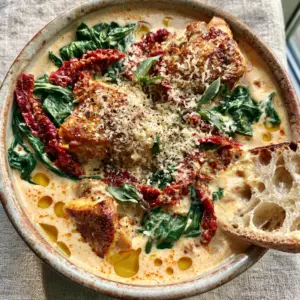
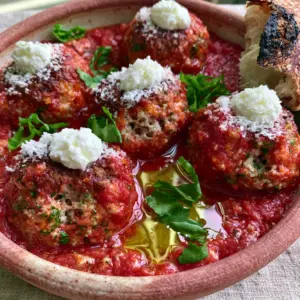
This Pasta Fagioli recipe is a complete meal on its own, but it pairs beautifully with other Italian-inspired sides. If you want a spread that feels like a Mediterranean feast, consider serving this alongside a plate of lemon whipped ricotta topped with herbs and a drizzle of honey.
For those who love a bit of variety, a crisp green salad or a side of zucchini lasagna can add a lighter element to the table. And of course, the torn sourdough bread mentioned in our visual prompt is mandatory for cleaning the bowl!
Frequently Asked Questions
Yes, you can use dried cannellini beans. Soak 1 cup of dried beans overnight, then simmer them for 60-90 minutes until tender before adding them to the soup as instructed.
While optional, the rind is highly recommended. It adds a unique savory depth (umami) and helps thicken the broth as it partially melts into the soup.
Ensure you only cook the pasta until al dente. If you plan on having leftovers, you may want to cook the pasta separately and add it to individual bowls to maintain texture.
Ditalini is the traditional choice because its small size matches the beans. However, tubetti or elbow macaroni also work well in a pinch.
The ditalini pasta continues to absorb the broth as it sits. When reheating, simply add a splash of water or stock to loosen the broth back to its velvety consistency.
The Authentic Pasta Fagioli Recipe Card
Pasta Fagioli recipe: The Ultimate Velvety Italian Comfort Bowl
Ingredients
Equipment
Method
- Heat oil in a Dutch oven and sauté onion, carrot, and celery until soft. Add garlic and rosemary sprig for 1 minute until fragrant.
- Stir in crushed tomatoes and tomato paste, cooking for 3-4 minutes until the broth achieves a deep reddish-orange color.
- Add stock, beans, and the Parmesan rind. Mash half a cup of the beans against the side of the pot to create a velvety thickness.
- Add ditalini pasta and simmer for 8-10 minutes until al dente. The starch from the pasta will continue to thicken the broth.
- Ladle into bowls, ensuring the melted Parmesan rind is visible. Garnish with grated cheese, parsley, pepper, and a final drizzle of olive oil.
Notes
If the pasta absorbs too much liquid, add an extra splash of warm stock before serving.

Closing the Kitchen: Share Your Culinary Creation
We hope this Pasta Fagioli recipe brings a sense of rustic Italian warmth to your home. With its velvety broth, tender beans, and aromatic rosemary, it is a dish that proves simple ingredients can create extraordinary results. If you enjoyed this recipe, please leave a comment below and let us know how your version turned out!
Don’t forget to take a photo of your beautiful bowl—complete with those golden oil droplets—and share it with us on social media. For more soul-warming recipes and kitchen inspiration, follow us and save this recipe to your boards on Pinterest.