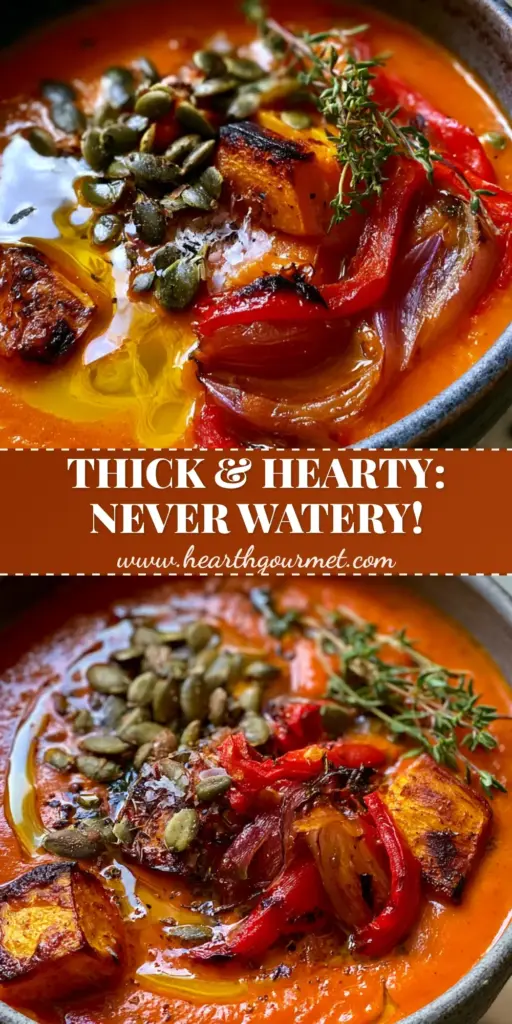
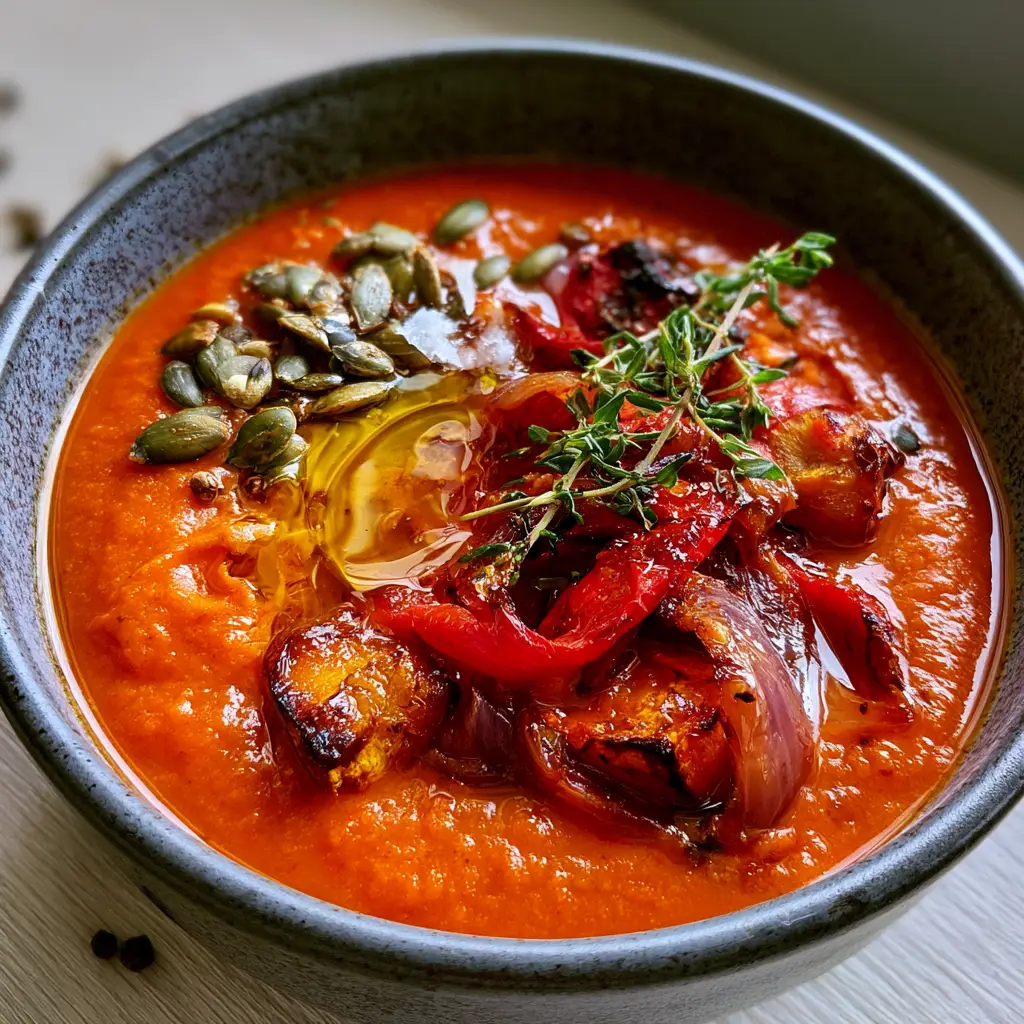
There is a profound difference between a standard bowl of broth and the artisanal vegetable soup recipe we are crafting today. Imagine a rustic matte charcoal ceramic bowl, its dark surface providing the perfect high-contrast backdrop for a soup that glows with the vibrant hues of a Mediterranean sunset. This isn’t just a meal; it’s a study in texture and the transformative power of high-heat roasting.
We are moving away from the watery, limp vegetables of traditional stovetop methods. Instead, this vegetable soup recipe utilizes a thick, velvety tomato and carrot puree as a canvas for caramelized butternut squash cubes, charred red bell pepper strips, and translucent red onion petals. Every spoonful offers a rhythmic interplay of silky liquid and tender, roasted bite, finished with the audible crunch of toasted pumpkin seeds.
The Culinary Architecture of a Superior Roasted Vegetable Soup
To achieve the “handheld smartphone photo” quality of a professional kitchen, we must focus on the structural integrity of our ingredients. This vegetable soup recipe relies on three distinct pillars of flavor and visual appeal that set it apart from ordinary recipes.
- Dual-Texture Composition: We blend half the roasted vegetables into a dense, non-watery base while keeping the most beautiful specimens—the browned squash and charred peppers—whole for visual impact.
- Maillard Reaction Mastery: By roasting our vegetables until they develop “blistered” and “caramelized” edges, we unlock complex sugars that a simple boil could never achieve.
- The Garnish Layering: We use high-viscosity extra virgin olive oil and fresh thyme sprigs to create a lustrous sheen that catches the natural morning window light perfectly.
Essential Components for Your Vegetable Soup Recipe
Selecting the right produce is the first step in ensuring your soup matches the deep orange and sunset red aesthetic of our blueprint. Each ingredient here serves a specific culinary and visual purpose.
Butternut Squash (1 Small, approx. 2 lbs / 900g): This provides the “chunks with browned edges” specified in our blueprint. Its high starch content also helps thicken the base naturally without the need for heavy creams.
Red Bell Peppers (2 Large): These are sliced into “strips” and roasted until the skins blister. They provide the “charred” element that introduces a smoky depth to the overall flavor profile.
Red Onions (2 Medium): Instead of dicing, we cut these into wedges to create “caramelized red onion petals.” They become translucent and sweet, offering a sophisticated textural contrast.
Carrots (3 Large / 300g) and Plum Tomatoes (4 Large / 400g): These are roasted and pureed to create the “thick tomato and carrot puree base.” They provide the vibrant sunset red color core.
Vegetable Stock (4 Cups / 950ml): Use a high-quality, low-sodium stock. We add this incrementally to ensure the soup remains “noticeably thick and velvety” rather than watery.
Extra Virgin Olive Oil (1/4 Cup / 60ml): A portion is used for the high-heat roasting, while the remainder is reserved for that “delicate swirl of golden oil” on the finished surface.
Toasted Green Pumpkin Seeds (2 tbsp / 16g): Also known as pepitas, these provide the “crunchy” element that breaks up the softness of the roasted vegetables.
Fresh Thyme (5-6 Sprigs): Used both in the roasting process and as a “fresh green” garnish to provide an earthy aromatic lift.
Foundational Seasonings: You will need flaky sea salt and cracked black pepper. The salt crystals should be visible on the surface of the finished dish to mimic the “authentic and unedited” style of the visual prompt.
Professional Tools for the Perfect Puree
To achieve the “dense, non-watery texture” visible in the soup’s surface, you will need a few specific kitchen items. A heavy-duty rimmed baking sheet is essential for the caramelization process, as it distributes heat evenly to the squash and peppers.
For the base, a high-speed immersion blender or a traditional upright blender is required to emulsify the carrots and tomatoes into a “lustrous” liquid. If you enjoy this level of vegetable-forward cooking, you might also find inspiration in our authentic pasta e fagioli soup, which also focuses on building deep, complex bases.
Step-by-Step Evolution of the Vegetable Soup Recipe
Roasting for Color and Concentration
Preheat your oven to 425°F (220°C). Peel and cube the butternut squash into 1-inch (2.5cm) pieces. Slice the red bell peppers into 1/2-inch (1.25cm) strips and the red onions into 8 wedges each to create those “petals.”
Toss the squash, peppers, onions, carrots, and halved tomatoes with 2 tablespoons (30ml) of olive oil and a generous pinch of salt. Spread them in a single layer. Roast for 25-30 minutes. Look for the “visual cue”: the squash should have distinct browned edges and the pepper skins should be starting to blacken and curl.
Building the Vibrant Puree Base
Remove the roasted carrots and tomatoes from the tray, along with about one-third of the roasted squash. Place these into a large pot. Add the vegetable stock and bring to a gentle simmer for 10 minutes to allow the flavors to meld.
Using your blender, process this mixture until it is completely smooth. It should be a “rich, vibrant deep orange.” If it feels too thick, add stock 1/4 cup (60ml) at a time, but remember our goal is a “velvety and lustrous” consistency that supports the weight of the garnishes.
Integrating the Roasted Gems
Gently fold the remaining caramelized butternut squash cubes, charred red bell pepper strips, and red onion petals into the pureed base. Heat over low for 5 minutes. Do not boil vigorously, or you will break down the structural integrity of the “visible chunks” we worked so hard to roast.
The Final Handheld-Ready Presentation
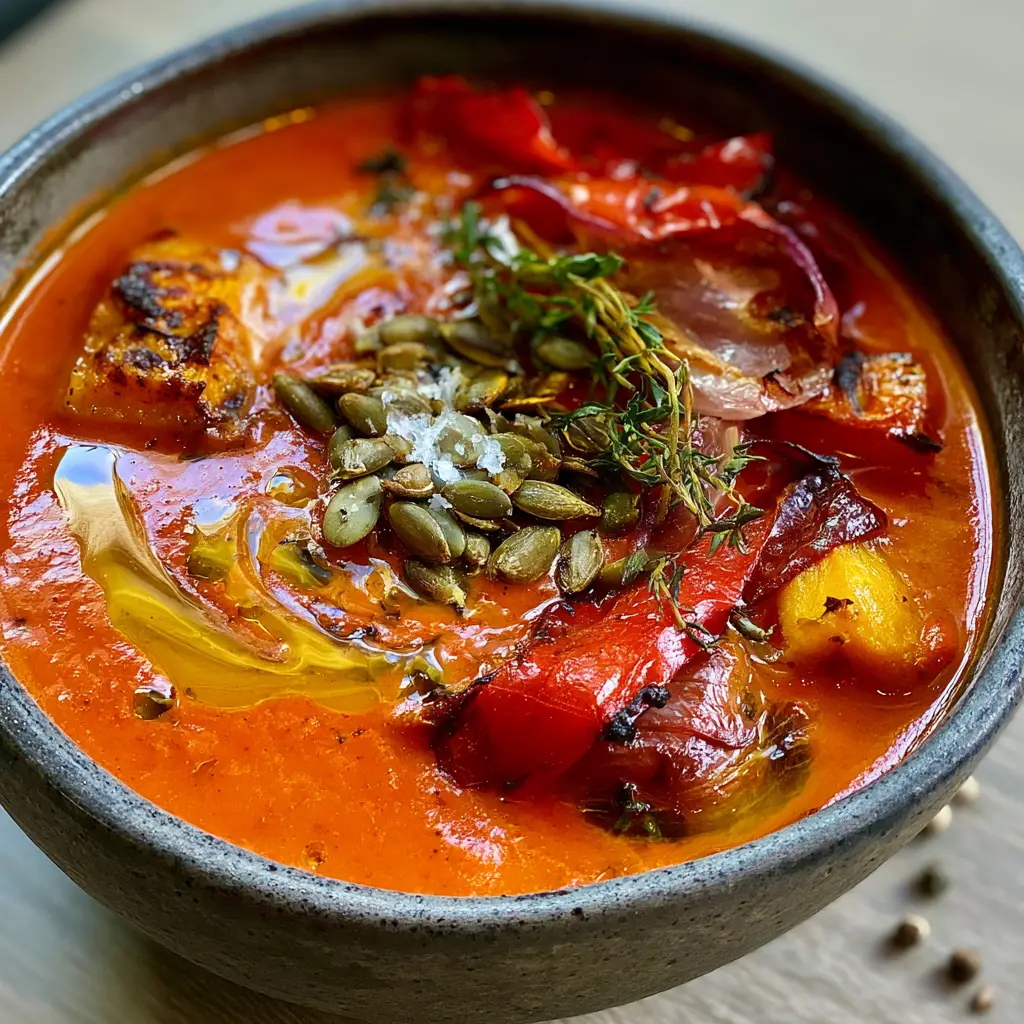
Ladle the soup into a rustic matte charcoal ceramic bowl. The heat of the soup will create a “gentle sheen” on the surface. Now, we execute the blueprint’s garnish instructions exactly. Scatter a handful of toasted pumpkin seeds across the center.
Carefully drizzle the extra virgin olive oil in a slow, circular motion. Top with a few fresh sprigs of thyme, a pinch of flaky sea salt, and a final aggressive crack of black pepper. The result should look “authentic and unedited,” just like a high-end smartphone photo from a rustic kitchen.
Expert Tips for Soup Success
- The Crowd Control Rule: Do not overcrowd your roasting pan. If the vegetables are too close together, they will steam instead of caramelizing, and you will lose those “browned edges” critical to the visual prompt.
- The Onion Petal Secret: Keep the root end of the red onion wedge slightly intact during roasting so the “petals” stay together as a unit rather than falling apart into thin slivers.
- Texture Management: If your soup feels too thin, simmer the pureed base for an extra 10 minutes before adding the vegetable chunks to reduce the water content and intensify the sunset red color.
- Flavor Pairing: For a complete meal, this soup pairs beautifully with a hearty bread. If you’re in the mood for more baking, try our homemade pizza recipe to serve alongside a smaller bowl of this soup.
Storing and Reheating Your Roasted Creation
This vegetable soup recipe actually improves the next day as the roasted aromatics continue to infuse the puree. Store in an airtight container in the refrigerator for up to 4 days.
When reheating, do so over low heat on the stovetop. Avoid the microwave if possible, as it can cause the “tender charred red bell pepper strips” to become rubbery. If the soup has thickened too much in the fridge, whisk in a tablespoon (15ml) of water or stock to restore the velvety sheen.
What to Serve with Roasted Vegetable Soup
Because this soup is so rich and “thick,” it demands a side dish with some structural bite. A crusty sourdough or a grilled cheese sandwich is the classic choice. If you are hosting a larger dinner, consider starting with this soup and following it with our classic lasagna recipe for a truly comforting feast.
For those looking for a lighter, more broth-heavy alternative for another night, our Japanese clear soup offers a wonderful contrast to this dense, roasted puree. Or, if you prefer more protein in your bowl, check out the traditional Italian chicken soup.
Frequently Asked Questions
While pumpkin seeds offer the best ‘crunch’ for this specific blueprint, you could also use toasted sunflower seeds or even sourdough croutons for a similar textural contrast.
Yes! This soup freezes beautifully. Store in an airtight container for up to 3 months. Thaw in the fridge overnight and reheat slowly on the stove to maintain the texture of the roasted chunks.
The secret is pureeing roasted starchy vegetables like carrots and butternut squash directly into the base. This creates a velvety, non-watery texture that is naturally thick and cream-free.
Ensure your oven is at least 425°F (220°C) and place the pepper strips skin-side up. Don’t be afraid of a few black spots; that’s where the smoky flavor resides.
Roasting triggers the Maillard reaction, which caramelizes the natural sugars in the squash and onions. This adds a depth of flavor and a smoky charred edge that boiling simply cannot achieve.
The Ultimate Roasted Vegetable Soup Recipe
Vegetable Soup Recipe: The Ultimate Roasted Butternut and Charred Pepper Velouté
Ingredients
Equipment
Method
- Preheat oven to 425°F (220°C). Toss butternut squash cubes, pepper strips, onion petals, carrots, and tomatoes with 2 tbsp (30ml) olive oil and sea salt on a baking sheet.
- Roast for 25-30 minutes until squash has browned edges and peppers are charred.
- Combine roasted carrots, tomatoes, and 1/3 of the squash in a pot with vegetable stock. Simmer for 10 minutes.
- Use an immersion blender to process the base until it is a thick, vibrant sunset red puree.
- Fold in the remaining roasted squash, pepper strips, and onion petals. Warm through.
- Serve in charcoal bowls. Garnish with pumpkin seeds, a swirl of olive oil, thyme, and cracked black pepper.
Notes
If the soup is too thick, thin with a splash of warm broth just before serving.
Share Your Culinary Masterpiece
We believe that a vegetable soup recipe this beautiful deserves to be seen. If your bowl looks exactly like our “rustic matte charcoal ceramic” blueprint, we want to see it! The contrast of the deep orange soup against the dark bowl is a photographer’s dream.
Please leave a comment below and tell us how your caramelization turned out. Don’t forget to save this recipe to your “Healthy Comfort Food” board on Pinterest so you can find it every time the temperature drops.