There is a specific, quiet magic that occurs when a bowl of authentic japanese clear soup is placed before you. It is the preamble to a great meal, yet it often steals the show with its deceptive simplicity. This isn’t just a basic stock; it is a masterclass in culinary clarity and refined umami balance.
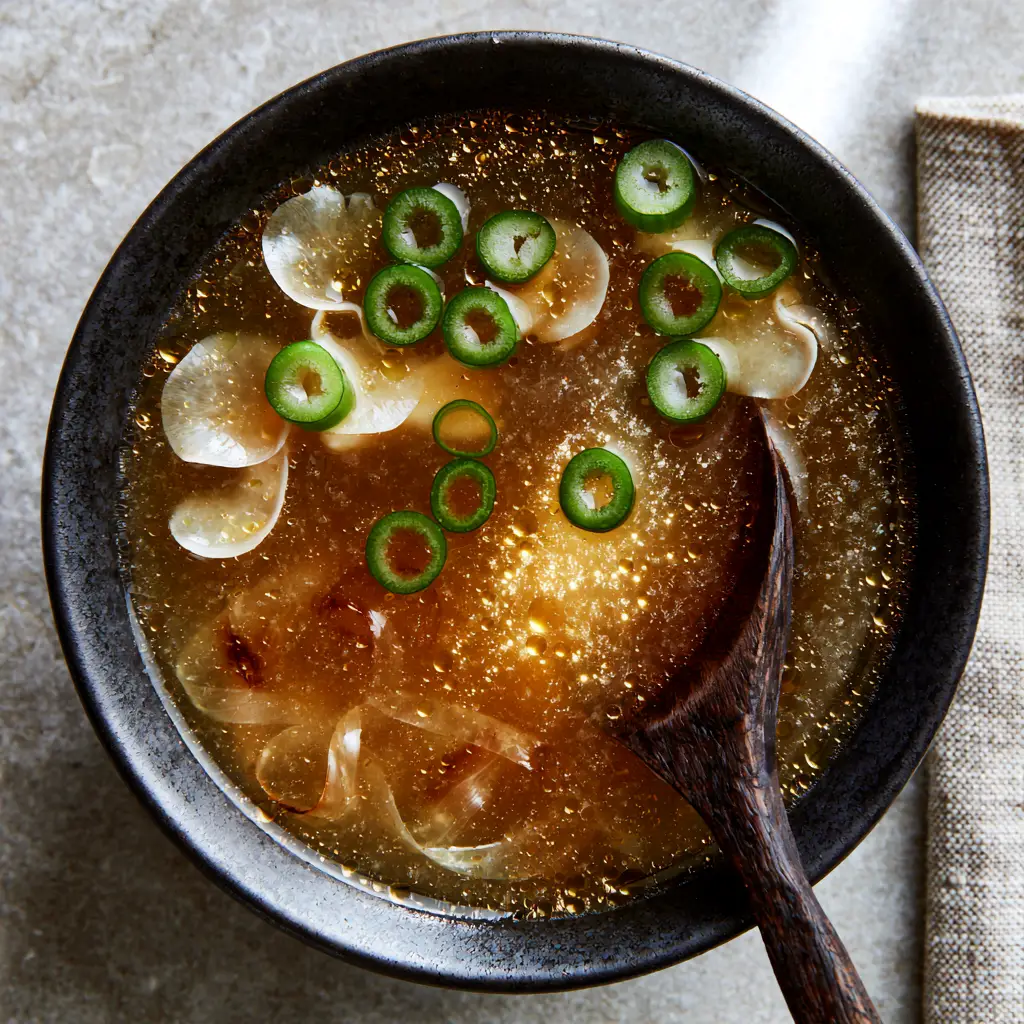
Our version recreates that iconic restaurant experience with a focus on forensic visual accuracy. We are targeting a translucent golden-amber onion broth that serves as a pristine window to the delicate garnishes below. Every sip delivers a complex, toasted sweetness that lingers on the palate.
By following this guide, you will learn to master the “long simmer” and the “gentle strain.” These techniques ensure your broth remains crystal-clear, adorned only by shimmering micro-oil droplets that catch the light like liquid gold. This is the japanese clear soup you’ve been dreaming of, perfected for the home kitchen.

The Visual Alchemy of Perfect Hibachi-Style Soup
- The Translucent Foundation: A crystal-clear, golden-amber liquid that reveals every detail of the submerged garnishes.
- The Floating Garnish: Paper-thin, raw white mushroom slices that soften just enough from the residual heat of the broth.
- The Toasted Ribbons: Translucent onion ribbons, deeply toasted to provide a savory depth and a beautiful visual contrast beneath the surface.
- The Vibrant Finish: Bright green, perfectly circular scallion rings that provide a sharp, fresh bite against the rich broth.
- The Shimmer: Tiny, shimmering golden oil droplets that create a luxurious mouthfeel and a professional “handheld smartphone photo” finish.
The Essential Components for a Crystal-Clear Result
To achieve the depths of flavor required for a world-class japanese clear soup, we must look beyond the surface. We utilize a combination of aromatic vegetables and slow-roasted bones to build a foundation that is both light and incredibly savory.
Yellow Onions (2 Large): These are the soul of the soup. We char them to create those signature toasted translucent onion ribbons and to infuse the broth with a golden-amber hue.
Beef and Chicken Bones (1lb (450g) each): A hybrid stock approach provides the most complex umami profile. Ensure they are rinsed thoroughly to prevent any cloudiness in your final liquid.
Fresh Ginger (3-inch (7.5cm) piece): Smashed to release its oils, ginger provides a subtle, warming heat that cuts through the richness of the toasted onions.
Carrots and Celery (2 each): These classic aromatics provide the subtle sweetness and herbaceous notes that round out the savory profile of the japanese clear soup.
White Button Mushrooms (1/2 cup (70g)): These must be sliced paper-thin. Their raw state allows them to maintain a delicate texture when they hit the hot broth at the moment of serving.
Scallions (3 stalks): Only the bright green parts are used for the rings, ensuring a pop of color that contrasts beautifully against the matte black ceramic bowl.
Neutral Oil (2 tbsp (30ml)): We use a high-smoke point oil to char the onions, which later translates into those shimmering micro-oil droplets on the surface.
Precision Tools for Culinary Clarity
Achieving a professional-grade japanese clear soup requires more than just a pot. To ensure your broth is as clear as the one in our visual blueprint, you will need a few specific tools.
A heavy-bottomed stockpot is essential for maintaining a consistent, low-simmer temperature. If the broth boils too vigorously, the fat and proteins emulsify, leading to a cloudy appearance rather than a translucent one.
You will also need a fine-mesh sieve lined with cheesecloth or a specialized coffee filter. This is the secret to removing every microscopic particle, leaving behind only the pure, golden-amber liquid that characterizes the best japanese clear soup.
The Mastery of the Golden-Amber Onion Broth
Step 1: The Maillard Char and Fragrant Foundation
Begin by slicing your onions into thick rounds. In your stockpot, heat 1 tbsp (15ml) of oil over medium-high heat. Place the onion rounds in a single layer and sear them until they are deeply browned, almost charred, on both sides.
This “Maillard reaction” is what develops the toasted translucent onion ribbons. Once charred, add your smashed ginger, carrots, and celery, allowing them to soften slightly for 3-5 minutes until the smell is intoxicating.
Step 2: The Gentle Extraction
Add your rinsed bones to the pot and cover with 10 cups (2.4L) of cold filtered water. It is vital to start with cold water; this allows the proteins to coagulate slowly and rise to the top as a foam, rather than staying suspended in the liquid.
Bring the pot to a bare simmer—look for “lazy bubbles” breaking the surface. Use a skimmer to remove any grey foam that rises. If you’ve enjoyed our classic vegetable soup, you know that patience during the simmering phase is the key to depth.
Step 3: The Long Simmer and Infusion
Reduce the heat to the lowest setting. Let the japanese clear soup simmer uncovered for at least 2 to 3 hours. This slow process extracts the essence of the toasted onions and bones without agitating the liquid.
As the liquid reduces, the color will transform from a pale yellow to a deep, translucent golden-amber. This is the sensory cue you are looking for—a rich, glowing liquid that looks like melted gemstones.
Step 4: The Double Filtration Process
Once the flavor is concentrated, remove the large solids with a slotted spoon. Prepare a second clean pot and set your fine-mesh sieve over it, lined with a triple layer of damp cheesecloth.
Pour the broth through the cloth slowly. Do not press on the solids, as this will force cloudy particles into your pristine japanese clear soup. The result should be a shimmering, sediment-free broth ready for the final assembly.
Expert Tips for the Perfect Garnish Display
- The Mushroom Mandoline: To get those paper-thin white mushroom slices, use a mandoline on the thinnest setting. They should be so thin they are nearly translucent.
- The Scallion Ice Bath: After hovering your scallions into rings, drop them into a bowl of ice water for 30 seconds. This makes them curl slightly and heightens their bright green color.
- Heat Control: Never boil the broth once it has been strained. Reheat it to just below a simmer before pouring over the raw garnishes.
- The Oil Drop Trick: If your broth looks too “lean,” whisk in a single teaspoon (5ml) of toasted sesame oil or scallion oil right before serving to create those shimmering golden oil droplets.
Storage, Reheating, and Make-Ahead Magic
This japanese clear soup is an excellent candidate for meal prep. The strained broth can be stored in an airtight glass jar in the refrigerator for up to 5 days. In fact, the flavor often deepens after 24 hours of resting.
When reheating, do so gently on the stovetop. Avoid the microwave, as uneven heating can sometimes cause the delicate oil droplets to disperse poorly. If you find yourself with extra broth, it freezes beautifully for up to 3 months.
For those who love a variety of starters, this broth pairs excellently alongside our light italian chicken soup as part of a multi-course soup tasting menu.
What to Serve With This Elegant Starter
Since this japanese clear soup is light and refreshing, it serves as the perfect palate cleanser before a heavier main course. It is traditionally served before a Hibachi-style meal featuring grilled meats and fried rice.
If you are looking to stick with a comforting theme, try serving this soup before a hearty bowl of pasta e fagioli or a slice of our homemade easy pizza. The contrast between the clear, umami broth and a cheesy, carb-heavy main is delightful.
For a Tex-Mex twist, you might even consider a soup-and-sandwich combo using our chicken torta sandwich, where the ginger in the soup provides a bright counterpoint to the rich avocado and beans.
Frequently Asked Questions
Yes, you can substitute the beef and chicken bones with high-quality dried shiitake mushrooms and a piece of kombu. The onion-charring step remains vital for the flavor.
No. The mushrooms should be sliced paper-thin so the residual heat of the hot broth ‘cooks’ them instantly without losing their delicate texture.
No. Miso soup uses fermented soybean paste and is opaque. Japanese clear soup (Miyabi soup) is a translucent meat and vegetable-based broth.
The color comes from deeply charring the onions before adding water. The Maillard reaction creates natural pigments that infuse into the liquid during the long simmer.
Cloudiness usually occurs if the broth is boiled too vigorously or if the bones weren’t rinsed. Keep the heat at a ‘lazy simmer’ and use a cheesecloth-lined sieve for maximum clarity.
The Final Recipe: Authentic Japanese Clear Soup

Japanese Clear Soup: The Ultimate Crystal-Clear Hibachi Broth Guide
Ingredients
Equipment
Method
- Heat oil in a stockpot over medium-high heat. Char onion rounds until deep brown on both sides. Add carrots, celery, and ginger; sauté for 5 minutes.
- Add rinsed bones and 10 cups (2.4L) cold water. Bring to a bare simmer. Skim foam from the surface. Reduce heat to low and simmer uncovered for 3 hours.
- Remove solids with a slotted spoon. Strain liquid through a fine-mesh sieve lined with triple-layered cheesecloth into a clean pot.
- Place raw mushroom slices and scallion rings in bowls. Pour hot broth over them. The toasted onion ribbons from the broth should be visible beneath the surface.
Notes
Do not boil the broth after straining; maintain a gentle heat to preserve the shimmering oil droplets.
Conclusion: Bring the Hibachi Experience Home
Mastering the japanese clear soup is a point of pride for any home cook. It demonstrates a respect for ingredients and a commitment to technique that transcends the simple act of boiling water. The combination of the deep matte black bowl and the golden-amber liquid creates a visual experience that is as satisfying as the taste itself.
We invite you to share your results with us! Tag your photos on Instagram or save this recipe to your favorite board on Pinterest. Your journey into the world of crystal-clear broths is just beginning, and we can’t wait to see your shimmering micro-oil droplets in action!