When you crave a meal that feels like a warm hug but looks like it belongs in a high-end Italian bistro, this Tomato pasta sauce with cream cheese is the definitive answer. There is something truly magical about the way tangy cream cheese melts into a simmering tomato base, transforming it into a thick, velvety pink-orange masterpiece.
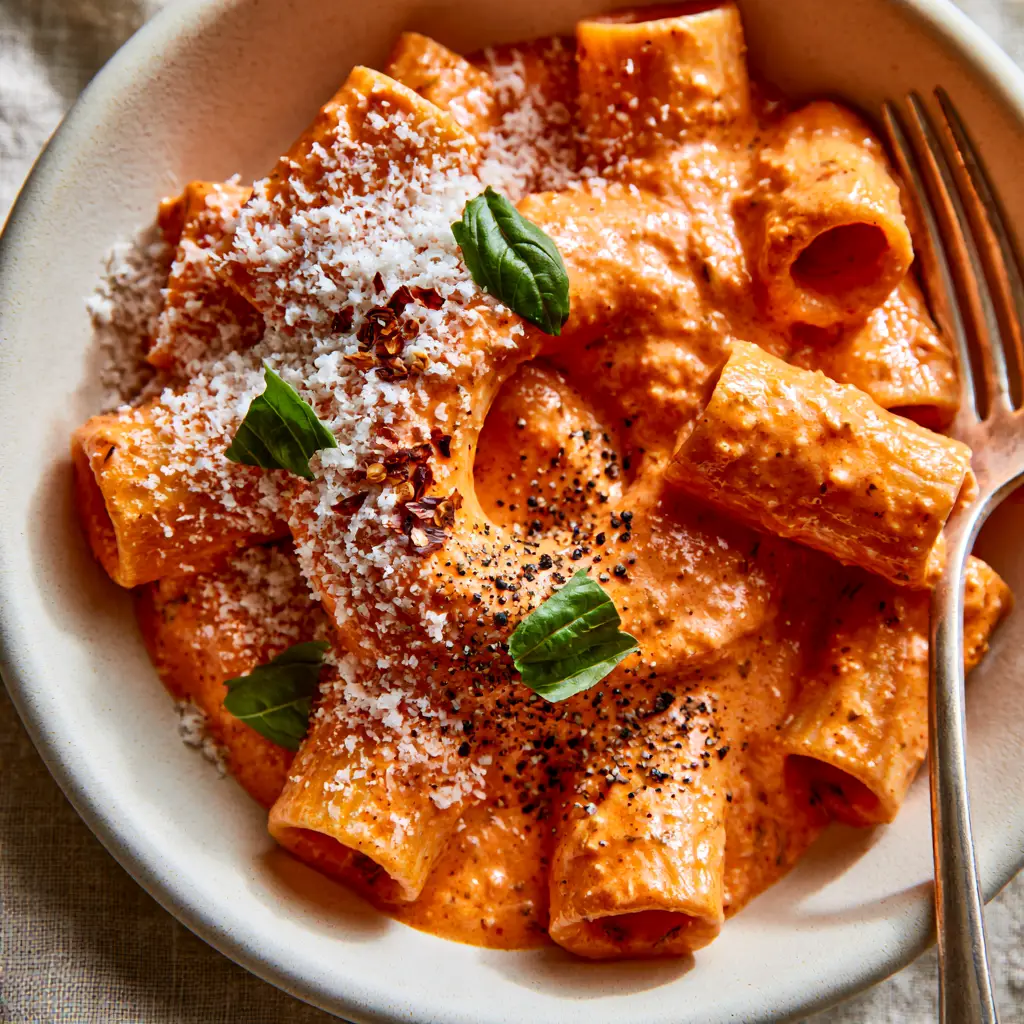
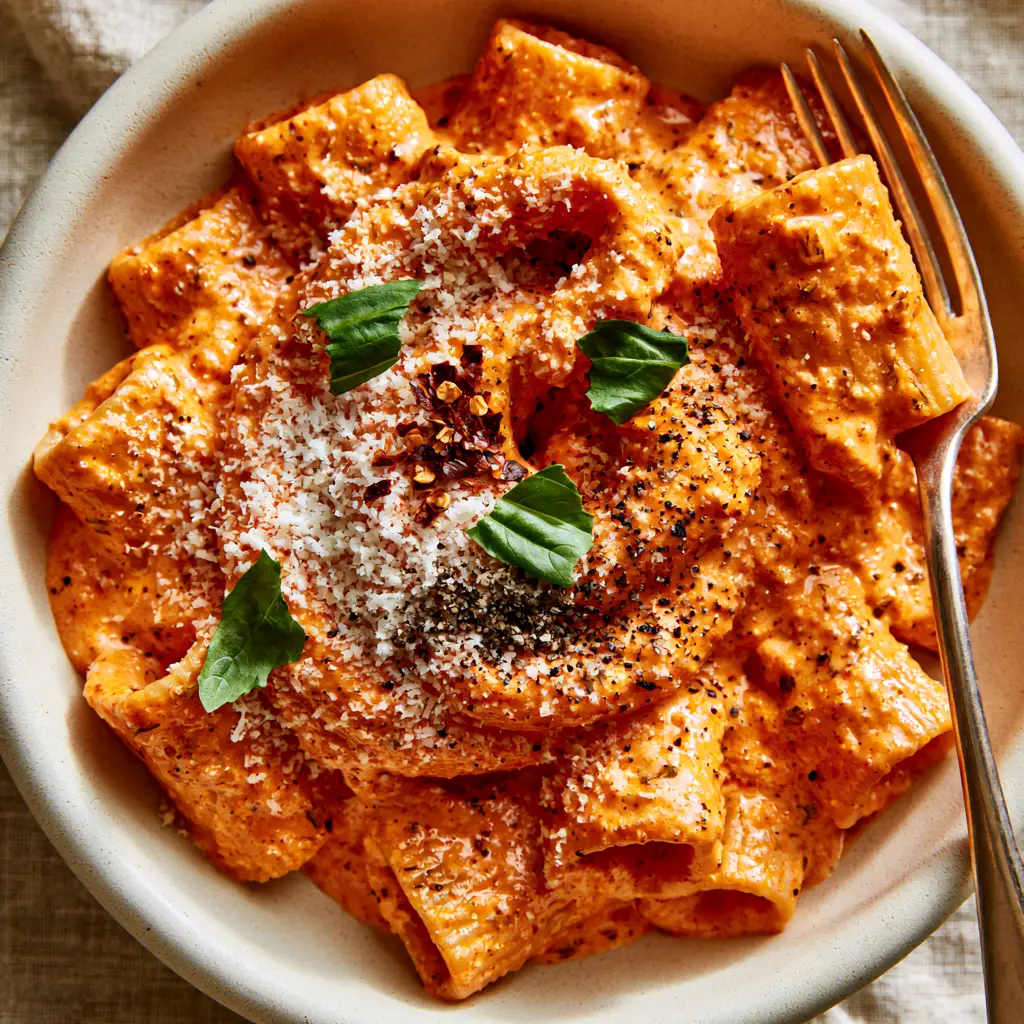
The visual appeal of this dish is undeniable—the sauce doesn’t just sit on the pasta; it clings to every ridge of the al dente rigatoni with a glossy sheen. This recipe is designed for those who appreciate the finer textures of home cooking, from the “snow-like” dusting of Pecorino Romano to the vibrant green of hand-torn basil.
Whether you are a seasoned home cook or just looking for a reliable weeknight staple, this sauce delivers professional-grade results with minimal effort. It is a masterclass in emulsification, proving that a few high-quality pantry staples can create a restaurant-quality experience in under 30 minutes.
Why This Velvety Tomato and Cream Cheese Emulsion Works
- The Viscosity Factor: Unlike traditional cream sauces that can be thin, the high fat and protein content of cream cheese creates a “non-dripping” viscosity that perfectly coats large pasta shapes.
- The Flavor Profile: You get the bright acidity of tomatoes balanced by the rich, tangy creaminess of the cheese, finished with the sharp saltiness of aged Pecorino.
- Textural Contrast: The soft, velvety sauce is punctuated by the crunch of toasted red chili flakes and the coarse bite of freshly cracked black pepper.
- Aromatic Depth: Dried oregano specks simmered directly into the sauce provide a nostalgic, earthy undertone that complements the fresh, herbal notes of torn basil.
If you enjoy the rich profile of this dish, you might also love my classic pasta alla vodka, which uses a similar color palette but with a sharp vodka finish. For a version with a bit more heat, my creamy calabrian chili pappardelle is another fan favorite.
Essential Ingredients for the Perfect Pink-Orange Sauce
Rigatoni Pasta: 1 lb (450g). We use rigatoni because its large ridges and wide hollow center act as a structural vessel to trap the thick, velvety sauce.
Tomato Passata or Crushed Tomatoes: 24 oz (680g). For that hyper-realistic, smooth texture seen in the photos, passata is preferred as it lacks the seeds and chunks of standard canned tomatoes.
Full-Fat Cream Cheese: 8 oz (226g). Ensure this is at room temperature to prevent curdling and to achieve that signature vibrant pink-orange hue during the emulsification process.
Pecorino Romano Cheese: 1/2 cup (50g). This sheep’s milk cheese provides a sharper, saltier punch than Parmesan, mimicking the “snow-like” dusting required for the final presentation.
Extra Virgin Olive Oil: 2 tbsp (30ml). This foundational fat is essential for blooming the dried oregano and chili flakes, releasing their essential oils into the base of the sauce.
Fresh Garlic: 3 cloves (15g). Minced finely to ensure the flavor is evenly distributed without leaving large, pungent chunks in the smooth sauce.
Dried Oregano: 1 tsp (2g). These provide the visible “simmered specks” that add visual complexity and a deep Mediterranean aroma.
Red Chili Flakes & Black Pepper: To taste. Toasted chili flakes add a gentle warmth, while coarse cracked black pepper provides the “high-resolution” texture seen in the final bowl.
Fresh Basil: 5-6 leaves. These should be torn by hand rather than sliced to preserve the volatile oils and provide that vibrant green contrast.
Tools Required for Professional Pasta Textures
To achieve the “handheld smartphone photo” quality of this dish, you need the right tools. A heavy-bottomed stainless steel or cast iron skillet is vital for even heat distribution, ensuring the cream cheese melts smoothly without scorching.
You will also need a Microplane or fine grater to achieve that “snow-like” Pecorino finish. A standard box grater will produce shreds that are too heavy; we want a light, airy dusting that sits on top of the sauce’s glossy sheen.
Step-by-Step Instructions for the Perfect Glossy Finish
1. Preparing the Pasta Foundation
Bring a large pot of heavily salted water to a rolling boil. Add 1 lb (450g) of rigatoni and cook for approximately 2 minutes less than the package directions. We are aiming for true “al dente” so the pasta finishes cooking in the sauce.
Pro Tip: Before draining, reserve 1 cup (240ml) of the starchy pasta water. This is the “liquid gold” that creates the final glossy highlights and helps the sauce adhere to the noodle.
2. Simmering the Aromatic Tomato Base
In a large skillet over medium heat, add 2 tbsp (30ml) of olive oil. Add the minced garlic and 1 tsp (2g) of dried oregano. Sauté for 60 seconds until the garlic is fragrant and the oregano “specks” begin to sizzle.
Pour in the 24 oz (680g) of tomato passata. Reduce heat to low and simmer for 10 minutes. Look for the visual cue of the sauce darkening slightly and the oil beginning to bead on the surface.
3. Emulsifying the Cream Cheese
Add the 8 oz (226g) of softened cream cheese to the tomato base. Use a whisk to gently break up the cheese. As it melts, you will see the sauce transform from deep red to a vibrant, velvety pink-orange.
Continue to stir until no white streaks remain. The sauce should have a thick, non-dripping viscosity at this stage. If it feels too thick, add a splash of the reserved pasta water to achieve that glossy sheen.
4. The Marriage of Pasta and Sauce
Toss the al dente rigatoni directly into the skillet. Increase the heat to medium-low and stir vigorously for 2 minutes. The starch from the pasta will react with the cream cheese to create a professional-grade emulsion.
Ensure every ridge of the rigatoni is fully coated. The sauce should look hyper-realistic and thick, not watery or separated.
Expert Tips for Visual and Flavor Success
- Temperature Control: Never boil the sauce once the cream cheese is added. High heat can cause the proteins to clump, destroying the velvety sheen we worked so hard to create.
- The “Pasta Water” Secret: If the sauce looks matte instead of glossy, add 1 tbsp of pasta water at a time while tossing. The starch acts as a bridge between the fat and the liquid.
- Toasting the Flakes: Add your red chili flakes to the oil at the beginning. Toasting them in fat brings out their natural color and infuses the entire dish with a gentle, balanced heat.
- The Pecorino Snow: Grate your cheese immediately before serving. Pre-grated cheese contains anti-caking agents that prevent it from melting into that beautiful, snow-like texture.
What to Serve With Your Creamy Tomato Pasta
To balance the richness of the Tomato pasta sauce with cream cheese, I recommend pairing it with a light, acidic side. A simple arugula salad with lemon vinaigrette works wonders.
If you’re hosting a full Italian spread, consider starting with prosciutto wrapped mozzarella bites or a crisp tortellini pasta salad for varied textures. For a heartier pairing, this pasta is a great side to a light chicken meatball soup.
Storage, Reheating, and Meal Prep
This sauce is best served fresh to maintain its “non-dripping” viscosity. However, leftovers can be stored in an airtight container in the refrigerator for up to 3 days. The sauce will thicken significantly as it cools.
To reheat, place the pasta in a skillet over low heat and add a splash of milk or water. Stir gently until the cream cheese relaxes and the pink-orange hue returns to its original vibrancy. Avoid the microwave if possible, as it can cause the sauce to break and become oily.
Frequently Asked Questions
Yes, but Pecorino Romano is saltier and tangier, which balances the sweetness of the cream cheese better. If using Parmesan, you may need to add an extra pinch of salt to achieve the same flavor profile.
While you can, full-fat cream cheese is recommended for the best results. Low-fat versions have a higher water content and may not provide the same thick, ‘non-dripping’ viscosity or vibrant pink-orange color seen in the photos.
The key is to use room-temperature cream cheese and keep the heat on low. High heat can cause the proteins to separate. Whisking the cheese into the warm (not boiling) tomato base ensures a smooth, velvety emulsion.
It is similar in color, but the texture is thicker. Vodka sauce uses heavy cream and vodka for a sharper finish, while this version uses cream cheese for a tangier flavor and a more velvety, stable viscosity.
Rigatoni has large ridges and a wide hollow center designed to hold onto thick sauces. Since this tomato and cream cheese sauce is very viscous, these ridges ensure every bite is perfectly coated.
The Complete Tomato Pasta Sauce with Cream Cheese Recipe
Tomato pasta sauce with cream cheese: The Ultimate 20-Minute Comfort Meal
Ingredients
Equipment
Method
- Cook rigatoni in salted water until just before al dente. Reserve 1 cup of pasta water and drain.
- In a skillet, sauté garlic and oregano in olive oil for 1 minute until fragrant.
- Add tomato passata and simmer on low for 10 minutes until slightly thickened.
- Stir in softened cream cheese until the sauce turns a velvety pink-orange. Use a whisk for a smooth texture.
- Toss the pasta with the sauce, adding splashes of pasta water as needed for a glossy sheen.
- Serve in bowls and top with finely grated Pecorino, torn basil, chili flakes, and black pepper.
Notes
Always reserve pasta water; it is the key to the glossy texture.
Closing & Call to Action
This Tomato pasta sauce with cream cheese is proof that you don’t need a pantry full of ingredients to create a stunning, flavorful meal. The combination of the thick, velvety sauce and the bite of al dente rigatoni makes it a recipe you will return to time and time again.
If you made this dish, I would love to hear how it turned out! Please leave a comment below and share your photos. Don’t forget to save this recipe to your favorite boards on Pinterest so you always have it on hand for your next cozy dinner night.