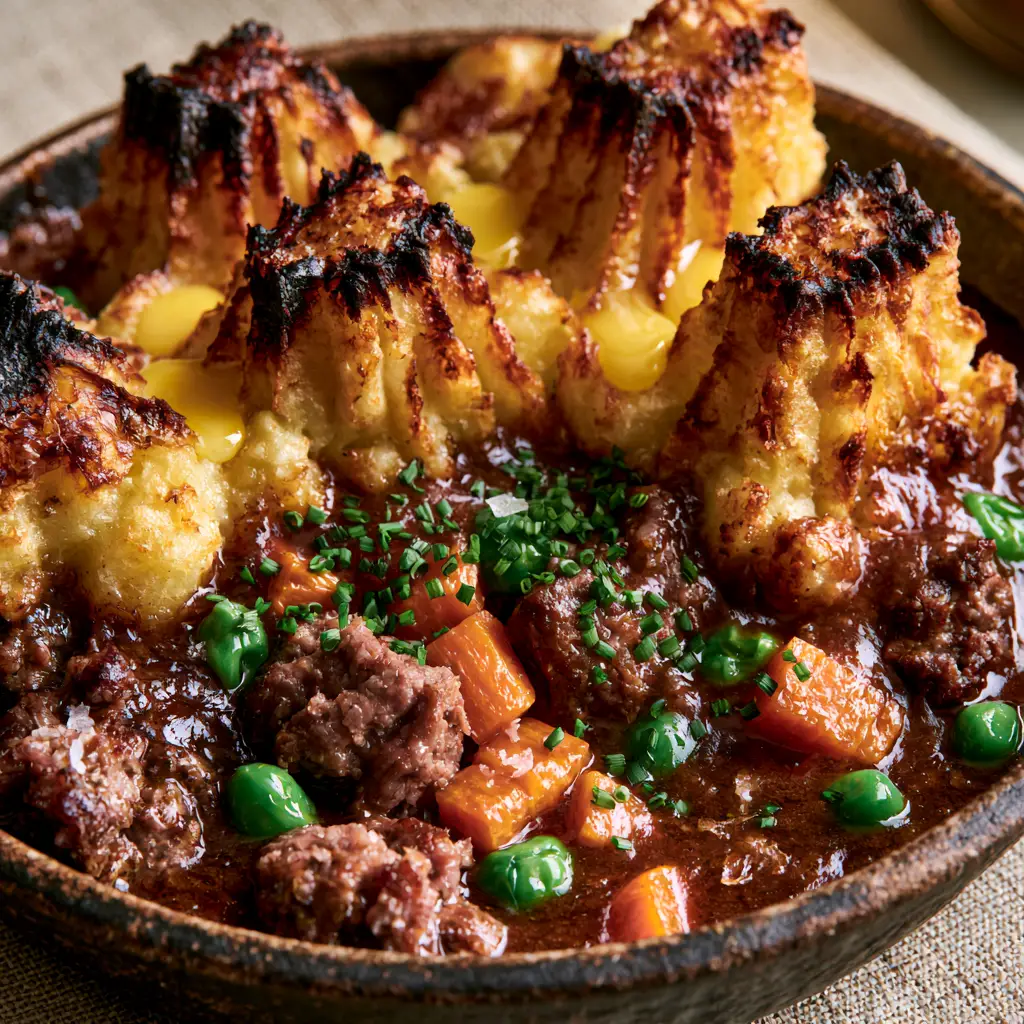
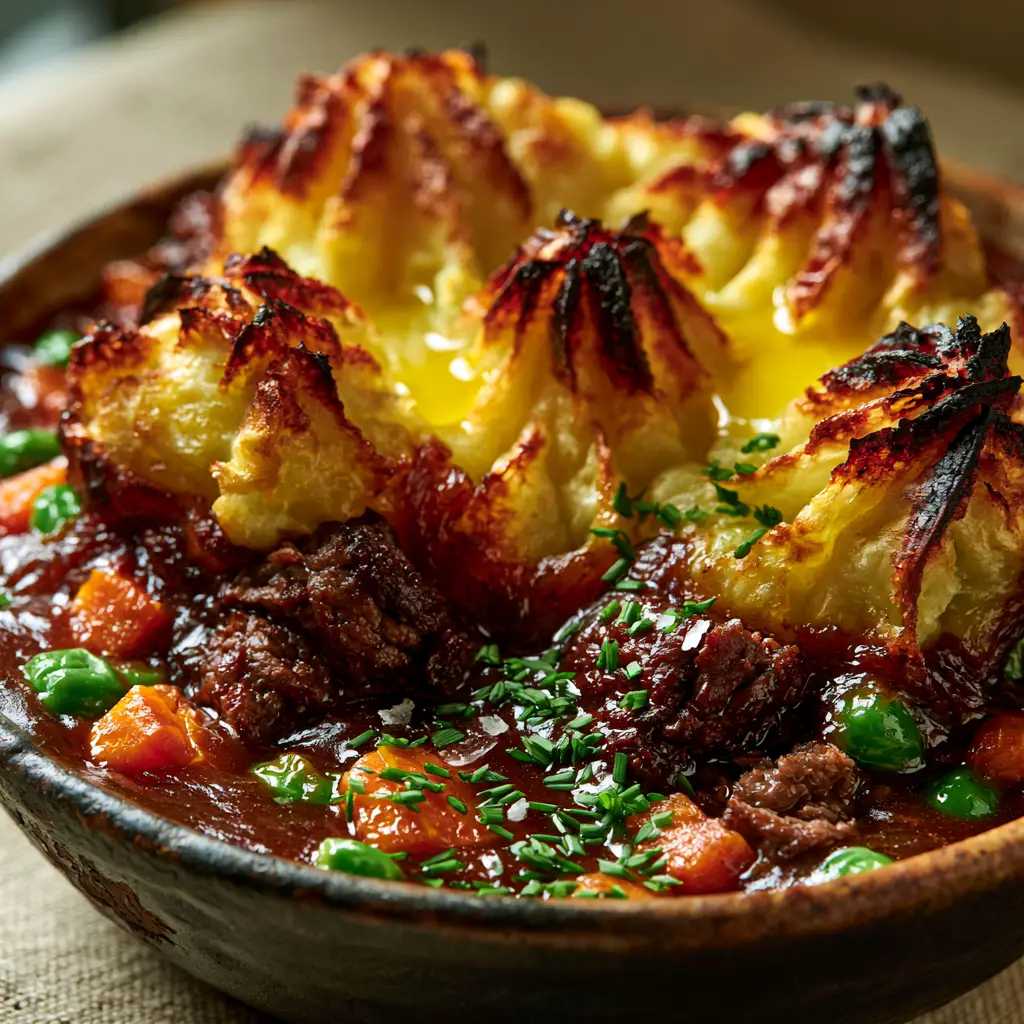
There is nothing quite as soul-warming as a perfectly executed Shepherd’s Pie, a dish that defines the pinnacle of rustic comfort food. When you look at a truly great version of this classic, your eyes should first land on those towering, architectural mashed potato peaks, their ridges deeply toasted to a golden-brown char.
As your spoon breaks through that crispy crust, it should reveal a thick, rich mahogany-colored beef gravy that clings to every morsel of browned ground beef. This isn’t just a meat pie; it is a study in texture, from the snap of vibrant emerald green peas to the tender bite of diced carrots, all glistening under a light scattering of fresh chives and flaky sea salt.
In this guide, we are stripping away the watery, bland versions of the past to build a Shepherd’s Pie that looks like a professional food photograph and tastes like a multi-generational heirloom recipe. We will focus on the science of the “no-runoff” gravy and the technique for those iconic charred potato ridges that define the dish’s visual identity.
Why This Savory Shepherd’s Pie Is a Visual and Culinary Masterpiece
- Structural Integrity: The mahogany beef gravy is engineered to be dense and glossy, ensuring zero watery runoff when served, keeping the layers distinct and beautiful.
- Textural Contrast: We achieve a specific “macro-level” detail with crispy potato ridges that provide a crunch against the velvety, cream-laden mash underneath.
- Flavor Depth: By using specific browning techniques, we develop a deep savory profile that turns simple ground beef into a sophisticated, rich filling.
- Vibrant Aromatics: The addition of finely minced fresh green chives and a few flakes of sea salt at the end provides a bright pop of color and an immediate hit of seasoning.
The Anatomy of a Perfect Shepherd’s Pie: Essential Ingredients
Ground Beef (90/10 Lean): 1.5 lbs (680g). While traditional Irish versions use lamb (Cottage Pie uses beef), this recipe utilizes high-quality ground beef for a flavor profile that is universally loved and provides the perfect base for our mahogany sauce.
Yukon Gold Potatoes: 2.5 lbs (1.1kg). These are the secret to that creamy, yellow interior; their natural starch content allows us to pipe or fluff them into the tall, architectural peaks seen in professional photography.
Tomato Paste: 2 tbsp (32g). This is the secret “invisible” ingredient that provides the deep, mahogany color to the gravy and adds a layer of umami that salt alone cannot achieve.
Beef Stock: 1.5 cups (360ml). Use a high-quality, low-sodium stock to control the salt levels while providing the liquid base for our glossy, thick sauce.
Diced Carrots: 1 cup (150g). These should be diced small and uniform to ensure they become perfectly tender during the simmering process without losing their vibrant orange hue.
Frozen Sweet Peas: 1 cup (150g). Added at the very end of the stovetop process, these maintain their emerald green color and provide a “pop” of sweetness in every bite.
Unsalted Butter: 6 tbsp (85g). Divided between the potatoes and the final topping, droplets of melted yellow butter nestled in the potato grooves are essential for that professional finish.
Fresh Chives: 2 tbsp (10g). Finely chopped, these provide a sharp, onion-like brightness that cuts through the richness of the beef and potatoes.
Flaky Sea Salt: A generous pinch for the finish. These large crystals catch the light and provide a burst of texture that fine table salt simply cannot match.
All-Purpose Flour: 2 tbsp (16g). This acts as our thickening agent, binding the beef juices and stock into a dense, clinging gravy.
Essential Tools for Achieving High-Definition Texture
To recreate the visual of our Shepherd’s Pie, you will need a rustic ceramic bowl or a deep-dish cast iron skillet. The ceramic holds heat evenly, which helps in developing the mahogany crust on the bottom while the top broils.
A heavy-duty potato masher or ricer is non-negotiable for achieving a smooth, creamy texture without lumps. To create those iconic peaks, a simple dinner fork is actually your best friend, though some prefer a piping bag with a large star tip for a more “architectural” look.
Mastering the Mahogany Beef Filling
Searing for Deep Flavor
Start by heating 1 tbsp (15ml) of neutral oil in a large skillet over medium-high heat. Add the ground beef, breaking it into hearty chunks rather than a fine crumble; this provides the “meaty” mouthfeel described in our visual blueprint.
Allow the meat to sear undisturbed for 3-4 minutes until a deep, dark brown crust forms on the bottom. This is the Maillard reaction in action, and it is the first step toward that rich mahogany color.
Building the Savory Base
Add your diced carrots to the pan with the beef. Sauté for another 5 minutes until the carrots begin to soften. At this stage, stir in the tomato paste, coating the meat and vegetables entirely.
Cook the tomato paste for 2 minutes until it turns a shade darker—this “toasting” of the paste removes the raw metallic taste and deepens the final gravy color significantly.
Deglazing and Thickening
Sprinkle the flour over the meat mixture and stir well for 1 minute to cook out the raw flour taste. Slowly pour in the beef stock while stirring constantly.
Bring the mixture to a simmer and watch as it transforms into a thick, glossy sauce. It should be dense enough to coat the back of a spoon heavily; if it looks watery, continue to simmer for 3-5 more minutes. Fold in the emerald green peas just before removing from heat.
Crafting the Iconic Architectural Potato Topping
The Secret to Creamy, Stable Mash
Boil the peeled Yukon Gold potatoes in salted water until fork-tender, usually about 15-20 minutes. Drain them thoroughly and let them steam in the pot for 2 minutes to remove excess moisture—dry potatoes absorb butter better.
Mash the potatoes with 4 tbsp (56g) of butter and 1/4 cup (60ml) of heavy cream. The consistency should be thick and hold its shape; if it is too runny, the peaks will collapse in the oven.
Creating the Deeply Toasted Ridges
Spread the mashed potatoes over the beef filling, starting from the edges to “seal” the gravy underneath. This prevents the sauce from bubbling up and staining your pristine white potatoes.
Use a fork to pull the potatoes upward, creating tall, irregular ridges and “fork-tine peaks.” These thin edges are what will catch the heat and turn that beautiful charred golden-brown in the oven.
The Final Broil and Finishing Touches
Place the Shepherd’s Pie in an oven preheated to 400°F (200°C). Bake for 20 minutes to heat everything through, then switch the oven to the “Broil” setting for the final 3-5 minutes.
Watch closely! You are looking for the very tips of the potato peaks to turn a deep, dark brown—almost blackened in spots—while the rest of the ridges turn golden. This creates the “macro” contrast of textures and colors.
Immediately upon removing from the oven, place small droplets of the remaining butter into the hot potato grooves. Scatter the finely minced chives and the flaky sea salt over the top while the butter is still glistening.
Expert Tips for Success
- Zero Watery Runoff: Ensure your gravy is thick before it goes into the oven. The potatoes will weigh down on the sauce; if it isn’t stable, it will turn into a soup.
- The Butter Groove: Placing the butter after baking ensures it stays yellow and vibrant rather than soaking into the mash and disappearing.
- Color Grading: If your gravy isn’t “mahogany” enough, a dash of Worcestershire sauce or a teaspoon of dark soy sauce can deepen the hue without changing the flavor profile significantly.
- Peak Performance: If your potatoes are too smooth, the ridges won’t char correctly. Keep the surface “messy” and architectural for the best visual result.
Storing, Reheating, and Make-Ahead Advice
Shepherd’s Pie is one of those rare dishes that actually tastes better the next day as the flavors in the mahogany gravy have time to meld. Store leftovers in an airtight container in the refrigerator for up to 3 days.
To reheat, use the oven at 350°F (175°C) rather than the microwave to preserve the crispy texture of the potato peaks. If you are looking for a lighter variation of this comfort classic, you might enjoy a lentil shepherd's pie which offers a similar texture with a plant-based twist.
What to Serve With This Savory Feast
Because this dish is so rich and hearty, it pairs beautifully with high-acid or very light sides. A crisp green salad with a lemon vinaigrette is traditional, but you can also lean into the “pie” theme with beef party pies if you are hosting a larger gathering.
If you have leftover filling, it can easily be transformed into a shepherd's pie soup, which is a fantastic way to utilize every bit of that mahogany gravy. For those who love the combination of peas and richness, our creamy pasta with sweet peas and crispy pancetta offers a similar flavor palette in a different format.
Frequently Asked Questions
Yes! You can assemble the entire dish, let it cool, and refrigerate it overnight. Increase the baking time by 10-15 minutes if cooking directly from the fridge.
Use a fork to pull the potatoes into irregular ridges. The high surface area of these thin peaks allows them to char and crisp up under the broiler while the rest stays creamy.
The secret is reducing the beef stock and using a thickener like flour or tomato paste. Ensure the filling is thick and glossy before adding the potato layer to prevent liquid from bubbling through.
Traditionally, Shepherd’s Pie is made with ground lamb (hence ‘shepherd’), while Cottage Pie is made with ground beef. However, in many modern kitchens, the terms are used interchangeably for the beef version.
Yukon Golds have a naturally buttery flavor and a starch content that creates a creamier, more stable mash that holds ‘architectural’ peaks better than fluffier Russets.
The Ultimate Shepherd’s Pie Recipe
Shepherd's Pie with Architectural Potato Peaks and Mahogany Beef Gravy
Ingredients
Equipment
Method
- Brown the ground beef in a skillet over medium-high heat until a deep crust forms. Add carrots and sauté until softened.
- Stir in tomato paste and cook for 2 minutes to darken. Sprinkle with flour, then gradually whisk in beef stock.
- Simmer until the gravy is thick and mahogany-colored. Fold in peas and remove from heat.
- Boil and mash potatoes with 4 tbsp butter and cream until smooth but stiff.
- Spread mash over beef and use a fork to pull up tall, architectural peaks.
- Bake at 400°F (200°C) for 20 mins, then broil for 3-5 mins until peaks are charred golden-brown.
- Top with remaining butter droplets, chives, and flaky sea salt before serving.
Notes
Use a fork to create irregular ridges for maximum char surface area.

Join the Hearth Gourmet Community
We hope this Shepherd’s Pie becomes a staple in your home, bringing the same warmth and visual delight to your table as it does to ours. The secret is all in the details—the mahogany sauce, the charred peaks, and that final sprinkle of salt.
If you made this recipe, please leave a comment below and let us know how your potato peaks turned out! Don’t forget to share your photos and pin this recipe to Pinterest so others can find this comforting classic. Happy cooking!