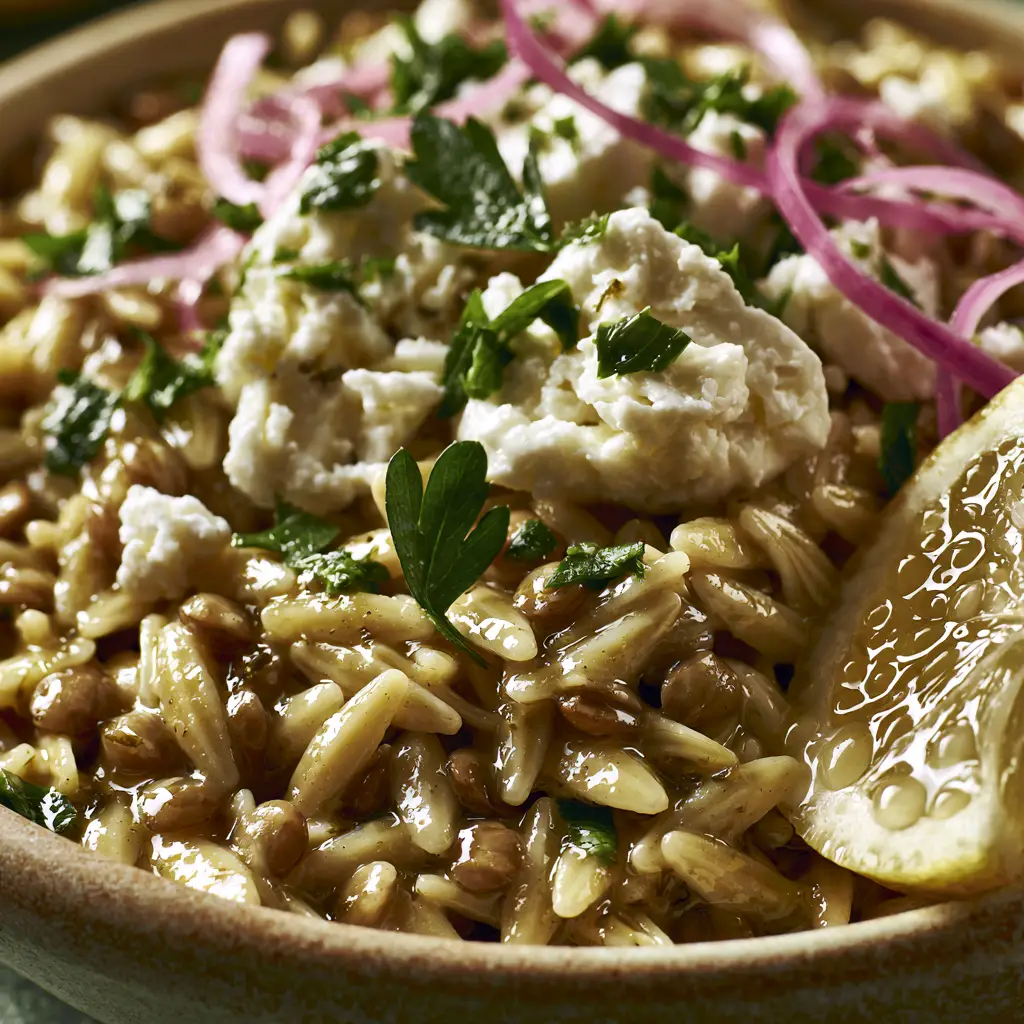
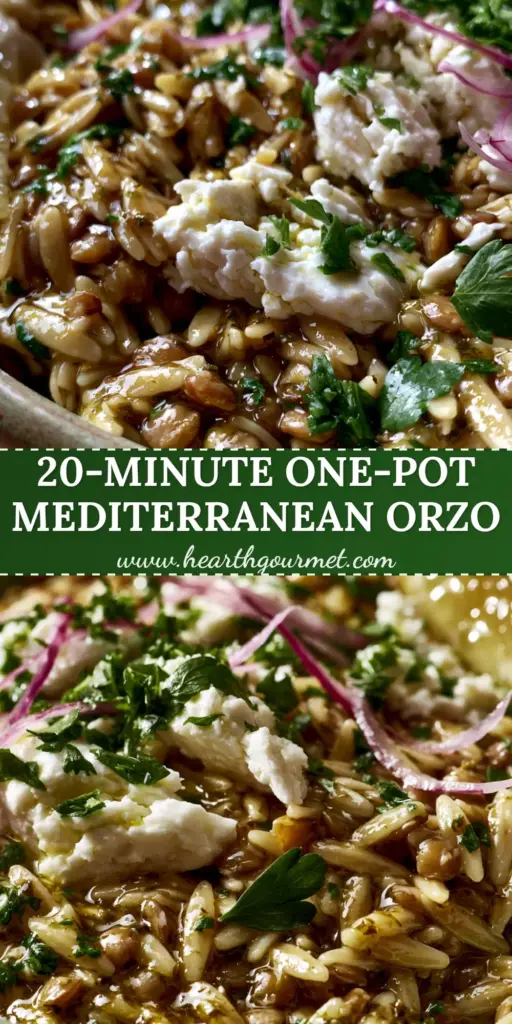
The mediterranean lentil and orzo is a masterclass in textural contrast and vibrant, sun-drenched flavors. Imagine a ceramic bowl where every grain of al dente pasta and every tender lentil is coated in a light, glossy lemon-herb emulsion that shimmers under natural light.
This dish isn’t just a meal; it’s a sensory experience defined by the sharp bite of red onion, the creamy saltiness of rustic feta crumbles, and the bright, citrusy droplets of fresh lemon juice. Whether served warm as a comforting dinner or chilled as a sophisticated salad, it captures the essence of Mediterranean coastal cooking.
In this guide, we will explore the culinary forensics of building the perfect grain bowl, ensuring your results match the high-definition, macro-detail beauty of a professional kitchen. We are focusing on “plump and glistening” textures that satisfy the palate and the eyes alike.
Why This Mediterranean Lentil and Orzo Recipe Works
- Perfect Textural Balance: By pairing “al dente” orzo with “tender” brown lentils, we create a complex mouthfeel that is neither mushy nor tough.
- The Lemon-Herb Emulsion: Unlike heavy sauces, our emulsion of extra virgin olive oil and fresh lemon juice creates a glistening finish that enhances rather than masks the ingredients.
- High-Definition Flavor Pops: Rustic crumbles of stark white feta and paper-thin slivers of red onion provide sharp, intermittent bursts of flavor against the earthy base.
- Visual Brilliance: The contrast between the vibrant green parsley and the cracked black pepper ensures every forkful looks as good as it tastes.
The Anatomy of Glistening Mediterranean Grains
To achieve the specific “glossy” look described in our visual blueprint, we must understand the role of fats and acids. The mediterranean lentil and orzo relies on high-quality extra virgin olive oil to act as a lubricant for the starches.
When the warm orzo and lentils meet the cold-pressed oil and lemon juice, they form a temporary emulsion. This is what creates that “plump, glistening” appearance in the ceramic bowl, catching the light perfectly for a high-definition finish.
If you enjoy this specific profile of citrus and starch, you might also find inspiration in our Mediterranean Pasta Salad, which utilizes similar flavor pillars but with a different pasta geometry.
Essential Ingredients for the Ultimate Grain Bowl
Dried Brown Lentils: 1 cup (200g). We use brown lentils specifically for their ability to hold their shape while becoming tender, providing the “tender” yet distinct texture required for our blueprint.
Orzo Pasta: 1 cup (200g). This rice-shaped pasta acts as the canvas for our flavors; cooking it strictly to al dente ensures it remains plump and individual rather than clumping.
Extra Virgin Olive Oil: 1/4 cup (60ml). This is a “foundational invisible” ingredient that provides the glossy sheen and carries the floral notes of the dried oregano.
Fresh Lemon Juice: 3 tbsp (45ml). Beyond flavor, the acid in the lemon juice “cuts” the starchiness of the grains, making the colors of the parsley pop visually.
Feta Cheese: 1/2 cup (75g), crumbled. Look for sheep’s milk feta in brine to achieve those “large, rustic crumbles” that hold their stark white color against the earthy lentils.
Red Onion: 1/4 medium onion, paper-thin slivers. Soaking these in cold water for five minutes can remove the harsh sulfur bite while maintaining the vibrant purple visual.
Fresh Flat-Leaf Parsley: 1/2 cup (15g), finely chopped. This provides the “vibrant green” element that signals freshness and provides an aromatic lift.
Dried Oregano & Black Pepper: 1 tsp (2g) each. These “finishing” spices add the “cracked” visual texture and an earthy depth that anchors the citrus notes.
Professional Equipment for Precision Results
To achieve the “paper-thin” slivers of red onion mentioned in the visual prompt, a sharp Mandoline or a professional-grade Chef’s knife is essential. Consistency in cutting ensures that the onion integrates into the mediterranean lentil and orzo without overpowering a single bite.
You will also need a fine-mesh strainer to rinse your lentils thoroughly. Removing excess dust and debris before cooking is the secret to a “clean” look in the final dish, preventing a cloudy or grey appearance on the grain surfaces.
Lastly, a large ceramic bowl is preferred for serving. Ceramic retains heat better than glass, and the matte finish of the bowl provides a beautiful contrast to the “glistening” emulsion of the pasta.
Step-by-Step Execution: Mastering the Emulsion
1. Preparing the Tender Brown Lentils
Start by sorting 1 cup (200g) of brown lentils to remove any small stones. Rinse them under cold water until the water runs clear, ensuring a bright final presentation.
Place lentils in a pot with 3 cups (720ml) of water and a pinch of salt. Bring to a boil, then reduce to a simmer; cook for 20-25 minutes until “tender” but not splitting. Drain and set aside in a large mixing bowl.
2. Achieving the Perfect Al Dente Orzo
While the lentils simmer, bring a large pot of salted water to a rolling boil. Add 1 cup (200g) of orzo and cook for approximately 8-9 minutes.
Test the pasta frequently; it should have a slight “bite” in the center. Drain the orzo, but do not rinse it—the residual starch is vital for creating the “light, glossy emulsion” with the olive oil.
3. Constructing the Lemon-Herb Base
In the bowl with the warm lentils, add the hot orzo. Immediately drizzle with 1/4 cup (60ml) of extra virgin olive oil and 2 tbsp (30ml) of fresh lemon juice. Toss gently.
Observe the “Visual Cue”: The grains should begin to glisten as they absorb the oil. Sprinkle in the dried oregano and cracked black pepper, allowing the heat to bloom the dried herbs’ fragrance.
4. Adding the High-Contrast Layers
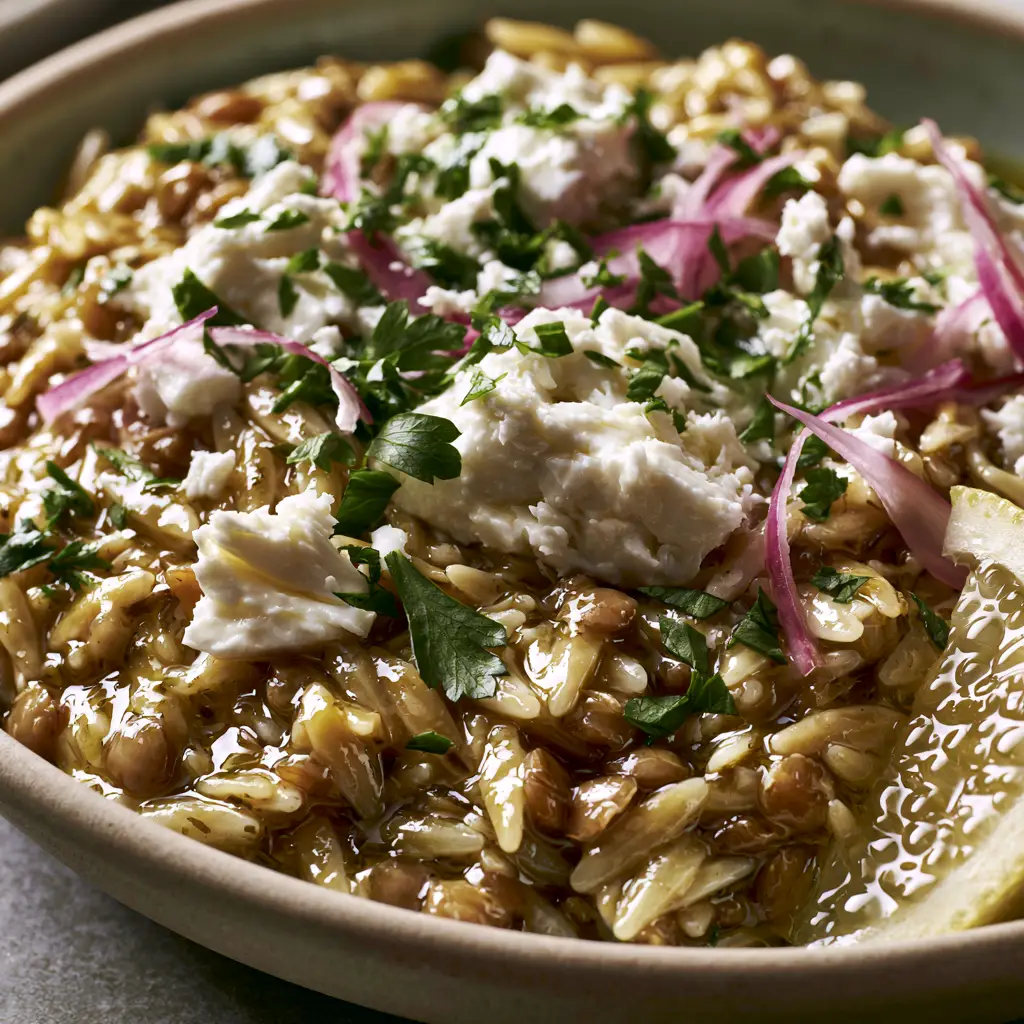
Once the mixture has cooled slightly (to prevent the cheese from melting), fold in the finely chopped parsley and the paper-thin red onion slivers. This preserves the “vibrant green” and “stark white” colors.
Top with the large, rustic crumbles of feta cheese. Do not over-mix; you want the feta to sit on top in distinct, creamy chunks as per the visual recipe blueprint.
Expert Tips for Visual and Culinary Success
- The “Gloss” Factor: If the dish looks dull after sitting, add one final “droplet” drizzle of lemon juice and a teaspoon of olive oil right before serving.
- Onion Mellowing: If you find raw red onion too sharp, soak the thin slivers in the lemon juice for 5 minutes before adding to the bowl. This “quick-pickles” them, turning them a bright pink.
- Lentil Integrity: Never boil lentils aggressively. A gentle simmer prevents the skins from bursting, which is essential for that “plump” look in our macro photo.
- Herb Freshness: Only chop the parsley right before serving. Pre-chopped herbs can bruise and turn dark, losing the “vibrant green” impact.
Storage, Reheating, and Make-Ahead Advice
This mediterranean lentil and orzo is an exceptional candidate for meal prep. It can be stored in an airtight container in the refrigerator for up to 4 days. In fact, many find the flavors deepen on the second day as the oregano and lemon infuse into the lentils.
To serve cold, simply give it a quick stir. If you prefer it warm, microwave it in 30-second intervals with a splash of water to loosen the starch. Avoid freezing this dish, as the texture of the orzo can become grainy upon thawing.
What to Pair with This Mediterranean Feast
This dish is incredibly versatile. For a complete vegetarian spread, serve it alongside Oven-Baked Italian Eggplant. The smoky, soft texture of the eggplant complements the bite of the orzo perfectly.
If you are looking for a soup and salad combo, pair a smaller portion of this with our Spicy Chicken Soup for a protein-packed lunch. The acidity of the lemon in the grains helps balance the heat of the soup.
For a crunchier side, consider serving with Classic Italian Bruschetta, using the toasted bread to scoop up the stray lentils and feta crumbles.
Frequently Asked Questions
Yes! Simply swap the orzo pasta for a gluten-free orzo brand or use short-grain brown rice. Ensure you don’t overcook the substitute to maintain the al dente texture.
The secret is adding the olive oil and lemon juice while the orzo and lentils are still warm. This allows the starches to bond with the oil, creating a glossy emulsion rather than just a greasy coating.
You can refrigerate this dish for up to 4 days. If the grains absorb the dressing and look dry, just add a quick squeeze of lemon and a tiny drizzle of olive oil before eating.
It is incredibly versatile. Serving it warm emphasizes the creamy feta and fragrant oregano, while serving it chilled makes it a refreshing and crisp pasta salad.
Brown or green (Puy) lentils are best because they hold their shape when cooked. Avoid red lentils, as they break down into a puree and won’t provide the distinct ‘tender’ texture required.
The Final Mediterranean Lentil and Orzo Recipe
Mediterranean Lentil and Orzo with Lemon, Herbs, and Feta
Ingredients
Equipment
Method
- Simmer lentils in 3 cups of salted water for 20-25 minutes until tender but intact. Drain well.
- Boil orzo in salted water for 8-9 minutes until al dente. Drain but do not rinse.
- Combine warm lentils and orzo in a bowl. Drizzle with olive oil and lemon juice, tossing until glistening.
- Fold in parsley and onion. Top with rustic feta crumbles, cracked pepper, and oregano flakes. Finish with fresh lemon droplets.
Notes
Soak onions in cold water first to remove the harsh bite.
Closing & Call to Action
The mediterranean lentil and orzo is a testament to the fact that simple ingredients, when treated with professional technique, can produce a world-class result. The glistening emulsion, the rustic feta, and the fresh lemon droplets create a dish that is as nourishing as it is beautiful.
If you enjoyed this recipe, please leave a comment below and tell us how yours turned out! Don’t forget to follow us on Pinterest for more visually-driven culinary inspiration. Share your creations by tagging @hearthgourmet!