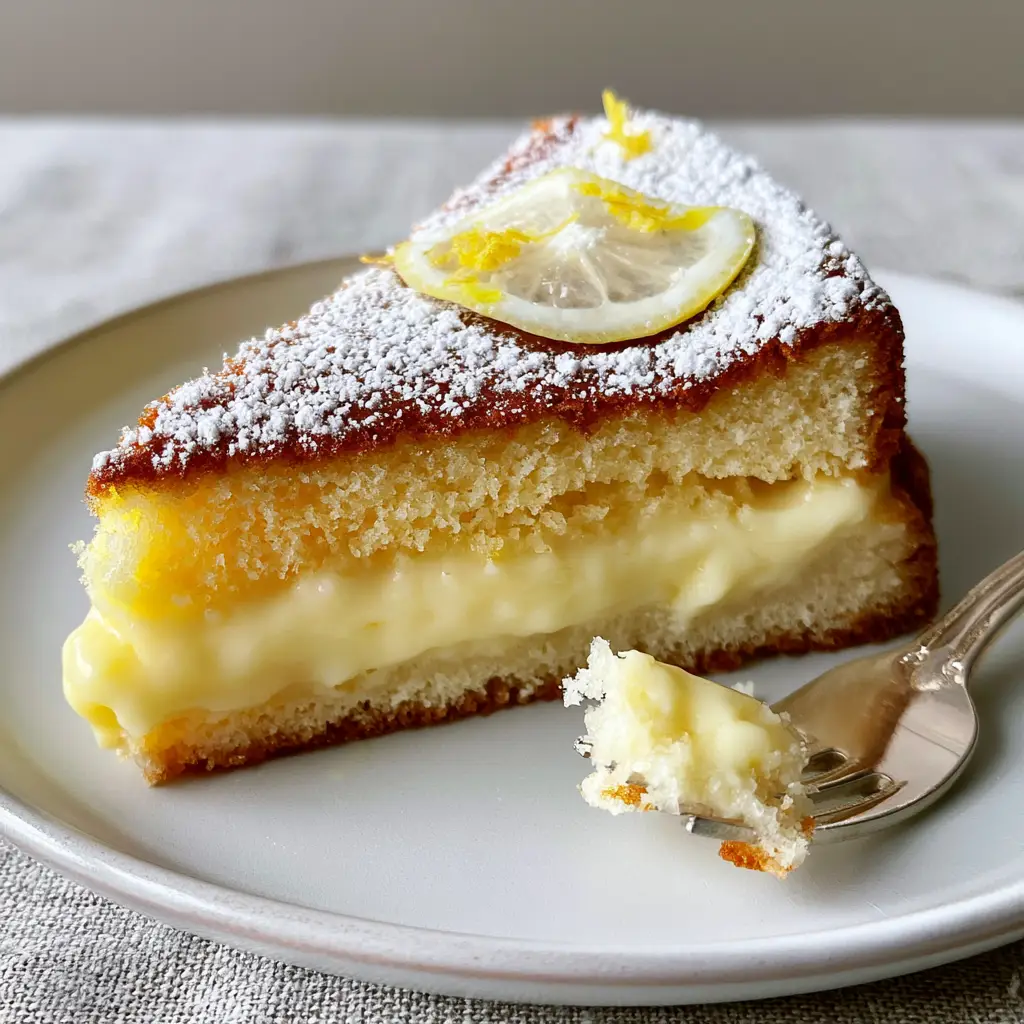
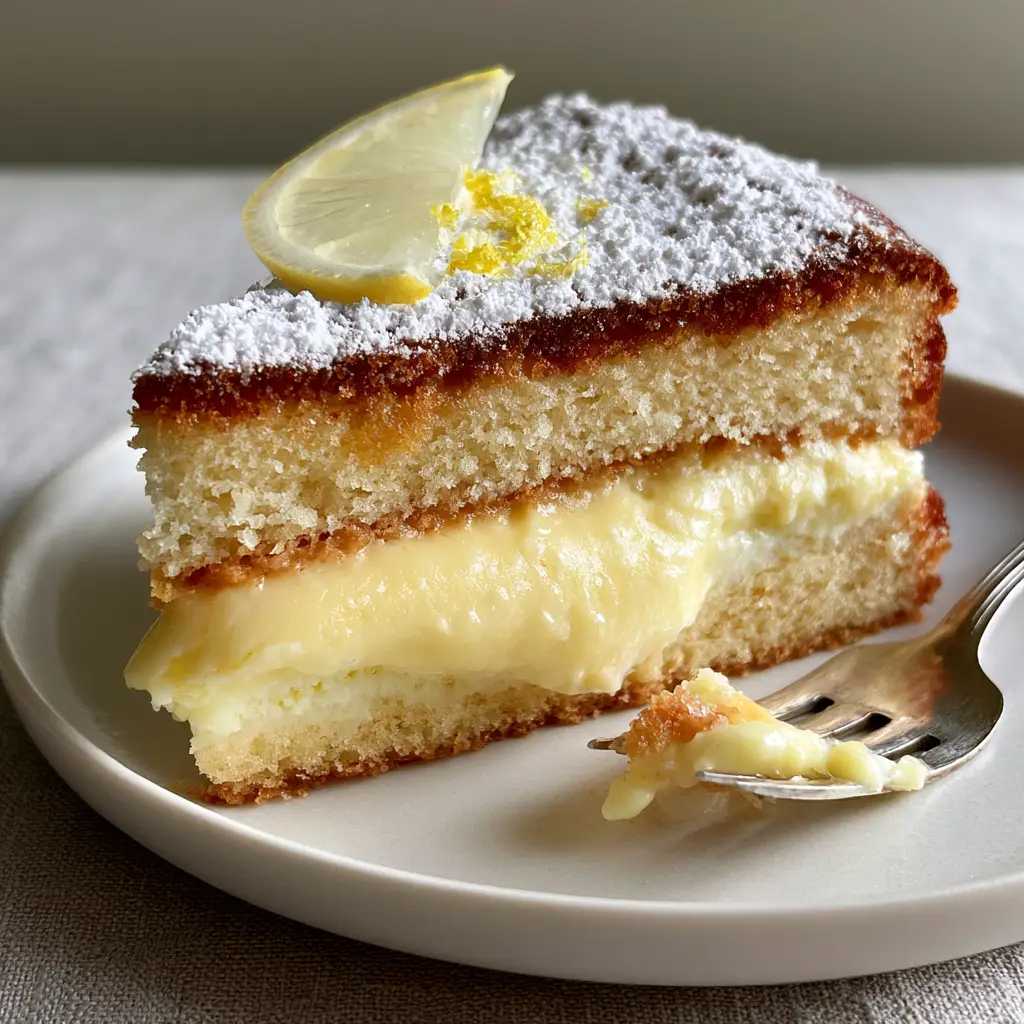
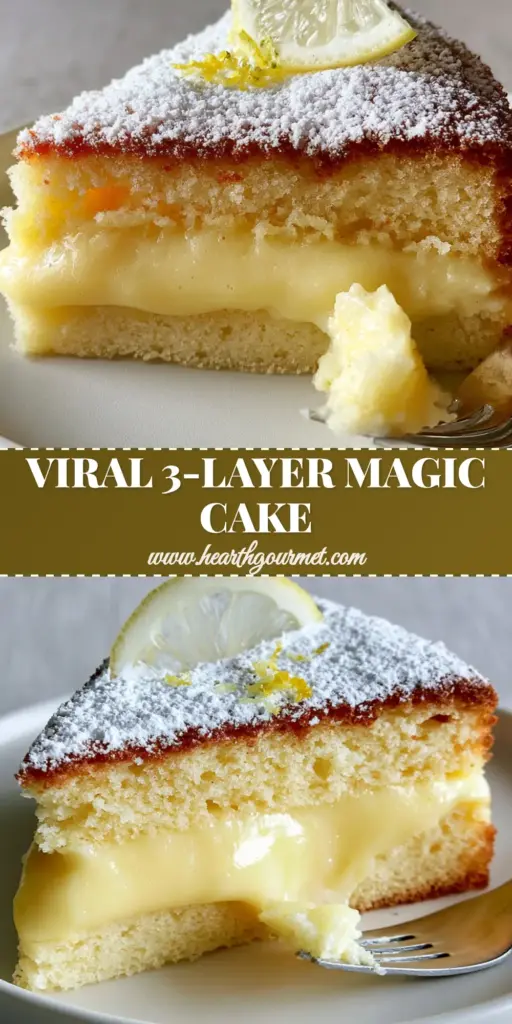
The Lemon Custard Cake is a culinary phenomenon that defies the laws of traditional baking. Imagine pouring a single, thin batter into a pan and pulling out a masterpiece with three distinct, perfect layers. This isn’t just a recipe; it is an edible science experiment that results in a golden-brown aerated sponge top, a thick creamy pale yellow lemon custard center, and a dense moist cake foundation.
As the soft, warm natural daylight hits the side of a freshly sliced piece, you can see the light-reflecting shimmer of the custard layer. The contrast between the snowy fine sifted powdered sugar and the vibrant translucent lemon half-wheel makes this the undisputed queen of citrus desserts. Whether you are hosting a formal brunch or looking for a comforting weekend treat, this cake provides a sensory experience that begins with the scent of fresh zest and ends with a melt-in-your-mouth creaminess.
Why This Magic Lemon Dessert Will Captivate Your Senses
- Triple Texture Harmony: You get the crunch of a sponge, the wobble of a custard, and the bite of a dense cake in every single forkful.
- Visual Sophistication: The natural separation of layers creates a “professional pastry chef” look with zero extra effort from you.
- Bright Citrus Profile: Using both micro-planed fresh lemon zest and fresh juice ensures a high-definition flavor that isn’t masked by sugar.
- Pantry Staple Luxury: This recipe uses foundational ingredients you likely already have, transforming them through technique rather than cost.
The Anatomy of Ingredients: What You Need for Citrus Success
To achieve the specific visual blueprint of this Lemon Custard Cake, every ingredient must be at room temperature. This ensures the fats and proteins emulsify correctly before the “magic” separation occurs in the heat of the oven.
Large Eggs (4 total): You must separate these carefully. The yolks provide the structural richness for the custard and base, while the whites are whipped to create that signature golden-brown aerated sponge top.
Granulated Sugar (3/4 cup / 150g): This provides sweetness and helps stabilize the egg foam. Without it, your sponge layer would collapse and lose its airy height.
Unsalted Butter (1/2 cup / 115g): Melted and slightly cooled, the butter adds a luxurious mouthfeel. It is the “invisible” fat that ensures the dense moist cake foundation remains tender rather than tough.
All-Purpose Flour (3/4 cup / 95g): A relatively small amount of flour is used here. This allows the starches to settle at the bottom, creating the “dense” layer while leaving enough moisture for the middle custard.
Whole Milk (2 cups / 480ml): Lukewarm milk is essential. Cold milk will seize the melted butter, preventing the batter from reaching the thin, pourable consistency required for layer separation.
Fresh Lemons (2-3 large): You will need 1/4 cup (60ml) of juice and 1 tbsp (6g) of micro-planed fresh lemon zest. Do not use bottled juice; the enzymatic properties of fresh citrus are vital for the custard’s “set.”
Vanilla Extract (1 tsp / 5ml): This acts as a flavor bridge, connecting the sharp acidity of the lemon to the creamy sweetness of the milk and eggs.
Powdered Sugar (for dusting): This provides the “fine snowy layer” seen in the visual prompt. It adds a final touch of sweetness and hides any minor imperfections on the sponge top.
Essential Equipment for a Picture-Perfect Bake
Achieving the precise look of a single slice on a matte white ceramic plate requires the right tools. You cannot skip the aeration process if you want that sponge top to rise correctly.
An 8×8 inch (20x20cm) square baking dish is the gold standard for this recipe. A glass or ceramic dish works best for heat distribution. You will also need two large mixing bowls—one for the yolk mixture and one perfectly clean, grease-free bowl for whipping the egg whites.
A micro-plane grater is non-negotiable for the zest. You want tiny, delicate curls of lemon that disappear into the batter but explode with flavor. Finally, a fine-mesh sieve is required to achieve that professional “fine sifted” powdered sugar finish.
The Multi-Step Journey to a Three-Layer Masterpiece
Preparing the Citrus Foundation
Begin by zest your lemons using a micro-plane before you juice them. This ensures you get only the yellow zest and none of the bitter white pith. Set aside a few thin, translucent half-moon lemon slices for the final garnish.
Preheat your oven to 325°F (160°C). This “low and slow” temperature is critical. If the oven is too hot, the cake will set as a solid mass before the layers have time to separate into the sponge, custard, and base.
Mastering the Egg Yolk Base
In your first bowl, beat the 4 egg yolks and 3/4 cup (150g) of sugar until the mixture is pale yellow and thickened. This usually takes about 2-3 minutes of vigorous whisking. Slowly stream in the melted butter and 1 tsp (5ml) vanilla extract.
Sift in the flour and whisk until just combined. Now, slowly whisk in the 2 cups (480ml) of lukewarm milk and the 1/4 cup (60ml) of lemon juice. The batter will be very thin, almost like a watery soup. Do not panic; this high liquid-to-flour ratio is what creates the custard.
The Secret to the Aerated Sponge Top
In a separate clean bowl, beat the 4 egg whites until stiff peaks form. When you lift the beaters, the whites should stand straight up without drooping. This air is what creates the golden-brown aerated sponge top.
Gently fold the egg whites into the thin batter using a spatula. Do not over-mix! You want large “clouds” of egg whites floating on top of the liquid. These clouds will rise to the surface during baking to form the top layer.
Baking and the Visual Cues of Success
Pour the batter into your greased baking dish and bake for 45-60 minutes. Look for specific sensory cues: the top should be a deep golden brown, but the center should still have a slight “wobble” when the pan is gently shaken. This wobble indicates that the thick creamy pale yellow lemon custard has formed correctly inside.
Expert Tips for the Perfect Lemon Custard Cake
- The Temperature Rule: Ensure your eggs and milk are truly room temperature. Cold ingredients prevent the layers from separating cleanly.
- The Folding Technique: Use a figure-eight motion when folding the egg whites. If you stir too hard, you’ll pop the air bubbles and end up with a flat cake.
- The Cooling Mandate: This cake MUST cool completely in the pan, then chill in the fridge for at least 2 hours. This allows the custard to set into that “thick and wobbly” texture seen in the Midjourney prompt.
- Slicing Precision: Use a sharp, thin knife dipped in hot water and wiped dry between each cut to get those perfectly clean internal layers.
How to Store and Preserve the Creaminess
Because of the high egg and milk content, this Lemon Custard Cake must be stored in the refrigerator. Cover the baking dish tightly with plastic wrap or transfer slices to an airtight container. It will stay fresh and delicious for up to 4 days.
We do not recommend freezing this cake. The delicate molecular structure of the custard layer will break down upon thawing, resulting in a grainy texture and a soggy sponge top. This is a dessert best enjoyed fresh or chilled from the fridge.
What to Serve With Your Lemon Masterpiece
This cake is a bright, acidic finish to a savory meal. If you have just enjoyed a rich dinner like a creamy tuscan mushroom pasta or a savory pasta with portobello mushroom, the lemon profile acts as a perfect palate cleanser.
For a lighter lunch pairing, serve a small slice after a bowl of vegetarian lentil soup or a hearty carrot lentil soup. The earthiness of the lentils provides a beautiful contrast to the zesty, sweet notes of the lemon custard.
Frequently Asked Questions
Yes, but an 8-inch round pan is required to maintain the depth of the layers. A pan that is too wide will result in layers that are too thin to be visually distinct.
We highly recommend fresh lemon juice. Bottled juice lacks the bright acidity and enzymatic properties that help create the distinct custard layer texture.
The center should be a ‘thick and wobbly’ custard. If it is completely liquid, it needs more baking time or a longer chilling period in the refrigerator to set.
This usually happens if the eggs were not at room temperature or if the egg whites were folded in too thoroughly. The layers rely on the air in the whites to float and the density of the flour to sink.
A thin sponge layer is often caused by under-beating the egg whites. They must reach stiff peaks to have enough structure to form the airy, golden-brown top.
The Definitive Lemon Custard Cake Recipe
Lemon Custard Cake: The Ultimate Guide to the Three-Layer Magic Dessert
Ingredients
Equipment
Method
- Preheat your oven to 325°F (160°C) and grease an 8x8 inch baking dish with butter or parchment paper.
- Carefully separate the 4 egg yolks from the whites. Place the whites in a completely clean, grease-free mixing bowl.
- Beat the egg yolks and sugar until the mixture is thick and pale yellow. Mix in the melted butter and vanilla.
- Whisk in the flour until combined, then slowly stream in the lukewarm milk, lemon juice, and lemon zest. The batter will be very thin.
- Beat the egg whites until stiff peaks form. They should be firm enough to hold their shape.
- Gently fold the egg whites into the batter. Leave large visible clumps of white foam; do not over-mix.
- Pour into the dish and bake for 45-60 minutes until the top is golden-brown but the center still jiggles. Cool completely before dusting with powdered sugar and garnishing with lemon slices.
Notes
Use a warm knife for clean slices.
Bring the Magic to Your Kitchen
Baking this Lemon Custard Cake is more than just making dessert; it’s about creating a moment of wonder. From the first bite of that golden-brown sponge to the final lingering creaminess of the custard, it is a dish designed to impress. The combination of the silver dessert fork resting against the light-grey linen creates a visual that tastes even better than it looks.
We would love to see your results! Did your layers separate perfectly? Leave a comment below and share your baking journey with us. For more visually stunning and scientifically sound recipes, be sure to follow us on Pinterest and join our community of home cooks.