Italian Antipasto Skewers are the quintessential appetizer for those who value both visual elegance and robust, Mediterranean flavors. This handheld masterpiece captures the essence of a traditional charcuterie board in a single, perfectly balanced bite.
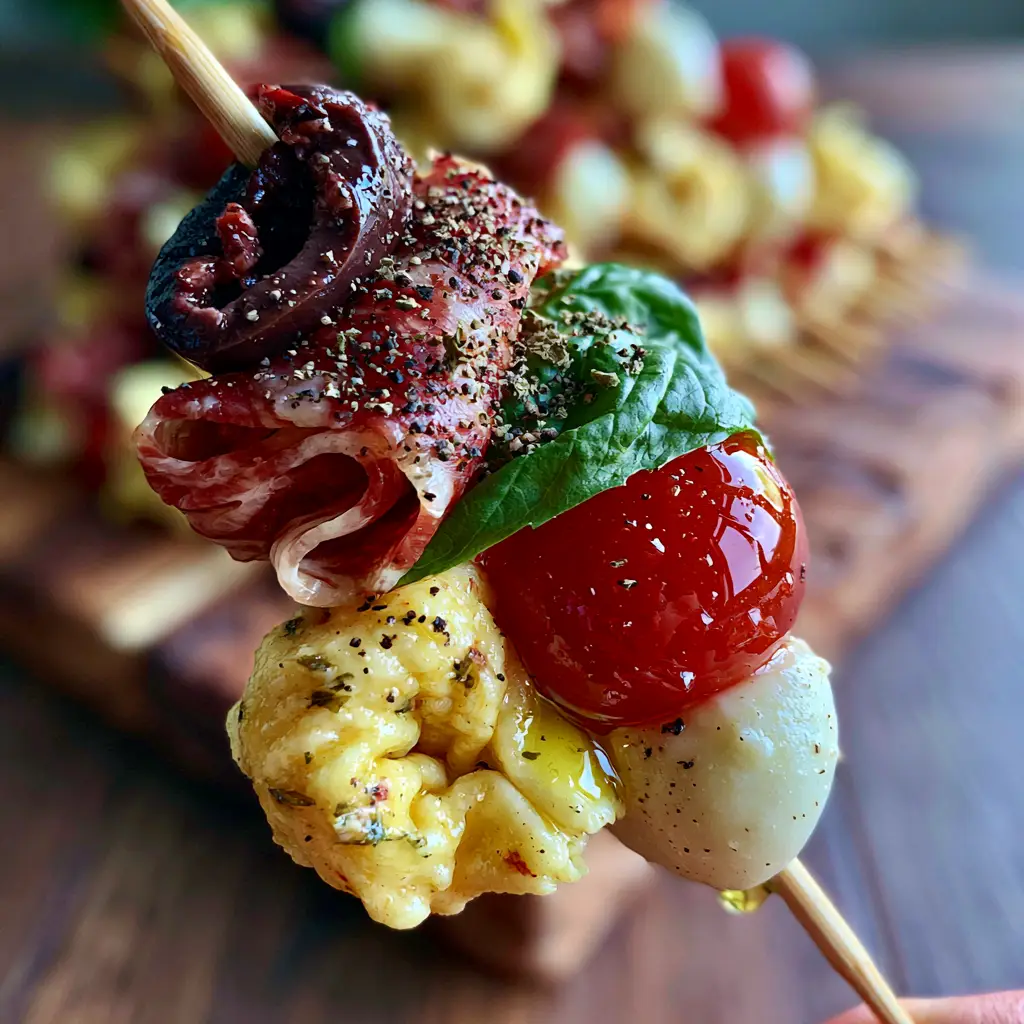
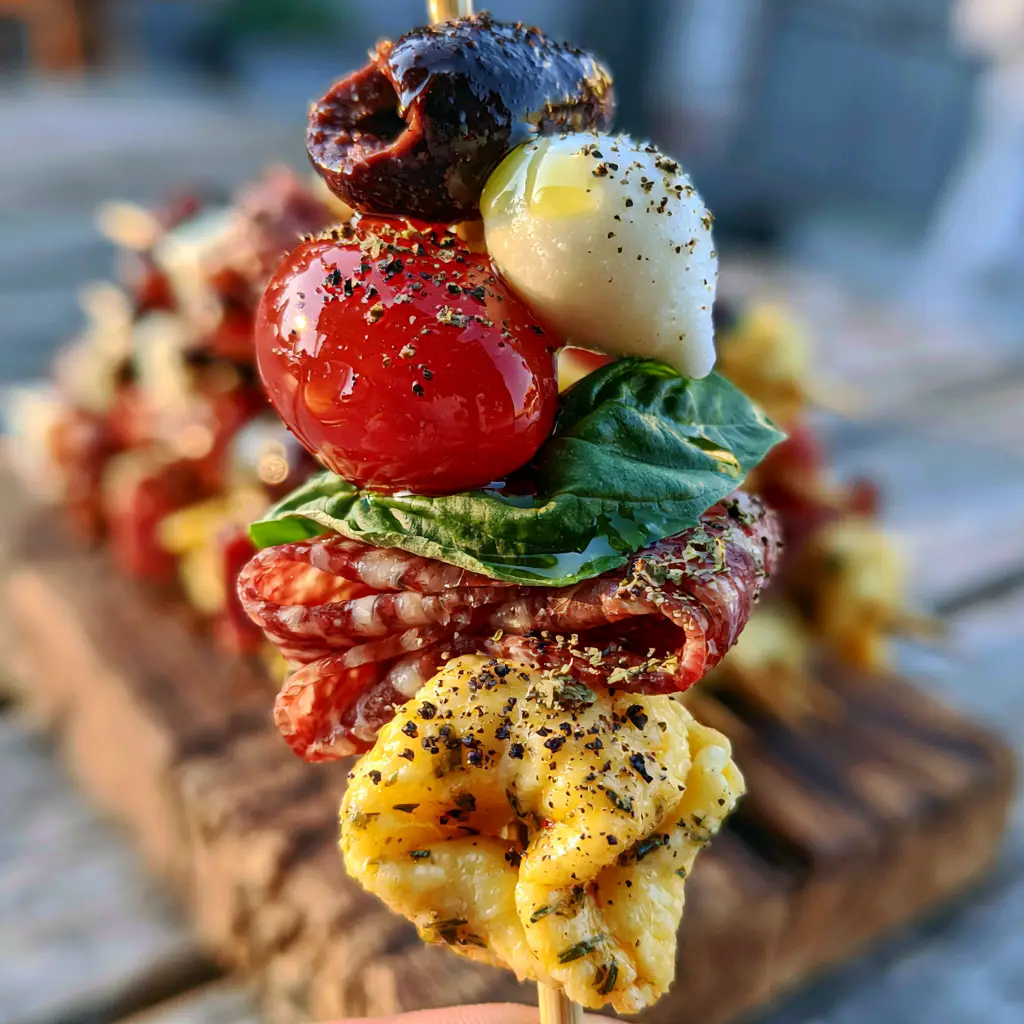
Imagine holding a skewer where a plump, golden-yellow cheese tortellini rests at the base, its surface glistening with high-quality extra virgin olive oil. Above it, a ribbon-folded slice of salty Genoa salami provides a marbled texture that contrasts beautifully against a bright, glossy red cherry tomato.
The experience is completed by a vibrant green basil leaf, a creamy matte-white bocconcini pearl, and a dark, savory kalamata olive. Finished with a fine dusting of cracked black pepper and dried oregano, these Italian Antipasto Skewers are designed to be the focal point of any gathering.
The Aesthetic Allure of Gourmet Italian Antipasto Skewers
What sets these Italian Antipasto Skewers apart is the meticulous layering and the play of contrasting textures. We aren’t just putting food on a stick; we are building a vertical flavor profile that hits every sensory note.
The visual appeal is undeniable, especially when the light hits the oil droplets on the smooth tomato skin. If you are a fan of bold, herb-forward starters, you might also find yourself craving our zesty Italian pasta salad which shares many of these vibrant components.
- Textural Harmony: The chew of the al dente tortellini meets the creamy yield of fresh mozzarella and the snap of a cherry tomato.
- Color Theory: The classic “tricolore” of the Italian flag—red, white, and green—is elevated by the deep purple of the olives and the golden hue of the pasta.
- Portability: These skewers are the ultimate “mingle food,” allowing guests to enjoy a sophisticated appetizer without the need for plates or cutlery.
Essential Components for These Zesty Kabobs
To achieve the specific visual and flavor results seen in our professional food photography, each ingredient must be selected for its quality and appearance. Using subpar ingredients will result in a muted look rather than the “glistening” macro effect we desire.
Cheese Tortellini (Refrigerated): 1 package (9oz / 255g). Look for the “fresh” variety in the refrigerated section; they absorb the marinade much better than dried versions and provide that plump, golden-yellow aesthetic.
Genoa Salami: 24 thin slices (approx. 6oz / 170g). The marbling of the fat in Genoa salami is crucial for that “salty, marbled” visual described in our blueprint.
Cherry Tomatoes: 1 pint (approx. 10oz / 285g). Choose “on the vine” if possible for the glossiest red skin and the firmest internal structure.
Fresh Basil Leaves: 1 bunch (approx. 24 large leaves). The leaves should be vibrant green and free of any dark bruising to maintain the high-resolution food photography standard.
Bocconcini Mozzarella Pearls: 8oz (225g) container. These “matte-white” pearls should be stored in water until the very moment of assembly to ensure they remain moist and creamy.
Kalamata Olives: 1 jar (approx. 6oz / 170g), pitted. The dark, almost eggplant-purple hue of the kalamata provides a sophisticated color anchor for the top of the skewer.
Extra Virgin Olive Oil: 1/4 cup (60ml). Use a high-quality, cold-pressed oil that leaves visible droplets and a “glistening” sheen on the ingredients.
Dried Oregano and Cracked Black Pepper: 1 tsp (5g) each. These “fine dustings” provide the final artisanal touch and the “herb flecks” visible on the tortellini.
Tools Required for Professional Assembly
While this recipe is simple, using the right equipment ensures the structural integrity of your Italian Antipasto Skewers. A dull skewer can tear the delicate basil or split the tomato, ruining the visual presentation.
You will need a large pot to boil the tortellini to a perfect “al dente” state. A colander is necessary for immediate draining and rinsing with cold water to stop the cooking process and prevent the pasta from becoming mushy.
Finally, select 6-inch (15cm) bamboo skewers. These are the perfect length to hold all seven layers without looking crowded, allowing the macro details of each ingredient to shine.
The Art of Layering: A Step-by-Step Build
Preparing the Golden Marinated Tortellini
Bring a pot of salted water to a rolling boil and cook the cheese tortellini for exactly one minute less than the package instructions. We need the pasta to be firm enough to hold its shape on the skewer without tearing.
Once drained and cooled, toss the tortellini in a bowl with 2 tablespoons (30ml) of extra virgin olive oil, half of the dried oregano, and a pinch of black pepper. This creates the “visible herb flecks” and the “glistening” golden-yellow base seen in the foreground of our guide.
The Ribbon-Fold Salami Technique
Take a thin slice of Genoa salami and fold it in half, then fold it into thirds like an accordion. This “ribbon-fold” creates height and captures the light on the marbled edges of the meat.
Slide the folded salami onto the skewer immediately following the tortellini. Ensure the skewer passes through all the folds so it remains secure and doesn’t unfurl during presentation.
Integrating the Fresh Produce and Cheese
Next, thread one glossy red cherry tomato onto the skewer. Follow this with a fresh basil leaf that has been folded in half—this ensures the “vibrant green” is concentrated and doesn’t flop over the other ingredients.
Slide the creamy, matte-white bocconcini pearl onto the skewer. The contrast between the vibrant basil and the white cheese is a hallmark of high-quality traditional Italian dinner recipes.
The Final Topping and Garnish
Finish the skewer with a dark, pitted kalamata olive at the very tip. This acts as a “cap” and provides a salty, tangy finish to the bite.
Once all skewers are assembled and arranged on your rustic wooden board, drizzle the remaining olive oil over the top. Apply a final, deliberate dusting of cracked black pepper and oregano to mimic the authentic, unedited look of professional food photography.
Expert Tips for Appetizer Success
- Temperature Control: Serve these slightly chilled or at room temperature. If the cheese is too cold, it loses its “matte-white” creaminess; if too warm, the salami fat may begin to sweat.
- Preventing Oxidation: If you are making these in advance, wait to add the basil until just before serving. Fresh basil can turn dark when exposed to air for prolonged periods.
- The “Gloss” Factor: For the best photos, use a pastry brush to apply a light coating of oil to the tomatoes and olives just before guests arrive.
- Uniformity Matters: Try to select cherry tomatoes and mozzarella pearls that are similar in diameter to create a clean, symmetrical silhouette.
Storage and Make-Ahead Instructions
Italian Antipasto Skewers can be assembled up to 4 hours in advance if stored correctly. Place them in a single layer in an airtight container, separated by parchment paper to prevent sticking.
Do not freeze these skewers. The fresh mozzarella and tomatoes have high water content, and the freezing/thawing process will result in a mealy texture and a loss of the “glossy” visual appeal.
If you have leftovers, you can remove the ingredients from the skewers and toss them with some greens and a balsamic vinaigrette for a quick repurposed pasta salad.
Perfect Pairings for Your Antipasto Platter
These skewers are a fantastic opening act for a larger Mediterranean feast. They provide a light, acidic contrast to heavier dishes like tender Italian meatballs or a hearty bowl of Italian chicken soup.
If you are hosting a casual game night, consider serving them alongside an easy pizza recipe. The acidity of the marinated tortellini cuts through the richness of melted pizza cheese perfectly.
For more inspiration on how to build a complete menu, explore our collection of easy Italian dinner ideas.
Frequently Asked Questions
It is not recommended to make them a full day ahead as the basil will wilt and the tortellini may become soggy. However, you can prep the tortellini and fold the salami a day early, then assemble the skewers 4 hours before serving.
Yes, prosciutto or pepperoni work well. Prosciutto should be ribbon-folded similarly to the salami, though it is more delicate and requires careful handling to maintain the visual effect.
Italian Antipasto Skewers are designed to be served cold or at room temperature. Cooking the tortellini al dente and then chilling them ensures they stay firm on the skewer.
Use the ‘ribbon-fold’ method: fold the round slice in half once, then fold it back and forth like an accordion (tri-fold) before skewering. This creates volume and visual interest.
The Ultimate Italian Antipasto Skewers Recipe Card
Italian Antipasto Skewers with Marinated Tortellini and Salami
Ingredients
Equipment
Method
- Boil the cheese tortellini in salted water for 1 minute less than the package directions until al dente. Drain and immediately rinse with cold water to stop the cooking process.
- Toss the cooled tortellini with 2 tbsp (30ml) of olive oil and half of the oregano/pepper. Ensure the pasta is golden-yellow and coated in herb flecks.
- On a 6-inch skewer, thread the ingredients in this order: one marinated tortellini, one ribbon-folded salami slice, one cherry tomato, one folded basil leaf, one mozzarella pearl, and one kalamata olive.
- Arrange skewers on a board. Drizzle with remaining oil and dust with the remaining pepper and oregano until they appear glistening and artisanal.
Notes
Assemble no more than 4 hours before serving to keep the basil vibrant.
Sharing the Joy of Italian Entertaining
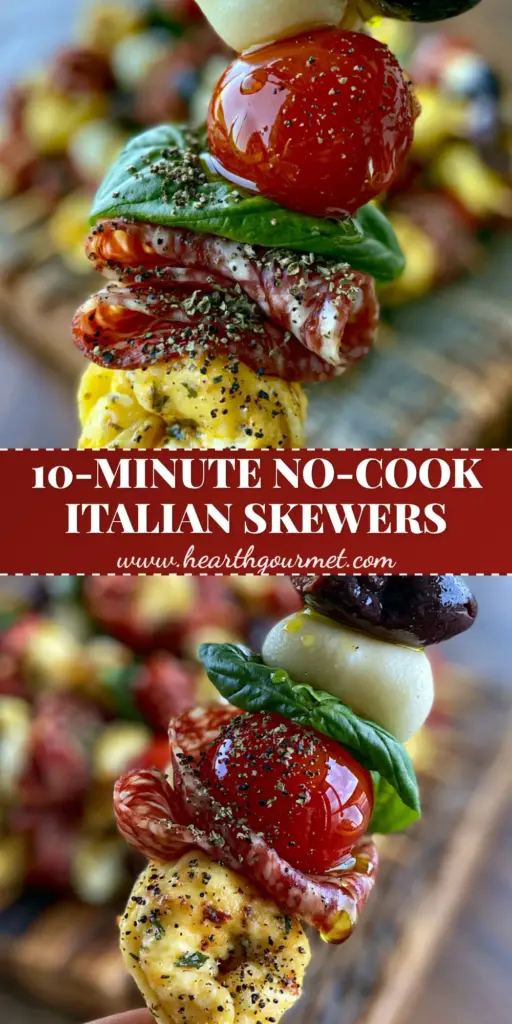
Italian Antipasto Skewers are more than just a recipe; they are an invitation to slow down and enjoy the simple beauty of high-quality ingredients. Whether you are hosting a formal gala or a casual backyard gathering, these skewers bring a touch of elegance to the table.
We would love to see how your skewers turned out! Did you achieve that perfect “glistening” oil finish? Leave a comment below and let us know your favorite variations.
Don’t forget to follow us on Pinterest for more visually stunning recipe inspiration and to save this recipe to your favorite appetizer board!