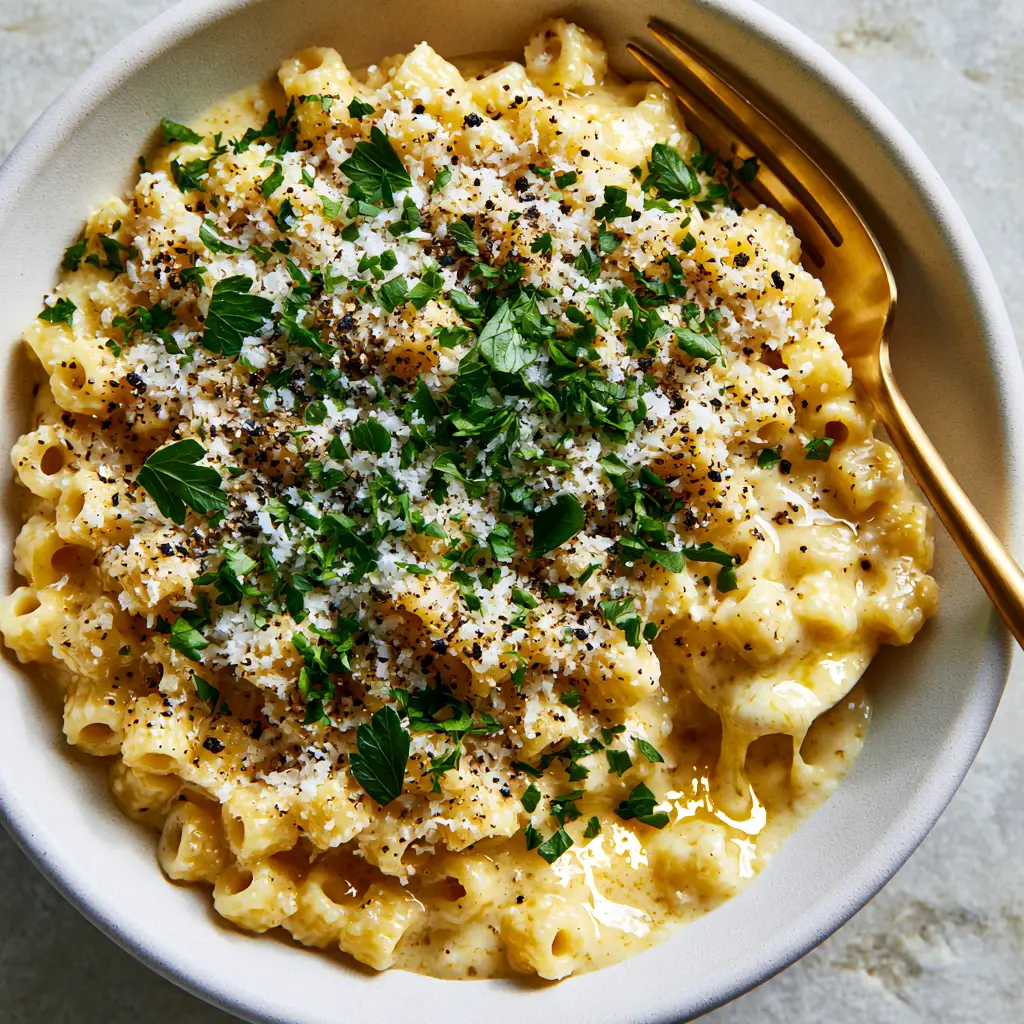
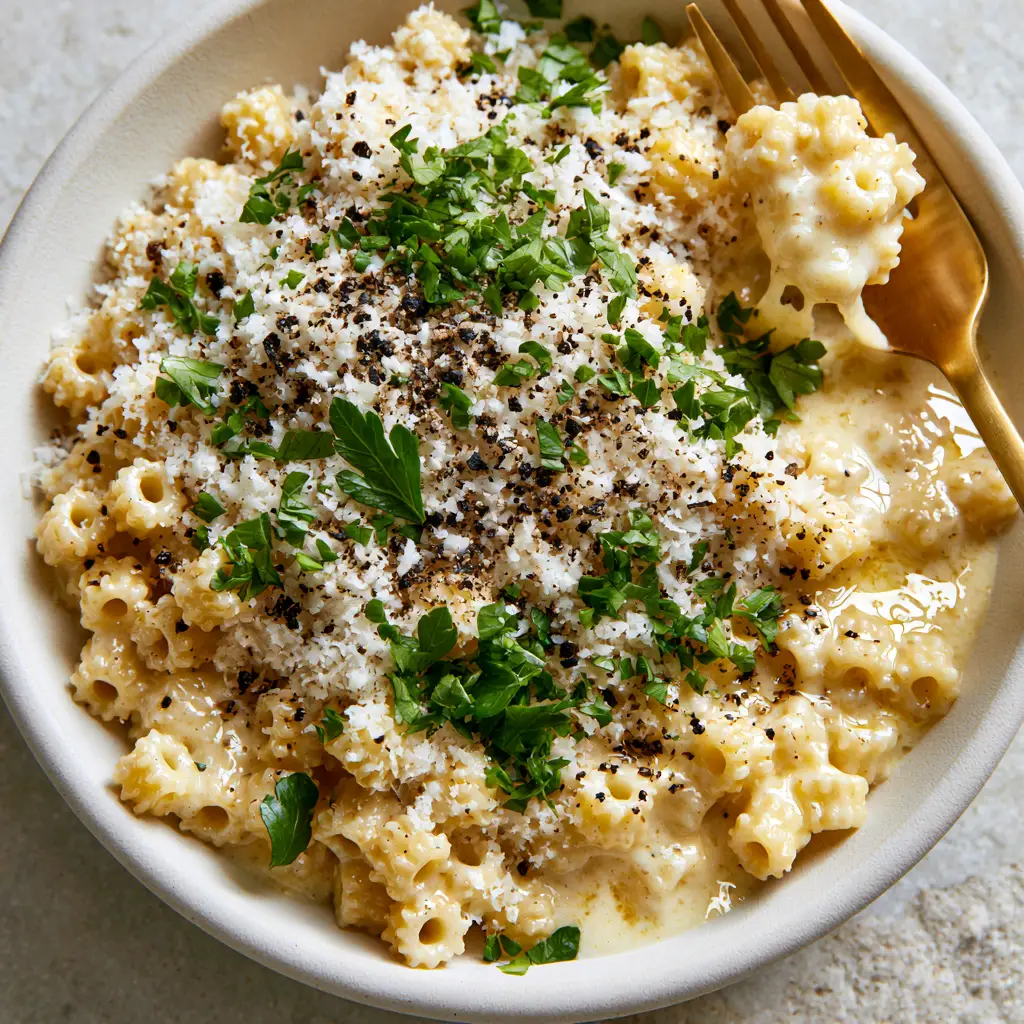
There is something inherently nostalgic and deeply satisfying about the Ditalini Pasta Recipe. These small, “little thimbles” of pasta are traditionally tucked into soups, but today, we are elevating them into a gourmet masterpiece. Imagine a bowl where every tiny tube is perfectly al dente, capturing a pool of velvety, pale golden-yellow cheese sauce within its hollow center.
This isn’t your average mac and cheese; it is a sophisticated study in textures and temperatures. We are focusing on a heavy cream reduction and a glossy butter emulsion to create a light-reflecting sheen that looks as good as it tastes. When you lift a gold fork from the matte white ceramic bowl, you should see a subtle, gooey cheese pull that promises pure indulgence.
Whether you are looking for a quick weeknight dinner or a side dish that steals the show, this Ditalini Pasta Recipe delivers high-end culinary results with accessible techniques. Let’s dive into the science of the perfect emulsion and the art of the “snowy” parmesan garnish.
Why This Velvety Ditalini Dish Defined Modern Comfort Food
- Perfectly Al Dente Texture: The small ditalini tubes provide a unique mouthfeel that larger pasta shapes simply cannot replicate, offering a firm bite in every spoonful.
- Triple-Layer Umami: By combining sharp white cheddar, nutty parmesan, and a touch of cracked black pepper, we achieve a complex flavor profile that dances on the palate.
- Professional Emulsion: This recipe utilizes the “glossy butter emulsion” technique, ensuring the sauce never breaks and remains thick enough to coat the pasta like a second skin.
- Vibrant Visual Contrast: The emerald-green flat-leaf parsley and snowy white parmesan create a high-contrast aesthetic that is worthy of a professional food photography spread.
The Anatomy of an Ultra-Creamy Pasta Sauce
Ditalini Pasta (1 lb / 450g): These small, tubular shapes are the star of the Ditalini Pasta Recipe, specifically chosen for their ability to hold sauce both inside and out. Ensure you cook them 1 minute less than the package directions for that perfect “bite.”
Heavy Cream (1.5 cups / 360ml): This serves as the fatty base for our reduction. As it simmers, the water evaporates, leaving behind a thick, luxurious liquid that acts as the primary binder for our cheeses.
Sharp White Cheddar (2 cups / 225g, shredded): Unlike orange cheddar, white cheddar provides a clean, sharp tang and contributes to the pale golden-yellow hue we see in the visual blueprint. Always grate your own to avoid anti-clumping agents.
Parmigiano-Reggiano (1 cup / 100g, finely grated): Half goes into the sauce for a salty, nutty depth, and the other half is reserved for that iconic “snowy” garnish that defines the dish’s top layer.
Unsalted European-Style Butter (4 tbsp / 56g): High-fat butter is essential for creating the glossy emulsion. It adds a light-reflecting sheen to the sauce that makes it look incredibly appetizing under diffused light.
Fresh Italian Flat-Leaf Parsley (1/2 cup / 15g, minced): This provides the “emerald-green” scatter. It’s not just for looks; the herbaceous notes cut through the richness of the heavy cream and cheese.
Coarse-Cracked Black Pepper (1 tsp / 2g): Large, irregular shards of pepper provide bursts of heat and visual texture against the smooth, pale sauce. Use a pepper mill on the coarsest setting for the best effect.
Reserved Pasta Water (1 cup / 240ml): This is the “liquid gold” of the kitchen. The starch released from the pasta helps to bind the butter and cream into a cohesive, non-greasy sauce.
Essential Tools for the Professional Home Chef
To achieve the macro-level perfection seen in our visual guide, you will need a few specific tools. A heavy-bottomed stainless steel skillet or saucier is preferred over a pot for the sauce; the wider surface area allows for a faster and more even cream reduction.
A Microplane or fine grater is non-negotiable for the parmesan garnish. This tool creates the “snowy” texture that floats on top of the pasta rather than sinking into it. Finally, a large whisk will help you emulsify the butter and cream into that signature glossy sheen.
Mastering the Reduction: A Step-by-Step Guide
Boiling the Ditalini to Al Dente Perfection
Bring a large pot of heavily salted water to a rolling boil. It should taste like the sea—this is your only chance to season the pasta itself. Add the ditalini and cook, stirring occasionally to prevent the small tubes from sticking to the bottom.
Test the pasta 2 minutes before the timer ends. You are looking for a firm center with no chalky residue. Before draining, carefully scoop out a cup of the starchy pasta water and set it aside; you will need this for the emulsion.
Executing the Heavy Cream Reduction
While the pasta boils, place your skillet over medium heat. Pour in the heavy cream and bring it to a gentle simmer. Do not let it boil over. Let the cream reduce by about one-third until it is thick enough to coat the back of a spoon.
This reduction is the secret to a Ditalini Pasta Recipe that doesn’t feel watery. As the cream thickens, you’ll notice the bubbles becoming smaller and more viscous. This is the visual cue that it’s time to start adding your fats.
The Art of the Glossy Butter Emulsion
Reduce the heat to low. Whisk in the cold, cubed butter one piece at a time. This is a classic French technique that creates a stable emulsion, giving the sauce its light-reflecting, glossy sheen.
Once the butter is fully incorporated, add the shredded white cheddar in small handfuls. Whisk constantly in a figure-eight motion until the cheese is melted and the sauce is a smooth, pale golden-yellow. If it looks too thick, whisk in a tablespoon of the reserved pasta water.
Combining and Garnishing for Visual Impact
Add the drained ditalini directly into the skillet with the cheese sauce. Toss gently with a wooden spoon or silicone spatula until every tube is filled with the velvety mixture. At this stage, you should see that subtle, gooey cheese pull when you lift the spoon.
Transfer the pasta into a shallow matte-white ceramic bowl. Now, for the critical visual finish: sprinkle a dense layer of finely grated parmesan over the top. Follow this with a generous amount of coarse-cracked black pepper and a vibrant scatter of emerald-green parsley.
Expert Tips for the Ultimate Cheese Sauce Texture
- Control the Heat: Never let the sauce boil once the cheese is added. High heat will cause the proteins in the cheddar to tighten and separate from the fats, resulting in a grainy sauce rather than a velvety one.
- The “Pasta Water” Insurance: If your sauce starts to look matte or “tight,” add a splash of pasta water. The starch acts as a bridge between the water and fat, restoring the glossy sheen immediately.
- Grate Your Own Cheese: Pre-shredded cheeses are coated in potato starch or cellulose. These will prevent your Ditalini Pasta Recipe from achieving that smooth, gooey pull we are aiming for.
- Timing is Everything: Have your garnishes ready before you toss the pasta. The “snowy” parmesan effect works best when it hits the hot pasta and just barely begins to soften without melting completely.
The Best Way to Store and Reheat Your Pasta
Leftover creamy ditalini can be stored in an airtight container in the refrigerator for up to 3 days. However, cream-based sauces tend to thicken significantly when cooled. To restore the original velvety texture, do not use a microwave if possible.
Instead, place the pasta in a small saucepan over low heat. Add a splash of heavy cream or whole milk (about 1 tbsp per cup of pasta). Stir constantly as it warms up; the added moisture will re-emulsify the fats and bring back that glossy, light-reflecting sheen.
Creating a Complete Italian Feast
While this Ditalini Pasta Recipe is a powerhouse on its own, it pairs beautifully with vibrant, acidic sides that cut through the richness of the white cheddar and cream. Consider starting your meal with a classic Italian bruschetta or perhaps a lighter caprese bruschetta recipe to wake up the palate.
If you are hosting a summer gathering, this dish works surprisingly well alongside a summer garden pasta or a refreshing Mediterranean pasta salad. For those who love a bit of crunch, serving this creamy pasta with a side of oven-baked Italian eggplant provides a wonderful textural contrast.
Frequently Asked Questions about Ditalini
Absolutely! As shown in this recipe, ditalini is excellent for creamy sauces, pasta salads, and even baked pasta dishes due to its ability to hold sauce.
Use a Microplane or a fine-hole grater on cold cheese to create ultra-light, airy flakes that sit on top of the pasta.
To avoid graininess, use freshly grated cheese and keep the heat very low once you begin adding the dairy to the reduction.
The best substitutes are other small shapes like tubetti, macaroni, or even orecchiette, though the cooking times may vary slightly.
Ditalini translates to ‘little thimbles’ in Italian, referring to the small, tubular shape of the pasta.
The Signature Creamy Ditalini Pasta Recipe
Ditalini Pasta Recipe: The Ultimate Creamy White Cheddar and Parmesan Comfort
Ingredients
Equipment
Method
- Cook ditalini in salted water until al dente. Reserve 1 cup of pasta water before draining.
- In a skillet, simmer heavy cream over medium heat until reduced by one-third.
- Whisk in cold butter cubes one by one until glossy, then melt in white cheddar and half the parmesan.
- Toss pasta with sauce, adding pasta water if needed for a gooey cheese pull.
- Top with remaining parmesan, parsley, and cracked pepper in a matte white bowl.
Notes
Use cold butter to help stabilize the sauce and create a high-gloss finish.

Closing & Call to Action
This Ditalini Pasta Recipe is a testament to the power of simple ingredients treated with professional technique. By focusing on the reduction, the emulsion, and the high-contrast garnishes, you can turn a humble pantry staple into a gourmet experience that rivals any high-end bistro.
If you enjoyed this deep dive into creamy pasta science, please leave a comment below and let us know how your cheese pull turned out! Don’t forget to follow us on Pinterest and pin the images above to your favorite comfort food boards.