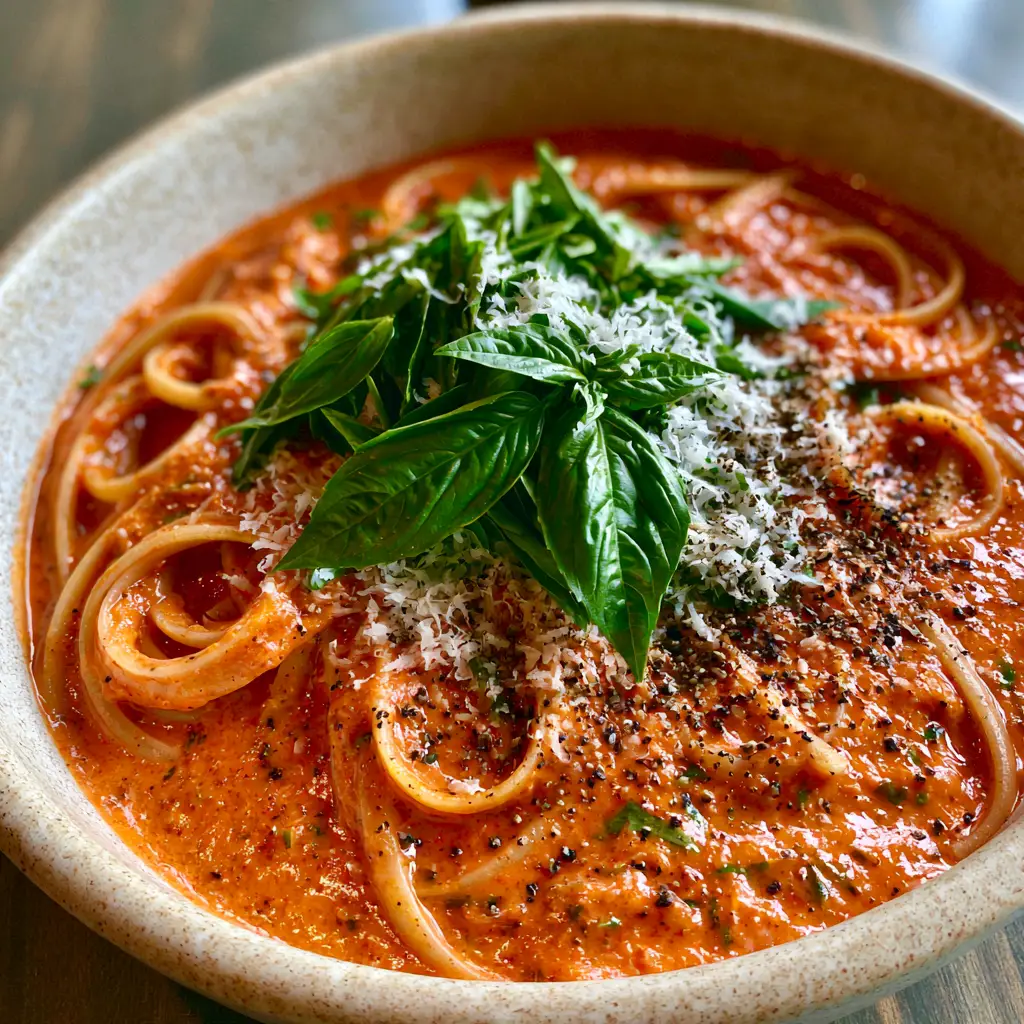
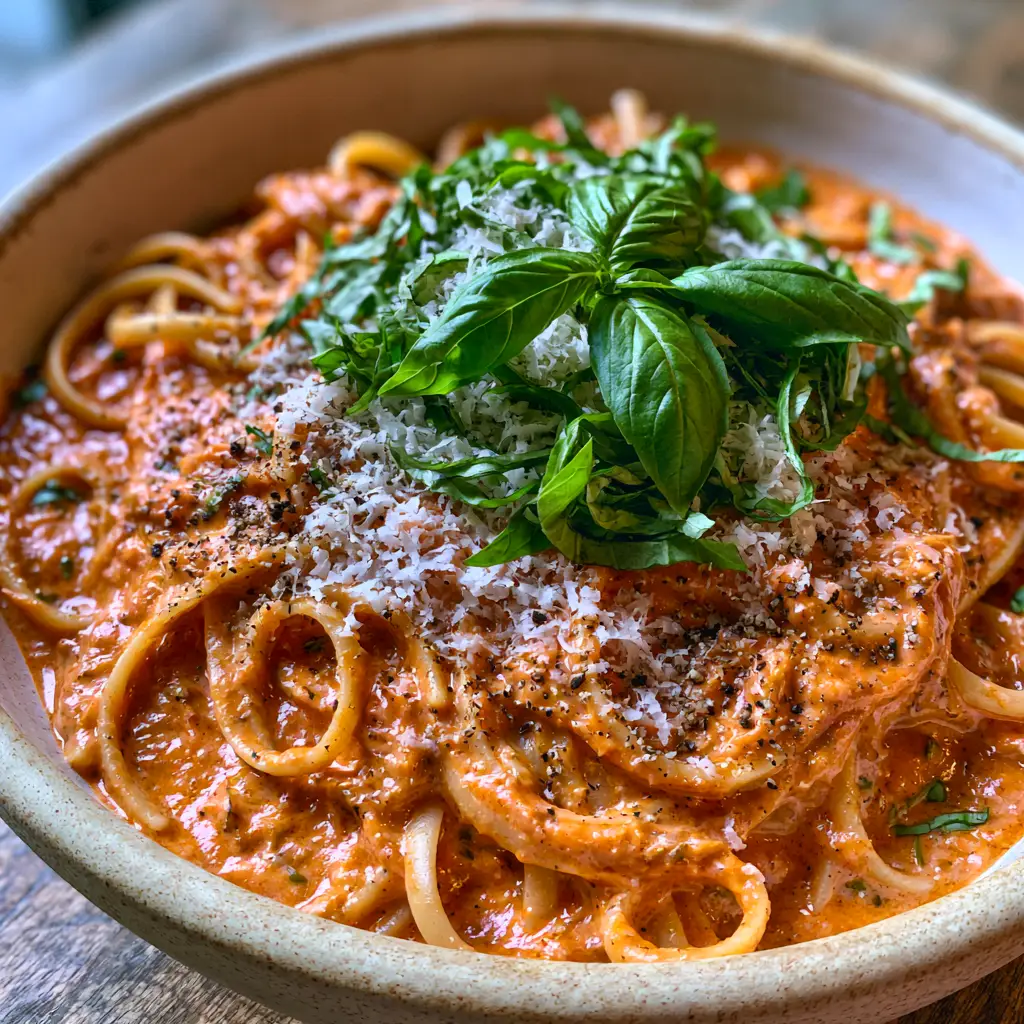
There is a specific kind of magic that happens when high-quality linguine meets a vibrant, orange-red tomato cream sauce. This Creamy Basil Tomato Pasta isn’t just another weeknight meal; it is a masterclass in texture and visual appeal. Imagine a shallow, matte-cream ceramic bowl filled to the brim with twisting ribbons of pasta, each strand perfectly encased in a glossy, silk-textured coating that catches the morning light. The aroma of sautéed minced garlic bits and fresh, emerald-green basil leaves fills the kitchen, promising a meal that tastes even better than it looks.
In the world of home cooking, achieving that professional “restaurant sheen” on a pasta sauce can often feel elusive. However, by focusing on the culinary science of emulsification and the specific “one-pot” method, we can create a dish that rivals any high-end trattoria. This recipe is designed for the enthusiastic home cook who appreciates the finer details—the coarse cracks of black pepper, the snow-like dusting of microplaned fluffy parmesan, and the perfect al dente bite of a linguine noodle.
Why This One-Pot Linguine Is a Weeknight Game Changer
- Unmatched Sauce Adhesion: Because the linguine cooks directly in the sauce base, the natural starches from the pasta act as a binder, creating a glossy tomato cream sauce that clings to every noodle rather than pooling at the bottom of the bowl.
- Vibrant Sensory Contrast: The deep orange-red hue of the sauce provides a stunning backdrop for the bright, emerald-green fresh basil leaves and the delicate, white microplaned parmesan cheese flakes.
- Efficiency Meets Luxury: This recipe delivers the complex flavors of a slow-simmered sauce in a fraction of the time, making it a staple for those who want a gourmet experience without the gourmet cleanup.
- Texture-First Engineering: From the crunch of sautéed minced garlic bits to the silk-like texture of the finished sauce, every element is designed to provide a multi-dimensional mouthfeel.
Essential Elements for the Perfect Silk-Textured Sauce
To achieve the visual and culinary results seen in our Creamy Basil Tomato Pasta, every ingredient serves a dual purpose: flavor and structure. We aren’t just making a sauce; we are building an emulsion. If you enjoy this flavor profile, you might also find yourself craving our roasted cherry tomato pasta, which utilizes similar acidic notes from fresh produce.
Linguine Noodles: 1 lb (450g). The flat, wide surface area of linguine is superior to spaghetti for this recipe, as it provides more “real estate” for the thick, vibrant sauce to coat.
Heavy Cream: 1 cup (240ml). This is the secret to the “silk-like texture” and the vibrant orange-red color. It mellows the acidity of the tomatoes while adding a luxurious fat content that carries the flavor of the basil.
Tomato Paste and Crushed Tomatoes: 2 tbsp (30g) paste and 15 oz (425g) crushed. The paste provides the deep red base and umami depth, while the crushed tomatoes offer volume and body to the sauce.
Fresh Garlic: 4-5 cloves (20g), minced. We want actual sautéed minced garlic bits visible in the sauce, providing small bursts of savory intensity that contrast with the creamy backdrop.
Fresh Basil Leaves: 1 large bunch. We will use half for infusion and the other half as fresh, whole leaf garnishes to provide that bright, aromatic finish described in our visual blueprint.
Parmesan Cheese: 1/2 cup (50g), microplaned. Using a microplane is non-negotiable here; it creates “fluffy parmesan flakes” that melt instantly into the sauce and create a “snow-like dusting” on top.
Foundational Additions: 2 tbsp (30ml) extra virgin olive oil for the initial sauté, 1 tsp (6g) kosher salt, and 1 tsp (2g) coarse cracked black pepper for that essential visual and flavor kick.
The Culinary Toolkit for Professional Results
To recreate the “authentic food blog aesthetic” seen in the handheld smartphone photo of this dish, you need the right tools. While the ingredients are the soul, the equipment is the skeleton of the recipe.
A Large Heavy-Bottomed Skillet or Dutch Oven: This ensures even heat distribution, preventing the cream from scorching and allowing the garlic to sauté without burning. This is a similar technique used in our creamy garlic sauce beef pasta to ensure a smooth finish.
A Microplane Grater: This is the only way to achieve the “fluffy cheese flakes” seen in the visual prompt. Traditional graters produce shards that are too heavy and will sink into the sauce rather than resting delicately on top.
Wooden Spoon or Silicone Spatula: Essential for scraping the fond (the brown bits) from the bottom of the pan after sautéing the garlic, which adds immense depth to the tomato base.
Mastering the Art of the One-Pot Emulsion
1. Sautéing the Aromatic Foundation
Heat 2 tbsp (30ml) of olive oil in your skillet over medium heat. Add the minced garlic bits. Watch closely; you are looking for the garlic to become fragrant and turn a pale golden hue—not brown. This usually takes about 60-90 seconds. The smell should be buttery and sweet, never acrid.
2. Blooming the Tomato Base
Stir in the tomato paste. Use your spoon to “fry” the paste in the oil for 2 minutes until it turns a shade darker—from bright red to a deep brick color. This removes the “raw” metallic taste of the paste and intensifies the natural sugars. Pour in the crushed tomatoes and 2 cups (480ml) of water or vegetable broth.
3. Infusing the Linguine
Add the linguine noodles directly into the simmering liquid. Gently nudge them down as they soften until they are fully submerged. Cover the pan and simmer, stirring occasionally to ensure the noodles don’t stick together. You will see the liquid begin to thicken into a glossy tomato cream sauce as the pasta releases its starch.
4. The Silk-Textured Finish
Once the pasta is al dente (check at the 8-minute mark), pour in the heavy cream. Stir vigorously. This is the moment the sauce transforms into a vibrant orange-red hue. The fat from the cream will emulsify with the tomato acids and pasta starch, creating that coveted silk-like texture. Fold in half of the basil leaves so they wilt and release their oils into the heat.
Expert Tips for Success
- The “Gloss” Factor: If the sauce looks too thick or matte, add 1/4 cup (60ml) of warm water. The extra moisture will reactivate the fats and starches, bringing back the glossy shine.
- Cheese Temperature: For the most “snow-like” appearance, microplane your parmesan directly over the bowl while the cheese is cold. Cold cheese produces finer, fluffier flakes.
- Basil Preservation: Never chop the garnishing basil. Hand-tear it or leave it whole to prevent the edges from bruising and turning black, ensuring those “emerald-green” highlights remain vibrant.
- Black Pepper Punch: Use a pepper mill on the coarsest setting. Pre-ground pepper lacks the visual “cracked” look and the floral heat required to balance the heavy cream.
What to Serve With This Creamy Basil Tomato Pasta
This dish is quite rich, so pairing it with something bright and acidic is key. A crisp cucumber tomato salad provides a refreshing crunch that cuts through the creaminess of the pasta. If you’re looking for a full Italian spread, consider starting with a small bowl of pasta e fagioli soup for a rustic, traditional touch.
For those who enjoy a bit more protein in their pasta nights, this dish pairs beautifully with grilled chicken or even sliced Italian sausage, similar to the profile of our popular one-pot creamy sausage pasta.
Storage, Reheating, and Freezing
Storage: Keep leftovers in an airtight container in the refrigerator for up to 3 days. The noodles will continue to absorb the sauce, so it may appear thicker the next day.
Reheating: To restore the silk-textured sauce coating, reheat the pasta on the stovetop over low heat. Add a splash of milk or water (approx. 2 tbsp / 30ml) to loosen the sauce and bring back the glossy finish. Avoid the microwave if possible, as it can cause the cream to separate.
Freezing: We do not recommend freezing this specific dish. Cream-based sauces often break (separate) during the thawing process, and the linguine can become mushy.
Frequently Asked Questions
While you can use 1 teaspoon of dried basil in the sauce base for flavor, it will not provide the same bright, emerald-green visual or the aromatic punch that fresh whole leaves offer as a garnish.
Milk is much thinner and has less fat, so the sauce will not be as thick or glossy. If you must substitute, use half-and-half, but the color will be lighter and less vibrant orange-red.
Yes, the one-pot method is essential for this recipe because the starch from the linguine thickens the sauce and creates that professional-looking coating that clings to the noodles.
Use a microplane grater on a cold block of Parmesan cheese. This creates ultra-fine flakes that look like snow and melt perfectly into the dish.
A matte sauce usually means it is too thick or has lost its emulsion. Stir in a small splash of warm water or heavy cream to bring back the glossy, silk-like texture.
The Ultimate Creamy Basil Tomato Pasta Recipe
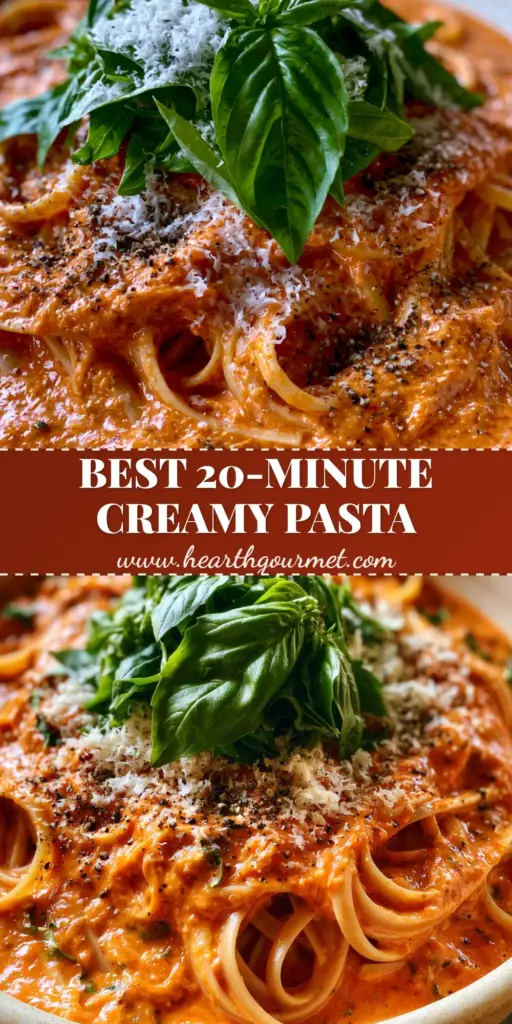
Creamy Basil Tomato Pasta with a Silky Tomato Cream Sauce
Ingredients
Equipment
Method
- Heat olive oil in a skillet over medium heat. Sauté minced garlic until fragrant and pale golden (about 1 minute).
- Stir in tomato paste and cook for 2 minutes. Add crushed tomatoes and 2 cups of water. Bring to a gentle simmer.
- Add linguine noodles to the skillet. Submerge fully and cook for 8-10 minutes, stirring occasionally, until al dente and sauce has thickened.
- Stir in the heavy cream and half of the basil. Toss vigorously until the sauce is glossy and vibrant orange-red.
- Plate in shallow bowls. Top with fresh whole basil leaves, microplaned parmesan flakes, and cracked black pepper.
Notes
If the sauce thickens too much, add a splash of pasta water to restore the gloss.
Bring the Italian Trattoria to Your Kitchen
Making a restaurant-quality Creamy Basil Tomato Pasta is entirely achievable when you focus on the visual cues—the gloss of the sauce, the vibrancy of the basil, and the fluffiness of the cheese. This dish is designed to be shared, photographed, and savored. We would love to see your results! If you make this, tag us or leave a comment below with your favorite pasta shape variations.
For more daily recipe inspiration and behind-the-scenes culinary tips, follow us on Pinterest and save this recipe to your “Easy Dinner Ideas” board!