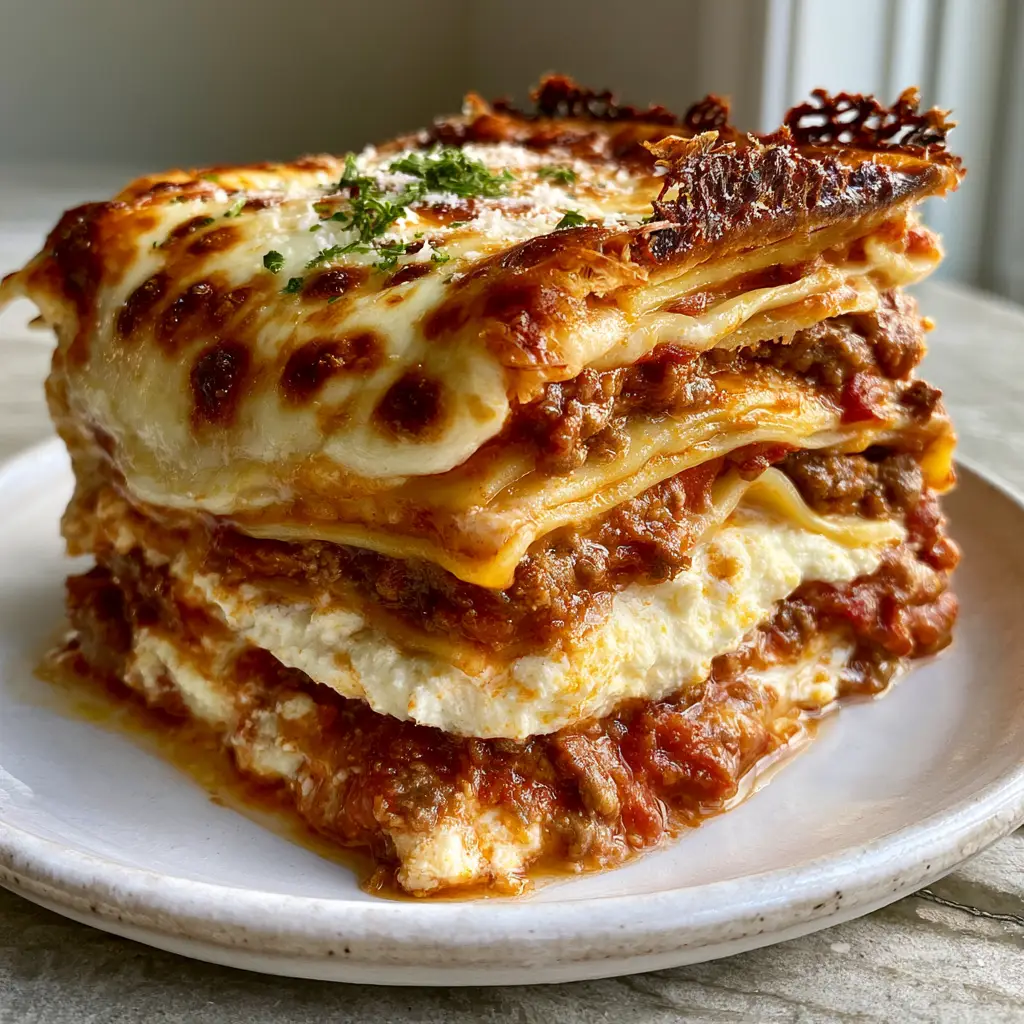
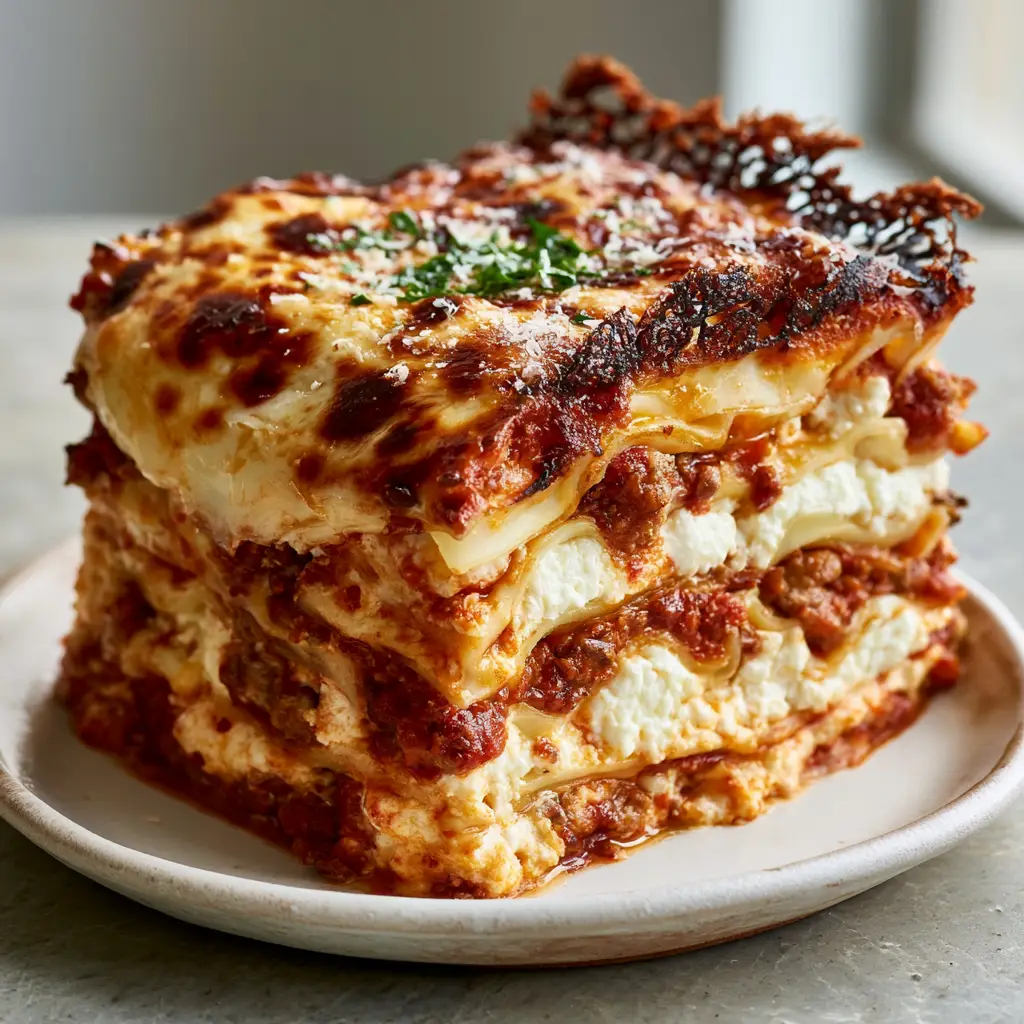
There is a specific culinary magic that happens when the best lasagna is executed with precision. We aren’t talking about a slumped, watery pile of pasta on a plate; we are talking about a structural marvel that stands tall, showcasing five distinct, glorious layers of rich meat sauce and velvety cheese.
Achieving this level of perfection requires more than just a recipe; it requires an understanding of moisture control and heat management. This version focuses on a thick, concentrated bolognese and a stable ricotta mixture to ensure every slice is as beautiful as it is delicious.
Imagine a side profile where the wide pasta ribbons act as the foundation for seared ground beef and bubbling mozzarella. The top is a landscape of golden-brown toasted spots and lace-like crispy cheese edges that shatter upon the first bite.
Why This Sturdy Italian Classic Works Every Time
- Structural Integrity: By reducing the ragu to a thick, jammy consistency, we eliminate the liquid pooling that often ruins home-cooked lasagna.
- The Maillard Reaction: We don’t just cook the beef; we sear it in batches to develop deep, caramelized flavors that permeate the entire dish.
- Five-Layer Symmetry: A precise layering technique ensures that every bite contains the perfect ratio of wide pasta sheets to creamy ricotta and melted mozzarella.
- The Crispy Cheese Crown: A specific blend of low-moisture mozzarella and finely grated parmesan creates that sought-after toasted crust.
Essentials for a Sturdy, Flavor-Packed Slice
To create the best lasagna, every ingredient must serve a purpose for both flavor and physics. We choose components that withstand the high heat of the oven while maintaining their individual textures.
Lean Ground Beef: Use a 90/10 blend to provide the “seared minced beef” texture without excessive grease. The beef is the structural backbone of our thick bolognese sauce.
Wide Lasagna Pasta Sheets: Choose the widest ribbons available (2 inches / 5cm) to create a solid platform for the heavy sauce. These ribbons catch the ragu and prevent the ricotta from sliding out the sides.
Whole Milk Ricotta Cheese: 15 oz (425g) of full-fat ricotta provides the “creamy ricotta cheese” layer mentioned in our visual blueprint. When mixed with an egg, it sets into a dense, stable white layer that stands perfectly upright.
Low-Moisture Mozzarella: 3 cups (336g) of shredded mozzarella are essential for that “melted mozzarella cheese” look. Unlike fresh mozzarella, low-moisture varieties won’t release water into your layers.
Parmigiano-Reggiano: 1 cup (90g) of finely grated parmesan is split between the layers and the topping. This is the key to achieving those “toasted golden-brown parmesan” spots and crispy edges.
Tomato Paste and Crushed Tomatoes: 6 oz (170g) of tomato paste provides the “thick bolognese sauce” structure. It binds the seared beef together into a ragu that stays exactly where you put it.
Fresh Flat-Leaf Parsley: A 1/4 cup (15g) of chopped parsley is added at the very end. This adds a burst of green color and a fresh herbal note to balance the rich, savory meat.
Tools Required for the Perfect Five-Layer Stack
You cannot achieve professional results without the right equipment to manage the “stable sauce structure.” A deep-dish 9×13 inch (23x33cm) ceramic or glass baking dish is non-negotiable for creating five distinct layers.
A heavy-bottomed Dutch oven is required for the meat sauce to ensure even heat distribution. This allows you to sear the beef at high temperatures without burning the delicate aromatics like garlic and onions.
Finally, a sharp offset spatula or a sturdy metal cake server is the secret to lifting a “single thick slice” out of the pan. This tool ensures the “macro, eye-level side profile” of the lasagna remains intact when served on a rustic white ceramic plate.
Building the Foundation: The Searing and Simmering Phase
Mastering the Seared Minced Beef Ragu
Heat 2 tbsp (30ml) of extra virgin olive oil in your Dutch oven over medium-high heat. Add the ground beef in small clumps, allowing them to sit undisturbed for 3-4 minutes until a deep, dark brown crust forms.
This “seared minced beef” step is the difference between a bland lasagna and a world-class one. Once seared, break the meat into small chunks and stir in your diced onions and garlic until translucent.
Add the tomato paste and cook for 2 minutes until it turns a brick-red color. Pour in 28 oz (794g) of crushed tomatoes and simmer on low for at least 45 minutes until the sauce is thick and no longer runny.
Crafting the Creamy Ricotta Binder
In a medium bowl, whisk 1 large egg before folding in the 15 oz (425g) of ricotta cheese. Add 1/2 tsp (3g) of kosher salt and a pinch of nutmeg to enhance the dairy’s natural sweetness.
This mixture is what creates the “dense, creamy white ricotta” layers seen in the profile of the slice. The egg acts as a stabilizer, ensuring the cheese doesn’t liquefy during the long bake time.
Fold in 1/2 cup (45g) of the grated parmesan and 2 tbsp (8g) of the chopped parsley. This creates a speckled, flavorful layer that contrasts beautifully with the red ragu.
The Art of the Architecture: Layering for Stability
Constructing the Five Distinct Layers
Spread a very thin layer of sauce at the bottom of the dish to prevent the pasta from sticking. Place three wide lasagna sheets over the sauce, slightly overlapping them to create a solid floor.
Spread one-third of the ricotta mixture evenly over the pasta, followed by a generous layer of the thick bolognese. Sprinkle a handful of mozzarella over the meat to act as “glue” for the next pasta sheet.
Repeat this process until you have reached five layers of pasta. The final layer should be topped with the remaining meat sauce, followed by a heavy blanket of mozzarella and the rest of the parmesan.
Achieving the Crispy, Lace-Like Burnt Cheese Edges
The visual hallmark of the best lasagna is the “heavy blanket of bubbling mozzarella” with “deep golden-brown toasted spots.” To achieve this, cover the dish with foil for the first 45 minutes of baking at 375°F (190°C).
Remove the foil and bake for an additional 15-20 minutes. For the “crispy, lace-like burnt cheese edges,” turn on the broiler for the final 2-3 minutes, watching closely as the cheese bubbles and browns.
Crucially, you must let the lasagna rest for at least 20 minutes before slicing. This allows the sauce to set and ensures the slice “stands perfectly upright” when plated.
Expert Tips for a Professional Result
- Avoid Oil Pooling: If your sauce looks oily, skim the fat off the top after simmering. This prevents “oil pooling on the plate” as seen in the visual prompt.
- Pasta Doneness: Boil your pasta ribbons for 2 minutes less than the package instructions. They will finish cooking in the sauce, absorbing flavor while remaining “tender.”
- The Resting Rule: Never skip the rest period; a hot lasagna is a runny lasagna. The residual heat will continue to thicken the starches and fats.
- Internal Link Check: If you enjoy the hearty flavors of this ragu, you might also love our creamy pasta dishes or a side of garlic butter orzo.
Pairing Suggestions and Side Dishes
A heavy, five-layer lasagna needs a bright, acidic side dish to cleanse the palate. A simple arugula salad with lemon vinaigrette is traditional, but you can also explore other Italian-inspired sides.
Consider serving this alongside some warm Italian soups for a multi-course dinner party. If you are feeding a crowd, adding homemade pizza dough appetizers can turn the meal into a true feast.
For those who enjoy a variety of textures, our Mexican-inspired pasta salad offers a unique contrast to the traditional flavors of the best lasagna.
Common Questions About Perfectly Layered Lasagna
Yes, you can assemble the layers and refrigerate the dish overnight. Increase the covered bake time by 10 minutes to ensure the center is heated through.
Bake the lasagna uncovered for the last 20 minutes, then use the broiler for 2-3 minutes at the very end to create a golden-brown, toasted parmesan crust.
The key is to reduce your bolognese sauce until it is thick and jammy, use low-moisture mozzarella, and add an egg binder to your ricotta mixture to stabilize the dairy layers.
Traditional wide lasagna ribbons are best for this recipe. Boiling them to al dente allows you to control the texture and ensures they are wide enough to support five heavy layers.
Lasagna needs to rest for at least 20 minutes after leaving the oven. This allows the starches in the pasta and the proteins in the cheese to set, creating a stable, upright slice.
The Ultimate Recipe for the Best Lasagna
The Best Lasagna Recipe for a Perfectly Stacked, Crispy-Edged Masterpiece
Ingredients
Equipment
Method
- Heat oil in a Dutch oven. Add ground beef in clumps and sear until a deep golden-brown crust forms on the bottom before breaking it up.
- Add onions, garlic, tomato paste, and crushed tomatoes. Simmer on low for 45 minutes until the sauce is thick and oil begins to separate slightly.
- Combine ricotta, egg, half the parmesan, and parsley in a bowl. Whisk until smooth and dense.
- Layer sauce, pasta, ricotta, and mozzarella in five distinct layers. Finish with a heavy layer of mozzarella and parmesan on top.
- Cover with foil and bake at 375°F (190°C) for 45 minutes.
- Remove foil and bake for 15-20 minutes. Broil for 2-3 minutes until you see bubbling mozzarella and crispy cheese edges.
Notes
Use wide pasta ribbons to provide a better structural base for the heavy meat sauce.
Perfecting Your Pasta Craft
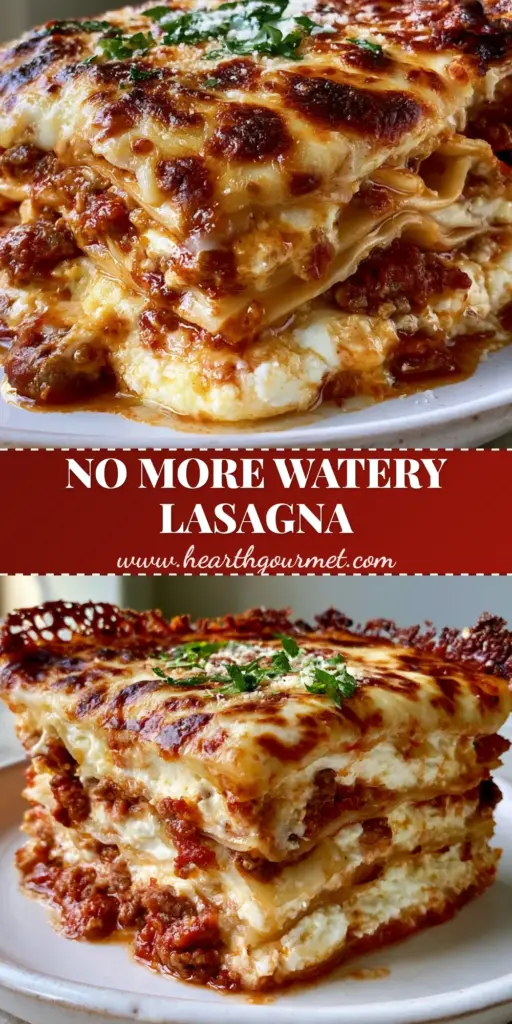
Creating the best lasagna is an act of culinary patience. From the slow-simmered ragu to the precise layering of the wide pasta ribbons, every step contributes to a final result that is as visually stunning as it is flavorful.
Once you’ve mastered the crispy cheese crust and the stable sauce structure, you’ll never go back to basic recipes. We encourage you to share your results and tag us on social media.
For more comfort food inspiration, follow us on Pinterest. Leave a comment below if you have any questions about achieving those perfect five layers!