When the temperature drops and the light begins to fade, there is nothing quite as restorative as a bowl of liquid gold. Creamy soup recipes have long been the backbone of comfort cooking, but achieving that perfect, velvety texture seen in professional food photography requires more than just a blender. It requires a balance of starch, fat, and high-heat roasting techniques.
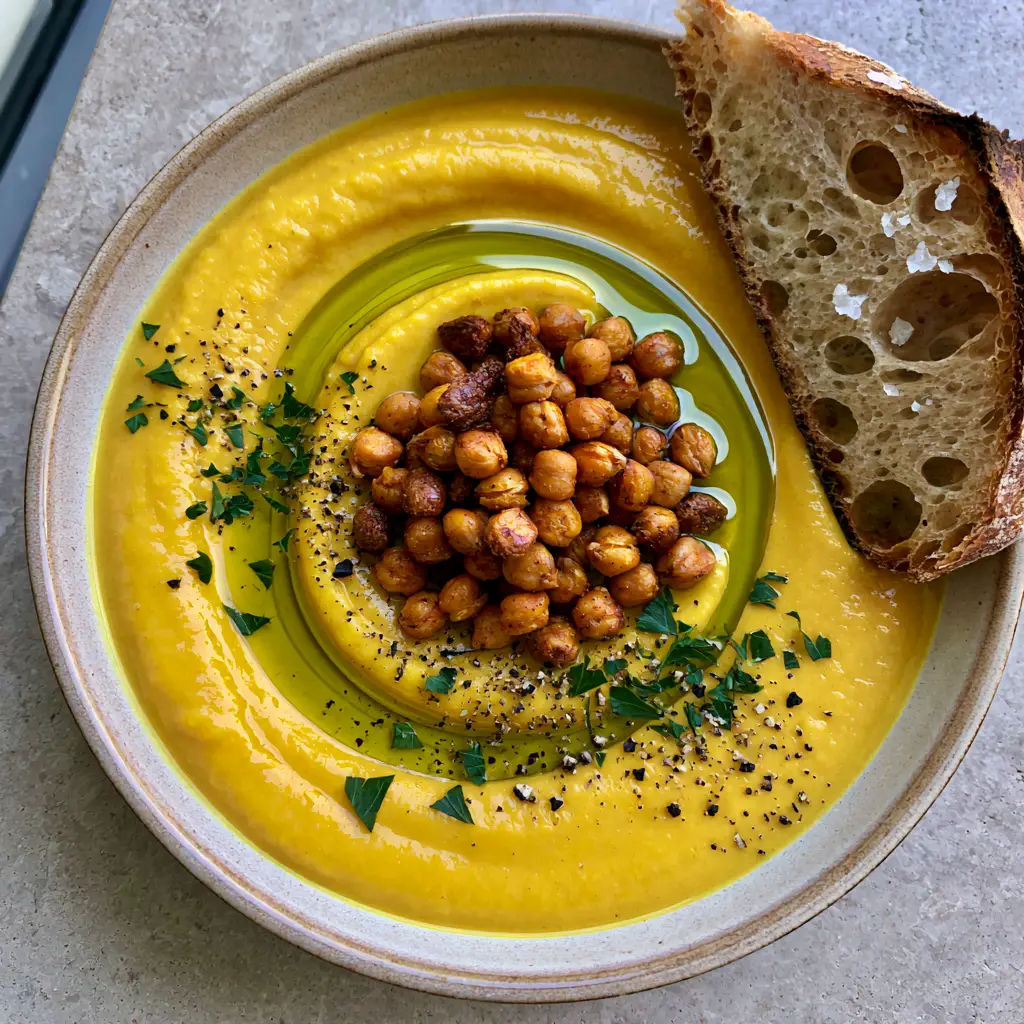
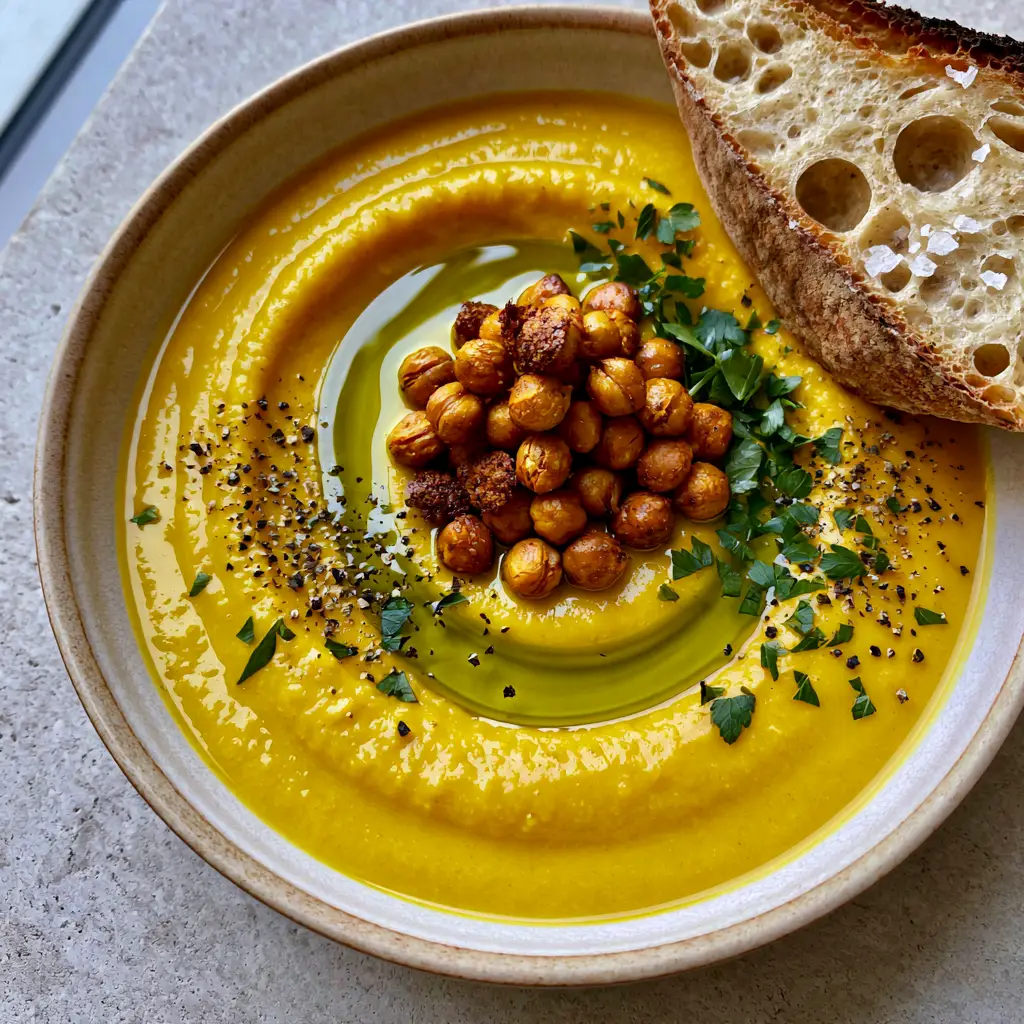
This specific golden vegetable puree is designed to be a sensory masterpiece. Imagine a deep ceramic bowl filled with a thick, glossy, golden-yellow soup that glows under natural daylight. It is not just a meal; it is a study in texture, featuring a neat pile of crispy roasted chickpeas, a generous swirl of vibrant green olive oil, and the sharp, fresh bite of flat-leaf parsley.
Whether you are looking for a soul-warming lunch or an elegant starter for a dinner party, mastering the art of the vegetable puree will elevate your culinary repertoire. Let’s dive into the science of building flavor layers and capturing that elusive, unedited lifestyle aesthetic in your own kitchen.
Why This Golden Puree Stands Out Among Creamy Soup Recipes
- The Velvety Foundation: Unlike thinner broths, this recipe utilizes the natural starches of golden potatoes and carrots to create a thick, glossy texture without over-reliance on heavy flour thickeners.
- Textural Contrast: The inclusion of oven-roasted chickpeas provides a necessary “crunch” factor that breaks the monotony of a pureed dish, much like the croutons in a creamy vegetable soup recipe.
- Visual Brilliance: The deep golden hue is achieved through a combination of beta-carotene-rich vegetables and a touch of ground turmeric, ensuring the dish looks as vibrant as it tastes.
- Aromatic Depth: By roasting the aromatics before simmering, we unlock a caramelized sweetness that defines high-end creamy soup recipes.
The Golden Harvest Pantry: Essential Ingredients and Substitutions
To achieve the visual and structural results described in our blueprint, every ingredient must serve a dual purpose: flavor and physics. Here is what you will need to gather for this golden masterpiece.
The Vegetable Base for Color and Body
Golden Potatoes (Yukon Gold): These are the secret to a “glossy” finish. Their medium starch content provides a creamy mouthfeel without the graininess found in Russets. You will need 2 cups (300g) of peeled and cubed potatoes.
Carrots and Yellow Squash: These provide the primary pigment. Use 3 large carrots (180g) and 2 medium yellow squashes (400g) to ensure that signature golden-yellow hue. These vegetables also offer a natural sweetness that balances the savory broth.
Aromatic Trinity: A large yellow onion (150g), 4 cloves of garlic, and a 1-inch (2.5cm) piece of fresh ginger. The ginger adds a subtle “glow” to the flavor profile, preventing the soup from feeling too heavy.
The Texture and Finishing Elements
Canned Chickpeas (Garbanzo Beans): One 15oz (425g) can, thoroughly rinsed and patted dry. Moisture is the enemy of crispiness, so ensure they are bone-dry before roasting to achieve that “neat pile” look in the center of your bowl.
Extra Virgin Olive Oil: Use a high-quality, cold-pressed green olive oil for the finishing drizzle. This isn’t just for flavor; the fat helps carry the fat-soluble flavors of the vegetables across your palate.
Fresh Flat-Leaf Parsley: Finely chopped just before serving. The bright green contrast against the golden soup is a hallmark of authentic, lifestyle food photography.
Sourdough Bread: One thick slice of crusty sourdough per person. The visible air bubbles in the bread act as “flavor pockets” for the soup and the coarse sea salt flakes we will sprinkle on top.
Essential Tools for a Professional Finish
To move from a rustic mash to a professional-grade puree, your equipment matters. While a standard blender works, an immersion blender allows you to control the aeration of the soup, keeping it dense and velvety rather than foamy.
You will also need a large, heavy-bottomed Dutch oven. The thick walls of a Dutch oven provide even heat distribution, which is critical for simmering creamy soup recipes without scorching the bottom. Finally, a rimmed baking sheet is necessary for roasting the chickpeas until they achieve a deep, crispy brown color.
The Step-by-Step Path to Velvety Perfection
Phase 1: Roasting the Chickpea Garnish
Preheat your oven to 400°F (200°C). Toss your dried chickpeas with 1 tbsp (15ml) of olive oil and a pinch of salt. Spread them in a single layer on your baking sheet. Roast for 20-25 minutes, shaking the pan halfway through.
Visual Cue: Look for the chickpeas to turn a deep amber color. They should feel light and sound “hollow” when tapped against the pan. Set them aside to maintain their crunch while you prepare the soup.
Phase 2: Building the Golden Base
In your Dutch oven, heat 2 tbsp (30ml) of olive oil over medium heat. Add the chopped onion, carrots, and squash. Sauté for 8-10 minutes. You are looking for the edges of the vegetables to begin softening, but do not let them brown too deeply, as this will muddy the golden color.
Add the garlic, ginger, and a teaspoon of turmeric. Stir constantly for 60 seconds until the spices become fragrant. This “blooming” of the spices is a technique often used in an avgolemono soup to ensure the flavor is integrated into the fat.
Phase 3: The Gentle Simmer
Pour in 4 cups (960ml) of high-quality vegetable broth and your cubed potatoes. Bring the mixture to a boil, then immediately reduce the heat to a low simmer. Cover the pot and let the vegetables cook for 20-25 minutes.
Sensory Cue: The potatoes should be fork-tender, practically falling apart when pressed against the side of the pot. The liquid should have reduced slightly, becoming a rich, opaque yellow.
Phase 4: Achieving the Glossy Puree
Remove the pot from the heat. Use your immersion blender to process the soup until it is completely smooth. For the ultimate “velvety” result, you can pass the liquid through a fine-mesh sieve, though a high-powered blender usually suffices.
Stir in 1/2 cup (120ml) of heavy cream or full-fat coconut milk to give the soup that “glossy, rich texture” described in the blueprint. Season generously with sea salt and cracked black pepper.
Expert Tips for Success with Creamy Soup Recipes
- Temperature Control: Never boil the soup after adding the cream. High heat can cause the dairy to split, destroying the velvety emulsion.
- The Sourdough Toast: To get those “visible air bubbles” to pop, brush the bread with olive oil and toast it in a cast-iron skillet rather than a toaster. The direct contact creates a better crust and highlights the sea salt flakes.
- Dry the Garnish: If your parsley is damp, it will clump. Wash it well in advance and spin it dry so the “tiny flakes” scatter evenly across the soup surface.
- Balancing Acidity: If the soup feels “flat,” add a tiny squeeze of lemon juice at the very end. The acid brightens the golden vegetables without changing the color.
Storage, Reheating, and Freezing Advice
This golden vegetable puree stores beautifully. Keep it in an airtight container in the refrigerator for up to 4 days. When reheating, do so over low heat on the stovetop, stirring frequently to maintain the emulsion.
If you plan to freeze the soup, do so before adding the cream. Dairy-based creamy soup recipes can sometimes become grainy when thawed. Freeze the base for up to 3 months, then add the cream and fresh garnishes after reheating.
What to Serve With This Golden Masterpiece
While the toasted sourdough is the classic pairing, this soup also works well as a starter for heavier pasta dishes. If you are hosting a multi-course meal, consider following this soup with a creamy garlic pasta or even a hearty sausage ditalini soup for a contrasting flavor profile.
For those looking for a lighter accompaniment, a crisp green salad or a small portion of creamy pasta salad can provide a refreshing counterpoint to the rich, warm puree.
Frequently Asked Questions
It is best to freeze the vegetable base before adding the cream. If you must freeze the finished soup, reheat it slowly while whisking to help re-emulsify the fats.
Absolutely. Simply substitute the heavy cream with full-fat canned coconut milk or a cashew-based cream. The golden color will remain just as vibrant.
The secret lies in using high-starch vegetables like Yukon Gold potatoes and emulsifying the soup thoroughly with a high-speed blender or immersion blender while adding a small amount of high-quality fat, like olive oil.
The combination of beta-carotene in carrots and yellow squash, paired with a small amount of ground turmeric, creates that professional lifestyle-photography glow.
The most common reason is excess moisture. Ensure the chickpeas are completely dry before roasting and avoid overcrowding the pan, which causes them to steam rather than crisp.
The Ultimate Golden Vegetable Puree Recipe
Creamy Soup Recipes: The Ultimate Golden Vegetable Puree with Crispy Chickpeas
Ingredients
Equipment
Method
- Toss chickpeas with oil and salt; roast at 400°F (200°C) for 20-25 minutes until crispy and amber-colored.
- Sauté onions, carrots, and squash in a Dutch oven until soft. Stir in garlic, ginger, and turmeric.
- Add broth and potatoes. Simmer covered for 25 minutes until vegetables are fork-tender.
- Puree with an immersion blender until glossy. Stir in cream, season with salt and pepper, and top with garnish.
Notes
Always dry chickpeas thoroughly before roasting to ensure maximum crunch.

Closing and Call to Action
Mastering creamy soup recipes like this golden vegetable puree is about more than just following steps; it is about embracing the sensory details of the kitchen. From the sound of the chickpeas crisping in the oven to the glossy swirl of olive oil hitting the surface of the bowl, this recipe is designed to be a joy to cook and a wonder to eat.
If you enjoyed this recipe, please leave a comment below and tell us how your golden puree turned out! Don’t forget to save this to your favorite boards on Pinterest for your next cozy weekend meal. For more inspiration, check out our guide on making the perfect roasted butternut squash soup!