There is a specific kind of culinary magic found in a bowl of Olive Garden pasta salad. It is the perfect marriage of vibrant colors, zesty acidity, and the satisfying bite of al dente tri-color rotini. This recipe captures that exact restaurant-quality experience, bringing the bright, sun-drenched flavors of an Italian summer right to your kitchen table.
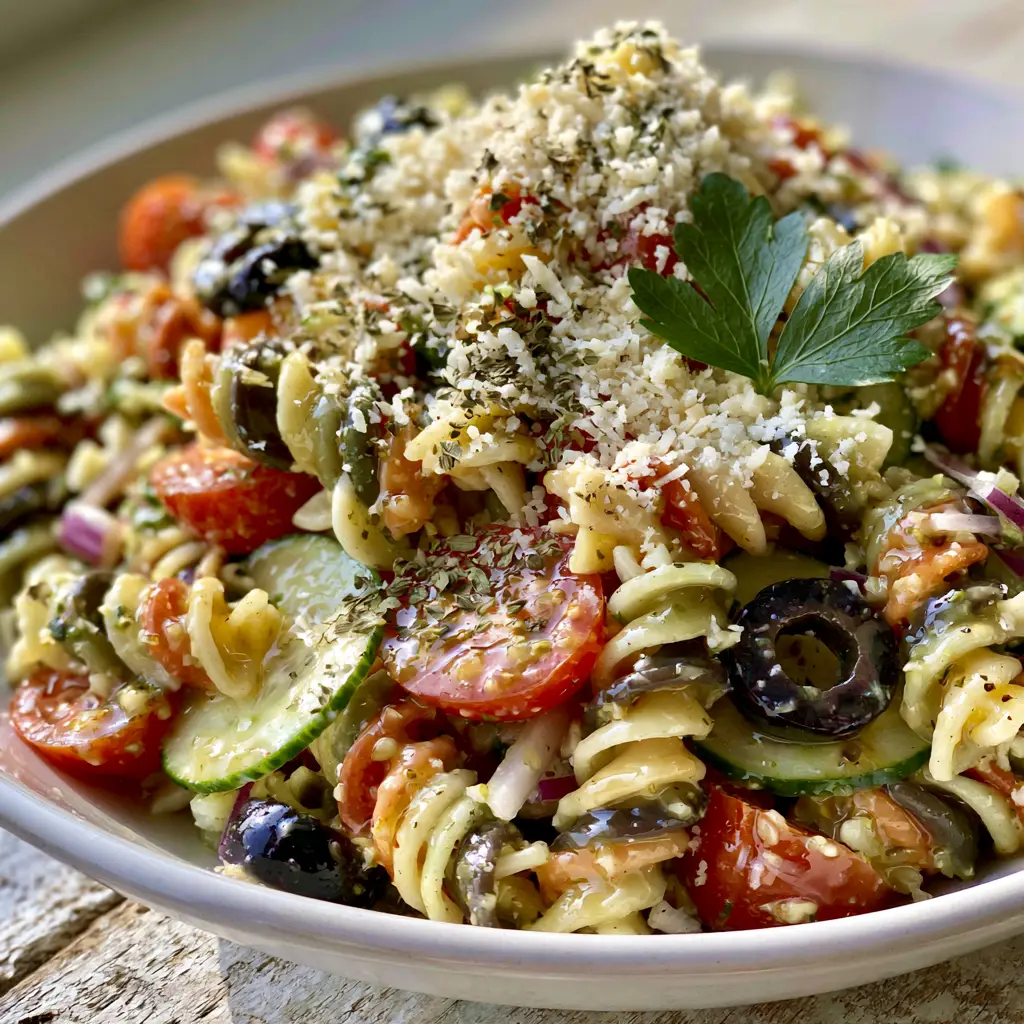
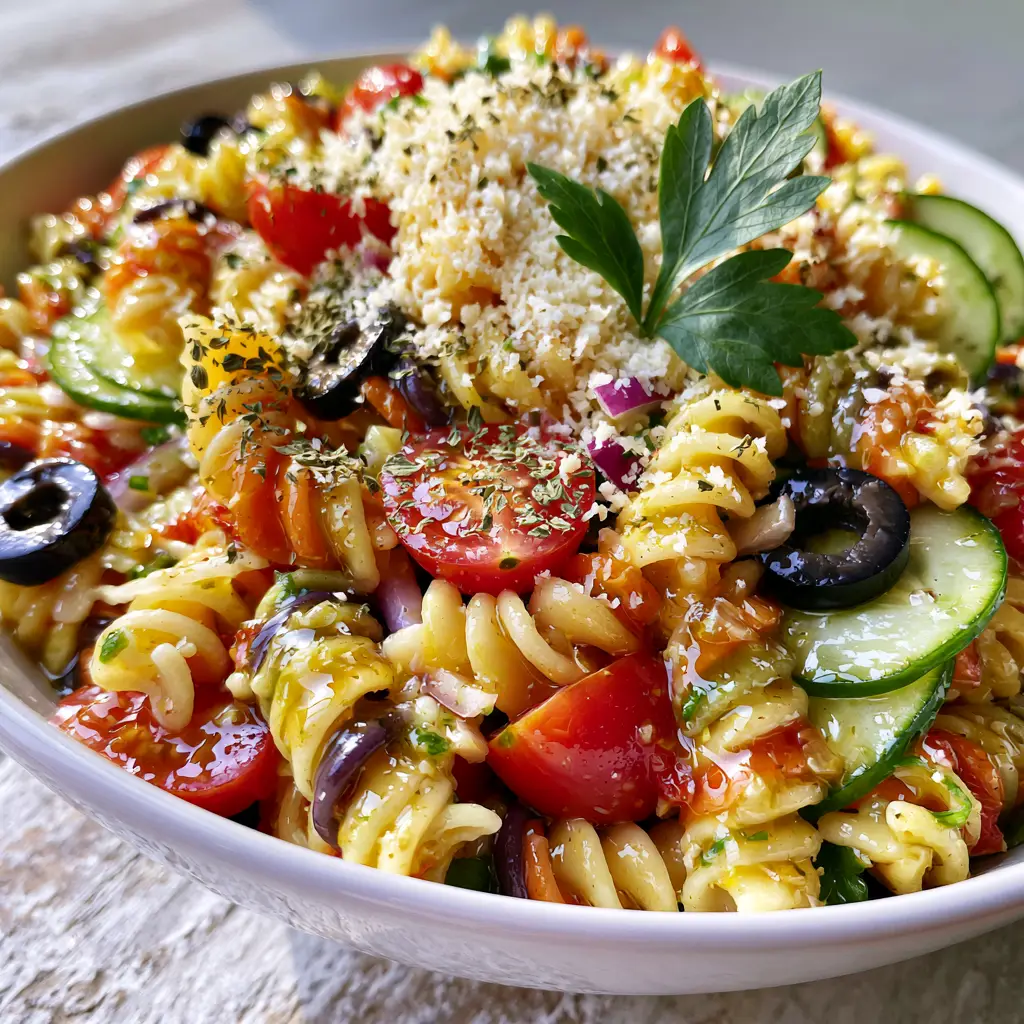
When you look at this dish, you are immediately struck by the macro-level textures. The glossy, translucent dressing clings to every spiral of the pasta, catching the light just like a professional food photograph. The contrast between the crisp English cucumbers and the juicy, bursting cherry tomatoes creates a sensory experience that is as beautiful as it is delicious.
Whether you are preparing this for a weekend barbecue or a simple weekday lunch, the goal is forensic visual accuracy. We are looking for that specific handheld smartphone aesthetic—real, rustic, and incredibly appetizing. By following this guide, you will achieve that exact “heavily coated” look and the fresh, herbal aroma that defines the classic Italian pasta salad experience.
The Anatomy of a Vibrant Italian Pasta Salad
- Visual Texture Contrast: The combination of smooth black olives, slivered red onions, and textured tri-color rotini creates a visually stimulating plate.
- Glossy Emulsification: A high-quality oil-based dressing ensures a translucent, light-reflecting sheen that persists even after chilling.
- Al Dente Precision: Cooking the pasta to a perfect firm bite prevents the salad from becoming mushy once the dressing is added.
- Herbaceous Finishing: A final dusting of finely grated parmesan and dried oregano provides that signature Mediterranean flavor profile.
Essential Components for the Perfect Copycat Bowl
Tri-Color Rotini Pasta: Use 1 lb (450g) of dried rotini. The spirals are scientifically designed to trap the zesty dressing within their grooves, ensuring flavor in every single bite.
Zesty Italian Dressing: You will need 1.5 cups (355ml) of a high-quality, oil-based Italian dressing. The oil content is crucial for achieving the glossy, translucent coating seen in the visual blueprint.
English Cucumbers: Use 1 large (approx. 300g) English cucumber, thinly sliced. These are preferred over standard cucumbers because their skin is thinner and the seeds are negligible, preventing the salad from becoming watery.
Cherry Tomatoes: 1 pint (280g) of ripe cherry tomatoes, halved longitudinally. These provide the bright red pops of color and a burst of acidity that balances the richness of the parmesan.
Black Olives: 1 can (3.8 oz/108g) of sliced black olives, drained. The dark rounds provide a necessary visual anchor and a salty, briny punch to the flavor profile.
Red Onion: 1/2 medium (75g) red onion, very thinly slivered. Soaking these in cold water for 5 minutes before adding can take the “bite” out while keeping the crunch.
Grated Parmesan Cheese: 1/2 cup (50g) of finely grated parmesan. This should be a fine dust rather than shreds to ensure it adheres to the oily dressing on the pasta.
Dried Oregano & Fresh Parsley: 1 tsp (2g) dried oregano and 2 tbsp (8g) fresh chopped flat-leaf parsley. The oregano provides the earthy base note, while the parsley adds the vibrant green flecks for the final presentation.
Kosher Salt: 2 tbsp (30g) for the pasta water. This is an “invisible” but vital ingredient to season the pasta from the inside out.
Professional Tools for Culinary Success
To achieve the macro-shot quality of the Olive Garden pasta salad, you need the right equipment. A large stainless steel stockpot is essential for boiling the pasta in plenty of salted water to prevent sticking. A high-quality mandoline slicer is recommended for achieving those perfectly uniform, thin slices of cucumber and red onion.
You will also need a large glass or ceramic mixing bowl to toss the ingredients without reacting to the acidic dressing. A fine-mesh sieve is helpful for rinsing the cooked pasta in cold water to stop the cooking process immediately. Finally, a sharp chef’s knife is non-negotiable for halving the cherry tomatoes cleanly without crushing them.
Step-by-Step Evolution to a Zesty Masterpiece
Achieving the Perfect Al Dente Foundation
Bring 4 quarts (3.8L) of water to a rolling boil and add your 2 tbsp (30g) of kosher salt. Add the 1 lb (450g) of tri-color rotini and cook for approximately 8-10 minutes.
Begin testing the pasta 2 minutes before the package directions suggest. You are looking for a firm “al dente” bite—the pasta should be fully cooked but still offer a slight resistance when bitten.
Drain the pasta immediately in a colander and rinse with cold running water for 60 seconds. This removes excess starch and stops the residual heat from overcooking the spirals, ensuring they stay bouncy and separate.
Precision Vegetable Preparation
While the pasta drains, slice your English cucumber into thin, uniform rounds. If you want a more rustic look, you can half-moon the slices, but thin rounds offer the best surface area for dressing.
Halve the cherry tomatoes lengthwise so the seeds stay intact within the flesh. This prevents the salad from becoming too liquid-heavy while maintaining those juicy “red jewels” described in the visual prompt.
Sliver the red onion as thinly as possible. The goal is to have delicate purple ribbons that weave through the pasta rather than chunky bites that overpower the other flavors.
The Art of the Glossy Coating
Place the cooled pasta into your large mixing bowl and pour 1 cup (240ml) of the Italian dressing over it. Toss thoroughly with tongs or a large spoon until every spiral has a glistening, translucent sheen.
Add the sliced cucumbers, halved tomatoes, black olives, and red onions to the bowl. Pour the remaining 1/2 cup (115ml) of dressing over the vegetables and toss again gently to avoid bruising the tomatoes.
Allow the salad to sit at room temperature for 15 minutes. This “marination phase” allows the porous rotini to soak up the zesty flavors of the dressing before you add the final dry ingredients.
The Final Aesthetic Flourish
Just before serving, sprinkle the finely grated parmesan cheese over the top. The cheese should catch on the oily coating of the pasta, creating a textured, snowy appearance.
Finish the dish by scattering the dried oregano and the freshly chopped parsley across the surface. The bright green of the parsley against the tri-color pasta creates that vibrant, high-contrast look suitable for a macro food photo.
Serve in a shallow white ceramic bowl to let the colors of the vegetables pop. Ensure you are in a bright, naturally lit area to capture those appetizing highlights on the oil-based dressing.
Expert Tips for the Ultimate Pasta Salad
- Temperature Control: Never dress hot pasta with an oil-based dressing if you plan to serve it cold; the pasta will absorb all the oil and lose its glossy sheen.
- The Dressing Reserve: Pasta acts like a sponge. If you are making this ahead of time, reserve 1/4 cup (60ml) of dressing to toss in right before serving to refresh that “light-catching” look.
- Salt Management: Since the dressing and parmesan are salty, always taste the finished salad before adding any extra table salt.
- Vegetable Freshness: Only add the cucumbers and tomatoes when the pasta is completely cool to keep them crisp and vibrant.
Storage and Make-Ahead Instructions
The Olive Garden pasta salad is an excellent candidate for meal prep. It stays fresh in the refrigerator for up to 3 to 4 days when stored in an airtight container. The flavors actually deepen after 24 hours as the red onion and oregano infuse the dressing.
When reheating is not an option for cold salads, simply take it out of the fridge 15 minutes before eating. The oils in the dressing may solidify slightly in the cold; a few minutes at room temperature will restore the glossy, translucent appearance.
Do not freeze this pasta salad. The cellular structure of the cucumbers and tomatoes will break down during the freezing process, resulting in a mushy texture once thawed. This dish is best enjoyed fresh or chilled from the refrigerator.
Complementary Dishes for a Complete Italian Feast
This zesty salad is a versatile side dish that pairs beautifully with grilled proteins or other Mediterranean favorites. If you are looking for more variety, consider serving it alongside a Mexican-inspired pasta salad for a fusion potluck spread.
For those who love a thematic Italian dinner, this salad provides a bright contrast to a rich and savory traditional pasta carbonara. The acidity of the Italian dressing cuts through the creamy egg and cheese sauce perfectly.
If you are hosting a larger gathering, you can create a “salad bar” effect by including a balsamic-glaze caprese pasta salad as an alternative option. This allows guests to choose between zesty vinaigrettes and creamy textures like a classic creamy macaroni salad.
Common Questions About Italian Pasta Salad
Yes, simply substitute the rotini with your favorite gluten-free fusilli or rotini. Ensure your Italian dressing is certified gluten-free, as some brands use thickeners containing wheat.
Rinse your pasta in cold water to remove excess starch before dressing. Also, reserve a small amount of dressing to toss into the salad just before serving, as the pasta will naturally absorb liquid while sitting.
Add the parmesan cheese just before serving. If added too early, the cheese can absorb the oil from the dressing and lose its distinct, snowy visual appeal.
For the most authentic taste, use Olive Garden’s signature bottled Italian dressing. If unavailable, any zesty, oil-based Italian vinaigrette will provide the necessary glossy coating and acidic punch.
English cucumbers have thinner skins and fewer seeds. This prevents the salad from becoming soggy and provides a cleaner, crisper aesthetic in the final dish.
Authentic Olive Garden Pasta Salad Recipe
Olive Garden Pasta Salad: The Ultimate Zesty Italian Copycat Recipe
Ingredients
Equipment
Method
- Cook tri-color rotini in salted boiling water for 8-10 minutes until al dente.
- Drain and rinse immediately with cold water to stop cooking and remove excess starch.
- Place cold pasta in a bowl and toss with 1 cup (240ml) of dressing until glossy.
- Add cucumbers, tomatoes, olives, and onions. Toss with the remaining 1/2 cup (115ml) of dressing.
- Top with grated parmesan, dried oregano, and fresh parsley before serving.
Notes
Reserve a splash of dressing to add right before serving for maximum glossiness.
Bring the Italian Countryside to Your Kitchen
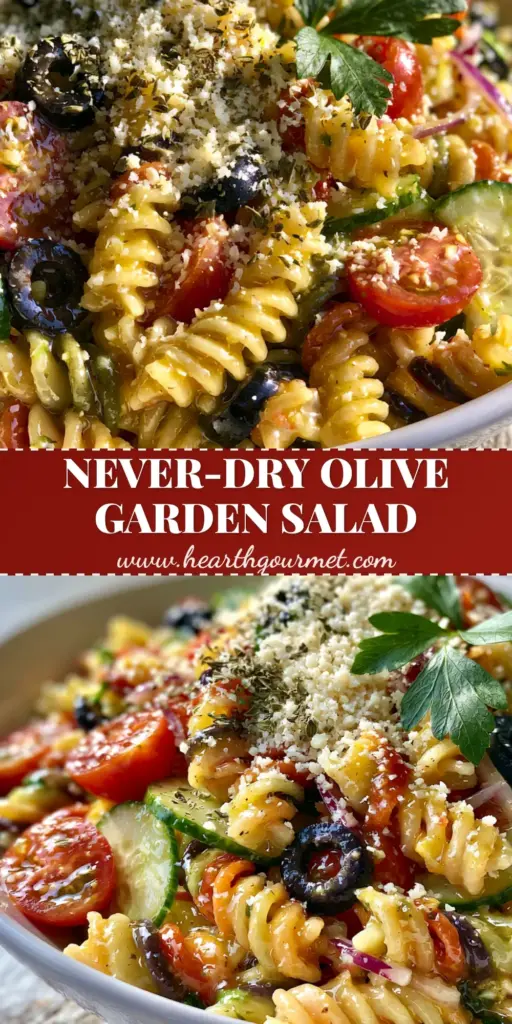
Crafting the perfect Olive Garden pasta salad is about more than just mixing ingredients; it’s about capturing a specific visual and flavor profile. From the glossy sheen of the zesty dressing to the crisp snap of the English cucumbers, every element plays a role in this Mediterranean masterpiece. It is a reliable, crowd-pleasing dish that looks just as good as it tastes.
We would love to see your culinary creations! If you made this recipe, please leave a comment below and let us know how it turned out. Don’t forget to follow us on Pinterest for more vibrant recipe inspiration and save this pin to your favorite boards for later!