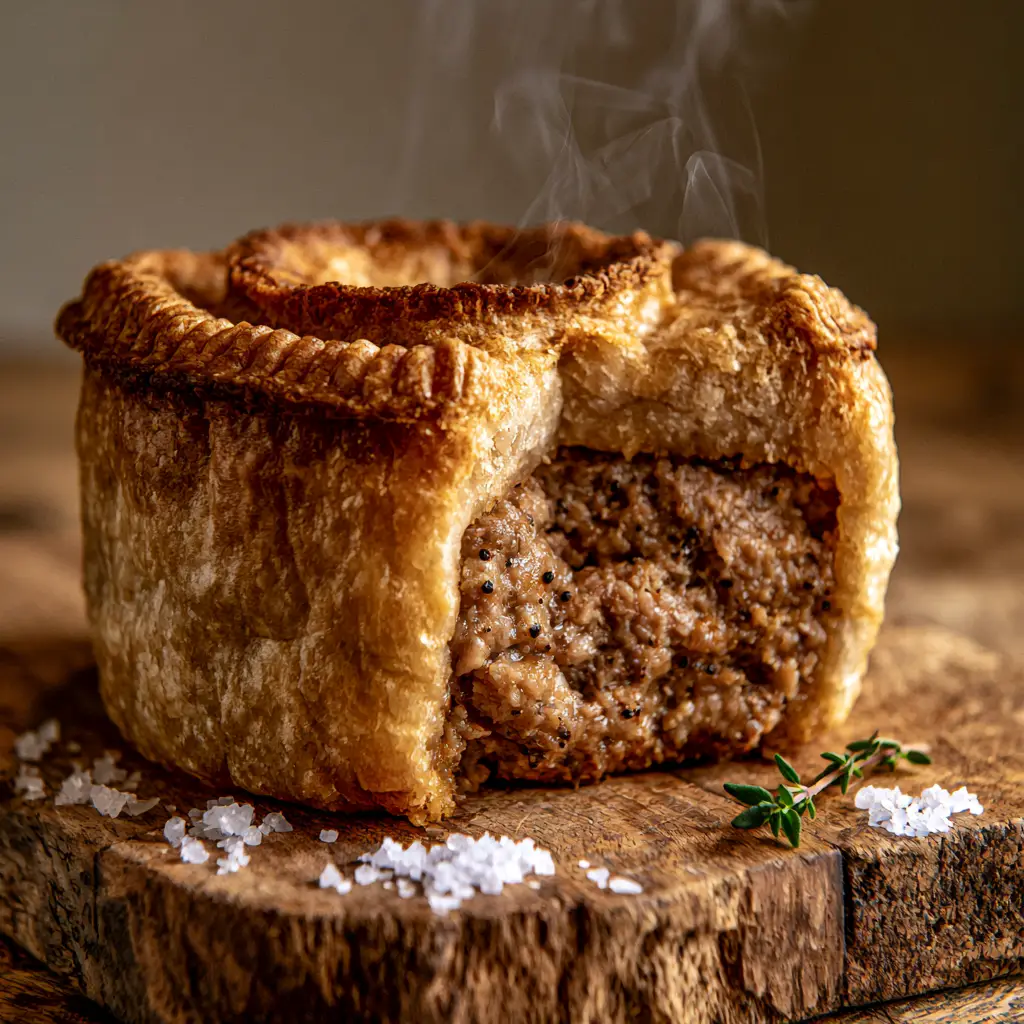
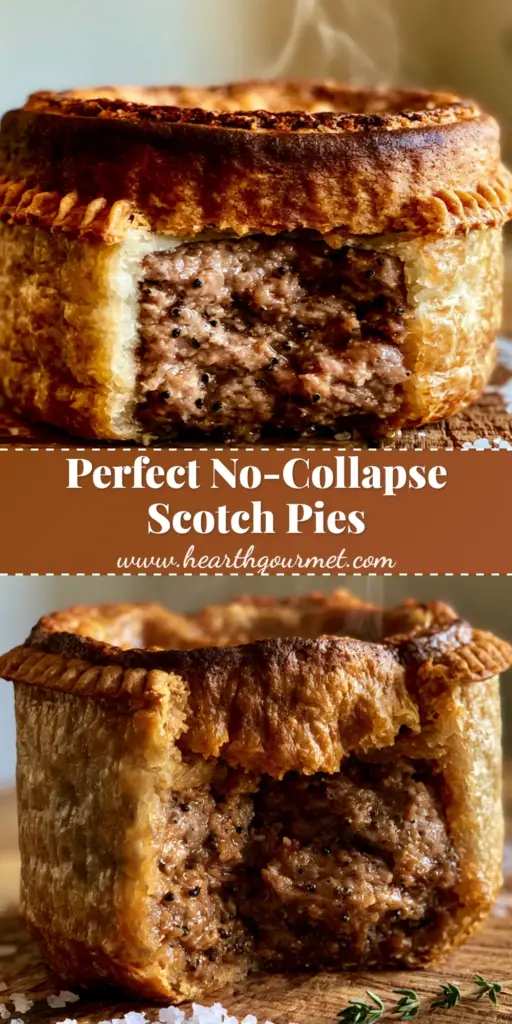
The Scotch pie is more than just a convenience food; it is a marvel of culinary engineering. Characterized by its unique vertical walls and recessed lid, this “mutton pie” is a staple of Scottish culture, traditionally enjoyed at football matches and high tea. This recipe focuses on achieving that precise, tall structure and deep golden-brown finish that defines a professional-grade pie.
When you hold a freshly baked Scotch pie, you should feel the sturdy, crisp texture of the hot water crust. The matte finish of the pastry should give way to a dense, incredibly juicy filling. In this guide, we will recreate the iconic visual of fine wisps of steam rising from a pepper-flecked meat center, served on a rustic wooden board with a sprig of fresh thyme.
The Anatomy of a Perfect Scottish Handheld Pie
What makes this recipe stand out is the commitment to traditional techniques that ensure structural integrity. We aren’t just making a meat pie; we are building an edible vessel designed to hold in every drop of savory juice. To achieve the results seen in our blueprint, we focus on three core pillars:
- The Architectural Shell: A hot water crust that is strong enough to stand vertically without a tin during the final stages of baking.
- The Recessed Lid: A specific assembly method that creates a crisp, baked-on rim designed to hold gravy or mashed peas.
- The Peppery Interior: A dense, seasoned filling where the heat of black pepper balances the richness of the meat.
Foundational Ingredients for the Architectural Crust and Savory Filling
To achieve the deep golden-brown, matte finish described in our visual blueprint, we must select ingredients that react specifically to high heat. While the visual focuses on the meat and pastry, these “invisible” ingredients are the scientific requirements for success.
All-Purpose Flour: 3 cups (375g). This provides the necessary protein structure to create those perfectly vertical pastry walls without collapsing under the weight of the meat.
High-Quality Lard: 1/2 cup (115g). Lard is non-negotiable for an authentic Scotch pie; it provides the specific “snap” and matte texture that butter simply cannot replicate.
Boiling Water: 2/3 cup (160ml). The water must be at a rolling boil to gelatinize the starches in the flour, making the dough pliable enough to mold while warm.
Minced Lamb or Beef: 1 lb (450g). While traditional recipes use mutton, a high-fat minced lamb or beef ensures the filling remains juicy and dense after baking.
Coarse Sea Salt and Cracked Black Pepper: 1 tbsp (15g) of pepper and 1 tsp (5g) of salt. The visual blueprint highlights visible flecks of pepper; we use a coarse grind to ensure those flavor bursts are both seen and tasted.
Beef Stock: 1/4 cup (60ml). This foundational liquid is absorbed by the meat during the bake, creating the “fine wisps of steam” when the pie is sliced open.
Fresh Thyme: 1 small sprig. While used as a garnish on our rustic board, the aromatic oils of the thyme enhance the olfactory experience of the warm pastry.
Essential Equipment for Shaping Vertical Pastry Walls
Creating a Scotch pie requires more than just a standard pie dish. To get that handheld, smartphone-photo-ready look, you need tools that help “raise” the pie. If you’ve previously mastered Aussie-style beef party pies, you’ll find this technique both familiar and distinct.
You will need a “pie glass” or a straight-sided jam jar (approximately 3 inches (7.5cm) in diameter). This acts as the mold for your vertical walls. A small kitchen crimper or even a fork will be needed to create those iconic crimped edges on the lid.
Additionally, a heavy-duty baking sheet and parchment paper are required to handle the high heat needed to blister the pastry slightly for that deep golden-brown finish. A digital meat thermometer is also recommended to ensure the internal filling is safely cooked while remaining juicy.
Mastering the Hot Water Crust Technique
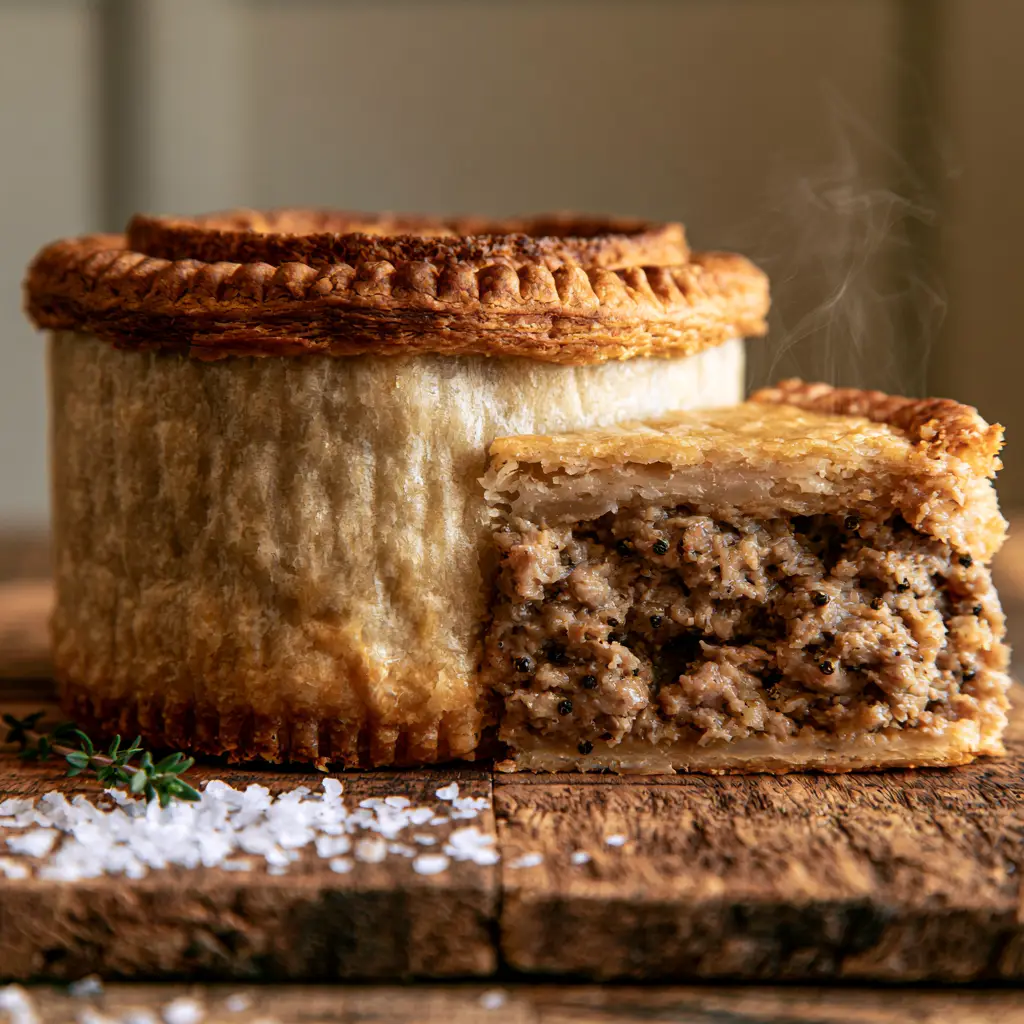
The secret to the Scotch pie’s legendary strength is the hot water crust. Unlike a flaky puff pastry chicken pot pie which relies on cold fats and lamination, this pastry is cooked before it is baked. This process allows you to mold the dough into a tall, architecturally straight cylinder.
Step 1: Preparing the Scalded Dough
Sift your flour and salt into a large heat-proof bowl. In a small saucepan, combine the lard and water, bringing them to a full, rolling boil. Immediately pour the boiling liquid into the flour and stir with a wooden spoon until a cohesive dough forms.
Once it is cool enough to handle but still significantly warm, knead the dough briefly on a clean surface. The dough should be smooth, elastic, and have a matte, slightly oily sheen. Do not let the dough cool completely, or it will become brittle and impossible to shape into vertical walls.
Step 2: Molding the Vertical Shells
Divide the dough, reserving about a quarter for the lids. Roll the remaining dough into balls and, using your jam jar or pie mold, press the dough up the sides of the jar to create a 3-inch (7.5cm) tall cylinder. The walls should be of uniform thickness to ensure they support the meat.
Carefully slide the pastry shell off the mold. If the dough is still warm, it will hold its shape. Set these shells aside to firm up at room temperature while you prepare the peppery meat filling.
Creating the Dense and Juicy Savory Filling
The filling of a Scotch pie is distinct from the loose, saucy meat found in a traditional shepherd's pie. It must be dense enough to be eaten by hand, yet moist enough to release steam when sliced. This is where your seasoning strategy becomes critical.
Step 3: Seasoning for Visual and Flavor Impact
In a medium bowl, combine your minced meat with the coarse sea salt, mace, nutmeg, and a generous amount of cracked black pepper. The pepper flecks should be clearly visible throughout the mixture. Mix in the beef stock slowly; the meat should be tacky and moist, not swimming in liquid.
Tightly pack the meat into the prepared pastry shells. Leave about 1/2 inch (1.25cm) of space at the top of the pastry wall. This gap is essential for creating the recessed lid effect that is synonymous with authentic Scottish styling.
Step 4: The Art of the Recessed Lid and Crimped Edge
Roll out the reserved pastry and cut circles that fit just inside the diameter of your pie walls. Place the lid onto the meat. Use your fingers or a small tool to crimp the edges of the lid against the inside of the pastry walls.
The lid should sit slightly lower than the top of the wall, creating a crisp rim. Poke a small hole in the center of the lid to allow steam to escape. Brush the top and the tall vertical walls with an egg wash (1 egg beaten with 1 tsp (5ml) of water) to ensure that deep golden-brown, matte finish.
Cues for the Perfect Bake: Steam, Scent, and Texture
Place the pies on a preheated baking sheet in an oven set to 400°F (200°C). Bake for 30-35 minutes. You are looking for specific sensory cues during this stage: the kitchen should fill with the scent of toasted grain and savory pepper.
Visually, the pastry will transition from a pale cream to a rich, matte golden-brown. The edges of the rim should look crisp and slightly darker than the walls. When you remove them from the oven, you may see tiny bubbles of savory juice around the steam vent.
Let the pies rest for at least 10 minutes. This resting period allows the juices to redistribute within the dense meat, ensuring that when you take that “smartphone photo,” the cross-section reveals a juicy, perfectly set filling rather than a dry interior.
Serving Suggestions and Pairing Perfection
To serve, place the pie on a rustic wooden board. Sprinkle a few grains of coarse sea salt over the top and place a single sprig of fresh thyme alongside it to mimic our master visual. The contrast between the warm, golden pastry and the green herb creates a stunning presentation.
While these are excellent on their own, they also pair beautifully with a warm bowl of Italian chicken soup for a multi-course lunch. For a truly Scottish experience, serve them with “neeps and tatties” or a side of mushy peas poured right into the recessed lid of the pie.
Scotch Pie Recipe: The Ultimate Masterclass in Architectural Hot Water Crust
Ingredients
Equipment
Method
- Bring water and lard to a rolling boil in a small saucepan.
- Pour boiling liquid into flour and salt. Stir until a warm dough forms and knead until smooth.
- Press warm dough around a jam jar to create tall, vertical walls. Remove the jar carefully.
- Pack the seasoned meat tightly into the shells, leaving space at the top for the lid.
- Place the pastry lid inside the walls, crimping the edges to create a recessed top.
- Bake at 400°F (200°C) for 35 minutes until the pastry is deep golden-brown and the filling is juicy.
Notes
Use high-fat meat to ensure the filling releases steam when sliced.
Frequently Asked Questions
While you can use butter, lard is preferred for its higher melting point and lack of water, which results in a stronger, more ‘architectural’ crust that can stand vertically without support.
The secret is temperature. Hot water crust must be shaped while the dough is still warm and the starches are gelatinized. If it cools too much, it loses its elasticity and will crack.
Traditionally, mutton is used for its deep flavor. However, minced lamb or a high-fat beef (20% fat) are excellent modern substitutes that ensure a juicy, savory result.
The stock is absorbed by the meat as it bakes, creating a dense but moist texture and producing the characteristic steam when the pie is cut open.
The recessed lid is a traditional design feature intended to hold a serving of gravy, mushy peas, or baked beans directly on top of the pie without it spilling over the sides.
Expert Tips for Scotch Pie Success
- Maintain Temperature: If your hot water crust cools down too much while molding, it will crack. Keep the dough in a warm bowl covered with a towel while you work.
- The “Football” Poke: Always ensure you have a steam vent in the lid. Without it, the expanding steam might force the recessed lid to pop off or cause the vertical walls to bulge.
- Fat Choice Matters: If you cannot find lard, use vegetable shortening. Avoid butter for the crust as it contains water which will make the pastry too soft to stand vertically.
- Seasoning Balance: Because this pie is eaten warm or cold, it needs more pepper and salt than a typical meatloaf. Taste a small bit of the cooked filling before stuffing the pies if you are unsure.
Storage, Reheating, and Freezing Advice
Scotch pies are incredibly durable. They can be stored in the refrigerator for up to 4 days. To reheat, place them in an oven at 350°F (175°C) for 10-15 minutes to restore the crispness of the hot water crust. Avoid the microwave, as it will turn the architectural crust soft and doughy.
To freeze, wrap the cooled pies tightly in plastic wrap and then foil. They will stay fresh for up to 3 months. Thaw in the refrigerator overnight before reheating in the oven. This makes them a perfect make-ahead meal for busy weeknights.
Join the Hearth Gourmet Community
Mastering the Scotch pie is a rite of passage for any serious home cook. The combination of structural pastry and savory, peppery filling is a testament to the beauty of traditional British baking. We would love to see your architectural creations!
Please leave a comment below with your results and don’t forget to share your photos with us. For more rustic recipes and culinary inspiration, follow us on Pinterest and sign up for our newsletter to get the latest guides delivered straight to your inbox.