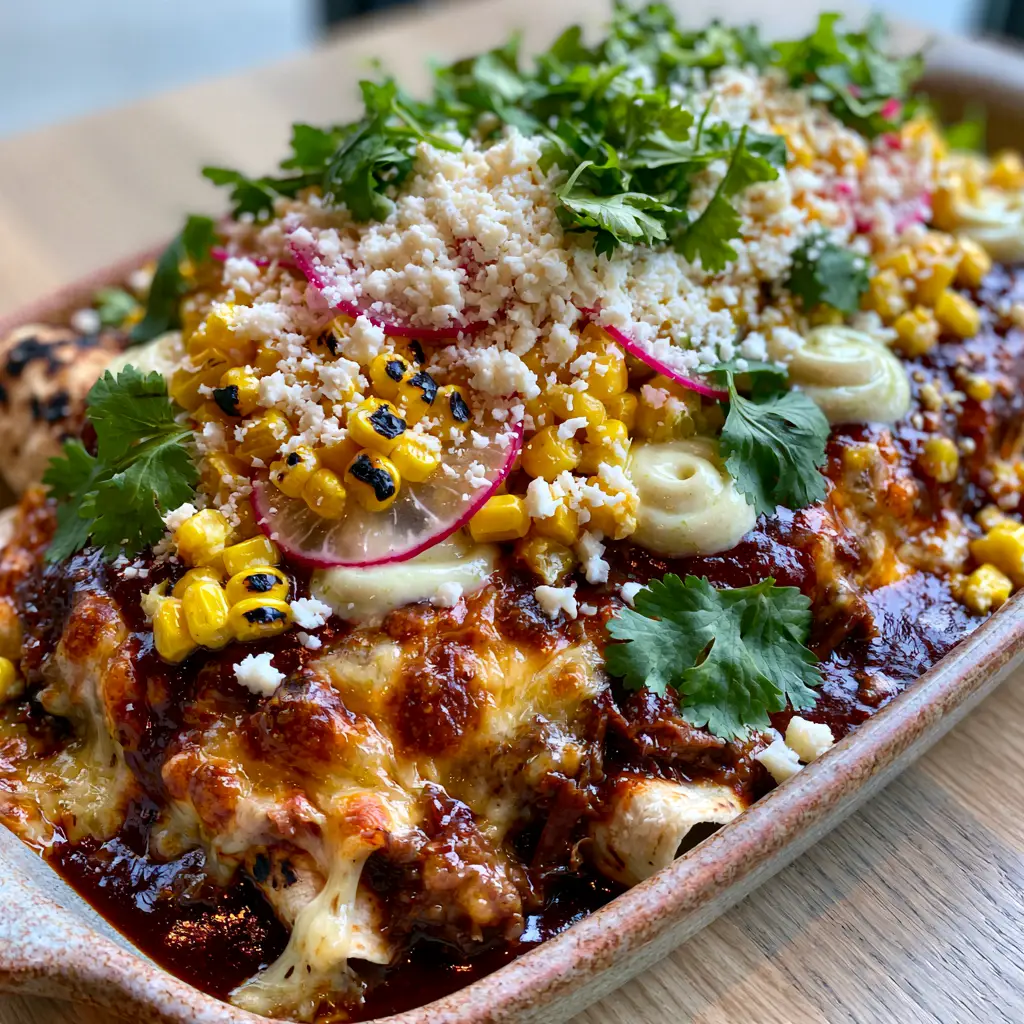
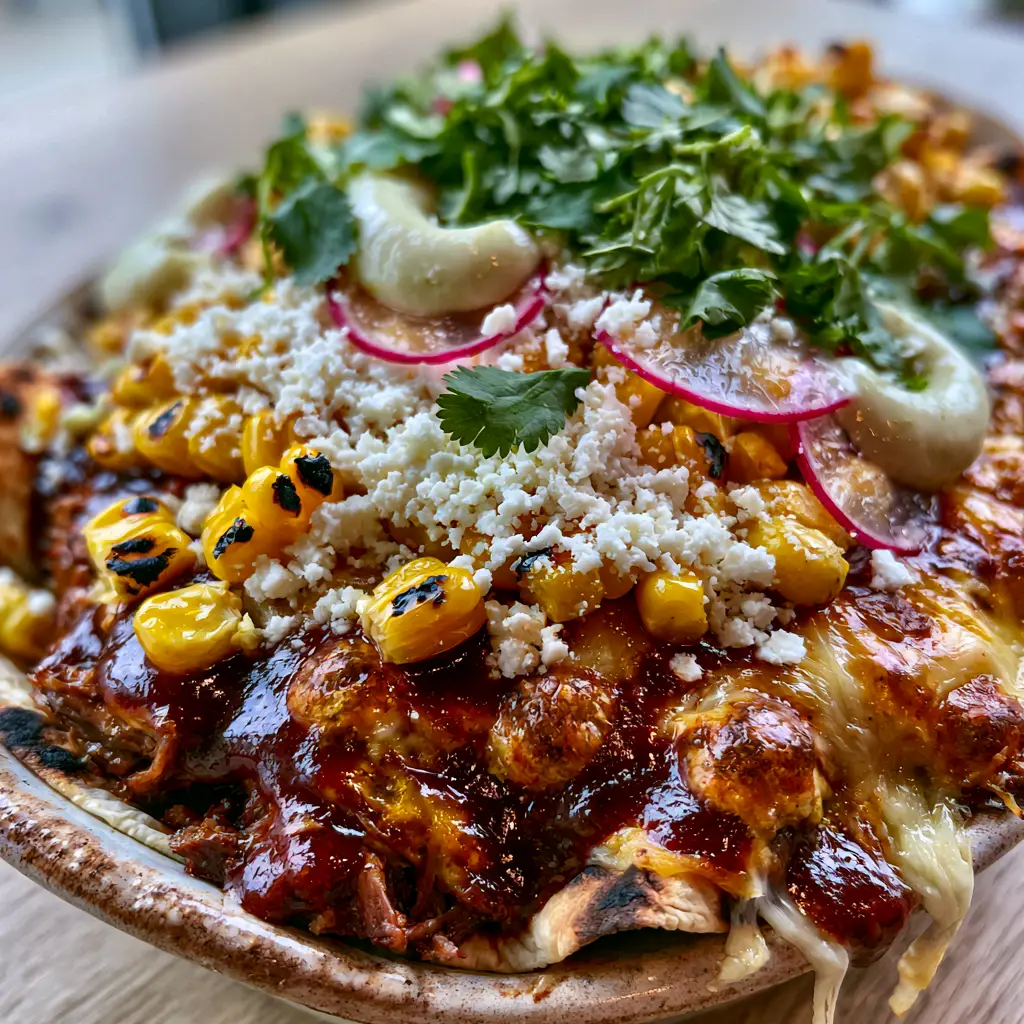
There is a specific kind of culinary magic that happens when the morning sun hits a rustic ceramic dish filled with bubbling Monterey Jack cheese and deep, crimson ancho sauce. These Tex-Mex recipes are designed to capture that exact moment—a symphony of succulent shredded brisket, smoky chilies, and the vibrant crunch of street-corn-inspired toppings.
Authentic Tex-Mex is often misunderstood as simple “fusion,” but in reality, it is a sophisticated discipline of heat, fat, and acidity. By slow-cooking beef until it yields at the touch of a fork and pairing it with a velvety lime crema, we create a dish that is as visually stunning as it is structurally sound.
Whether you are preparing a weekend feast or looking for a centerpiece for your next gathering, this recipe bridges the gap between traditional slow-cooking and modern plating. Let’s dive into the forensic details of building the perfect Tex-Mex plate.
Why These Elevated Beef Enchiladas Defined Premium Tex-Mex
- Succulent Texture: The beef brisket is slow-cooked until it reaches a “dripping” consistency, ensuring every bite is moist and tender.
- Visual Contrast: The deep-red ancho chili sauce provides a dramatic backdrop for the bright yellow charred corn and emerald-green cilantro.
- Complex Flavor Profiles: We balance the heavy, savory notes of melted Monterey Jack with the sharp, translucent bite of fresh red radishes and acidic lime crema.
- Professional Finish: Achieving those signature “brown spots” on the cheese requires specific heat management that elevates home cooking to restaurant quality.
The Anatomy of Flavor: Essential Ingredients and Substitutions
Beef Brisket (3 lbs / 1.36kg): This is the soul of the dish. Look for a flat-cut brisket with a decent fat cap, as this fat renders down to create the succulent mouthfeel seen in the visual blueprint.
Ancho Chilies (4-6 dried pods): These provide the base for our thick, glossy, deep-red sauce. Anchos are dried poblanos and offer a mild, raisin-like sweetness rather than sharp heat.
Monterey Jack Cheese (12 oz / 340g): This cheese is prized for its superior melting point. It creates the iconic “stretch” and browns beautifully under the broiler.
Sweet Corn (2 ears or 1.5 cups / 250g): We aren’t just boiling this; we are charring it to achieve those black sear marks that provide a smoky counterpoint to the rich beef.
Cotija Cheese (1/2 cup / 60g): Known as the “Parmesan of Mexico,” this dry, crumbly cheese provides a salty punch that won’t melt away into the sauce.
Corn Tortillas (12-14 standard): Use soft, high-quality corn tortillas. A quick dip in warm oil prevents them from cracking and helps them stand up to the heavy ancho sauce.
Fresh Radishes (4-5 medium): Sliced paper-thin, these add a translucent beauty and a necessary peppery crunch to the finished plate.
Lime Crema (1/2 cup / 120ml): A mixture of sour cream (or Mexican crema) and fresh lime juice, providing the velvety white swirls that cut through the richness.
Precision Tools for High-End Tex-Mex Results
To achieve the professional look of a handheld smartphone photo, you need the right gear. A heavy-bottomed Dutch oven is essential for the slow-cooking process, ensuring even heat distribution for the brisket. For the sauce, a high-speed blender will emulsify the soaked chilies into that perfectly smooth, glossy consistency.
A cast-iron skillet is the best tool for charring your sweet corn kernels, as it retains the high heat necessary for those distinct black sear marks without overcooking the interior of the corn. Finally, a rustic ceramic baking dish is not just for aesthetics; its thermal mass helps maintain the bubbling temperature of the Monterey Jack cheese during serving.
The Master Blueprint: Slow-Cooking the Succulent Beef
Preparing the Brisket Base
Begin by seasoning your 3 lbs (1.36kg) brisket generously with salt and cracked black pepper. In a large Dutch oven, sear the meat in 2 tbsp (30ml) of high-smoke-point oil until a deep, dark-brown crust forms on all sides.
Remove the meat and deglaze the pot with a splash of beef stock. Return the brisket to the pot with 2 cups (480ml) of stock, 4 cloves of smashed garlic, and a teaspoon of cumin. Cover and cook at 300°F (150°C) for 3.5 to 4 hours until the beef shreds easily with two forks.
Crafting the Glossy Ancho Chili Sauce
While the beef rests, stem and seed your dried ancho chilies. Toast them in a dry pan for 2 minutes until fragrant, then soak them in hot water for 20 minutes. Blend the softened chilies with 1 cup (240ml) of the soaking liquid, a pinch of salt, and a teaspoon of honey to enhance the gloss.
The resulting sauce should be thick enough to coat a spoon—this is what creates the “dripping” effect on the final enchiladas. If the sauce is too thin, simmer it in a saucepan for 10 minutes to reduce and concentrate the flavors.
Assembly and the Perfect Char
Achieving the Street Corn Topping
Slice the kernels off two ears of corn. Heat a cast-iron skillet over high heat until it begins to wisps smoke, then add the corn in a single layer. Leave it undisturbed for 2-3 minutes until you see significant black sear marks, then toss and remove from heat immediately.
This “charred sweet corn” is a staple of modern summer grilling recipes and adds a sophisticated textural element to the dish. Mix the charred kernels with a squeeze of lime to keep the colors bright yellow and vibrant.
Rolling and Baking for Visual Excellence
Dip each tortilla into the warm ancho sauce, fill with a generous portion of shredded brisket, and roll tightly. Place them seam-side down in your rustic ceramic dish. Pour the remaining deep-red sauce over the center, leaving the edges of the tortillas slightly exposed for texture.
Cover the center with a heavy layer of shredded Monterey Jack. Place the dish under the broiler for 3-5 minutes. Watch closely: you are looking for the cheese to be bubbling and “browning in spots,” just like the visual prompt describes.
Expert Tips for Success
- The Tortilla Trick: Flash-fry your corn tortillas in 350°F (175°C) oil for just 5 seconds per side. This creates a fat barrier that prevents the sauce from making the tortillas soggy.
- Radish Preparation: Keep your sliced radishes in a bowl of ice water until the very last second. This ensures they remain “translucent” and extra crisp when placed on the hot cheese.
- Crema Consistency: If your lime crema is too thick to dollop, whisk in a teaspoon of milk. It should be “velvety” enough to swirl but thick enough to hold its shape.
- The Cotija Factor: Don’t overdo the cotija; its saltiness is intense. A “heavy dusting” is perfect for visual contrast against the emerald cilantro.
Storage, Reheating, and Freezing
These enchiladas are best enjoyed fresh to maintain the texture of the charred corn and crisp radishes. However, the beef and sauce components can be prepared up to 3 days in advance and stored in airtight containers in the refrigerator.
If you have leftovers, reheat them in the oven at 350°F (175°C) covered with foil to prevent the cheese from hardening. Avoid the microwave, as it will turn the corn tortillas rubbery. For freezing, only freeze the beef and sauce; fresh toppings like radish and cilantro should always be added just before serving.
What to Serve With Elevated Tex-Mex
To round out a full Tex-Mex spread, consider pairing these rich enchiladas with a lighter side. A vibrant elote-inspired pasta salad echoes the flavors of the charred corn topping while providing a cool contrast.
If you are looking for a starter, a warm bowl of traditional Mexican shell soup provides a comforting opening to the meal. For those who enjoy a variety of textures, these enchiladas also pair beautifully with crispy Tex-Mex favorites for a festive platter.
Frequently Asked Questions
Yes, but ensure it is fully thawed and patted dry before hitting the hot cast-iron skillet to achieve proper black sear marks.
Blending the soaked chilies with a small amount of honey or sugar and emulsifying with oil creates that signature high-shine, thick consistency.
Beef brisket is the gold standard for its fat content and ability to shred into succulent, moist ribbons after a long, slow braise.
Monterey Jack is used for its superior melting and browning properties, while Cotija is used as a salty, crumbly finishing garnish that doesn’t melt.
You must flash-fry the tortillas in hot oil for 5 seconds per side to create a protective barrier that prevents them from absorbing too much liquid.
The Ultimate Shredded Beef and Street Corn Enchilada Recipe
Tex-Mex Recipes: The Ultimate Shredded Beef Enchiladas with Charred Street Corn
Ingredients
Equipment
Method
- Sear the seasoned brisket in the Dutch oven until a deep golden-brown crust forms on all sides.
- Add stock and garlic, then braise at 300°F (150°C) for 4 hours until succulent and shreddable.
- Blend toasted and soaked anchos with liquid and honey until a thick, glossy red sauce forms.
- Sear corn in a hot cast-iron skillet until black sear marks appear on the yellow kernels.
- Dip tortillas in sauce, fill with shredded beef, and roll into the ceramic dish.
- Top with cheese and sauce; broil until the Monterey Jack is bubbling and browning in spots.
- Top with charred corn, radish slices, cotija, cilantro, and dollops of lime crema.
Notes
Keep radishes in ice water until serving for maximum crunch.
Closing & Call to Action
Mastering these Tex-Mex recipes is about more than just following steps; it is about understanding the balance between the deep, smoky heat of the ancho sauce and the bright, fresh crunch of the toppings. This dish is designed to be a centerpiece, bringing the warmth of morning light and rustic charm to your dinner table.
If you enjoyed this forensic look at premium enchiladas, please leave a comment below with your favorite Tex-Mex variations! Don’t forget to follow us on Pinterest and share your creations using our recipes. Your support helps us continue to develop these deep-dive culinary guides.