Experience the vibrant essence of an Italian summer with this exquisite Caprese Chicken. This recipe transforms the classic trio of tomato, basil, and mozzarella into a protein-packed masterpiece that is as visually stunning as it is delicious.
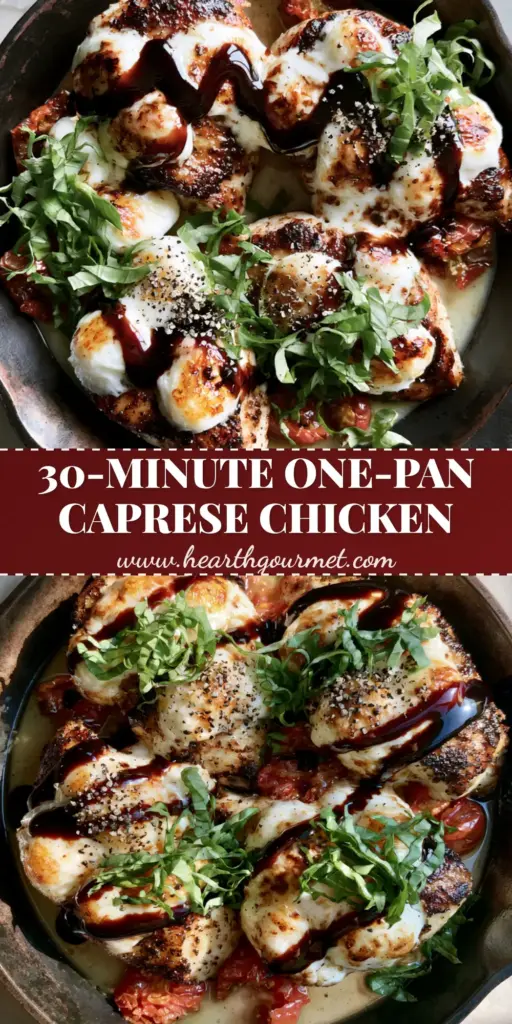
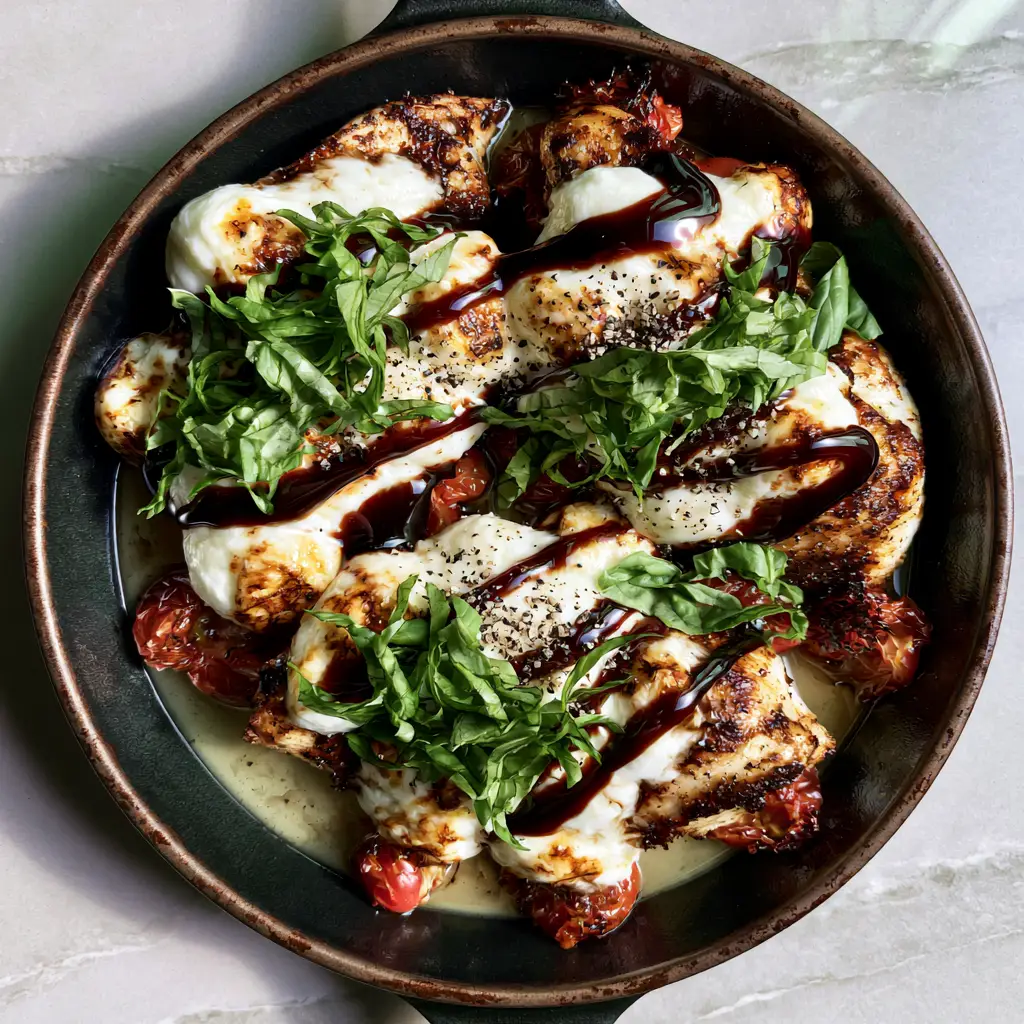
Imagine succulent chicken breasts, seared to a deep mahogany gold, topped with pools of molten fresh mozzarella. Nestled in a rustic cast iron skillet, burst cherry tomatoes release their sweet juices to create a natural sauce that clings to every bite.
The final flourish of a thick, glossy balsamic drizzle and fragrant ribbons of fresh basil makes this dish a high-end restaurant experience in your own kitchen. Whether you are hosting a dinner party or seeking a sophisticated weeknight meal, this recipe delivers on every sensory promise.
The Sensory Appeal of Our Signature Caprese Chicken
- Visual Masterpiece: The contrast of vibrant green basil against snowy white mozzarella and deep red blistered tomatoes creates a professional, “unedited” aesthetic perfect for your table.
- Textural Harmony: Enjoy the crunch of a perfectly seared chicken crust paired with the soft, bubbly pull of melted mozzarella pearls and the “pop” of burst tomatoes.
- Flavor Complexity: The acidity of the balsamic reduction balances the creamy fat of the cheese, while the cracked black pepper adds a necessary bite to the finish.
- One-Pan Simplicity: Achieve gourmet results using a single rustic cast iron skillet, ensuring all the flavors of the chicken and tomatoes meld into a rich pan sauce.
Anatomy of an Authentic Caprese Chicken Skillet
To achieve the specific visual results of our forensic blueprint, every ingredient must serve a structural and flavor-driven purpose. Below are the elements required for success.
The Foundational Proteins and Dairy
4 Boneless Skinless Chicken Breasts (approx. 1.5 lbs / 680g): Choose even-sized breasts to ensure uniform cooking. We will sear these until they reach a deep golden brown, providing the structural base for our cheese.
8 oz (225g) Fresh Mozzarella Pearls: Unlike shredded cheese, pearls provide those thick, bubbly mounds seen in our blueprint. They melt into distinct, luxurious pools rather than a flat sheet.
The Garden-Fresh Aromatics
2 cups (300g) Cherry Tomatoes: We use cherry tomatoes specifically for their thin skins, which blister and burst beautifully under high heat, contributing to the “shallow pool of light pan juices.”
1 bunch (30g) Fresh Basil: This must be fresh. We will prepare a chiffonade (ribbons) to garnish at the very end to maintain its vibrant green color and volatile oils.
3 cloves (15g) Fresh Garlic: Minced finely, this “invisible” ingredient infuses the pan juices with a savory backbone that elevates the natural sweetness of the tomatoes.
The Finishing Glaze and Pantry Essentials
1/2 cup (120ml) Balsamic Glaze: This is a balsamic reduction, thick enough to hold its zigzag shape on top of the cheese without running off instantly. It provides that sophisticated mahogany finish.
2 tbsp (30ml) Extra Virgin Olive Oil: Essential for the initial sear. High-quality oil ensures the chicken doesn’t stick to the cast iron while facilitating the Maillard reaction.
1 tsp (5g) Coarse Cracked Black Pepper: Large cracks of pepper provide a visual “speckle” and a pungent heat that cuts through the richness of the mozzarella.
1 tsp (5g) Flaky Sea Salt: This seasons the chicken deeply and helps draw moisture out of the tomatoes during the blistering process.
Essential Equipment for Professional Results
To replicate the rustic, high-end look of our Caprese Chicken, the right tools are non-negotiable. A 12-inch matte black cast iron skillet is the star of the show.
Cast iron provides superior heat retention, which is critical for that golden-brown crust and for blistering tomatoes rapidly without overcooking the chicken’s interior. You will also need a sharp chef’s knife for clean basil ribbons and a pair of stainless steel tongs for precise chicken flipping.
The Culinary Blueprint: Step-by-Step Caprese Chicken
Phase 1: Achieving the Golden Sear
Pat the chicken breasts completely dry with paper towels. Season both sides generously with salt and half of the cracked black pepper. A dry surface is the only way to achieve the deep golden-brown crust described in our visual prompt.
Heat your cast iron skillet over medium-high heat with the olive oil. Once the oil shimmers and barely begins to smoke, add the chicken breasts. Sear undisturbed for 5-6 minutes until the chicken releases easily from the pan with a rich, mahogany-colored crust.
Flip the chicken and cook for another 4-5 minutes. The sound should be a consistent sizzle; if it goes quiet, your pan has lost heat. If it begins to smoke excessively, turn the heat down slightly.
Phase 2: Blistering the Tomatoes and Creating Pan Juices
Once the chicken is flipped, nestle the cherry tomatoes into the empty spaces around the meat. The direct contact with the hot iron will cause the skins to char and blister. As they heat up, you will hear them “pop.”
Add the minced garlic into the spaces between the tomatoes. Stir the tomatoes and garlic occasionally. The tomatoes will release their juices, mixing with the rendered chicken fat and garlic to create a shallow, savory pool of light pan juices.
Phase 3: The Mozzarella Melt
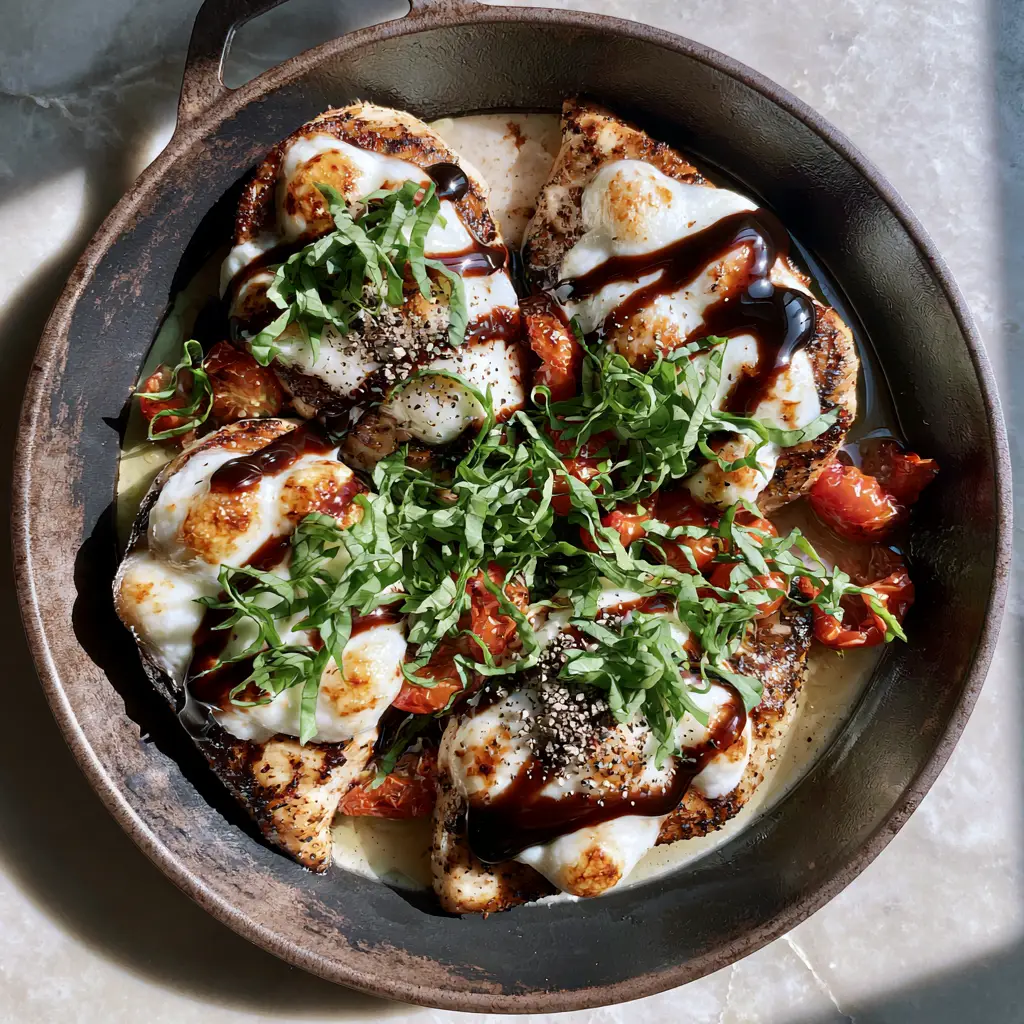
Top each chicken breast with a generous handful of the mozzarella pearls. To achieve the “bubbly, melted fresh mozzarella with slight golden toasted spots,” you can place a lid over the skillet for 2 minutes or, ideally, place the skillet under a broiler for 60-90 seconds.
Keep a close eye on the cheese. You want it thick and molten, but not so melted that it loses its “pearl” definition entirely. The goal is a landscape of white and gold over the chicken.
Phase 4: The Finishing Flourish
Remove the skillet from the heat. Drizzle the thick balsamic glaze in a sophisticated zigzag pattern across the chicken. The glaze should sit on top of the cheese, creating a stark contrast against the white mozzarella.
Garnish with the fresh basil chiffonade. Sprinkle the remaining cracked black pepper over the entire dish. Serve immediately directly from the cast iron skillet for that rustic, high-end presentation.
Expert Tips for Success
- Room Temperature Protein: Take your chicken out of the fridge 20 minutes before cooking. This ensures the center reaches the safe internal temperature of 165°F (74°C) at the same time the exterior reaches golden perfection.
- The Basil Rule: Never chop basil when it is wet, and never cook it in the skillet. Adding it as a raw garnish preserves its bright color and prevents it from turning black and bitter.
- Glaze Thickness: If your balsamic glaze is too thin, it will run into the tomato juices. Use a store-bought “reduction” or simmer balsamic vinegar separately until it coats the back of a spoon.
- Avoid Overcrowding: If your skillet is too small for four large breasts, cook them in two batches. Overcrowding leads to steaming rather than searing, and you’ll lose that golden-brown visual.
Preserving the Perfection: Storage and Reheating
While this Caprese Chicken is best served fresh from the skillet, leftovers can be stored in an airtight container for up to 3 days. To maintain the texture, avoid the microwave if possible.
Reheat in a pan over low heat with a splash of water or chicken broth to keep the chicken moist. Note that the basil will wilt and darken upon reheating, so consider adding fresh basil ribbons just before eating your leftovers.
What to Serve With This Italian Classic
This dish is incredibly versatile. For a light lunch, serve it alongside a crisp arugula salad. If you are looking for a heartier dinner, it pairs beautifully with roasted potatoes or a side of creamy tomato pasta.
If you enjoy exploring different flavor profiles, consider starting your meal with prosciutto-wrapped mozzarella bites to lean into the Italian theme. For those who prefer a soul-warming accompaniment, a bowl of classic chicken noodle soup or even a cup of vegetable soup makes for a comforting side during cooler months.
If you’re in the mood for something truly unique, this chicken even pairs surprisingly well with global flavors like authentic Mexican rice or a light vegetable-forward side.
Frequently Asked Questions
Absolutely! Simmer 1 cup of balsamic vinegar with 2 tablespoons of honey or brown sugar over medium-low heat until it reduces by half and coats the back of a spoon.
Yes, boneless skinless chicken thighs work beautifully. They are more forgiving and stay juicy, though you may need to cook them for 2-3 minutes longer per side than breasts.
Use fresh mozzarella pearls and pat them dry with a paper towel before adding them to the chicken. This removes excess brine that can create a watery mess in your skillet.
Yes, the core ingredients are keto-friendly. To keep it strictly low-carb, ensure your balsamic glaze doesn’t contain added sugars, or use a smaller amount for the drizzle.
Any heavy-bottomed oven-safe pan, like stainless steel, will work. However, cast iron is preferred for its superior heat retention and the specific rustic sear it provides.
The H1 Title From The Article
This Caprese Chicken brings the elegance of an Italian trattoria to your home kitchen. With its vibrant colors and balanced flavors, it is a testament to the beauty of simple, high-quality ingredients.
Caprese Chicken: The Ultimate One-Pan Skillet Recipe with Balsamic Glaze
Ingredients
Equipment
Method
- Pat chicken dry and season with salt and half the pepper.
- Heat oil in cast iron skillet over medium-high. Sear chicken for 5-6 minutes until golden brown.
- Flip chicken. Add tomatoes and garlic to the skillet. Cook 5 minutes until tomatoes burst.
- Top chicken with mozzarella pearls. Broil or cover until bubbly and toasted.
- Drizzle with balsamic glaze in a zigzag pattern. Garnish with basil and remaining pepper.
Notes
Ensure the balsamic glaze is thick enough to hold its shape.
Join the Hearth Gourmet Community
We hope this Caprese Chicken becomes a staple in your home! If you enjoyed the recipe, please leave a comment below and let us know how your skillet turned out.
Don’t forget to sign up for our newsletter for more elite culinary blueprints and follow us on Pinterest for daily inspiration. Save this recipe to your “Dinner Ideas” board by clicking the pin image below!