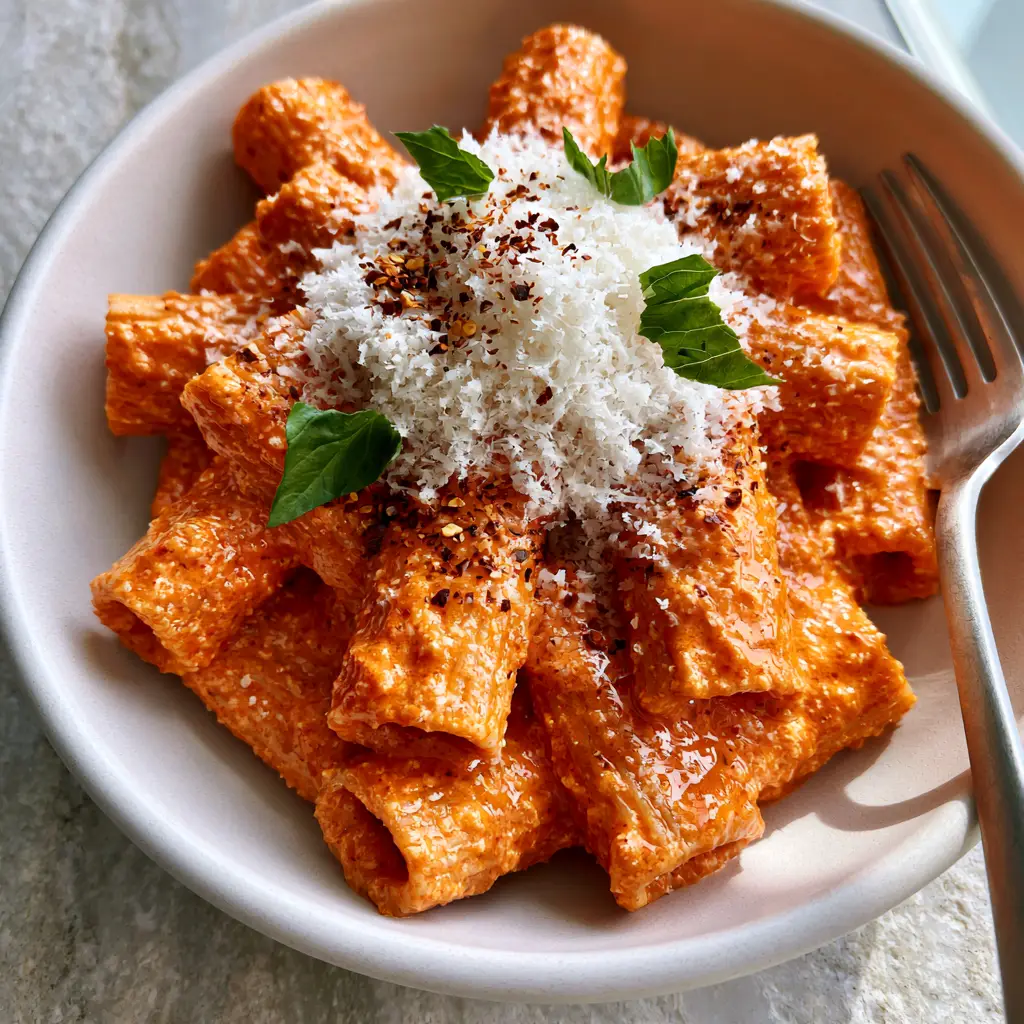
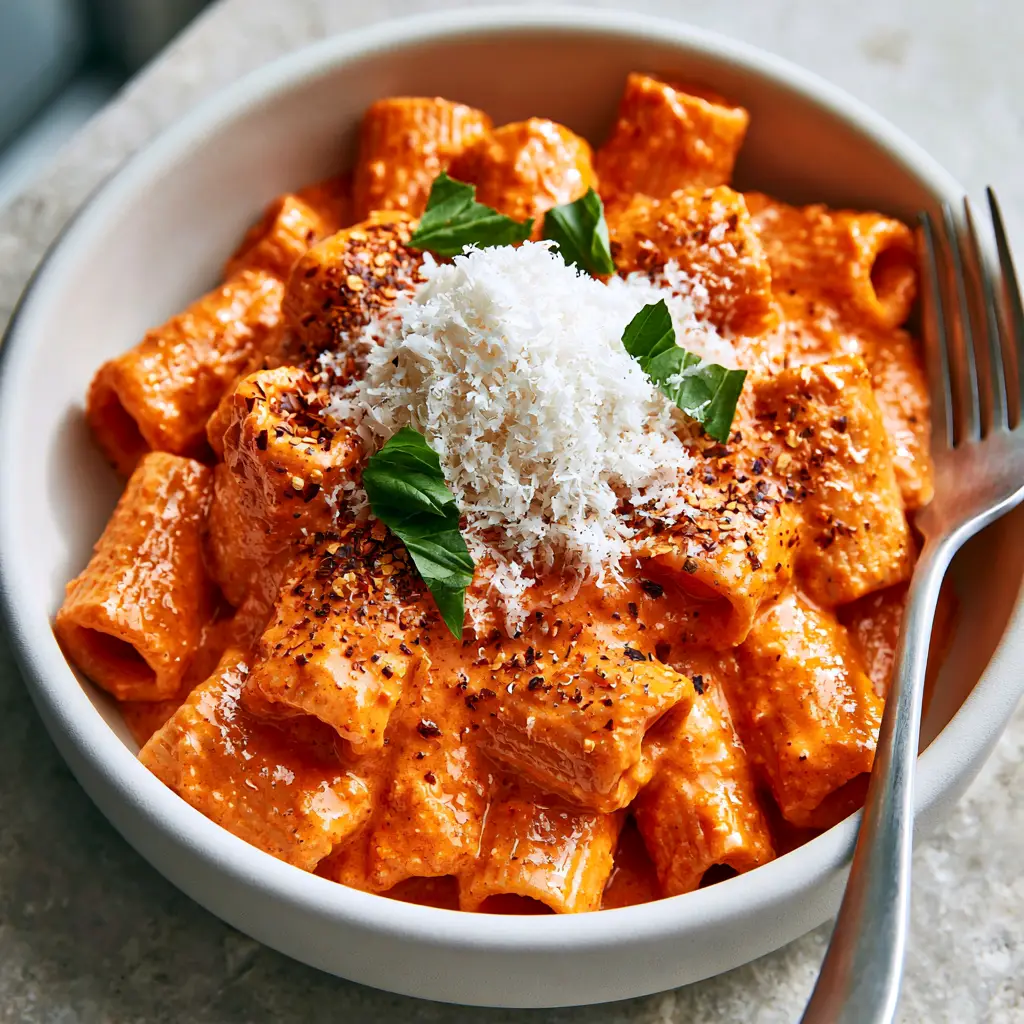
There is a specific visual magic that occurs when the sharp acidity of concentrated tomatoes meets the luxurious silkiness of heavy cream. This pasta alla vodka isn’t just a meal; it’s a masterclass in achieving that elusive, vibrant terracotta-orange hue that defines high-end Italian-American cuisine.
Every ridge of the al dente rigatoni in this recipe is designed to act as a vessel, capturing a velvety sauce that glistens under natural light. Whether you are looking for a weeknight comfort dish or a show-stopping centerpiece, this recipe delivers a restaurant-quality experience right to your matte-finish ceramic bowls.
We are moving beyond the watery, pale imitations often found in takeout containers. By focusing on the caramelization of tomato paste and the precise emulsification of fats, we create a dish that looks exactly like a high-end smartphone photo: rich, textured, and incredibly inviting.
Why This Rigatoni Alla Vodka Works Every Single Time
- The Terracotta Glow: We use a high ratio of concentrated tomato paste, caramelized until deep rust, to ensure a vibrant orange color rather than a muted pink.
- Superior Sauce Adhesion: By using rigatoni, we maximize the surface area for the sauce to cling to, ensuring every bite is fully coated.
- The “Fluff” Factor: Using a microplane for the parmesan cheese creates a light, snow-like texture that melts instantly into the heat of the pasta.
- Balanced Heat: A precise dusting of crushed red pepper flakes provides a back-of-the-throat warmth that cuts through the richness of the cream.
- Aromatic Depth: Freshly torn basil leaves offer a peppery, herbaceous finish that brightens the heavy, savory notes of the vodka sauce.
Essential Elements for the Perfect Terracotta Glow
To achieve the visual and textural standards of this pasta alla vodka, each ingredient must serve a specific culinary and aesthetic purpose. Here is what you will need for this transformation.
Rigatoni Pasta (1 lb / 454g): Look for a brand with deep ridges and a rough, bronze-cut texture. This ensures the sauce fills the grooves perfectly, just as seen in our visual blueprint.
Double-Concentrated Tomato Paste (6 oz / 170g): This is the soul of the dish. It provides the deep red pigment that, when tempered with cream, creates that stunning terracotta-orange finish.
Premium Vodka (1/4 cup / 60ml): While the alcohol cooks off, the vodka acts as an emulsifier. It bonds the fats and liquids together, preventing the sauce from breaking or looking greasy.
Heavy Cream (1 cup / 240ml): Use full-fat cream for the most velvety mouthfeel. It transforms the concentrated tomato base into a rich, glossy coating.
Unsalted Butter (2 tbsp / 30g): Added at the end, this “monter au beurre” technique provides the final glisten and a professional, silky sheen.
Shallots and Fresh Garlic: These foundational aromatics should be finely minced. They provide a sweet, savory backbone without distracting from the smooth texture of the sauce.
Microplaned Parmesan (1/2 cup / 45g): Do not use pre-grated cheese. Shaving it finely with a microplane ensures it remains fluffy and light on top of the pasta.
Fresh Basil Leaves: Three to four large leaves, torn by hand just before serving. Tearing releases the oils more effectively than slicing with a knife.
Crushed Red Pepper Flakes: Use high-quality flakes to ensure a vibrant red contrast against the orange sauce.
The Culinary Toolkit for Professional Results
Achieving a macro-shot-worthy pasta requires more than just ingredients; you need the right tools for the job. A large, heavy-bottomed stainless steel skillet or Dutch oven is essential for even heat distribution while caramelizing the tomato paste.
A microplane grater is non-negotiable for that specific “fluffy” cheese texture. You will also need a sturdy pair of tongs or a spider strainer to move the pasta directly from the water to the sauce, as that starchy pasta water is the secret “invisible” ingredient for emulsification.
Finally, serve this in a shallow, matte-finish white ceramic bowl. The contrast between the vibrant orange pasta and the neutral white ceramic creates the high-end aesthetic described in our visual guide.
The Step-by-Step Path to Velvety Pasta Perfection
1. Boiling the Rigatoni to True Al Dente
Bring a large pot of heavily salted water to a rolling boil. Add the 1 lb (454g) of rigatoni and cook for 2 minutes less than the package instructions suggest.
The pasta should have a firm “bite” in the center. It will finish cooking inside the sauce, allowing it to absorb the flavors and the starch to help thicken the liquid.
2. Building the Aromatic Base
In your skillet, melt 1 tbsp (15g) of butter over medium heat. Add finely minced shallots and garlic, sautéing until they are translucent and fragrant, but not browned.
Listen for a gentle sizzle; if the garlic begins to smell bitter or looks dark brown, reduce the heat immediately. You want a soft, sweet foundation for your pasta alla vodka.
3. The Caramelization Secret
Add the entire 6 oz (170g) of tomato paste to the skillet. Use a wooden spoon to “fry” the paste in the fat, stirring constantly for 5-7 minutes.
Watch for the color change: it will move from a bright red to a deep, dark rust or brick color. This process removes the raw metallic taste and develops the sugars necessary for the terracotta hue.
4. Deglazing with Precision
Pour in the 1/4 cup (60ml) of vodka to deglaze the pan. Use your spoon to scrape up all the browned bits (the fond) from the bottom of the skillet.
The vodka will hiss and steam. Continue stirring until the liquid has mostly evaporated, leaving behind a thick, concentrated paste that smells slightly sweet and floral.
5. Achieving the Terracotta-Orange Gloss
Lower the heat and slowly pour in the 1 cup (240ml) of heavy cream. Stir vigorously until the cream and tomato paste are fully integrated into a uniform, vibrant orange sauce.
Season with salt and a light dusting of red pepper flakes. The sauce should look velvety and rich, thick enough to coat the back of a spoon without running off.
6. The Emulsification Marriage
Using tongs, transfer the rigatoni directly from the boiling water into the sauce. Add about 1/4 cup (60ml) of the starchy pasta water to the skillet as well.
Toss the pasta over medium-high heat. The starch in the water will act as a bridge, helping the glossy sauce fill the ridges of the rigatoni perfectly. Add the remaining 1 tbsp (15g) of butter for that final professional glisten.
Expert Tips for Success
- Never Rinse Your Pasta: Rinsing removes the starch that allows the sauce to stick. Move it directly from the pot to the pan.
- Control Your Heat: If the sauce looks like it is separating or “breaking,” add a splash more pasta water and whisk vigorously.
- The Cheese Reveal: Only add the microplaned parmesan at the very end. If you stir it in while the sauce is boiling, it can become stringy rather than creamy.
- Color Check: If your sauce looks too pale, you likely didn’t cook the tomato paste long enough. Next time, aim for a “dried blood” color before adding cream.
What to Serve With This Velvety Rigatoni
This pasta alla vodka is quite rich, so it pairs beautifully with lighter, crisp accompaniments. A simple arugula salad with a lemon vinaigrette provides a necessary acidic contrast to the cream sauce.
If you are hosting a multi-course dinner, consider starting with prosciutto-wrapped mozzarella bites for a salty, savory appetizer. For those who love a variety of textures, our tortellini pasta salad or a cold tortellini pasta salad can serve as a refreshing side dish for a summer gathering.
If you enjoy the creaminess of this dish but want a different flavor profile, you might also like our tomato pasta sauce with cream cheese or the spicy kick of creamy calabrian chili pappardelle.
Frequently Asked Questions
While vodka is traditional, you can use a splash of water with a squeeze of lemon to mimic the acidity, though you will lose the unique emulsification properties.
Most of the alcohol evaporates during the reduction phase, leaving behind only the flavor-enhancing properties and helping to emulsify the cream and tomato.
The secret is using a microplane grater. It shaves the cheese into incredibly fine, airy strands that melt beautifully and look like professional garnish.
Rigatoni or Penne Rigate are best because their ridges and hollow centers are designed to capture and hold the thick, velvety sauce.
This usually happens if the tomato paste wasn’t caramelized long enough. Ensure you fry the paste until it reaches a deep rust color before adding the cream.
Pasta Alla Vodka Recipe Card
Pasta Alla Vodka: The Secret to a Glossy Terracotta-Orange Rigatoni Sauce
Ingredients
Equipment
Method
- In a large skillet over medium heat, melt 1 tbsp (15g) of butter. Sauté minced shallots and garlic until translucent and fragrant, about 3 minutes.
- Add the tomato paste. Stir constantly for 5-7 minutes until the color shifts from bright red to a deep terracotta rust. This step is vital for the final color.
- Pour in the vodka and scrape the bottom of the pan to release any browned bits. Simmer until the liquid has reduced by half.
- Reduce heat to low and whisk in the heavy cream. Stir until a smooth, glossy, orange sauce forms.
- Add al dente rigatoni and a splash of starchy pasta water to the pan. Toss over medium heat until the sauce clings to every ridge of the pasta.
- Top with fluffy microplaned parmesan, torn basil leaves, and red pepper flakes. Serve immediately in a matte ceramic bowl.
Notes
Caramelize the tomato paste until it is dark rust to ensure the signature terracotta color.
Storage, Reheating, and Freezing
Pasta alla vodka is best enjoyed immediately while the sauce is at its glossiest. However, you can store leftovers in an airtight container in the refrigerator for up to 3 days.
To reheat, avoid the microwave if possible, as it can cause the cream sauce to break and become oily. Instead, place the pasta in a skillet with a splash of water or milk over low heat. Stir gently until the sauce becomes creamy again.
We do not recommend freezing this dish. The cellular structure of the cream and the pasta changes when frozen, resulting in a grainy texture upon thawing.
Final Thoughts on the Perfect Bowl
Making a restaurant-quality pasta alla vodka is an exercise in patience and visual cues. From the moment you see the tomato paste turn to rust, to the final dusting of fluffy parmesan, every step is designed to create a sensory masterpiece.
We would love to see your creations! If you make this recipe, please leave a comment below and share your photos with us. Don’t forget to save this recipe to your favorite boards on Pinterest so you can find it the next time those cravings hit!