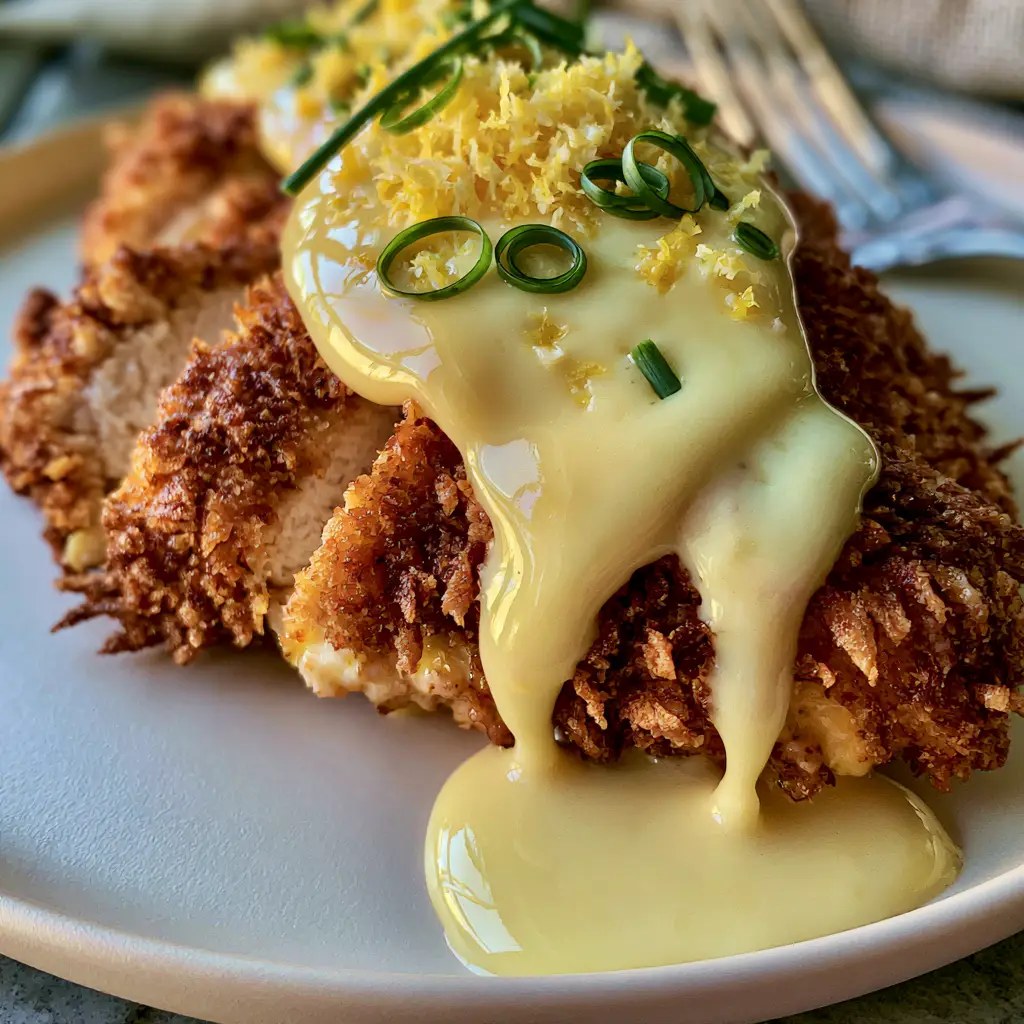
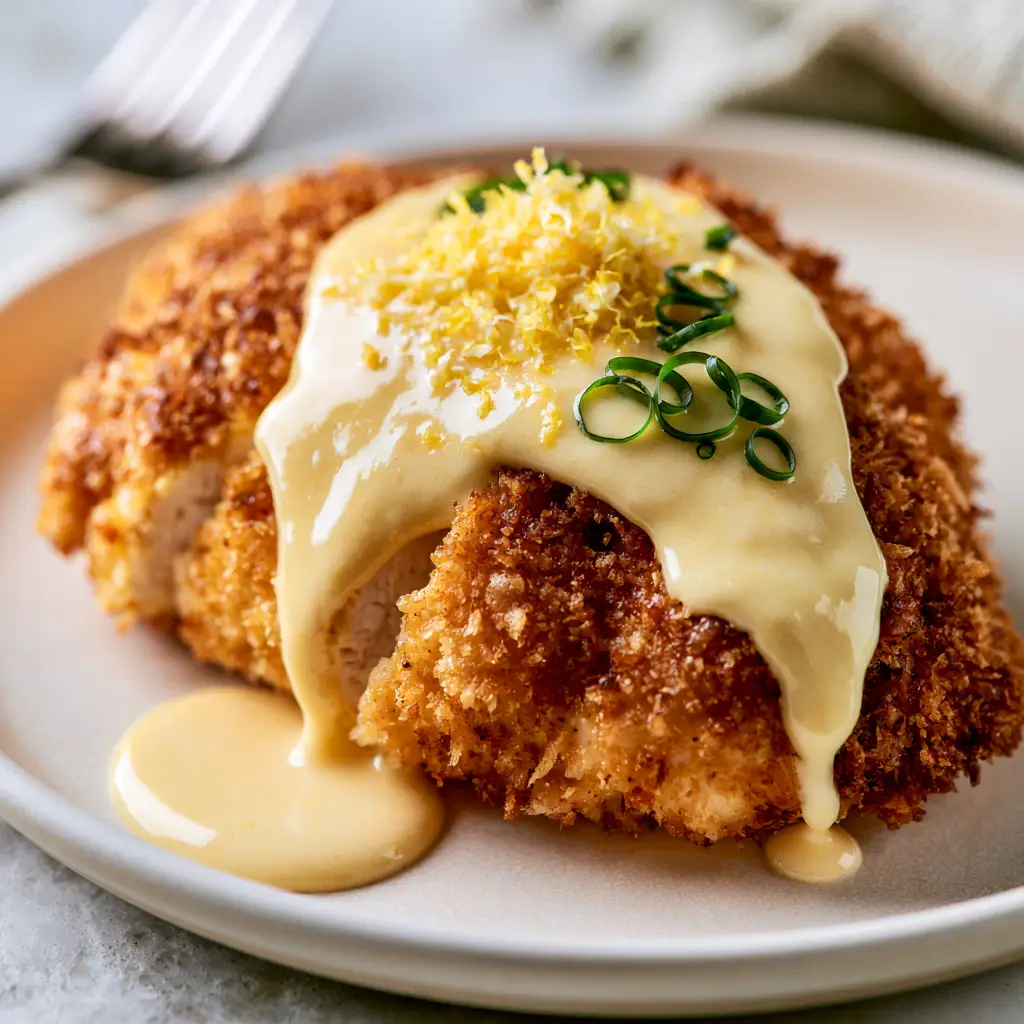
The Chicken Christopher is a masterclass in texture and balance, offering a sophisticated dining experience that rivals the finest white-tablecloth establishments. This dish centers on a succulent, panko-encrusted chicken breast that is pan-fried to a deep golden-brown perfection, providing a satisfying crunch in every bite.
What truly elevates this recipe is the “velvet” lemon butter beurre blanc—a glossy, pale yellow sauce that cascades over the crispy exterior like liquid silk. Finished with micro-planed lemon zest and paper-thin rings of fresh chives, this dish is as visually stunning as it is delicious.
Whether you are hosting a formal dinner party or simply looking to upgrade your weeknight rotation, the Chicken Christopher delivers a high-impact flavor profile with relatively straightforward techniques. Let’s dive into the culinary science of achieving that hyper-realistic, restaurant-quality finish at home.
The Signature Appeal of This Crispy Chicken Masterpiece
- Jagged Panko Texture: Unlike traditional breadcrumbs, panko creates a mountainous, airy crust that stays crispy even under a heavy pour of sauce.
- Velvet Sauce Consistency: Our beurre blanc technique ensures a stable, glossy emulsion that clings to the chicken rather than running off the plate.
- Bright Citrus Notes: The use of both fresh lemon juice in the sauce and micro-planed zest as a garnish provides layers of acidity that cut through the rich butter.
- Juicy Interior: By using a specific searing-to-resting ratio, the white meat remains remarkably tender and moist beneath the golden exterior.
The Essential Components for a Crispy Chicken Christopher Experience
Every ingredient in this recipe serves a specific structural or flavor-based purpose. To achieve the luxury aesthetic seen in professional food photography, quality is paramount.
Chicken Breasts: Use 2 large (approx. 450g) boneless, skinless chicken breasts. Pounding them to an even thickness ensures they cook at the same rate and provide a flat surface for the panko to adhere to.
Panko Breadcrumbs: 1.5 cups (90g) of Japanese-style panko are required for that specific jagged, irregular crust. If you’ve enjoyed the texture in our crispy chicken torta sandwich, you’ll know why panko is the superior choice here.
Unsalted Butter: 1 cup (225g) of high-quality cold butter is the backbone of the beurre blanc. Using unsalted butter allows you to control the seasoning precisely, which is crucial for a delicate lemon sauce.
Dry White Wine: 1/2 cup (120ml) of Sauvignon Blanc or Pinot Grigio provides the necessary acidity to start the emulsion. This provides a sophisticated depth that water or broth simply cannot replicate.
Fresh Chives: 2 tbsp (5g) of finely sliced chives add a mild onion note and a vibrant green contrast. Precision is key; you want paper-thin rings, not rough chops.
Lemon Zest & Juice: You will need 1 large lemon. The juice provides the “tang” in the sauce, while the micro-planed zest adds aromatic oils that sit on top of the dish for an immediate sensory impact.
Foundational Ingredients: You will also need 1/2 cup (60g) all-purpose flour for dredging, 2 large eggs for the wash, and 1/4 cup (60ml) neutral frying oil (like grapeseed or canola) to achieve that deep golden-brown hue.
Professional Tools for Culinary Precision
To replicate the “macro shot” quality of this dish, you will need a few specific tools. A heavy-bottomed stainless steel or cast-iron skillet is essential for even heat distribution during the frying process.
For the sauce, a small saucier or heavy saucepan is preferred to prevent the butter from breaking. A microplane is non-negotiable for achieving those feather-light wisps of lemon zest that decorate the final plate.
Lastly, a sharp chef’s knife is required to slice the chicken into clean, juicy strips without tearing the delicate panko crust. This attention to detail is what separates a home-cooked meal from a gourmet Chicken Christopher.
Mastering the Art of the Golden-Brown Panko Crust
Step 1: Preparing the Chicken for the Pan
Start by slicing your chicken breasts in half horizontally to create four even cutlets. Place them between sheets of plastic wrap and gently pound them to a 1/2-inch (1.25cm) thickness using a meat mallet or a heavy skillet.
Season both sides generously with kosher salt and freshly cracked black pepper. Setting up a proper breading station is the secret to success: one bowl for flour, one for beaten eggs, and one for the panko breadcrumbs.
Step 2: The Three-Stage Breading Process
Dredge each cutlet in the flour, shaking off any excess. Dip into the egg wash, ensuring full coverage, and then press firmly into the panko. The goal is to have the panko standing up in jagged peaks, much like the textures found in our breaded chicken meatball variations.
Allow the breaded chicken to rest on a wire rack for 5-10 minutes before frying. This “tacking” period helps the crust adhere to the meat, preventing the breading from falling off in the pan.
Step 3: Achieving the Deep Golden Sear
Heat 1/4 cup (60ml) of neutral oil in your skillet over medium-high heat. You’ll know it’s ready when a single panko crumb sizzles violently upon contact.
Lay the chicken away from you into the oil. Fry for 3-4 minutes per side until the exterior is a deep, uniform golden brown. Internal temperature should reach 165°F (74°C). Remove to a paper-towel-lined plate and let rest while you finish the sauce.
Creating the Velvet Lemon Butter Beurre Blanc
The Reduction Phase
In a small saucepan, combine 1/2 cup (120ml) white wine, 2 tbsp (30ml) fresh lemon juice, and 1 tbsp (10g) minced shallots. Bring to a simmer over medium heat and reduce until only about 2 tablespoons of liquid remain.
This concentrated “gastrique” is the flavor engine of your Chicken Christopher. If you’ve made the sauce for our creamy garlic beef pasta, you’ll recognize the importance of this reduction step for flavor depth.
The Cold Butter Emulsion
Reduce the heat to low. Begin whisking in the cold butter, one tablespoon (14g) at a time. Do not add the next piece until the previous one has fully melted into the sauce.
Keep the pan moving constantly. The goal is a thick, glossy, pale yellow liquid that coats the back of a spoon. If the sauce looks oily or “broken,” remove it from the heat and whisk in a teaspoon of cold heavy cream to bring the emulsion back together.
Expert Tips for a Flawless Presentation
- Temperature Control: Never let the beurre blanc boil once the butter is added, or it will separate into a greasy mess.
- The Resting Rule: Let the chicken rest for at least 3 minutes before slicing. This allows the juices to redistribute, ensuring the “white meat” remains juicy as described in the blueprint.
- The Final Garnish: Always add the lemon zest and chives at the very last second. The residual heat from the sauce will release the lemon oils, creating an incredible aroma as the plate hits the table.
- Plate Choice: Use a matte ceramic plate as suggested in the visual prompt; the lack of reflection makes the glossy sauce and golden chicken stand out beautifully.
Storage, Reheating, and Make-Ahead Advice
Chicken Christopher is best enjoyed immediately to preserve the contrast between the crispy crust and the velvet sauce. However, if you have leftovers, store the chicken and sauce in separate airtight containers in the refrigerator for up to 2 days.
To reheat the chicken, use an oven or air fryer at 350°F (175°C) until crispy. Avoid the microwave, as it will make the panko soggy. For the sauce, reheat it very gently over a double boiler or in 10-second intervals in the microwave, whisking constantly to prevent breaking.
What to Pair with Your Chicken Christopher
This dish is rich and decadent, so it pairs best with sides that offer a bit of “snap” or acidity. A simple arugula salad with a light vinaigrette or steamed asparagus tips works beautifully.
If you prefer a heartier meal, serve it alongside a small portion of creamy pasta with peas to complement the lemon butter notes. For a lighter starter, consider our clear Italian chicken soup to open the palate before the main course.
Frequently Asked Questions
For Chicken Christopher, fresh lemon is essential. Bottled juice lacks the bright acidity and floral oils needed to balance the heavy butter in the beurre blanc.
The secret is the ‘resting’ period. After breading the chicken, let it sit on a wire rack for 10 minutes so the egg and flour can form a ‘glue’ that binds the panko to the meat.
Yes! If the sauce breaks, whisk in one teaspoon of cold heavy cream or a splash of water over very low heat. This helps re-emulsify the butter fats with the liquid.
While both use lemon and butter, Chicken Christopher uses a thick panko breading for a jagged, crispy crust, whereas Piccata is lightly floured and includes capers in a thinner sauce.
Panko has a larger, airier flake that creates the ‘jagged’ texture and superior crunch that defines a high-end Chicken Christopher presentation.
The Ultimate Chicken Christopher Recipe
Chicken Christopher with Velvet Lemon Butter Beurre Blanc
Ingredients
Equipment
Method
- Halve chicken breasts horizontally and pound to 1/2-inch (1.25cm) thickness. Season with salt and black pepper.
- Dredge chicken in flour (60g), dip in egg, and press firmly into panko (90g) until a jagged crust forms.
- Heat oil (60ml) in a skillet over medium-high. Fry chicken for 3-4 minutes per side until deep golden brown and 165°F (74°C) internal.
- Simmer wine (120ml), lemon juice (30ml), and shallots (10g) in a saucepan until only 2 tbsp liquid remains.
- Reduce heat to low. Whisk in cold butter (225g) one cube at a time until the sauce is thick, glossy, and velvet-smooth.
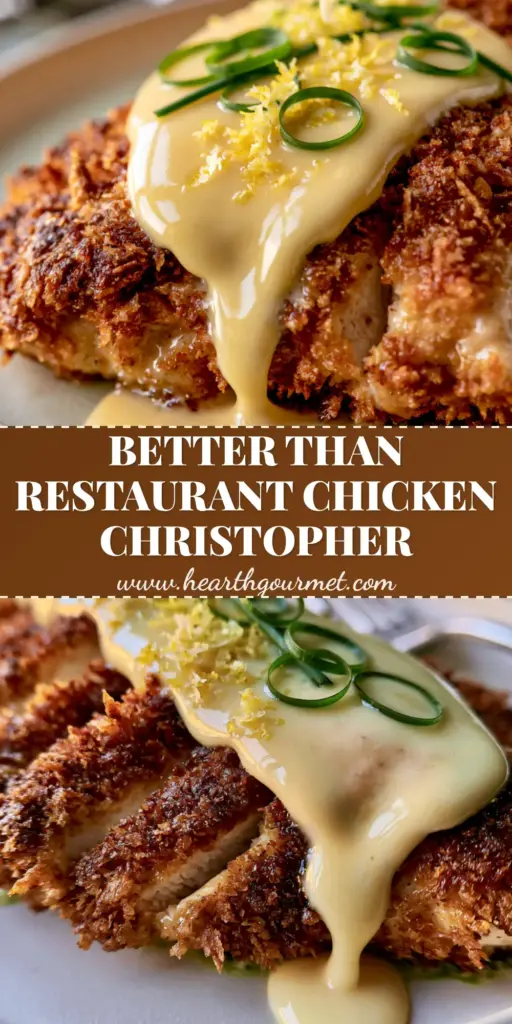
- Slice the chicken into thick strips. Pour the velvet sauce over the center. Garnish with lemon zest and chive rings.
Notes
Rest the chicken for 3 minutes before slicing to keep the meat juicy.
Closing & Call to Action
The Chicken Christopher is more than just a meal; it is a celebration of culinary technique and visual artistry. From the jagged panko crust to the velvet-smooth beurre blanc, every element is designed to impress. We hope this guide helps you master this restaurant classic in your own kitchen!
If you enjoyed this recipe, please leave a comment below and let us know how your sauce turned out. Don’t forget to follow us on Pinterest for more gourmet inspiration and share your creations with the #HearthGourmet community!