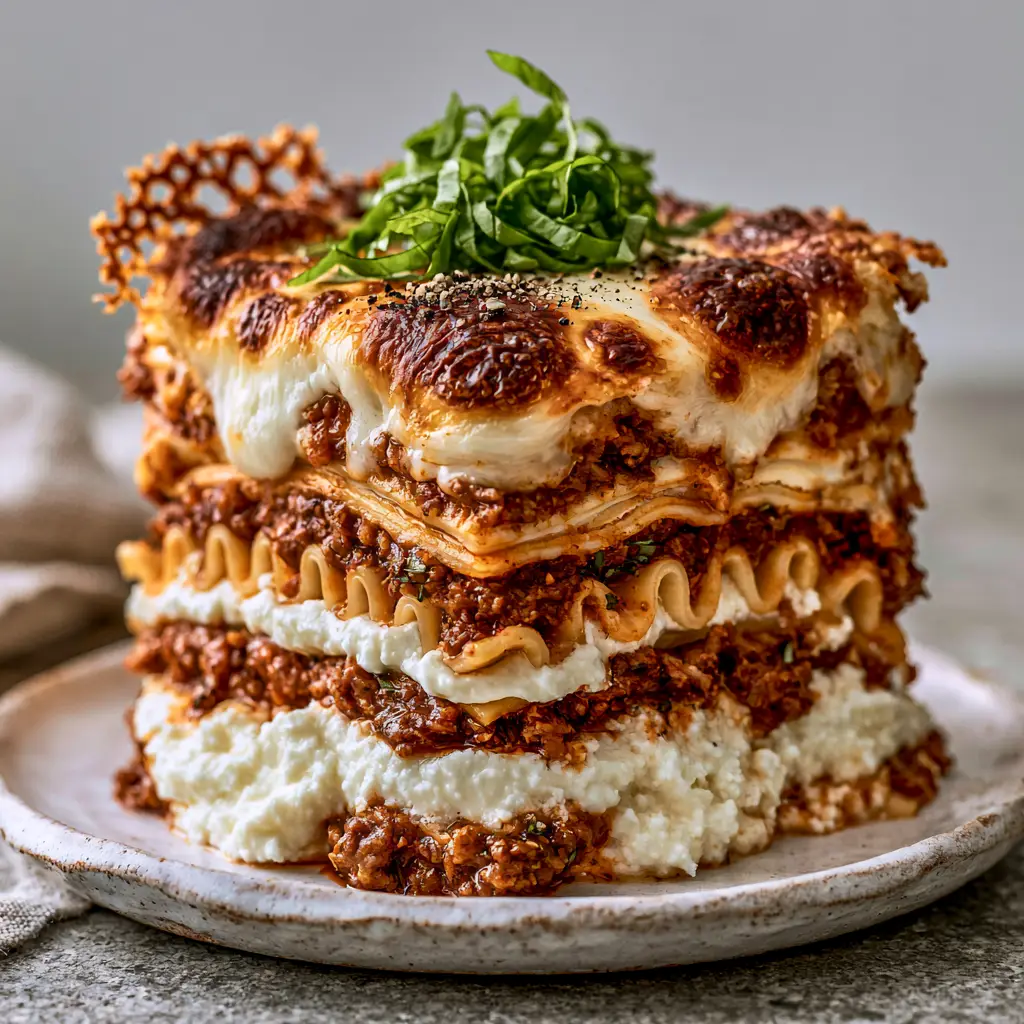
There is nothing quite like the architectural beauty of a perfectly executed Classic Lasagna. Imagine a single, tall slice standing upright on your plate, revealing seven distinct layers of wavy pasta ribbons, dense beef bolognese, and velvety ricotta. This isn’t just a meal; it is a structural masterpiece designed to satisfy the most enthusiastic home cooks.
The secret to this specific recipe lies in the contrast of textures. We are aiming for a crown of molten mozzarella with deep golden-brown toasted blisters and those coveted crispy lace edges. When you pierce the top with a fork, you should encounter the resistance of a toasted parmesan crust before sinking into the firm, non-leaking ricotta filling.
Whether you are preparing a Sunday feast or looking to master the art of Italian-American comfort food, this guide will walk you through the culinary science of the Classic Lasagna. We will ensure your sauce is chunky and dark red, your herbs are vibrant, and your pasta retains that perfect al dente bite.
The Blueprint for a Masterpiece: Why This Layered Lasagna Works
- Structural Integrity: By using a specific ricotta-to-egg ratio, we create a filling that stays firm and beautiful when sliced, rather than running across the plate.
- The Seven-Layer Verticality: We utilize wavy-edged lasagna noodles to create height and “sauce pockets” that hold the dense beef bolognese in place.
- High-Contrast Textures: From the crunch of the toasted parmesan crust to the molten pull of the mozzarella blisters, every bite offers a different sensory experience.
- Aromatic Finishing: The addition of freshly chiffonade basil and coarse cracked black pepper provides a bright, sharp finish to the rich, savory meat sauce.
The Foundation: Essential Ingredients for the Ultimate Beef Bolognese and Ricotta Filling
To achieve the visual and flavorful depth required for a world-class Classic Lasagna, every ingredient must serve a specific purpose. We aren’t just making a meat sauce; we are building a concentrated ragù that provides the “dark red” chunky appearance seen in our blueprint.
Wavy Lasagna Noodles: 1 lb (450g) of dried lasagna sheets with ruffled edges. These ridges are essential for creating the seven-layer height and ensuring the sauce clings to the pasta ribbons.
Lean Ground Beef: 2 lbs (900g) of 85/15 ground chuck. This ratio provides enough fat for a silky mouthfeel without making the Classic Lasagna overly greasy, which can cause the layers to slide.
Whole Milk Ricotta Cheese: 30 oz (850g) of high-quality ricotta. To ensure the “firm and non-leaking” texture, we will drain this cheese to remove excess whey before mixing.
Low-Moisture Mozzarella: 4 cups (450g) of shredded mozzarella. Using low-moisture cheese is the only way to achieve those “golden blisters” without releasing a pool of water into your dish.
Parmigiano-Reggiano: 1 cup (90g) finely grated. This is the key to the toasted crust, providing a salty, nutty counterpoint to the creamy mozzarella.
Tomato Paste and Crushed Tomatoes: 2 tbsp (30g) paste and 28 oz (800g) crushed. The paste is caramelized first to deepen the color of the bolognese to a “dense and chunky dark red.”
Invisible Foundations: You will also need 2 tbsp (30ml) extra virgin olive oil for searing, 1 large onion, 4 cloves of garlic, and 1 tsp (5g) of kosher salt to draw out the flavors of the beef.
The Finishers: 1 bunch of fresh basil for a bright green chiffonade and 1 tbsp (6g) of coarse cracked black pepper to be scattered over the crown before serving.
Essential Equipment for a Perfectly Structured Slice
To achieve the “tall, perfectly structured” look of our Classic Lasagna, the right tools are non-negotiable. You need a deep-dish lasagna pan, preferably ceramic or heavy-duty glass, measuring at least 9×13 inches (23x33cm) with a 3-inch (7.5cm) depth.
A heavy-bottomed Dutch oven is required for the long simmer of the beef bolognese. This ensures even heat distribution and prevents the sugars in the tomato from scorching. You will also need a fine-mesh strainer to drain the ricotta cheese, a step many home cooks skip but which is vital for structural stability.
A Step-by-Step Guide to Constructing Your Sky-High Lasagna
Crafting the Dense Beef Bolognese Ragù
Heat 2 tbsp (30ml) of olive oil in your Dutch oven over medium-high heat. Add the ground beef and cook until a deep golden-brown crust forms on the meat—this is the Maillard reaction in action. Drain the excess fat, leaving about 1 tbsp (15ml) in the pot.
Add your finely diced onions and garlic, sautéing until translucent and fragrant. Stir in the tomato paste and cook for 2 minutes until it turns a brick-red color. Pour in the crushed tomatoes and a pinch of dried oregano. Lower the heat and simmer for at least 45 minutes until the sauce is thick enough to hold its shape on a spoon.
Preparing the Firm Ricotta Filling
While the sauce simmers, place your ricotta in a fine-mesh strainer over a bowl for 20 minutes. Once drained, transfer to a mixing bowl and add 1 large egg, half of the parmesan cheese, and a pinch of salt. Whisk until smooth but thick; it should have the consistency of a velvety spread that won’t leak when heated.
Boiling the Wavy Pasta Ribbons
Bring a large pot of salted water to a boil. Cook the wavy lasagna noodles for 2 minutes less than the package instructions. We want them “al dente”—firm to the bite—so they can absorb the juices from the sauce without becoming mushy. Drain and lay them flat on parchment paper to prevent sticking.
The Architecture of the Seven Layers
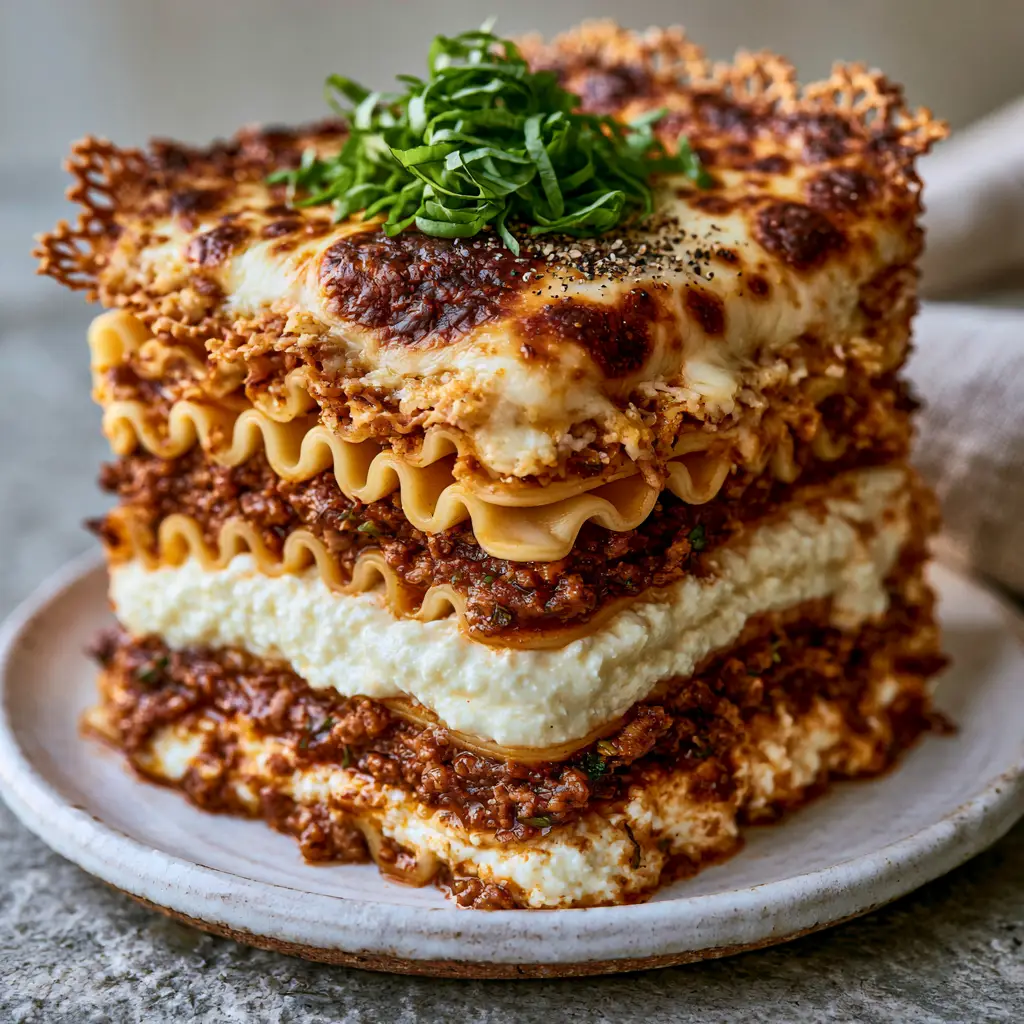
To achieve the seven-layer height, follow this specific order. Start with a thin layer of sauce on the bottom of the pan to prevent sticking. Lay down your first layer of wavy noodles. Spread a thick layer of the ricotta mixture, followed by a generous scoop of the chunky beef bolognese, and a sprinkle of mozzarella.
Repeat this process until you have built your layers upward. The final layer should be a “crown” of pasta, topped with the remaining bolognese, a heavy layer of mozzarella, and the rest of the parmesan cheese. This top layer is where the “toasted parmesan crust” will form.
Baking for Blisters and Lace Edges
Cover the pan loosely with foil, ensuring it doesn’t touch the cheese. Bake at 375°F (190°C) for 25 minutes. Remove the foil and bake for another 15-20 minutes. For the final touch, turn on the broiler for 2-3 minutes. Watch closely! You are looking for the mozzarella to develop deep golden-brown blisters and for the edges to become crispy and “lacy.”
Expert Tips for a Tall, Upright Slice
- The Resting Rule: Do not cut the Classic Lasagna immediately. Let it rest for at least 20 minutes. This allows the proteins in the cheese and the starches in the pasta to set, ensuring your slice stands tall and upright on the plate.
- Noodle Alignment: Alternate the direction of your noodles with each layer (horizontal, then vertical). This creates a cross-hatch structure that prevents the slice from sliding apart.
- Fresh Herb Timing: Only add the chiffonade basil after baking. The residual heat of the lasagna will release the basil’s oils without turning the leaves black.
- Pepper Coarseness: Use a pepper mill on the coarsest setting for the final garnish. Those large “pinches” of black pepper provide a visual and textural pop that fine pepper cannot match.
The Art of the Italian Feast: What to Serve With Classic Lasagna
A dish this rich and structured deserves side dishes that provide a crisp or acidic contrast. A simple arugula salad with lemon vinaigrette is traditional, but you can also lean into the “Hearth Gourmet” style by serving prosciutto-wrapped mozzarella bites as an appetizer.
If you are planning a multi-course dinner, consider starting with a light soup like chicken meatball soup or a vibrant ground beef vegetable soup. For those who love a variety of pasta textures, serving a side of creamy Calabrian chili pappardelle can introduce a spicy kick to the meal.
To keep the Italian theme going, you might even consider making a batch of authentic Italian braciole for the ultimate meat-lover’s Sunday dinner. The goal is to balance the “creamy and molten” nature of the lasagna with bright, fresh flavors.
Preserving the Perfection: Storage and Reheating
Lasagna is famously better the next day. Store leftovers in an airtight container in the refrigerator for up to 4 days. When reheating, add a teaspoon of water to the plate and cover the slice with a damp paper towel to maintain the moisture of the pasta ribbons.
To freeze, wrap individual slices in plastic wrap and then foil. They will stay fresh for up to 3 months. Reheat directly from frozen in a 350°F (175°C) oven until the center is bubbling and the cheese blisters are revived.
Answering Your Most Burning Lasagna Layering Questions
Finish your lasagna under the broiler for 2-3 minutes at the very end of the baking cycle. The high heat caramelizes the sugars in the mozzarella and parmesan, creating deep golden blisters and crispy lace edges.
The secret to a tall, structured slice is two-fold: drain your ricotta cheese thoroughly for 20 minutes and allow the baked lasagna to rest for at least 20 minutes before cutting. This allows the fillings to set into firm layers.
For this specific recipe, use traditional wavy-edged lasagna noodles. The ruffles create ‘sauce pockets’ that hold the thick bolognese in place and contribute to the distinct seven-layer height.
Stack the fresh basil leaves, roll them tightly like a cigar, and use a sharp knife to cut thin ribbons. Always add the basil after baking to maintain its bright green color and fresh aroma.
Watery lasagna usually comes from high-moisture vegetables or fresh mozzarella. To prevent this, simmer your beef bolognese until it is thick and chunky, and always use low-moisture shredded mozzarella for the top crown.
The Ultimate Classic Lasagna Recipe
Classic Lasagna with Seven Sky-High Layers and a Blistered Mozzarella Crust
Ingredients
Equipment
Method
- Brown ground beef in olive oil, add onions, garlic, tomato paste, and crushed tomatoes. Simmer for 45 minutes until chunky and dark red.
- Strain ricotta for 20 minutes, then mix with egg and half the parmesan for a firm, non-leaking consistency.
- Place wavy noodles in a deep pan. Layer with ricotta, then beef bolognese, then mozzarella. Repeat to reach seven distinct layers of height.
- Bake at 375°F (190°C) for 45 minutes total. Broil the last 3 minutes for golden mozzarella blisters and crispy lace edges.
- Rest for 20 minutes. Garnish with fresh chiffonade basil and a pinch of coarse black pepper before slicing.
Notes
Resting for 20 minutes is critical for a perfectly upright slice.
Bring the Hearth to Your Table
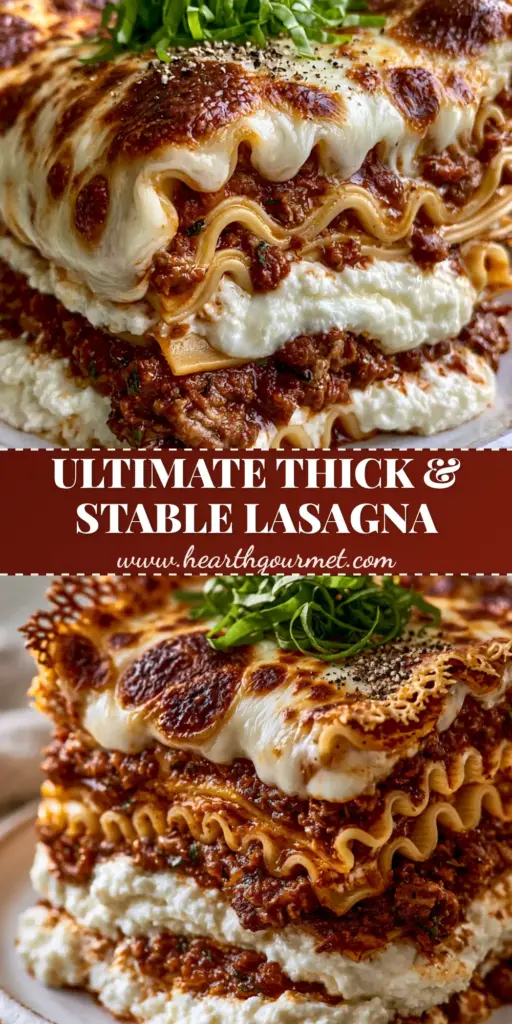
Creating a Classic Lasagna with seven perfect layers is a labor of love that rewards you with every tall, structured slice. By focusing on the “firm ricotta” and the “blistered mozzarella,” you elevate a simple casserole into a culinary event. We would love to see your sky-high results!
If you enjoyed this recipe, please leave a comment below and share your photos with us. Be sure to follow Hearth Gourmet on Pinterest for more visual recipe blueprints and kitchen inspiration. Sign up for our newsletter to get the latest Italian-American classics delivered straight to your inbox.