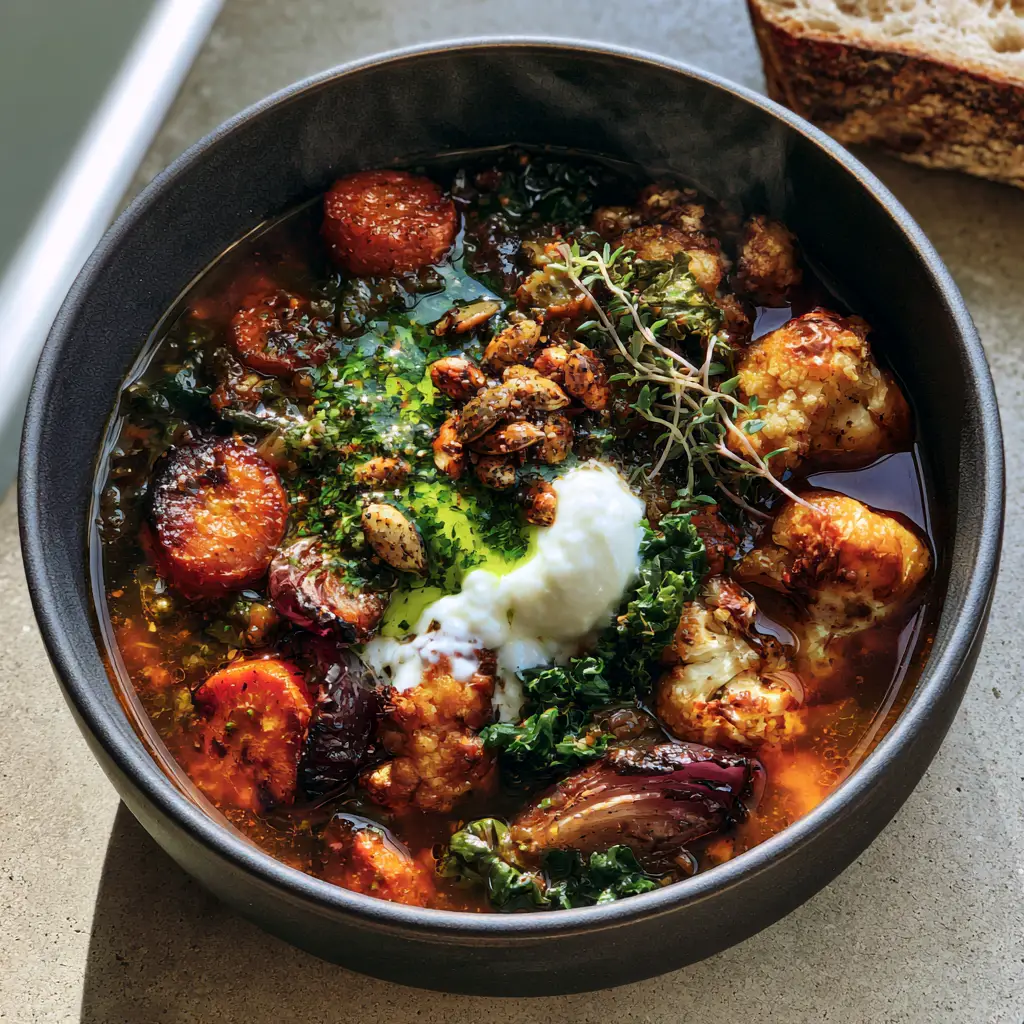
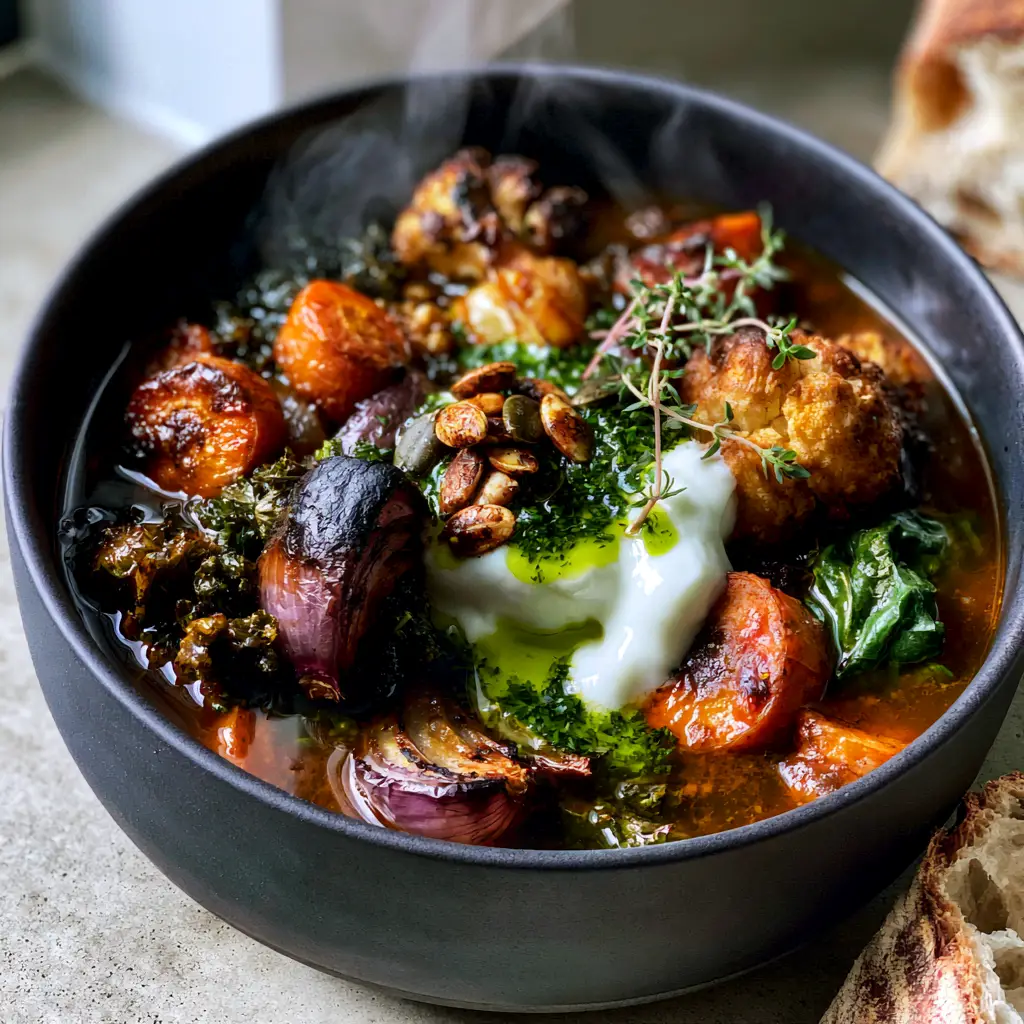
There is a profound difference between a thin, watery broth and a truly soul-warming healthy vegetable soup that eats like a meal. When you look at a bowl of soup, you should see the effort of the craft—the caramelized edges of a carrot, the deep char on a red onion, and a broth so rich it carries a visible weight.
This recipe isn’t about tossing raw vegetables into boiling water; it is about building layers of flavor through high-heat roasting and a concentrated tomato-herb foundation. The result is a vibrant, amber-hued masterpiece that looks as incredible as it tastes, captured perfectly in that rustic, handheld smartphone aesthetic we all love.
By the time you finish this guide, you will understand how to transform humble garden staples into a gourmet experience. Whether you are meal prepping for the week or looking for a show-stopping plant-forward dinner, this soup delivers on every sensory promise.
Why This Hearty Harvest Bowl Redefines Nutrient-Dense Dining
- Unrivaled Texture: Unlike mushy soups, this version features distinct, caramelized roasted carrot coins and golden-brown cauliflower florets that retain their bite.
- Complex Flavor Profile: The “thick tomato-herb base” provides an umami-rich foundation that balances the natural sweetness of roasted butternut squash.
- Visual Sophistication: A dollop of cool Greek yogurt melting into a bright green herb oil creates a high-contrast, restaurant-quality presentation.
- Satiety Without Weight: High in fiber from the kale and pumpkin seeds, this healthy vegetable soup keeps you full without the “heavy” feeling of cream-based alternatives.
The Anatomy of a Thick and Vibrant Broth: Essential Ingredients
To achieve the deep amber color and “visible body” described in our visual blueprint, we must choose ingredients that provide both pigment and pectin. This is the secret to a soup that looks rich even without heavy cream.
Roasted Root Vegetables: You will need 2 cups (260g) of carrot coins, 1 large (200g) red onion cut into wedges, and 2 cups (300g) of butternut squash cubes. These are the stars of the show, providing the sweetness and structural integrity of the dish.
Golden Cauliflower: Use 1 medium head (approx. 500g) of cauliflower broken into small florets. Roasting these until golden-brown adds a nutty dimension that raw cauliflower simply cannot provide.
The “Green” Element: 2 cups (60g) of tightly packed, stemmed, and chopped Lacinato kale. We wilt this at the very end to ensure it stays vibrant and “vibrant” rather than turning grey.
Tomato-Herb Foundation: 3 tbsp (45g) of high-quality tomato paste and 6 cups (1.4L) of low-sodium vegetable stock. The tomato paste is toasted in the pot to deepen the color to a rich amber.
Foundational Seasonings: 4 cloves of minced garlic, 1 tsp (5g) sea salt, and 1/2 tsp (2g) cracked black pepper. These “invisible” ingredients are scientifically required to bridge the flavors of the roasted vegetables.
The Finishing Garnishes: 1/2 cup (120g) Greek yogurt, 1/4 cup (30g) toasted pumpkin seeds, and a handful of fresh micro-thyme. These provide the textural contrast between the hot soup and cool, crunchy toppings.
Emerald Herb Oil: 1/2 cup (120ml) extra virgin olive oil blended with 1 cup (30g) fresh parsley and chives. This adds the signature bright green swirl that cuts through the richness of the roasted vegetables.
Foundational Tools for the Perfect Roast
To achieve the “charred” and “caramelized” results seen in the matte charcoal bowl, you cannot rely on a slow cooker alone. You need the dry heat of an oven.
You will need two large rimmed baking sheets to ensure the vegetables are not crowded; crowding leads to steaming rather than browning. A high-speed blender is also essential for creating that perfectly smooth, emerald-green herb oil.
Finally, a heavy-bottomed Dutch oven or stockpot is required for the final assembly. This ensures even heat distribution as you wilt the kale into the thick tomato base.
Mastering the Maillard Reaction: Roasting Your Roots
Prepping and Seasoning
Preheat your oven to 425°F (220°C). High heat is non-negotiable for achieving the “charred red onion wedges” and “golden-brown cauliflower” we are looking for.
Toss the carrot coins, squash cubes, onion wedges, and cauliflower florets in 3 tbsp (45ml) of olive oil. Ensure every piece is coated, as oil is the heat-transfer medium that creates the caramelization.
The Roasting Process
Spread the vegetables in a single layer across your baking sheets. Roast for 25-30 minutes, tossing halfway through.
Look for specific sensory cues: the onions should have darkened, slightly blackened edges, and the cauliflower should smell nutty and look deep gold. Once roasted, remove from the oven and set aside.
Crafting the Velvet Base and Wilted Greens
Developing the Amber Broth
In your large pot over medium heat, sauté the garlic in a splash of oil until fragrant. Add the tomato paste and “fry” it for 2 minutes until it turns a shade darker—this is the key to that “deep amber-colored broth.”
Slowly whisk in the vegetable stock, scraping the bottom of the pot to release any toasted tomato bits. This creates the “thick tomato-herb base” that houses our roasted treasures.
The Final Assembly
Gently fold the roasted vegetables into the broth. Simmer for 10 minutes to allow the flavors to marry without overcooking the vegetables into mush.
Add the chopped kale in the last 2 minutes of simmering. You want to see the kale transition to a vibrant, dark green, “wilted” state while still maintaining its ruffled texture.
The Finishing Touches: Emerald Oil and Garnishes
While the soup simmers, prepare the herb oil by blending the olive oil, parsley, and chives until completely smooth. Strain through a fine-mesh sieve if you want a crystal-clear “swirl of emerald herb oil.”
Ladle the hot soup into a dark ceramic bowl. The contrast between the amber broth and the dark bowl makes the colors pop—perfect for your smartphone photography.
Place a dollop of thick Greek yogurt in the center. Drizzle the herb oil around it, then sprinkle with the toasted pumpkin seeds, micro-thyme, and a final aggressive crack of black pepper.
Culinary Secrets for Maximum Flavor Depth
- The Squashing Secret: Take 1/2 cup of the roasted butternut squash and mash it into the broth before adding the rest of the veggies. This naturally thickens the soup without flour.
- Acid Balance: If the soup tastes “flat,” add a squeeze of fresh lemon juice right before serving to brighten the roasted flavors.
- Temperature Contrast: Ensure your Greek yogurt is cold. The interplay between the steaming broth and the cold dairy is a hallmark of elite food styling.
- Don’t Skip the Micro-thyme: These tiny greens aren’t just for looks; they provide a concentrated herbal punch that complements the roasted notes.
Preserving the Freshness: Storage and Reheating
This healthy vegetable soup actually improves the next day as the roasted vegetables continue to infuse the broth. Store in airtight containers in the refrigerator for up to 5 days.
When reheating, do so gently on the stovetop over medium-low heat. Avoid boiling aggressively, as this can break down the cauliflower florets and cause the kale to lose its color.
For freezing, store the soup base and roasted veggies, but wait to add the Greek yogurt and herb oil until the day of serving. It will stay fresh in the freezer for up to 3 months.
Elevating the Meal: Perfect Pairings
To complete the experience, serve this soup with a thick slice of crusty sourdough bread, just like in the photo. The bread is essential for mopping up the herb oil and melted yogurt.
If you’re looking for a multi-course meal, start with prosciutto wrapped mozzarella bites for a salty appetizer. For those craving more protein, this soup is a wonderful side to chicken meatballs or a hearty sausage pie.
If you enjoy the texture of roasted vegetables in liquid bases, you might also love our creamy potato chowder or the classic Pioneer Woman potato soup.
Frequently Asked Questions
Yes, but ensure you choose vegetables that stand up well to roasting, such as parsnips, sweet potatoes, or Brussels sprouts, to maintain the textural integrity described in the recipe.
The best way to add body is to blend or mash a portion of the roasted butternut squash directly into the broth. This adds natural creaminess and thickness while keeping the recipe gluten-free.
The herb oil is best used within 24 hours for maximum color vibrancy. If stored in the fridge, it will last 3 days, though the color may darken slightly over time.
To make this recipe 100% vegan, simply replace the Greek yogurt dollop with a swirl of coconut cream or a dollop of cashew-based yogurt.
A pale broth usually comes from skipping the roasting step or not ‘frying’ your tomato paste. Roasting creates the Maillard reaction (caramelization) which provides that deep amber color and umami depth.
The Ultimate Roasted Healthy Vegetable Soup Recipe
Healthy Vegetable Soup with Roasted Roots and Emerald Herb Oil
Ingredients
Equipment
Method
- Preheat oven to 425°F (220°C). Toss carrots, onions, squash, and cauliflower with olive oil, salt, and pepper on two baking sheets.
- Roast for 25-30 minutes until edges are charred and cauliflower is golden-brown. Set aside.
- In a Dutch oven, sauté garlic, then add tomato paste and cook until it deepens in color to a dark amber.
- Add vegetable stock and roasted vegetables. Simmer for 10 minutes. Stir in kale until wilted and vibrant.
- Ladle into bowls. Top with a dollop of yogurt, a drizzle of blended herb oil, pumpkin seeds, and micro-thyme.
Notes
Use a matte bowl for the best photographic contrast with the amber broth.

Closing & Call to Action
This healthy vegetable soup is a testament to the fact that plant-based cooking can be just as decadent and visually stunning as any meat-heavy dish. The combination of roasted textures, the “emerald herb oil,” and the cooling yogurt creates a balanced bowl that satisfies every craving.
If you made this recipe, we want to see your results! Tag us in your smartphone photos or leave a comment below with your favorite roasting tips. Don’t forget to follow us on Pinterest for more culinary inspiration and visual recipe guides.