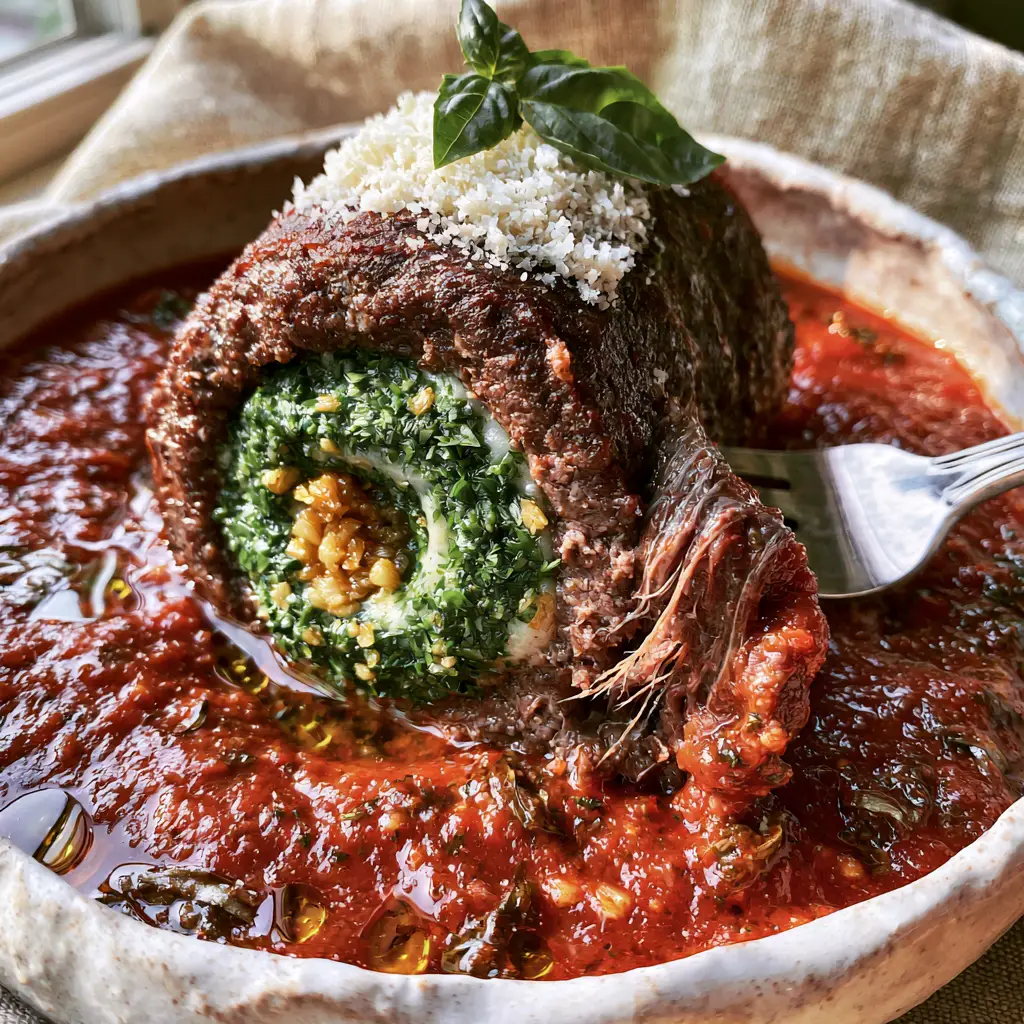
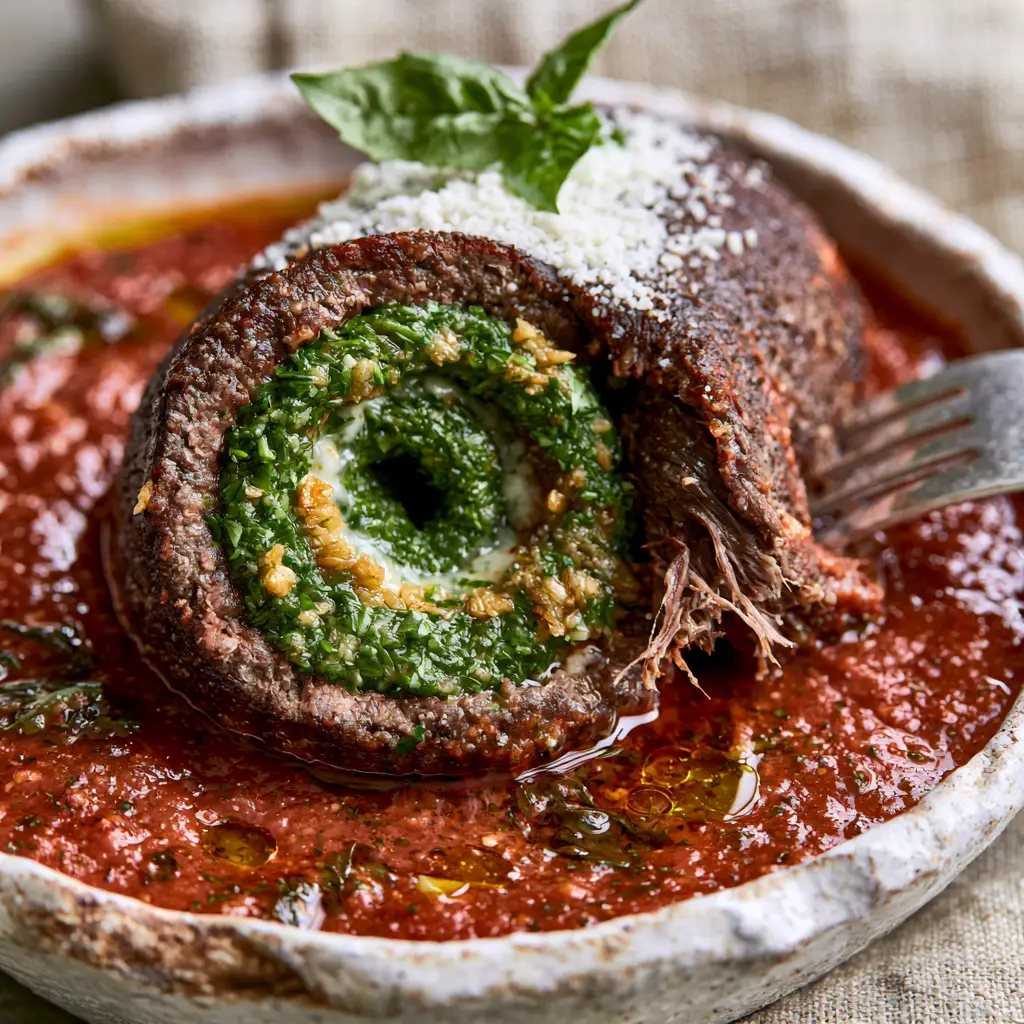
Braciole is the undisputed king of the Italian-American Sunday dinner, a dish that transforms humble flank steak into a masterpiece of tender, slow-cooked perfection. Imagine a single, thick beef roll, seared to a dark mahogany brown, then sliced open to reveal a vibrant green inner spiral of fresh herbs and melted cheese. This is not just a meal; it is a culinary event that fills your kitchen with the intoxicating aroma of garlic, red wine, and slow-simmering tomatoes.
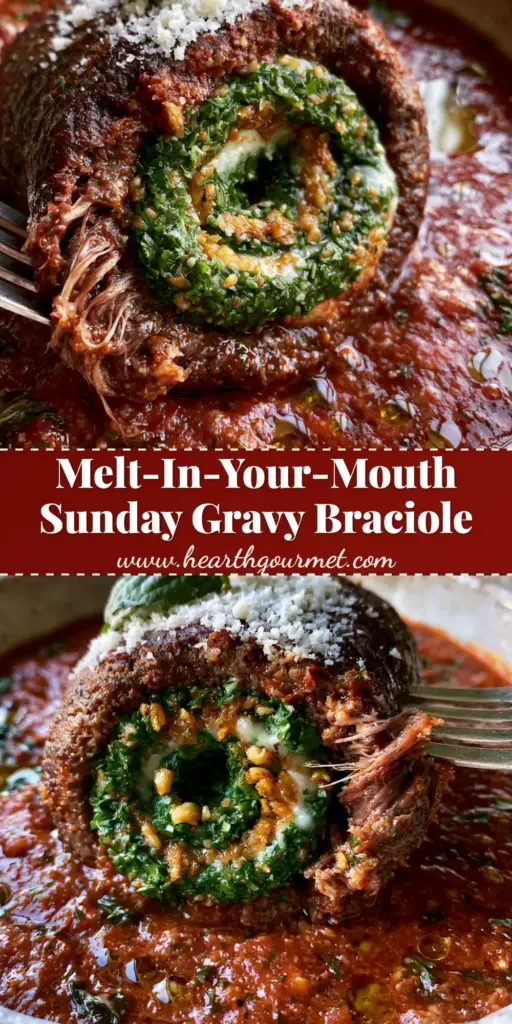
The magic of this Braciole lies in the contrast of textures: the visibly fork-tender beef with its pulling fibers nestled in a shallow, rustic ceramic bowl of thick, glossy, deep-red tomato Sunday gravy. As you press a silver fork into the side of the meat, it gives way with effortless softness, releasing the savory juices into the sauce dotted with olive oil droplets and bits of slow-cooked basil. This recipe is designed to bridge the gap between professional culinary science and the soulful cooking of a traditional Italian kitchen.
Why This Authentic Braciole Recipe Works
- Visual Precision: The tight inner spiral of vibrant green parsley, minced golden garlic, and melty white pecorino creates a stunning presentation that looks as good as it tastes.
- Textural Harmony: By utilizing a slow-braising technique, we transform tough connective tissue into succulent, fork-tender fibers that melt in your mouth.
- Flavor Depth: The combination of a hard sear (Maillard reaction) and a low-and-slow simmer in a rich tomato gravy creates layers of umami that a quick-cook meal simply cannot replicate.
- Authentic Finishing: A final snow-like dusting of finely grated Pecorino Romano and a fresh extra virgin olive oil glaze provide the bright, salty notes needed to balance the deep, dark beef flavors.
The Anatomy of a Perfect Braciole: Essential Ingredients
To achieve the specific visual and flavor profile described in our blueprint, every ingredient serves a dual purpose: structural integrity and sensory impact. We use high-quality fats and acidic components to ensure the beef remains moist during the long cooking process.
Flank Steak: 1.5 lbs (680g) of flank steak, pounded thin to approximately 1/4 inch (6mm). This cut provides the long muscle fibers that, when braised, become incredibly tender while maintaining the structure of the roll.
Pecorino Romano Cheese: 1/2 cup (50g) of finely grated Pecorino Romano, plus extra for the “snow-like” garnish. This sheep’s milk cheese provides a sharp, salty punch that stands up to the richness of the beef and gravy.
Fresh Italian Parsley: 1 cup (30g) of finely chopped parsley. This creates the vibrant green spiral seen in the cross-section, providing a fresh, earthy counterpoint to the heavy meat.
Minced Fresh Garlic: 4 cloves (20g) of garlic, minced until almost a paste. As the Braciole braises, this garlic turns golden and sweet, infusing the center of the meat with classic Mediterranean aroma.
Cracked Black Pepper: 1 tsp (2g) of coarsely cracked pepper. The larger grains provide subtle heat and a visual “speckled” effect within the stuffing.
Extra Virgin Olive Oil (EVOO): 4 tbsp (60ml) for searing and the final glaze. Use a high-quality oil to create those beautiful “olive oil droplets” seen on the surface of the finished gravy.
Crushed Tomatoes: 28 oz (800g) of San Marzano style crushed tomatoes. This forms the base of the “Sunday gravy,” turning deep red and glossy as it reduces.
Fresh Basil Leaves: 1/2 cup (15g) of whole leaves for the sauce and a single sprig for garnish. The basil bits slow-cook into the sauce, providing a sweet, herbal undertone.
Foundational Additions: You will also need 1/2 cup (120ml) of dry red wine for deglazing and kitchen twine to secure the beef rolls during the searing process.
Kitchen Tools for Rolling and Braising Success
Achieving a professional-grade Braciole requires specific tools to manage the structure of the meat. You cannot skip the pounding process, as this breaks down the tough fibers before the heat even touches the pan.
A heavy meat mallet is essential for thinning the flank steak uniformly. If the beef is uneven, the inner spiral will be lopsided, and it won’t cook at the same rate. You will also need a sharp chef’s knife to achieve those clean, handheld smartphone-photo-quality slices that showcase the interior.
For the cooking vessel, a large enameled cast-iron Dutch oven is preferred. It holds heat steadily, which is critical for the “low and slow” braise required to get the meat to a fork-tender state. Finally, ensure you have unbleached kitchen twine to tie the rolls tightly enough to contain the melting cheese.
Step-by-Step Mastery: How to Build the Perfect Beef Spiral
The secret to the “extreme close-up” beauty of this dish is in the assembly. If you roll it too loosely, the cheese escapes; if you roll it too tightly, the meat can toughen. Follow these sensory-focused steps for the best results.
Prepping the Flank Steak and Filling
Lay your flank steak on a large cutting board. Using a meat mallet, pound the steak to a consistent 1/4-inch (6mm) thickness. Season the entire surface generously with kosher salt and cracked black pepper.
In a small bowl, combine the minced garlic, chopped Italian parsley, and 1/4 cup (25g) of the Pecorino Romano. Mix until the garlic is evenly distributed. Spread this mixture across the beef, leaving a 1/2-inch (1cm) border at the edges to prevent the filling from squeezing out.
The Roll and The Sear
Starting from the short end, roll the beef tightly into a cylinder. Secure the roll with kitchen twine every 2 inches (5cm). Heat 2 tbsp (30ml) of extra virgin olive oil in your Dutch oven over medium-high heat.
Place the beef roll in the pan. Listen for a loud, aggressive sizzle—this indicates the Maillard reaction is occurring. Sear the beef until a dark brown, almost charred crust forms on all sides. This step is vital for the “dark brown, seared” appearance described in the visual prompt.
The Sunday Gravy Braise
Remove the beef and deglaze the pan with the red wine, scraping up all the brown bits (fond). Add the crushed tomatoes and the fresh basil leaves. Return the beef to the pot, ensuring it is nestled deep into the sauce.
Cover and simmer on low for 90 to 120 minutes. You are looking for a specific sensory cue: the meat should feel soft when pressed with a spoon, and the sauce should have transformed into a thick, glossy, deep-red gravy. The oil should begin to separate slightly, creating those beautiful droplets on the surface.
Chef’s Secrets for Fork-Tender Results
If your beef feels rubbery, it simply hasn’t cooked long enough. Flank steak is lean but fibrous; it requires time for the collagen to convert into gelatin. This is what creates that “pulling fibers” look when you press into it with a fork.
Always slice the Braciole against the grain of the original steak. Even though we have rolled it, the muscle fibers still run in one direction. Slicing against them ensures that every bite is as tender as possible.
For the glossiest sauce, do not boil the gravy. A gentle, lazy bubble is all you need. Boiling can emulsify the fats too much, turning the sauce cloudy rather than the clear, deep red we are aiming for.
Don’t be afraid of the salt. The Pecorino is salty, but the beef and the tomato sauce need their own seasoning to bring out the complexity of the wine and garlic.
Authentic Pairings: What to Serve with Italian Beef Rolls
Braciole is a hearty dish that demands sides capable of soaking up that incredible Sunday gravy. Traditionally, it is served over a bed of pasta, but the type of pasta matters for the texture of the meal.
For a spicy kick that cuts through the richness of the Pecorino, try serving this alongside creamy Calabrian chili pappardelle. The wide noodles are perfect for catching the sauce. If you prefer a more rustic, slightly unconventional pairing, a side of dirty spaghetti adds an extra layer of savory depth to the table.
If you’re looking for more classic Italian-American inspiration, you might find similar comfort in recipes from the Outlander Kitchen cookbook, which focuses on historical, slow-cooked meats. For those who enjoy the process of stuffing and rolling, our stuffed peppers recipe offers a lighter, vegetable-forward alternative to these beef rolls.
Preserving the Flavor: Storage and Reheating
Braciole is one of those rare dishes that actually tastes better the next day. As it sits, the garlic and basil flavors continue to permeate the beef, and the sauce thickens further. Store leftovers in an airtight container in the refrigerator for up to 4 days.
When reheating, do so gently on the stovetop. Add a splash of beef broth or water to the gravy to loosen it up. Heat over medium-low until the center of the beef roll is warm. Avoid the microwave, as it can cause the beef to become rubbery.
This dish also freezes beautifully. You can freeze the cooked rolls in their sauce for up to 3 months. Thaw overnight in the refrigerator before reheating for a quick, high-quality Sunday dinner on a weeknight.
Common Questions About Sunday Gravy Braciole
Yes, after searing the beef in a pan, you can transfer everything to a slow cooker and cook on low for 6-8 hours until the beef is fork-tender.
You must secure the rolls tightly with kitchen twine and sear them thoroughly before simmering. The sear helps ‘set’ the outer shape of the meat.
Flank steak is the traditional choice because its long fibers become extremely tender during a long braise, and its flat shape makes it easy to roll.
Involtini refers to smaller, bite-sized stuffed rolls (often made with veal or fish), while Braciole typically refers to the larger beef rolls served in a heavy Sunday gravy.
Toughness usually means the meat hasn’t braised long enough to break down the connective tissue. Continue simmering in the sauce until the fibers pull apart easily with a fork.
The Ultimate Braciole Recipe Card
Braciole: The Ultimate Italian Beef Rolls in a Rich Sunday Gravy
Ingredients
Equipment
Method
- Pound the flank steak to 1/4-inch (6mm) thickness. Season with salt and cracked black pepper.
- Spread the parsley, garlic, and pecorino mixture over the beef. Roll tightly and secure with kitchen twine.
- Heat oil in a Dutch oven and sear the beef rolls until dark brown and crusty on all sides.
- Deglaze with wine, add tomatoes and basil, then simmer covered for 2 hours until fork-tender.
Notes
Use high-quality EVOO for the final glaze to get the visual oil droplets.
Closing & Call to Action
Mastering the Braciole is a rite of passage for any serious home cook. The combination of the seared, dark brown beef and the vibrant, cheesy interior spiral creates a dining experience that is both rustic and refined. Whether you are serving this for a special occasion or a cozy Sunday at home, it is guaranteed to be the star of the show.
If you enjoyed this deep dive into Italian comfort food, please leave a comment below and let us know how your spiral turned out! Don’t forget to share your photos and pin this recipe to your favorite boards on Pinterest so you can find it every Sunday.