Step through the stones and into a world of hearth-cooked comfort with this rustic Highland masterpiece. Inspired by the rugged flavors found in the Outlander Kitchen cookbook, this Scottish Beef and Barley Stew is a tribute to the slow-simmered meals of the 18th century.
There is something deeply primal about a stew that has spent hours developing a rich, mahogany-hued depth. Every spoonful tells a story of the Scottish Highlands, where ingredients are humble but the results are nothing short of legendary.
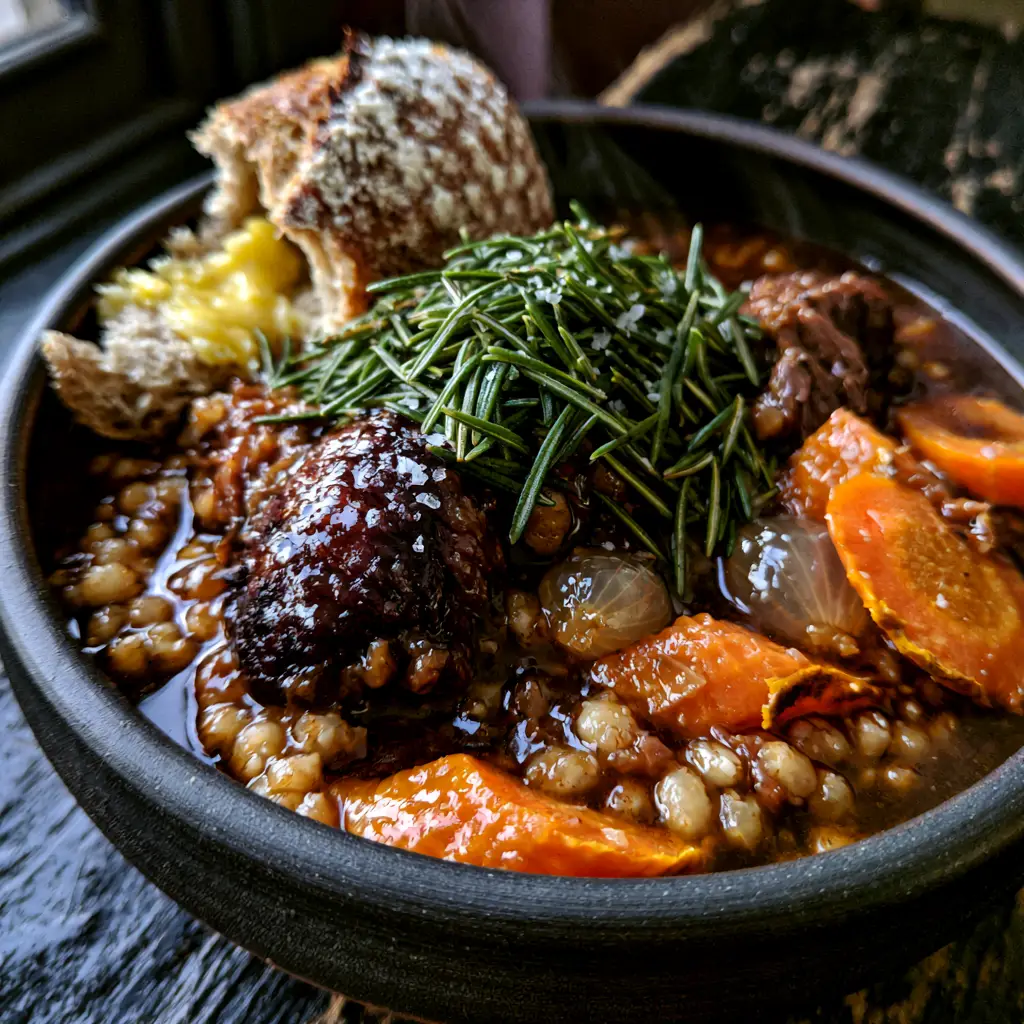
Imagine a dark, hand-thrown ceramic bowl filled to the brim with tender beef chunks and a gravy so thick it clings to your spoon. This isn’t just a meal; it’s a sensory experience designed to transport you to a weathered wooden tavern table by the fire.
Essential Elements for an Authentic Highland Feast
- Mahogany Seared Beef: Achieving a deep, dark crust on the beef is non-negotiable for that authentic “Outlander” visual.
- Glossy Dark Ale Gravy: A thick, velvety reduction of stout or ale provides the backbone for the entire dish.
- Tender Pearl Barley: This grain adds a soft, nutty texture that perfectly complements the hearty meat.
- Rustic Aromatics: Vibrant carrots, translucent pearl onions, and fresh rosemary needles bring both color and fragrance.
- The Sourdough Side: No stew is complete without a torn piece of crusty bread and a generous smear of melting salted butter.
The Secret Pantry for Your Outlander Kitchen cookbook Creation
Beef Chuck Roast (2 lbs / 900g): Choose a well-marbled cut and cube it into 1.5-inch (4cm) chunks. The fat renders down during the slow cook, creating that “glistening” look seen in the finest rustic photography.
Dark Ale or Stout (12 oz / 355ml): This provides the deep, malty bitterness that characterizes traditional Scottish cooking. It reacts with the beef juices to create a gravy that is naturally dark and complex.
Pearl Barley (1 cup / 200g): Unlike hulled barley, pearl barley cooks into a soft, slightly chewy texture. It acts as a natural thickener, releasing starches into the ale gravy.
Pearl Onions (1 cup / 150g): These should be peeled but kept whole. They become translucent and sweet, providing a beautiful visual contrast against the dark stew.
Sliced Carrots (3 medium / 225g): Cut these into thick rounds. We want the edges to soften while the center remains vibrant orange and tender.
Beef Bone Broth (3 cups / 720ml): A high-quality broth is the foundation of the liquid. It adds gelatinous body to the gravy, ensuring it isn’t watery.
Fresh Rosemary (3 sprigs): We will use the whole needles as a final scattering. The piney aroma is essential for that “just-picked” Highland herb garden feel.
Sea Salt Flakes: Used for finishing, these tiny white flakes catch the light and provide a sharp burst of seasoning against the rich stew.
Neutral Oil (2 tbsp / 30ml): High-smoke point oil like grapeseed or vegetable oil is required for that initial hard sear on the beef.
Tools for Your Rustic Hearth Kitchen
To recreate the magic of the Outlander Kitchen cookbook, you need a heavy-bottomed vessel. A 6-quart (5.7L) Dutch oven is ideal because it retains heat evenly and allows for a beautiful sear.
You will also need a sharp chef’s knife for those precisely sliced carrots and a sturdy wooden spoon to scrape up the “fond” (the brown bits) from the bottom of the pot. These brown bits contain all the concentrated flavor.
A Step-by-Step Journey to the Perfect Scottish Stew
Developing the Mahogany Crust
Pat your beef chunks completely dry with paper towels. This is the most important step for a forensic-level sear; moisture is the enemy of a mahogany crust.
Heat the oil in your Dutch oven over medium-high heat until it shimmers. Add the beef in batches, ensuring you don’t crowd the pan, which would cause the meat to steam rather than sear.
Leave the meat undisturbed for 3-4 minutes until a deep, dark brown crust forms. Flip and repeat on all sides, then remove the beef and set it aside on a plate.
Deglazing with Highland Spirits
Lower the heat slightly and pour in the dark ale. Use your wooden spoon to scrape every single browned bit off the bottom of the pot.
Allow the ale to simmer for 2 minutes. You will see the liquid begin to darken and thicken slightly as it incorporates the beef essence from the pan.
The Slow Simmer and Grain Integration
Return the beef and any accumulated juices to the pot. Add the beef broth and the pearl barley, stirring once to combine everything.
Bring the mixture to a very gentle simmer—you should only see a few bubbles breaking the surface. Cover tightly and let it cook for 90 minutes.
During this time, the barley will absorb the malty liquid and the beef fibers will begin to break down into tender, succulent chunks.
Softening the Root Vegetables
After 90 minutes, stir in the pearl onions and sliced carrots. These need less time than the beef and barley to reach that perfect “softened edge” texture.
Replace the lid and simmer for another 30-45 minutes. Check the carrots with a fork; they should be tender but not falling apart.
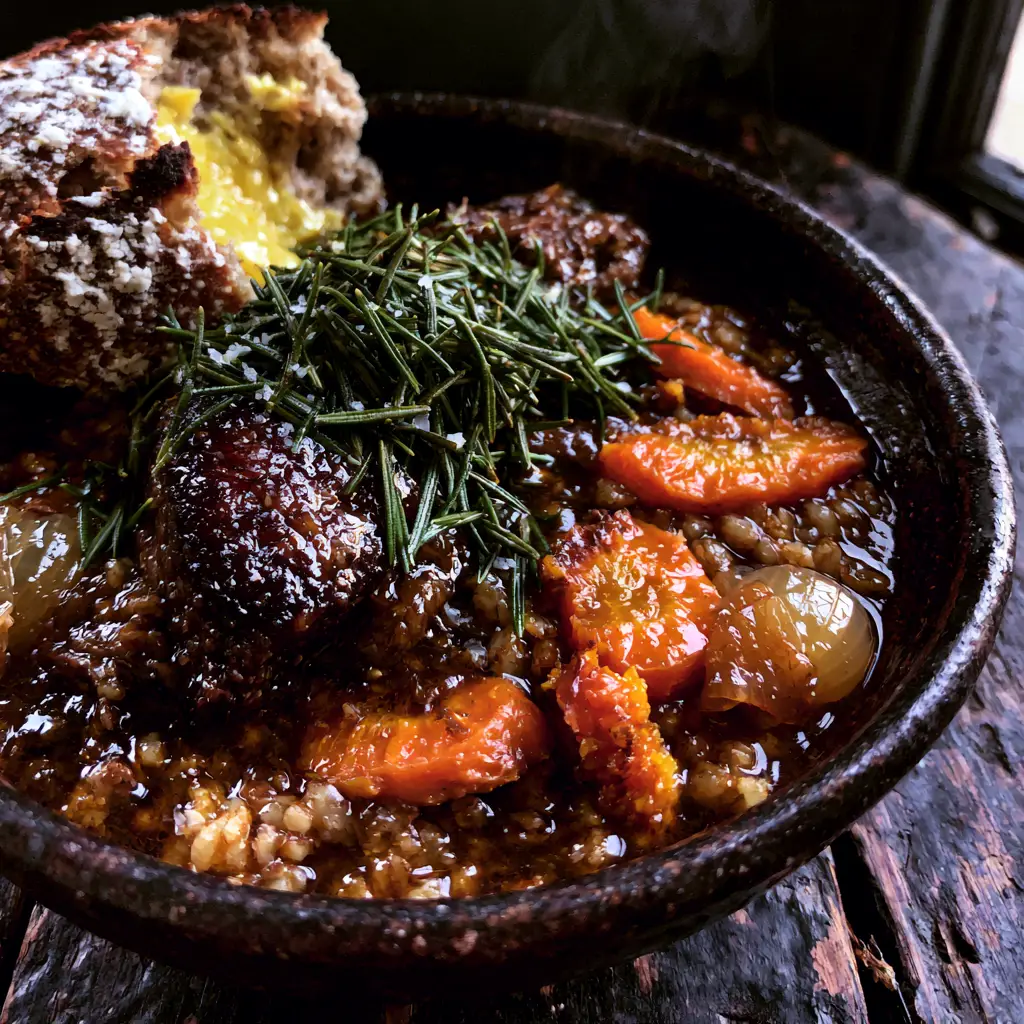
If the gravy is too thin, remove the lid for the final 15 minutes of cooking. This allows the steam to escape, concentrating the flavors and creating that “glossy” finish.
Expert Tips for Success
- Don’t Rush the Sear: If the meat is grey, the stew will lack depth. Wait for that dark mahogany color; it’s the signature of a professional chef.
- Salt in Stages: Season the beef before searing, but wait until the very end to add the sea salt flakes to avoid an over-salted gravy.
- The Butter Trick: For extra gloss, stir in a cold tablespoon of salted butter just before serving. It creates a professional “restaurant finish.”
- Bread Texture: Use a flour-dusted sourdough. The acidity of the bread cuts through the richness of the dark ale gravy perfectly.
Storing and Reheating Your Highland Stew
Like many recipes found in the Outlander Kitchen cookbook, this stew actually tastes better the next day. The flavors continue to meld and the barley develops a more pronounced nuttiness.
Store leftovers in an airtight container in the refrigerator for up to 4 days. When reheating, you may need to add a splash of water or broth, as the barley will continue to absorb liquid as it sits.
To freeze, place the cooled stew in freezer-safe bags. It will stay fresh for up to 3 months. Thaw overnight in the fridge before reheating gently on the stovetop.
What to Serve With This Traditional Dish
While this stew is a meal in itself, it fits perfectly into a larger spread of rustic comfort food. If you are hosting a themed dinner, consider starting with prosciutto-wrapped mozzarella bites for a modern touch on finger foods.
If you love the hearty nature of this dish, you might also enjoy comparing it to a classic Pioneer Woman potato soup or a rich bacon potato soup. Both offer that same soul-warming satisfaction.
For those who prefer poultry, a well-made chicken meatball soup provides a lighter but equally comforting alternative to the heavy beef and ale base.
Frequently Asked Questions
Hulled barley is less processed and takes much longer to cook (often over 2 hours). For this recipe, pearl barley is preferred as it achieves a soft, creamy texture that thickens the stew perfectly.
The secret is to pat the beef completely dry with paper towels and use a very hot Dutch oven. Don’t crowd the pan; sear in batches to ensure the meat browns rather than steams.
Yes! You must still sear the beef and deglaze the pan with ale on the stovetop first. Transfer everything to the slow cooker and cook on low for 7-8 hours, adding the vegetables in the last 2 hours.
Beef chuck roast is the gold standard. It has the perfect balance of fat and connective tissue that breaks down during the long simmer, resulting in succulent chunks and a rich gravy.
A dark ale, such as a Stout or a Scottish Wee Heavy, is best. These provide the deep, malty notes and dark color seen in the photography. Avoid overly hoppy IPAs, which can become bitter when reduced.
The Ultimate Outlander Kitchen cookbook Beef and Barley Stew

Outlander Kitchen cookbook Inspired Scottish Beef and Barley Stew
Ingredients
Equipment
Method
- Pat the beef chunks dry and season with salt. Heat oil in the Dutch oven over medium-high heat.
- Sear beef in batches until a deep mahogany crust forms on all sides. Remove and set aside.
- Pour in the dark ale, scraping the bottom of the pot to release the fond.
- Add beef broth, seared beef, and pearl barley. Bring to a light simmer.
- Cover and simmer for 90 minutes until the beef begins to tenderize.
- Stir in pearl onions and carrots. Simmer for another 45 minutes until vegetables are softened.
- Stir in fresh rosemary needles and sprinkle with sea salt flakes before serving with sourdough bread.
Notes
Use a real dark ale for the most authentic flavor profile.
Bring the Highlands to Your Table
This Scottish Beef and Barley Stew is more than just a recipe; it is a bridge to a different era. The combination of slow-cooked beef, nutty barley, and bitter ale creates a flavor profile that is both sophisticated and deeply nostalgic.
We hope this dish brings a bit of Highland magic to your kitchen. If you enjoyed this journey into the Outlander Kitchen cookbook style of cooking, please leave a comment below and let us know how your stew turned out!
Don’t forget to share your rustic creations with us on Pinterest. Seeing your hand-thrown bowls filled with this mahogany stew is the highlight of our day.