Pico de Gallo is the crown jewel of Mexican condiments, a vibrant, chunky salsa that brings a burst of garden-fresh acidity to every bite. Unlike blended salsas, a true salsa fresca relies on the structural integrity of its ingredients, creating a mosaic of color and flavor that is as visually stunning as it is delicious.
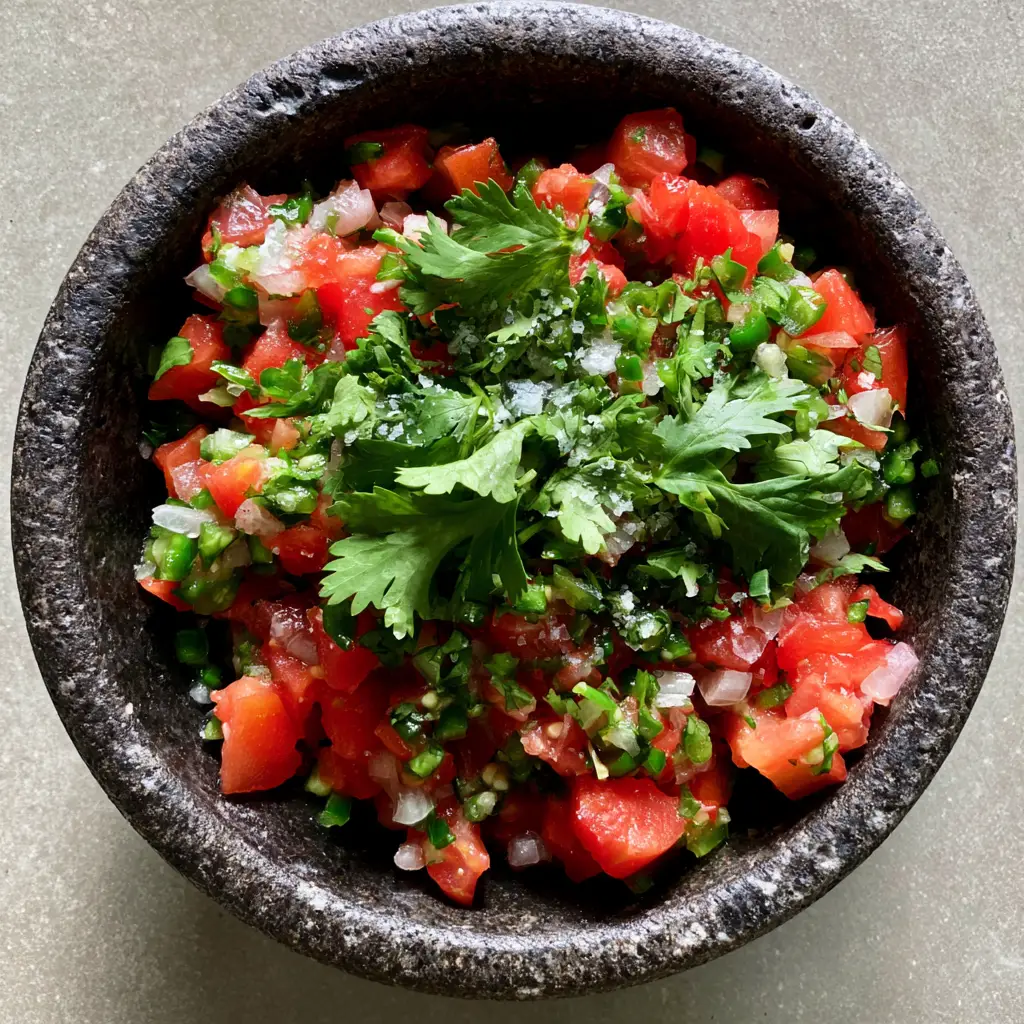
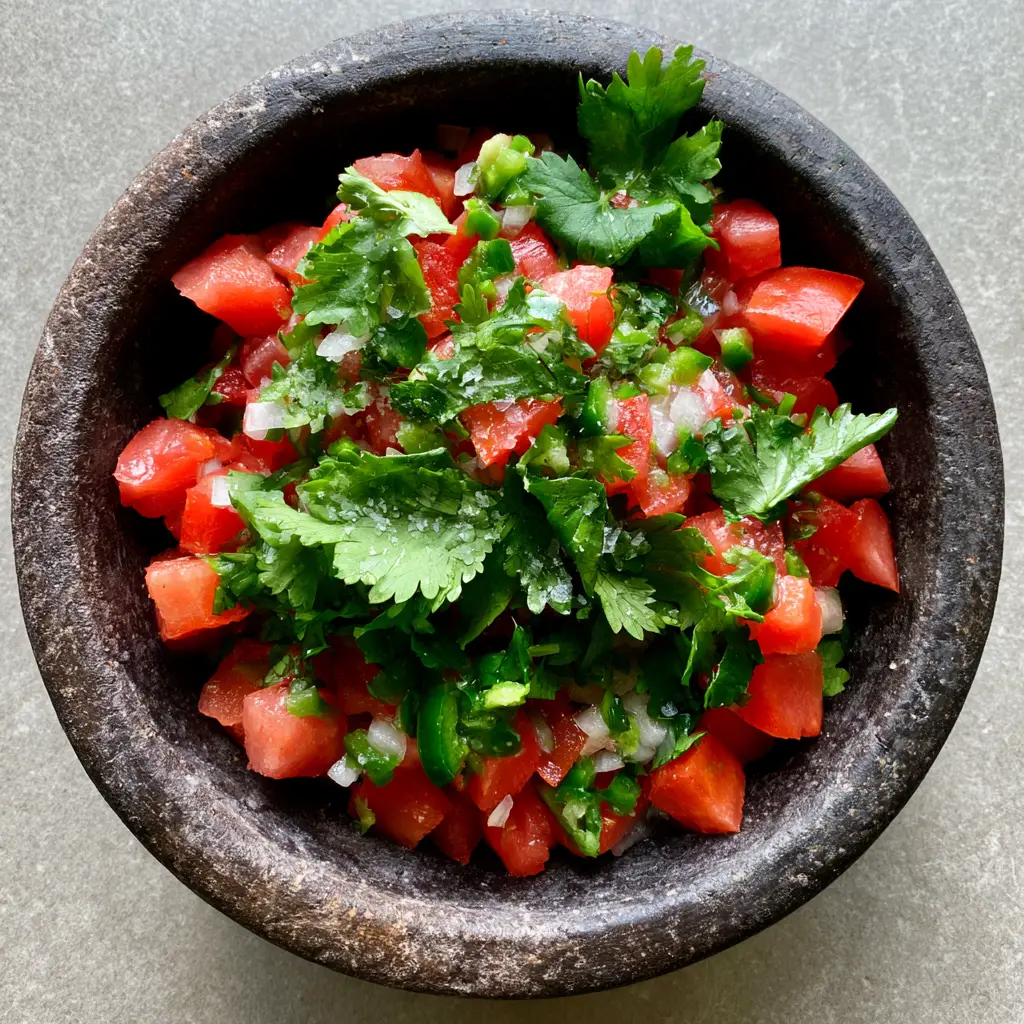
When you look at a professional-grade Pico de Gallo, you should see individual, glistening 1/4-inch cubes of deep red tomato, translucent bits of crisp white onion, and the bright green flecks of jalapeño. There is no murky liquid pooling at the bottom of the bowl; instead, each vegetable stands proud, seasoned to perfection with coarse sea salt and a bright kiss of lime.
Achieving this level of culinary excellence requires more than just chopping vegetables. It requires understanding the science of moisture control, the precision of a chef’s knife, and the traditional use of a dark stone molcajete to present the dish in its most authentic, rustic form.
Why This Authentic Salsa Fresca Stands Out
- Zero Liquid Pooling: By utilizing a specific salting and draining technique, we ensure your salsa stays chunky and fresh rather than turning into a watery mess.
- Precision Texture: We focus on a uniform 1/4-inch (6mm) dice, which ensures a balanced flavor profile in every single spoonful.
- Visual Brilliance: The contrast between the dark stone molcajete and the vibrant reds and greens makes this the ultimate centerpiece for your next gathering.
- Scientifically Balanced: We balance the natural sugars of the Roma tomatoes with the sharp acidity of fresh lime and the controlled heat of de-seeded jalapeños.
The Core Components of Perfect Pico de Gallo
To achieve the result seen in high-end culinary photography, we must be selective with our produce. Every ingredient in this Pico de Gallo serves a specific structural and flavorful purpose.
Firm Roma Tomatoes: You will need 1.5 lbs (680g) of the firmest Roma tomatoes you can find. These are preferred over heirloom or beefsteak varieties because they have a higher flesh-to-seed ratio, which is essential for maintaining those clean, sharp edges in your dice.
White Onion: One medium white onion (approx. 1 cup or 150g) provides the necessary crunch and a sharp, clean bite. Unlike red onions, which can bleed color, or yellow onions, which are too sweet, white onions offer the traditional pungent profile required for authentic salsa.
Fresh Jalapeños: Two medium jalapeños (approx. 45g) provide the heat. By removing the seeds and the white pith, we capture the bright, vegetal flavor of the pepper without overwhelming the palate with capsaicin.
Fresh Cilantro: One large bunch (approx. 1/2 cup or 15g packed) of flat-leaf cilantro is essential. We use hand-torn sprigs rather than finely minced leaves to maintain the rustic visual and prevent the herbs from bruising and turning black.
Fresh Lime Juice: Two tablespoons (30ml) of freshly squeezed lime juice provide the brightening agent. We apply these as droplets at the very end to ensure the vegetables glisten without becoming soggy.
Coarse Flaky Sea Salt: One teaspoon (5g) of coarse salt is used both for the osmotic process of draining the tomatoes and as a final seasoning. The visible flakes add a beautiful texture to the finished dish.
Essential Tools for Culinary Precision
To replicate the authentic look of a Mexican cantina, your choice of equipment is just as important as your ingredients. Using the right tools will prevent you from bruising the delicate cell walls of the vegetables.
A dark stone molcajete is the traditional vessel of choice. Its porous, rustic surface provides a stunning contrast to the bright vegetables and keeps the salsa naturally cool. If you are preparing large batches of food, having a high-quality stainless steel pot nearby can help for temporary storage, but the molcajete is for the final presentation.
You will also need a very sharp Chef’s Knife. A dull knife will crush the tomatoes rather than slicing through the skin, leading to the very pooling liquid we are trying to avoid. A fine-mesh strainer is also critical for the draining process that separates professional Pico de Gallo from amateur versions.
Step-by-Step Instructions for the Perfect Dice
Preparing the Tomato Foundation
Start by washing your Roma tomatoes and patting them dry. Slice each tomato in half lengthwise and, using a small spoon or your thumb, scoop out the watery pulp and seeds. This “filleting” of the tomato is the secret to a dry, crisp salsa.
Lay the tomato skins flat on your cutting board and cut them into 1/4-inch (6mm) strips. Turn the strips and cut crosswise to create uniform cubes. Place these cubes into a fine-mesh strainer set over a bowl and sprinkle with a pinch of sea salt. Let them sit for 10 minutes to drain any residual moisture.
Mastering the Aromatics
While the tomatoes drain, peel your white onion and cut it into a dice that is slightly smaller than your tomatoes. You want the onion to be a supporting player, not the lead. Aim for roughly 1/8-inch (3mm) pieces.
For the jalapeños, slice off the stem, cut in half, and carefully scrape out the seeds. Slice the flesh into very thin matchsticks, then dice into fine pieces. This ensures the heat is evenly distributed throughout the Pico de Gallo, preventing any guest from getting a “hot bite.”
The Hand-Torn Herb Technique
Instead of running your knife through the cilantro repeatedly, which causes the herb to oxidize and turn dark, pick the leaves off the stems. Roughly tear the larger leaves by hand. This preserves the essential oils and keeps the garnish looking vibrant and fresh in the stone bowl.
Final Assembly and Presentation
In a large mixing bowl, gently fold together the drained tomatoes, minced onions, and diced jalapeños. Do not over-mix; you want to maintain the sharp edges of the vegetable cubes. Transfer the mixture into your dark stone molcajete.
Just before serving, sprinkle the hand-torn cilantro over the top. Drizzle the fresh lime juice in droplets across the surface. You should see the juice glistening on the vegetables under the light. Finish with a final dusting of coarse flaky sea salt.
Expert Tips for Success
- Temperature Control: Serve your Pico de Gallo at room temperature for the best flavor, but ensure the ingredients were chilled before chopping to maintain crispness.
- Knife Maintenance: If your tomatoes are tearing, your knife is too dull. A quick hone on a steel rod can make all the difference in achieving those 1/4-inch cubes.
- Salt Timing: Never salt the entire bowl too far in advance. Salt draws out moisture through osmosis; if you salt it and let it sit for hours, you will end up with a tomato soup rather than a salsa.
- Acid Balance: If your tomatoes are particularly acidic, a tiny pinch of granulated sugar (not enough to taste) can balance the pH without changing the flavor profile.
Storage and Freshness Guidelines
Pico de Gallo is best consumed within 2 to 4 hours of preparation. This is when the textures are most distinct and the colors are at their peak. However, if you have leftovers, store them in an airtight glass container in the refrigerator for up to 2 days.
Note that the longer it sits, the more liquid will be released. You can “revive” leftover salsa by straining it again and adding a fresh squeeze of lime and a new sprinkle of cilantro. We do not recommend freezing this recipe, as the cellular structure of the tomatoes will collapse upon thawing, resulting in a mushy texture.
What to Serve With Pico de Gallo
This salsa is incredibly versatile. It is the natural companion for a walking taco casserole, providing a fresh contrast to the heavy meats and cheeses. It also works beautifully as a topping for grilled fish or inside a classic taco.
During the warmer months, this recipe fits perfectly alongside other summer soups or even as a bright side to a savory Southern tomato pie. The acidity of the lime and the crunch of the onion cut through rich, fatty dishes with ease.
Frequently Asked Questions
It is not recommended. A food processor will tear the vegetables and release too much juice, resulting in a mushy texture. Hand-dicing with a sharp knife is essential for authentic Pico de Gallo.
The secret is to remove the pulp and seeds from the tomatoes before dicing, and then salt and drain the diced tomatoes in a mesh strainer for 10-15 minutes before mixing with other ingredients.
It is best eaten within 4 hours. While it can stay in the fridge for up to 2 days, the salt will continue to draw out moisture, changing the texture over time.
Pico de Gallo is a type of ‘salsa fresca’ characterized by its chunky, raw texture and visible individual ingredients. Standard salsas are often blended, cooked, or have a more liquid consistency.
Roma (plum) tomatoes are best because they have thick walls and less water content compared to larger varieties, allowing them to hold their shape when diced.
The Ultimate Pico de Gallo Recipe
Pico de Gallo: The Ultimate Authentic Recipe for Salsa Fresca
Ingredients
Equipment
Method
- Slice Roma tomatoes in half and remove all pulp and seeds to prevent a watery salsa.
- Cut tomato skins into uniform 1/4 inch cubes. Mince the white onion and jalapeño (seeds removed) into slightly smaller pieces.
- Place diced tomatoes in a mesh strainer, sprinkle with a pinch of salt, and let drain for 10 minutes.
- Gently fold the drained tomatoes, onions, and jalapeños together in a bowl until just combined.
- Transfer to a molcajete. Top with hand-torn cilantro, droplets of lime juice, and a final sprinkle of flaky sea salt.
Notes
If the salsa is too spicy, ensure all jalapeño ribs (the white part) are removed.
Share Your Culinary Creation
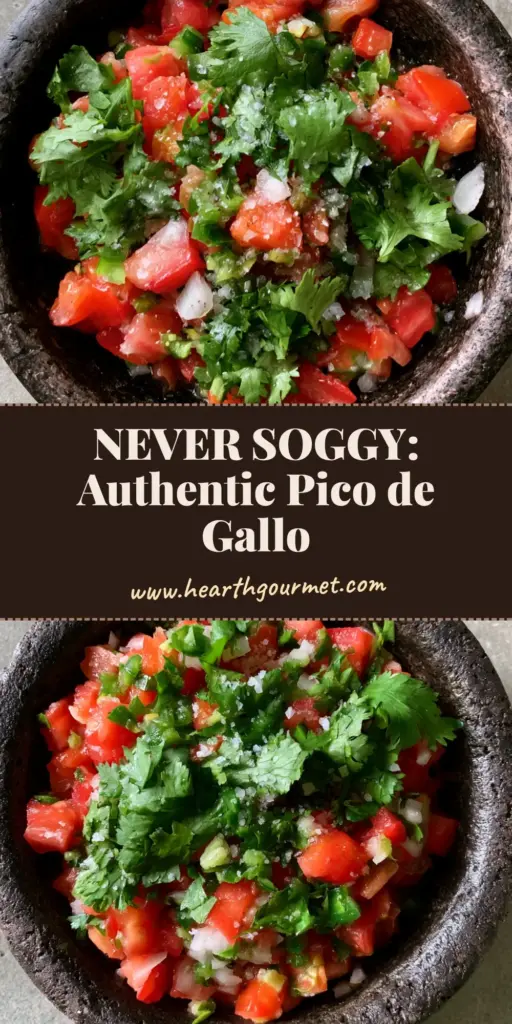
We hope this guide helps you master the art of the perfect salsa fresca. The contrast of the dark stone molcajete and the vibrant, precision-cut vegetables is a testament to the beauty of simple, fresh ingredients. If you enjoyed this recipe, please leave a comment below and share your photos with us!
For more garden-fresh inspiration, follow us on Pinterest and pin this recipe to your favorite boards.