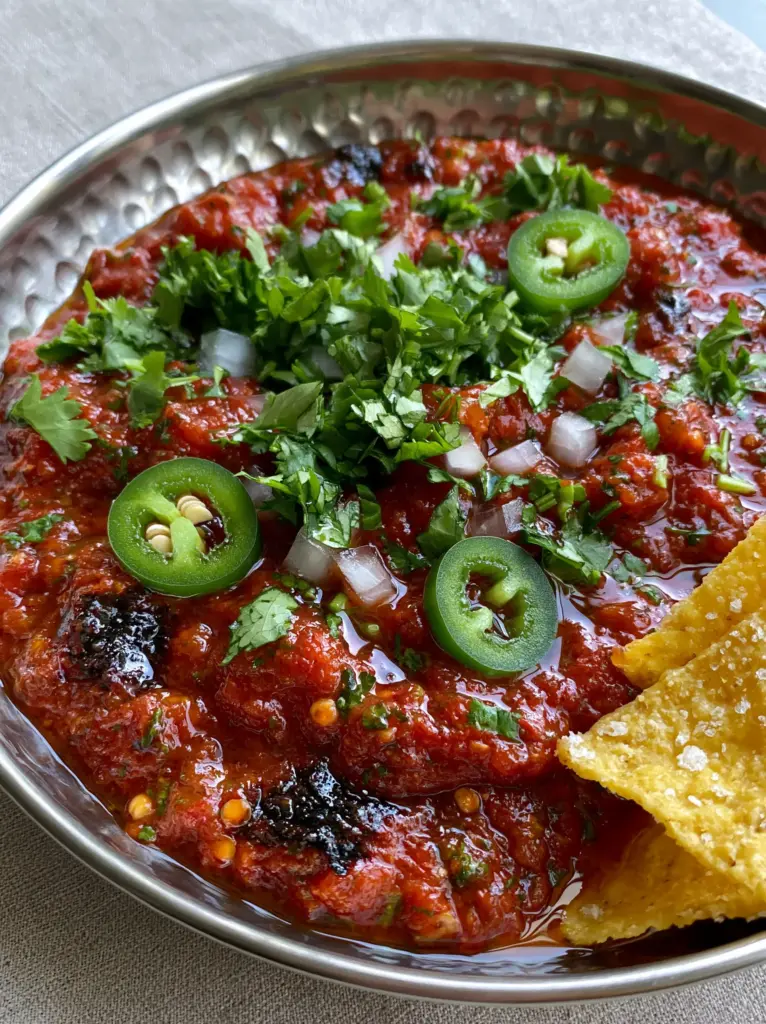
There is a specific kind of magic that happens when you sit down at a great Mexican restaurant and a bowl of warm, deep-red salsa arrives before you even order a drink. This Blender salsa is designed to replicate that exact experience in under ten minutes. We aren’t looking for a watery, pale pink puree; we are targeting a thick, pulpy texture punctuated by blackened char flecks and the sharp bite of raw white onion.
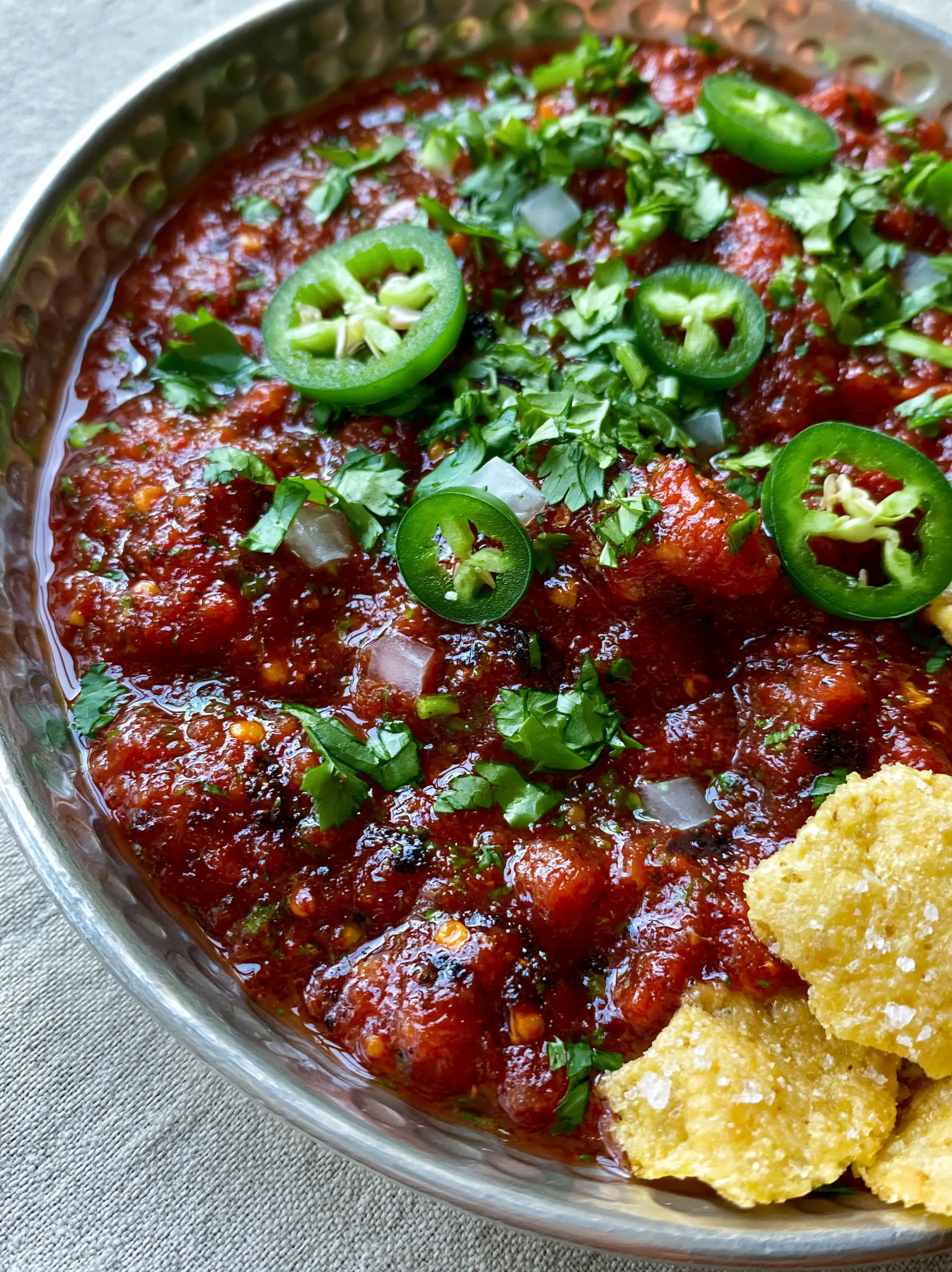
The visual appeal of this recipe is undeniable. Imagine a rustic, hammered silver bowl filled with a vibrant, glossy sauce. You see the distinct green of finely chopped cilantro and the translucent crunch of diced onions. It is a handheld-smartphone-photo-worthy masterpiece that tastes even better than it looks. Whether you are prepping for a party or just a quiet night in, this recipe delivers on every sensory promise.
Why This Fire-Roasted Masterpiece Outshines the Rest
- Visual Authenticity: Unlike typical home recipes, this version features “char flecks” from fire-roasted tomatoes, giving it that professional, roasted depth.
- Engineered Texture: We use a specific pulsing technique to ensure a pulpy tomato base that grips your chips rather than sliding off.
- Vibrant Contrast: The addition of fresh, raw ingredients—like sliced green jalapeños with seeds—after blending provides a stunning visual and textural contrast.
- Glossy Finish: A final drizzle of fresh lime juice creates a mouth-watering sheen that catches the light beautifully in any food photo.
The Anatomy of Flavor: Essential Ingredients for Blender salsa
To achieve the specific visual and flavor profile of our Blender salsa, every ingredient serves a dual purpose: aesthetic and culinary. Here is what you need to gather on your light gray linen-covered counter.
Fire-Roasted Canned Tomatoes: 2 cans (14.5 oz / 411g each). These provide the essential blackened char flecks and a deep red, concentrated tomato base that fresh supermarket tomatoes often lack.
Raw White Onion: 1/2 small onion (approx. 60g). While some is blended for flavor, a portion is finely diced and stirred in at the end to provide those translucent, crunchy gems visible in the final bowl.
Fresh Jalapeños: 2 medium peppers (approx. 30g). We keep the seeds in and slice them into thin rounds to match the rustic, spicy aesthetic of authentic restaurant salsa.
Fresh Cilantro: 1/2 bunch (approx. 15g). High-quality cilantro provides the vibrant green “stirred-in” look and a fresh, herbaceous aroma that balances the smokiness of the tomatoes.
Fresh Lime Juice: 2 tbsp (30ml). This isn’t just for acidity; it provides the glossy surface sheen and activates the bright colors of the other vegetables.
Sea Salt Flakes: 1 tsp (6g). Salt flakes are superior here because they offer tiny bursts of salinity and look beautiful when scattered over the final dish and the accompanying chips.
Garlic Cloves: 2 medium cloves (approx. 6g). Garlic provides the foundational umami that lingers on the palate long after the heat of the jalapeño fades.
Cumin and Sugar: 1/2 tsp (1g) each. These “invisible” ingredients balance the metallic notes of canned tomatoes and the high acidity of the lime juice.
The Technical Tools: Why Your Equipment Matters
To achieve the “pulpy and rustic” texture described in our visual blueprint, your choice of equipment is paramount. While a high-speed blender is excellent for smoothies, it can easily over-aerate salsa, turning it into a pink foam. I recommend using a blender with a “pulse” function or a wide-based food processor.
If you find yourself making large batches of sauces or even hearty meals like creamy potato and hamburger soup, a high-quality blender or a stainless steel pot for stovetop roasting can be your best friend in the kitchen. For this recipe, the goal is to keep the blades moving just enough to break down the large tomato chunks while leaving the seeds and char flecks intact.
Step-by-Step Instructions for the Perfect Pulse
1. Preparing the Aromatic Foundation
Begin by peeling your garlic cloves and roughly chopping your white onion. You don’t need to be precise here, as the blender will do the heavy lifting. Place the garlic, half of the onion, and one jalapeño (stem removed) into the blender carafe.
2. The Fire-Roasted Base
Add both cans of fire-roasted tomatoes, including the juice. Add the sea salt, cumin, and the optional pinch of sugar. The sugar is a culinary secret that mimics the natural sweetness of vine-ripened tomatoes that have been blistered over an open flame.
3. Mastering the Pulse Technique
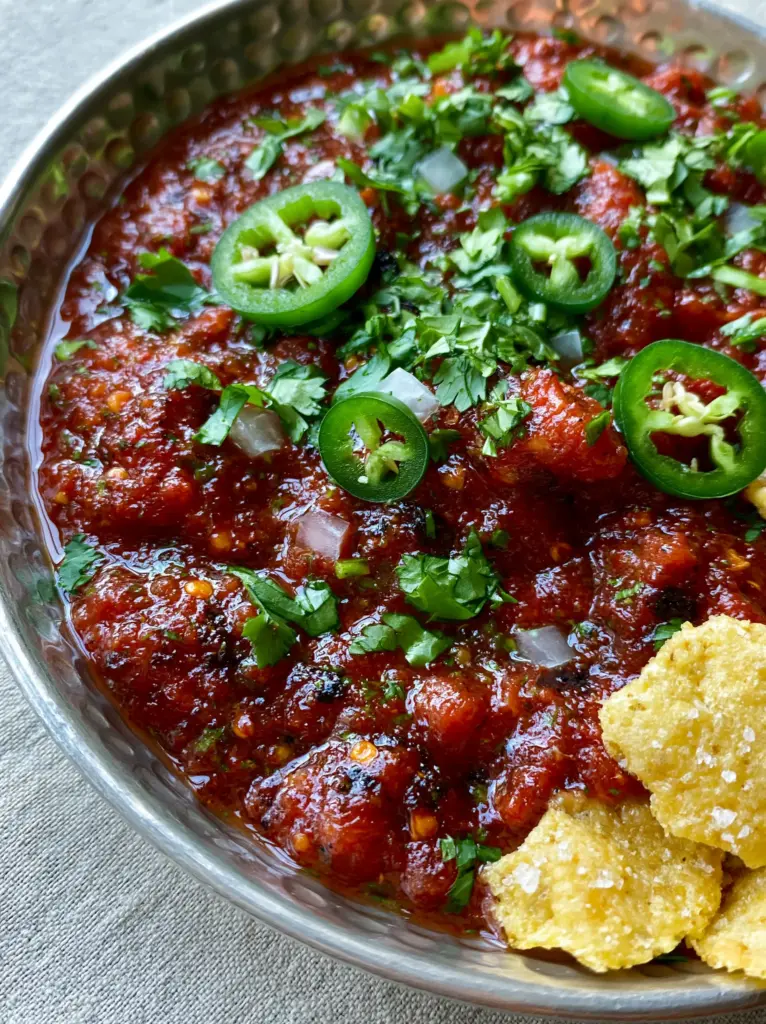
This is the critical stage for your Blender salsa. Do not simply turn the blender on high. Instead, use short, one-second pulses. Watch for the visual cue: you want the tomatoes to break down into a thick, pulpy mash where you can still see the blackened char flecks. Usually, 5 to 7 pulses are sufficient.
4. The Hand-Stirred Finish
Pour the mixture into a rustic hammered silver bowl. Now, finely dice the remaining white onion and finely chop the fresh cilantro. Slice the remaining jalapeño into thin, beautiful rounds with the seeds exposed. Stir these into the puree by hand. This ensures the salsa looks “made from scratch” and prevents the cilantro from turning the whole sauce green.
5. The Finishing Sheen
Squeeze the fresh lime juice over the top and stir gently. You will immediately notice a glossy sheen developing on the surface. Scatter a few extra sea salt flakes over the top for that mouth-watering, professional finish.
Expert Tips for a Culinary Masterpiece
- Chill for Depth: While you can eat this immediately, letting it sit in the fridge for 30 minutes allows the flavors to marry and the “heat” from the jalapeños to permeate the tomato base.
- Control the Water: If your canned tomatoes are particularly watery, drain about 1/4 cup of the juice from one can before adding it to the blender to ensure a thick, spoonable consistency.
- The Cilantro Secret: Always use the stems of the cilantro when blending the base; they contain the most flavor. Save the leafy tops for the manual stir-in at the end for the best visual impact.
- Adjusting the Heat: For a milder version, remove the ribs and seeds from the jalapeños before slicing, though you will lose some of the “rustic” visual appeal from the blueprint.
Optimal Storage and Shelf Life
This Blender salsa is best enjoyed within 3 to 5 days. Store it in an airtight glass jar in the refrigerator. Glass is preferable to plastic as it won’t absorb the onion odors or stain from the deep red tomato pigments. I do not recommend freezing this salsa, as the cellular structure of the raw onions and cilantro will break down, resulting in a mushy texture upon thawing.
What to Serve With Your Fresh Salsa
Naturally, this salsa belongs next to a pile of golden-yellow corn tortilla chips with visible salt grains. However, its versatility extends much further. It is the perfect bright accompaniment to a heavy walking taco casserole or a side dish for a summer brunch featuring a southern tomato pie.
If you are planning a Mexican-themed dinner party, consider serving this as an appetizer alongside a fresh pico de gallo for a contrast in textures. For those cooler evenings, this salsa can even be stirred into a jalapeno popper soup to add a smoky, acidic kick that cuts through the creaminess. It also pairs beautifully with the light, fresh notes found in many summer soups.
Frequently Asked Questions
Yes, but for the same visual ‘char flecks’ and deep flavor, you must roast or char the fresh tomatoes over a flame or under a broiler until the skins are blackened before blending.
If your salsa is too watery, try draining the juice from one of the cans of tomatoes before blending. Also, adding more raw diced onion at the end provides body and texture.
It will stay fresh and vibrant in an airtight glass container in the refrigerator for up to 5 days. Stir before serving to redistribute the lime juice and salt.
The seeds add significant heat. For a milder salsa with the same look, remove the seeds from the jalapeño that is blended, but keep them in the thin rounds you stir in at the end.
This happens due to over-blending, which incorporates too much air. To prevent this, use the ‘pulse’ setting in short bursts rather than running the blender continuously.
The Definitive Blender salsa Recipe Card
Blender salsa: The Ultimate Fire-Roasted Restaurant-Style Dip
Ingredients
Equipment
Method
- Peel garlic and roughly chop half of the white onion. Stem one jalapeño.
- Add tomatoes, garlic, roughly chopped onion, one jalapeño, cumin, sugar, and sea salt to the blender.
- Pulse the blender 5-7 times for 1 second each. Look for a pulpy texture with visible char flecks and seeds. Avoid over-blending.
- Pour the salsa into a bowl. Finely dice the remaining onion, chop the cilantro, and slice the second jalapeño into rounds. Stir these in by hand.
- Drizzle with fresh lime juice and stir gently to create a glossy sheen. Top with extra sea salt flakes.
Notes
Use fire-roasted tomatoes for the most authentic flavor and appearance.
Conclusion: Bring the Cantina to Your Kitchen
Creating a restaurant-quality Blender salsa is about more than just throwing ingredients into a machine. It is about honoring the textures and visual cues that make fresh food appetizing: the blackened char, the translucent crunch of onion, and the glossy finish of lime. This recipe is a guaranteed crowd-pleaser that looks just as good as it tastes. We invite you to try it tonight and share your results! Don’t forget to follow us on Pinterest for more visually-driven recipe inspiration.