Experience the culinary magic of a sheet pan soup, a revolutionary way to achieve deep, complex flavors with minimal effort. By roasting every vegetable to charred, caramelized perfection before blending, you unlock a natural sweetness and smokiness that a standard stovetop simmer simply cannot replicate. This vibrant orange masterpiece, inspired by authentic lifestyle photography, brings professional-grade textures right to your home kitchen.
Imagine the aroma of garlic cloves roasting in their skins and red bell peppers blistering under high heat filling your home. This isn’t just a meal; it is a sensory experience that culminates in a velvety, rich bowl finished with a delicate swirl of heavy cream. Whether you are looking for simple soup ideas or a sophisticated centerpiece for a weekend lunch, this method is the ultimate kitchen hack.
Why Roasting is the Secret to the Best Sheet Pan Soup
- Maillard Reaction Mastery: Roasting carrots and onions at high temperatures triggers the Maillard reaction, creating hundreds of flavor compounds that add savory depth to the vibrant orange base.
- Effortless Texture: The “sheet pan” method ensures that every vegetable is tender enough to blend into a silk-like consistency without the need for heavy thickeners.
- Visually Stunning Results: From the charred edges of the red peppers to the bright micro-green garnish, this dish is designed to be as beautiful as it is delicious.
- Concentrated Nutrients: Unlike boiling, where nutrients can leach into water and be discarded, roasting keeps the vitamins and minerals concentrated within the vegetables.
If you enjoy the rich texture of blended vegetables, you might also find comfort in a classic zucchini soup recipe or a nutrient-dense mediterranean lentil soup. Both offer that same satisfying mouthfeel that makes a soup feel like a complete meal.
The Essential Roasted Produce for Deep Flavor
To achieve the specific visual and flavor profile of this sheet pan soup, you must select high-quality produce. Each ingredient plays a structural and aesthetic role in the final bowl.
3 large (approx. 450g) Red Bell Peppers: These provide the smoky backbone of the soup; look for peppers with taut, shiny skin that will blister beautifully under the broiler.
1 lb (450g) Orange Carrots: Carrots provide the vibrant orange hue and natural sugars that caramelize during the roasting process for a hint of sweetness.
1 large (200g) Red Onion: When cut into wedges, red onions become jammy and savory, adding a necessary acidic balance to the earthy carrots.
1 whole head (50g) Garlic: Roasting the entire bulb mellows the garlic’s sharpness, turning the cloves into a buttery paste that incorporates seamlessly into the liquid.
3 cups (720ml) Vegetable Broth: This is the foundational liquid that adjusts the thickness of your velvety blended base; use a high-quality stock for the best results.
1/4 cup (60ml) Heavy Cream: A luxurious addition that creates the iconic white swirl seen in the blueprint, providing a rich mouthfeel and tempering the acidity of the peppers.
2 tbsp (30ml) Extra Virgin Olive Oil: Essential for the roasting phase to ensure even heat distribution and to help the vegetables achieve those golden-brown charred edges.
1 tsp (6g) Sea Salt and 1/2 tsp (1g) Cracked Black Pepper: Critical seasoning agents that enhance the natural profile of the roasted vegetables.
Fresh Micro-greens and Torn Sourdough: These are your texture superstars, adding a fresh snap and a crusty, airy crunch to every spoonful.
Professional Tools for a Velvety Finish
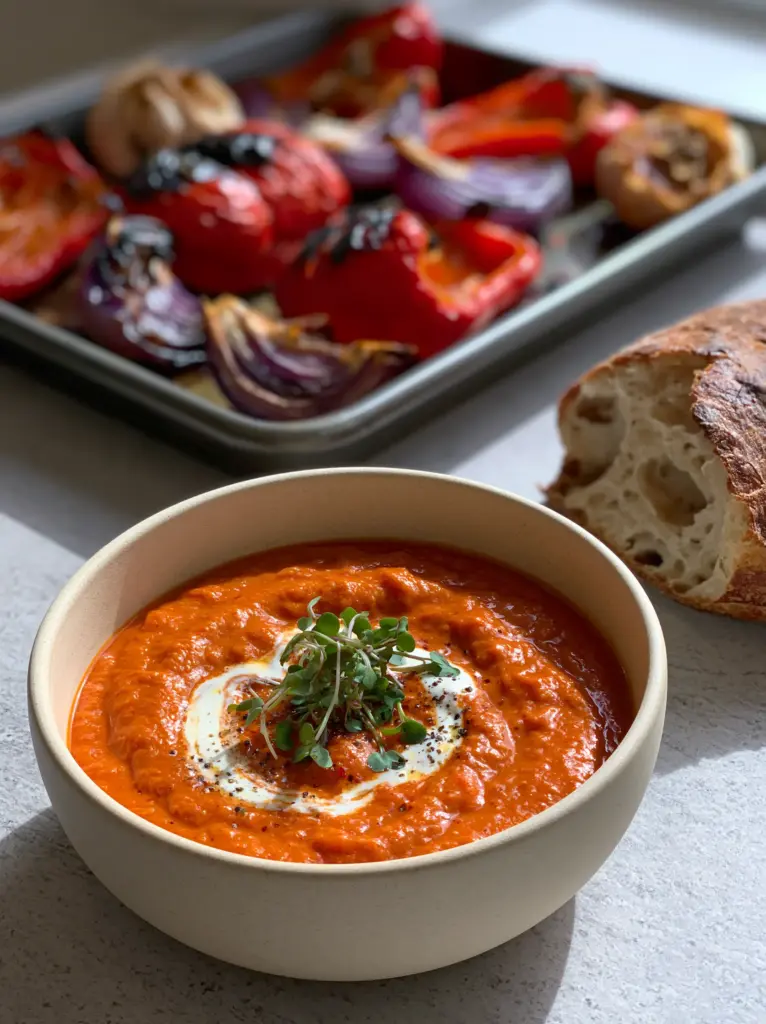
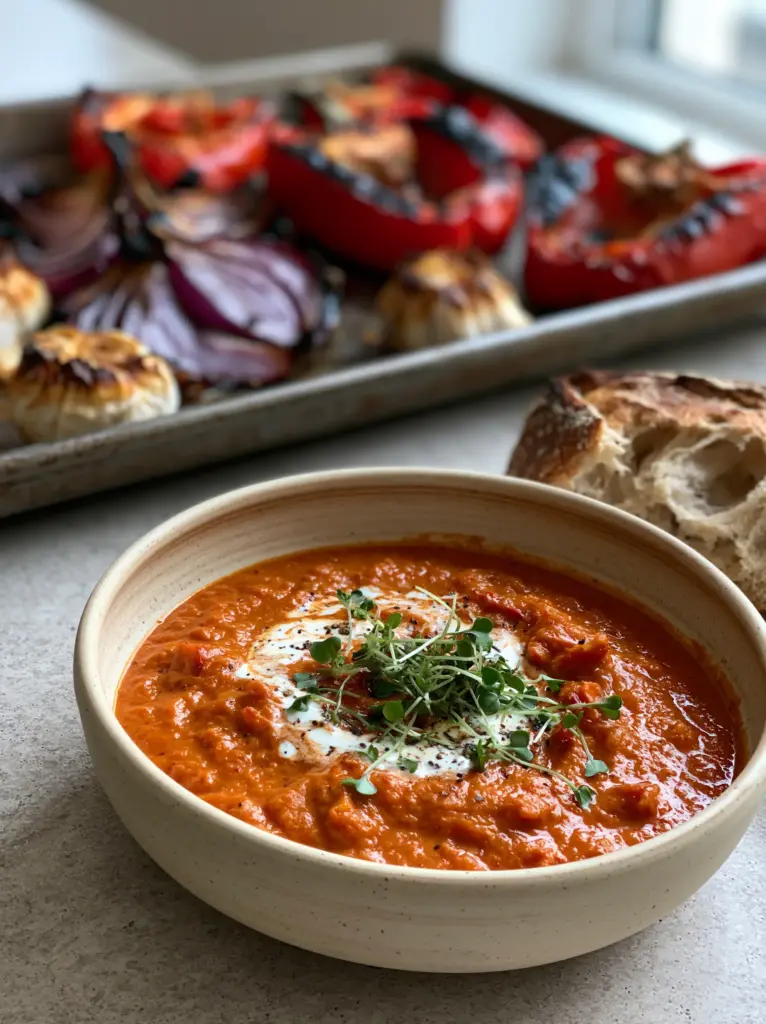
To recreate the “thick, vibrant orange” texture described in our visual blueprint, you need a few specific tools. A heavy-duty dark metal sheet pan is crucial for heat retention and achieving those caramelized edges on the onion wedges.
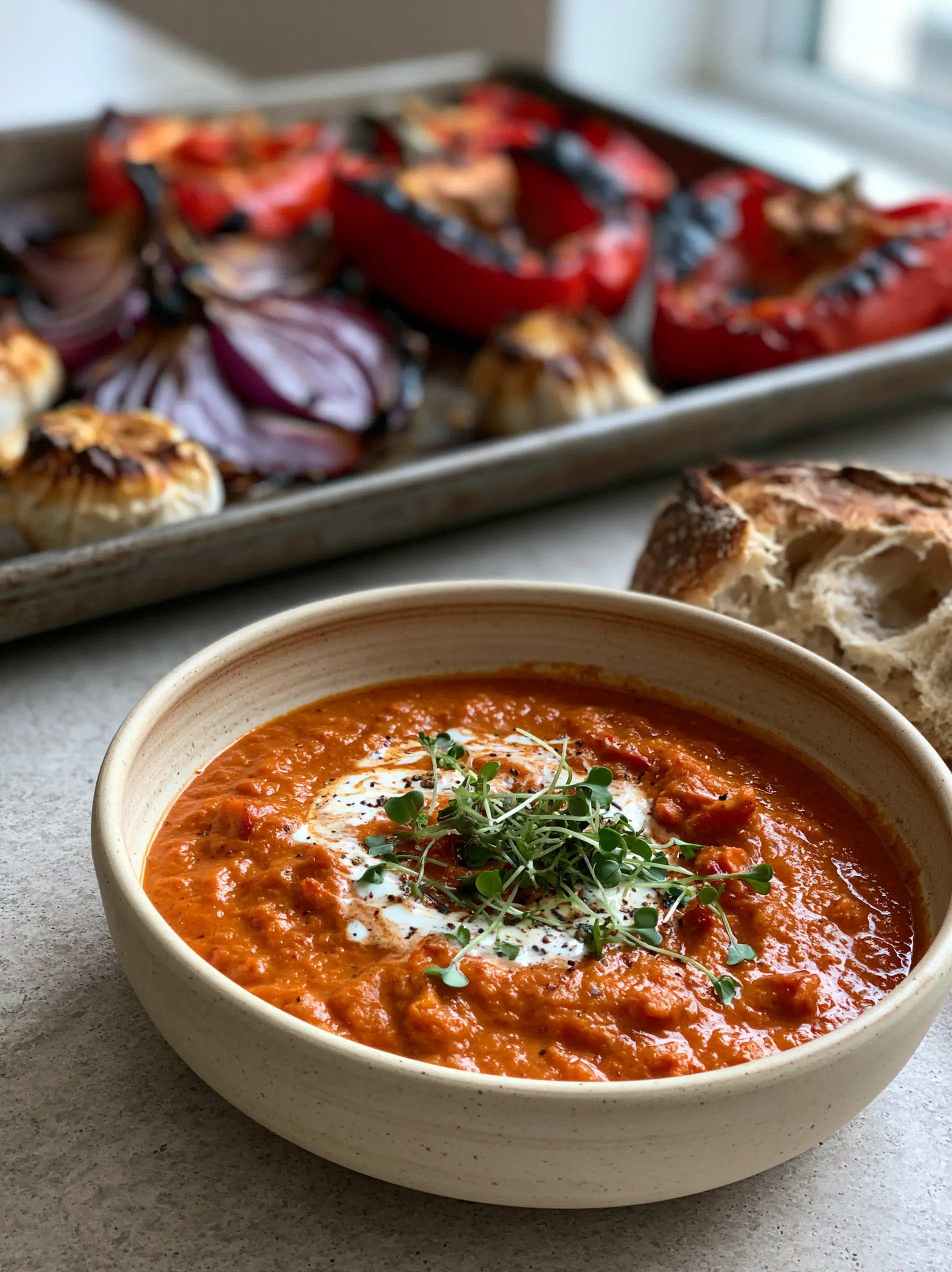
For the blending phase, a high-speed upright blender will yield the smoothest results, though an immersion blender can work for a more rustic, textured finish. Finally, a matte ceramic bowl, as seen in the lifestyle photography, helps retain heat while providing a beautiful neutral backdrop for the orange soup.
Step-by-Step Guide to Roasting and Blending Perfection
Preparing the Vegetable Foundation
Preheat your oven to 425°F (220°C). Wash your red bell peppers and carrots thoroughly. Slice the peppers into halves, removing the seeds and stems, and peel the carrots, cutting them into 2-inch (5cm) chunks. Quarter the red onion into thick wedges, keeping the root intact to prevent them from falling apart on the pan. Slice the top off the garlic bulb to expose the cloves.
The Art of the Sheet Pan Char
Arrange the vegetables in a single layer on your dark metal sheet pan. Drizzle generously with olive oil and sprinkle with salt. Place the garlic bulb cut-side down. Roast for 30–35 minutes. You are looking for specific visual cues: the bell pepper skins should be blistered and partially blackened, the carrots should be tender when pierced with a fork, and the onion wedges should have dark, caramelized edges.
Extracting the Roasted Gold
Once the vegetables are slightly cooled, peel the charred skins off the peppers if you prefer an ultra-smooth texture, though keeping them adds a lovely smokiness. Squeeze the roasted garlic cloves out of their skins—they should slide out like soft butter. Transfer all the sheet pan contents, including any accumulated juices, into your blender.
Blending to a Velvety Consistency
Add the vegetable broth to the blender. Start on a low speed and gradually increase to high. Blend for at least 60 seconds until the mixture is completely homogenous and vibrant orange. If the soup is too thick, add more broth 1/4 cup (60ml) at a time until the desired thickness is achieved. Pour the mixture into a pot and warm over medium heat.
The Final Flourish and Garnish
Ladle the hot soup into matte ceramic bowls. Using a small spoon, carefully swirl a tablespoon of heavy cream into the center of each bowl. Top with a generous pinch of fresh micro-greens and a final crack of black pepper. Serve immediately with large pieces of torn crusty sourdough bread, perfect for dipping into the rich base.
Expert Tips for Sheet Pan Soup Success
- Don’t Overcrowd the Pan: If the vegetables are too close together, they will steam instead of roast. Use two pans if necessary to ensure that charred, roasted flavor.
- The Sourdough Secret: For the best “air pockets,” use a high-hydration sourdough. Briefly toast the torn pieces in the oven for 2 minutes to enhance the crunch.
- Balance the Acidity: If your soup tastes a bit flat, add a teaspoon of lemon juice or apple cider vinegar right before serving to brighten the roasted flavors.
- Cream Swirl Technique: For a professional “swirl,” ensure the cream is at room temperature. Cold cream will sink too quickly into the hot soup.
Looking for other hearty vegetable-forward meals? You might enjoy a broccoli potato soup or even a decadent cheeseburger soup recipe for those nights when you want something a bit more indulgent.
Optimal Storage and Reheating Methods
This sheet pan soup stores beautifully, making it an excellent option for meal prep. Store leftovers in an airtight container in the refrigerator for up to 4 days. When reheating, do so on the stovetop over low heat to prevent the cream from separating.
To freeze, omit the heavy cream swirl and micro-greens. Freeze the blended base in silicone molds or freezer bags for up to 3 months. Thaw overnight in the fridge and add the fresh cream and garnishes just before serving to maintain the visual integrity of the dish.
What to Pair with Your Roasted Vegetable Masterpiece
While the sourdough bread is the classic companion for this soup, you can round out the meal with a crisp side salad or another complementary soup for a “soup and salad” lunch. Consider pairing it with a creamy chicken enchilada soup for a contrasting flavor profile.
For a cozy autumn dinner, this soup fits perfectly alongside a collection of fall soups and stews. The sweetness of the carrots and the smokiness of the peppers capture the essence of the season in every bite.
Frequently Asked Questions
Yes! Simply swap the heavy cream for full-fat coconut milk or a cashew-based cream for a perfectly dairy-free and vegan alternative.
It is optional. Leaving the charred skins on adds a deeper smoky flavor and rustic texture, while peeling them results in a brighter color and silkier finish.
Reheat on the stovetop over medium-low heat. Avoid boiling vigorously if you have already added the cream, as it may cause the soup to separate.
The vibrant orange color comes primarily from the carrots. Ensure you use at least 1 lb of carrots and avoid adding too many green herbs to the blender.
The Ultimate Sheet Pan Soup Recipe Card
Sheet Pan Soup with Roasted Red Peppers and Carrots
Ingredients
Equipment
Method
- Preheat oven to 425°F (220°C). Arrange peppers, carrots, onion wedges, and garlic bulb on a sheet pan.
- Drizzle with olive oil and salt. Roast for 30-35 minutes until peppers are charred and onions are caramelized.
- Squeeze garlic cloves from skins. Combine all roasted vegetables and broth in a blender. Process until velvety smooth.
- Ladle into bowls, swirl in heavy cream, and top with micro-greens and cracked pepper. Serve with sourdough.
Notes
Tip 2. For an extra smoky flavor, leave the charred pepper skins on.
A New Way to Soup
This sheet pan soup represents the best of modern home cooking: efficient, flavor-first, and visually stunning. By utilizing the high heat of the oven, you transform simple root vegetables and peppers into a gourmet experience that rivals any bistro. We hope this recipe becomes a staple in your kitchen for those chilly evenings when only a warm, velvety bowl will do.
Did you try the sourdough dip? Let us know in the comments below! Don’t forget to share your vibrant orange creations and tag us, and be sure to save this recipe to your favorite boards on Pinterest for later inspiration.